The 1990s gave us some of the most famous supercars ever built, but the decade’s value story now reaches well beyond the usual poster heroes. While the Ferrari F40, McLaren F1, and Lamborghini Diablo still dominate popular memory, several other exotic machines from the same era have become serious collector assets in their own right. Some came from major manufacturers trying something unusually ambitious. Others came from boutique makers with microscopic production and almost surreal confidence in their own ideas.
That is why this era remains so fascinating for collectors. The cars below were never ordinary, but today the market is treating them with a very different level of seriousness than it once did. Current collector data puts a Jaguar XJ220 around the mid-$500,000 range, a Vector W8 around $989,000, and a Bugatti EB110 around $1.9 million, while public sales and market comps have already pushed the Cizeta V16T and Isdera Commendatore 112i well into seven-figure territory. In other words, these are not obscure curiosities anymore. They are high-value collector cars, and the market is pricing them accordingly.
What makes them especially interesting is that their value stories are all a little different. One was hurt by a broken promise at launch and took decades to recover. Another felt too outrageous and too American for a European-leaning exotic market. One was engineered brilliantly but buried by a bankrupt brand. Another came from a tiny operation with almost surreal ambition. The last was so rare that it barely had a market history at all. Yet all five now sit in the same conversation because collectors have become more willing to reward originality, rarity, engineering depth, and period character. That is great news for cars like these, because the 1990s were full of bold ideas, and the collector market now has much more appetite for them.
How These Supercars Made This List
This list is not about the most valuable supercars of the 1990s. If it were, the usual headliners would take over immediately. It is also not just a list of rare cars with wild styling. To belong here, a model had to do three things at once. First, it had to be a true 1990s supercar, meaning a machine sold or unveiled in that decade with serious performance credentials, real exotic intent, and the kind of engineering or design ambition that separated it from ordinary sports cars. Second, it had to have a value story strong enough to matter today, not just historical interest. In practice, that meant recent auction results, credible market benchmarks, or both, showing that these cars now command prices ranging from very expensive to outright staggering. Third, it had to represent a distinct path to collector significance, whether through rarity, engineering brilliance, brand history, or sheer audacity. That is the real point of the headline. These are not nostalgia picks. They are collector market facts.
The other filter was relevance. Some obscure 1990s exotics remain too thinly traded to discuss with confidence, while others are so niche that even strong rarity has not turned them into major market stories. The five cars here each left a meaningful mark on the decade and now carry values to match. Jaguar’s XJ220 is the once-complicated flagship now trading like a blue-chip curiosity. The Vector W8 is the American outsider that became a near-million-dollar cult object. The Bugatti EB110 is the engineering landmark now priced like one. The Cizeta V16T is the boutique fever dream whose scarcity now reads like gold. The Isdera Commendatore 112i is something rarer still, a one-off vision that crossed from obscurity into museum-grade significance. Together, they show that the 1990s supercar market is much richer than the standard poster-car shortlist suggests.
Jaguar XJ220

The Jaguar XJ220 may be the best example here of a car whose collector value took time to catch up with its actual ability. When the project first caught the public imagination, buyers expected a V12 flagship with all-wheel drive. What finally reached production was different: a twin-turbo 214 cubic inch V6 making 542 horsepower, driving the rear wheels through a manual gearbox. That change became the headline, and for years it overshadowed the car itself. The irony is that the finished XJ220 was still a monster. It was a 217 mph machine, one of 281 production examples, and one of the most visually dramatic road cars of its decade. Time has helped separate the car from the disappointment that once defined it.
Modern collectors now look at the shape, the speed, the rarity, and the fact that it came from a major British manufacturer at the peak of the analog supercar age. They also see a market that has become much more serious. An XJ220 sold for $472,500 at RM Sotheby’s Arizona in January 2024, another brought $527,500 in Toronto in June 2024, and Hagerty’s early 2026 price guide placed the model around $548,000 in excellent condition. That still leaves room below the most celebrated 1990s exotics, which may be exactly why interest remains strong. The XJ220 no longer looks like a compromised dream. It looks like one of the smartest ways into the decade’s top tier.
Vector W8
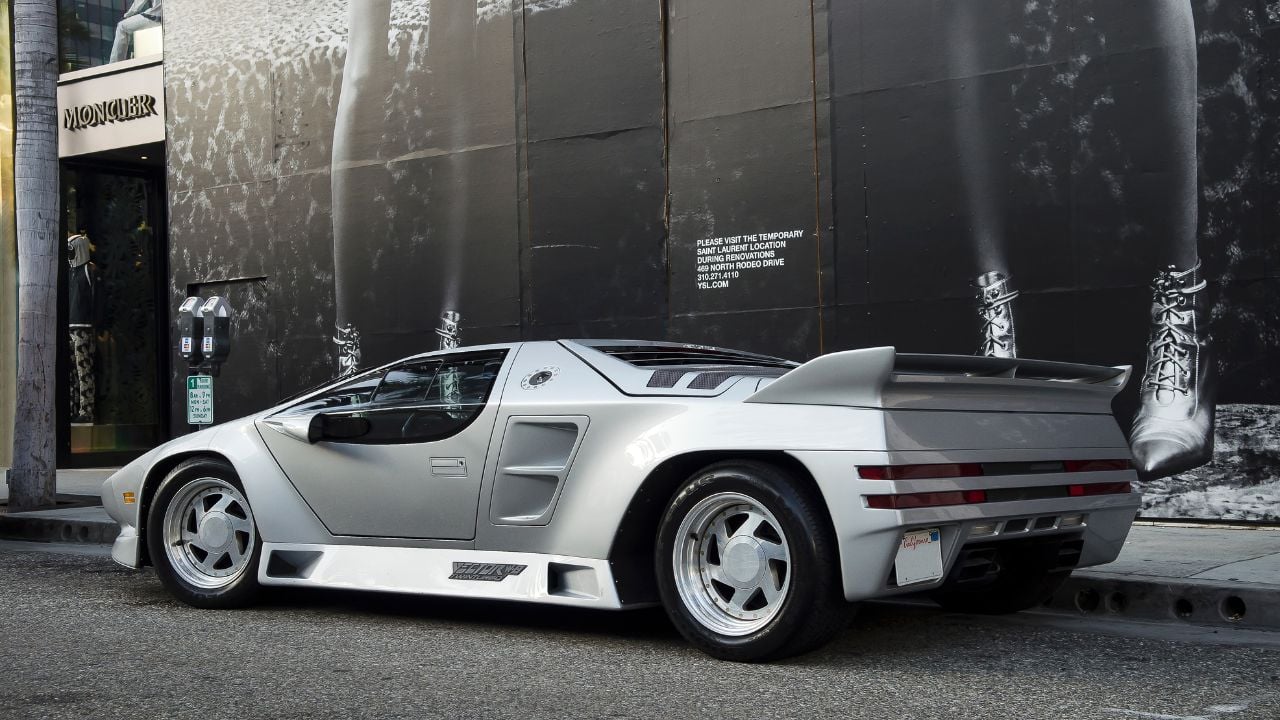
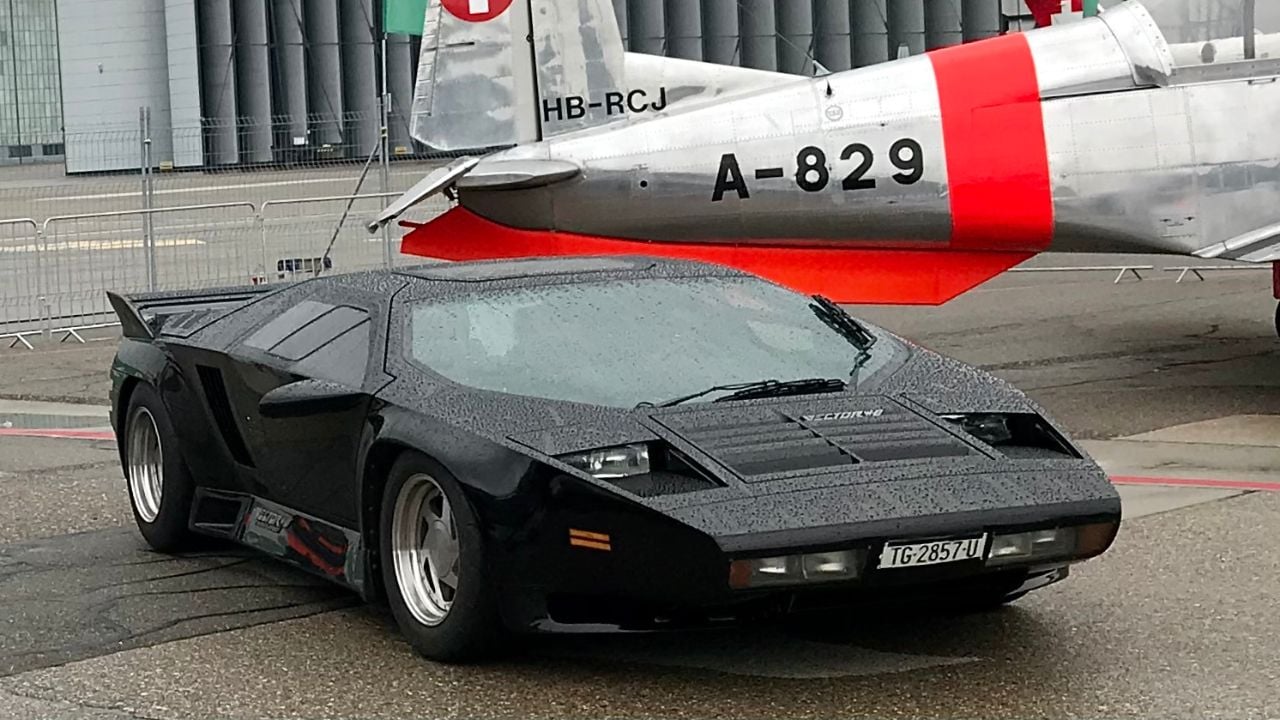
Nothing about the Vector W8 was subtle, and that is exactly why it stands out so strongly in today’s collector market. This was America trying to build a supercar as if aerospace logic mattered more than Italian tradition. The result looked like a fighter jet with license plates and sounded like a dare. Power came from a twin-turbo 360 cubic inch V8, with period claims ranging from 625 to 650 horsepower depending on source and specification, and the whole thing was wrapped in a body that looked more like industrial design than classic beauty. Even the drivetrain felt rebellious, since the W8 used an automatic rather than the kind of gated manual exotic buyers romanticize.
Yet that same refusal to play by accepted rules is exactly what makes the car so desirable now. Vector built just 17 production W8s, though some sources count prototypes separately, which means collectors are not really buying transport or even just performance. They are buying one of the rarest expressions of American excess ever turned into a road car. Hagerty’s early 2026 index pegged the W8 at $989,000, and although one example at Monterey in 2024 hammered at $575,000 before reportedly selling after the auction, the broader market still treats the car as a near-million-dollar object. That feels right. The W8 is not simply rare. It is unrepeatable. There has never been another supercar quite like it from the United States, and collectors have started to value that truth accordingly.
Bugatti EB110

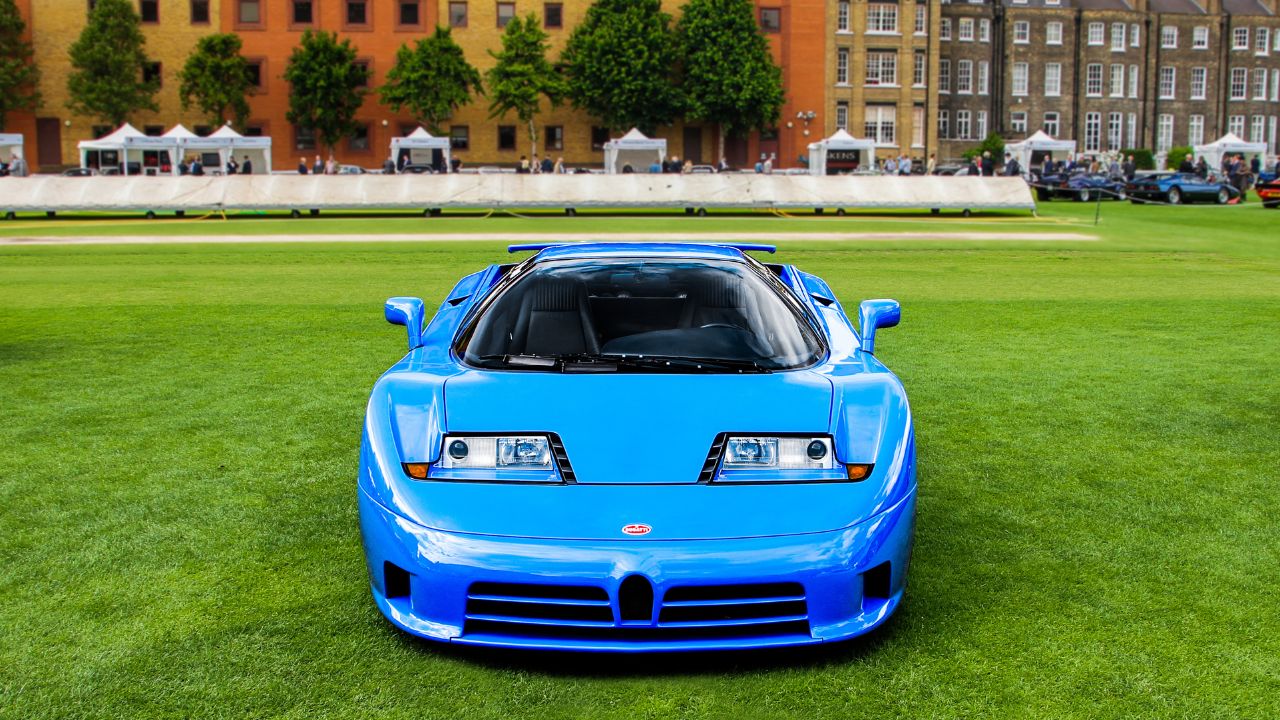
Before Bugatti returned with the Veyron and rewrote the modern hypercar script, the EB110 had already done the hard work of proving that the revived brand meant business. For years it sat in an awkward historical gap. It was too modern to carry the romance of prewar Bugatti and too early to benefit from the halo that later surrounded the Veyron and Chiron. Yet on substance alone, it always deserved far more respect. The EB110 packed a 214 cubic inch quad-turbo V12, all-wheel drive, a six-speed manual, and performance that placed it among the fastest cars in the world. In Super Sport form, output was about 603 to 610 horsepower, and the model’s engineering ambition now looks impressively ahead of its time rather than merely extravagant.
Collector values have followed that reassessment. Hagerty currently places a good EB110 Super Sport around $2.05 million, while a 1993 EB110 Super Sport prototype sold for $2.15 million at RM Sotheby’s Monterey sale in 2024. The bigger headline is that the ceiling is even higher. Another EB110 SS set the current record at $3,167,500. That is not the behavior of a market merely rediscovering an oddity. That is the behavior of a market accepting a genuine landmark. The EB110 is now being priced like the engineering triumph it always was.
Cizeta V16T
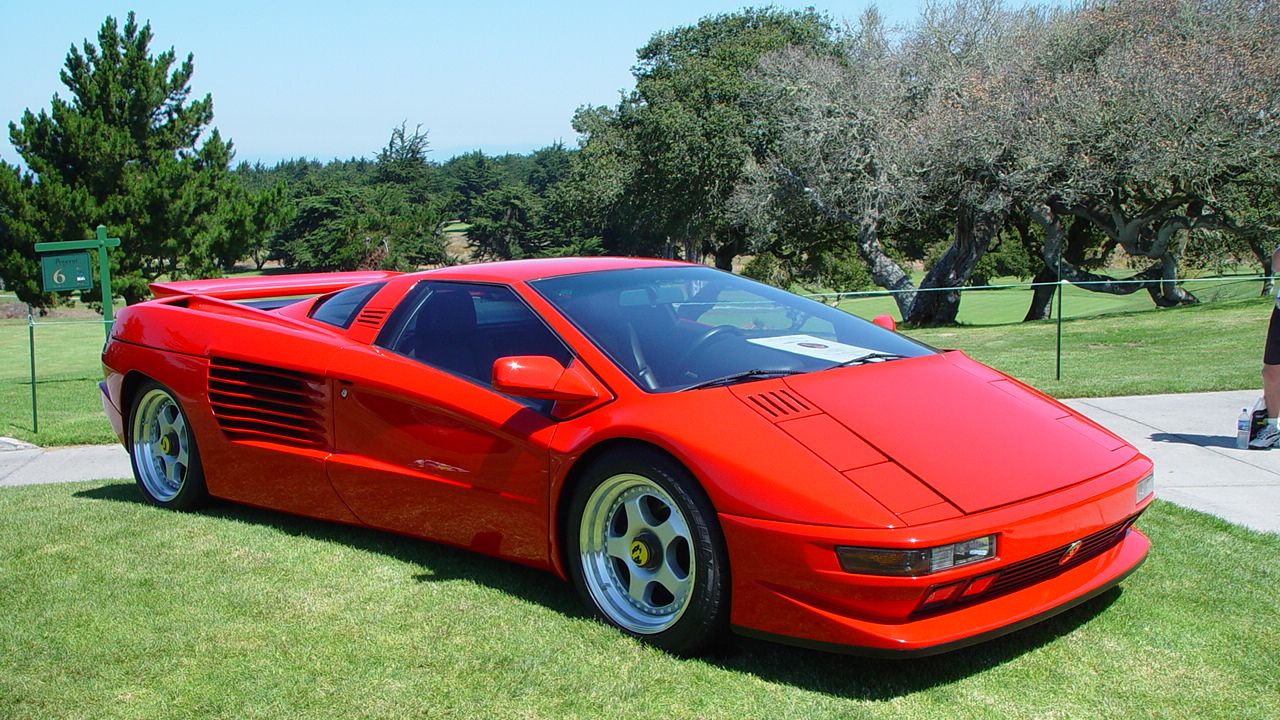
The Cizeta V16T reads like the kind of supercar story somebody would invent after staying up too late with a pile of old Geneva show reports. Former Lamborghini engineer Claudio Zampolli wanted to build his own exotic. Giorgio Moroder backed the project. Marcello Gandini shaped the body. And at the center of the whole thing sat a transverse 366 cubic inch V16, one of the wildest powertrain choices of the era. This was not a rational car, and it was never supposed to be one. It was meant to feel bigger, bolder, and more theatrical than the exotics surrounding it. That ambition also guaranteed tiny production.
Only nine V16Ts were completed, which means the market barely has any opportunities to price the model at all. When it does, the numbers get attention. Classic.com currently shows a market benchmark of $1,363,500 for the V16T, matching the $1,363,500 paid for the original Cizeta Moroder prototype at RM Sotheby’s Arizona sale in 2022. Even a later 1993 production example had already brought $665,000 at the same house in 2021, which helps show how far enthusiasm has moved. The reason is not hard to understand. The V16T combines absurd specification, microscopic production, top-level design pedigree, and one of the strangest origin stories in 1990s supercar history. Cars like that do not stay affordable once the collector market decides they matter. The Cizeta now sits firmly in the category of exotic machines people once talked about as trivia and now chase as trophies.
Isdera Commendatore 112i

If the other cars on this list are rare, the Isdera Commendatore 112i exists on a different level altogether. There was only one. That alone would make it memorable, but the Commendatore earns its place because the car itself was every bit as ambitious as the number built suggests. Developed by Eberhard Schulz as Isdera’s answer to the era’s biggest names, it used a 366 cubic inch Mercedes-Benz M120 V12, a specially adapted six-speed gearbox, active suspension, a remarkably slippery body, and styling so dramatic that even among 1990s supercars it still looks like a concept car that somehow escaped onto the road. Isdera targeted 211 mph, and the entire machine was shaped around speed, low drag, and Le Mans-level intent.
The Commendatore built its legend the old-fashioned way, by being almost impossibly scarce. When it finally resurfaced at RM Sotheby’s Paris sale in 2021, it sold for €1,113,125, or about $1.35 million. For a one-off from a tiny manufacturer, that is not just a healthy result. It is a statement. Collectors were not buying only rarity. They were buying a piece of alternate supercar history, the kind of machine that makes you wonder how different the 1990s might have looked if a few more dreamers had found the money to keep going. Few cars combine rarity, ambition, and value so completely.
Why These 1990s Supercars Command Big Money Now

The most interesting thing about these five cars is not just that they are expensive now. It is why they became expensive. None of them got there by following the safe path. Each one carries some combination of misunderstanding, bad timing, tiny production, technical bravado, or corporate instability. In their own decade, those traits often looked like weaknesses. In today’s collector market, they look like identity. That is a big difference. Buyers at this level do not just want speed or rarity anymore.
They want a story that feels inseparable from the machine itself. The Jaguar delivers redemption. The Vector delivers audacity. The Bugatti delivers overdue respect. The Cizeta delivers beautiful madness. The Isdera delivers the kind of singularity that the industry almost never allows. That is why these cars now command such serious money. They are not just fast and rare. They are distinct, ambitious, and impossible to confuse with anything else from the period. In a collector market that increasingly rewards character as much as specification, that is a very powerful combination.