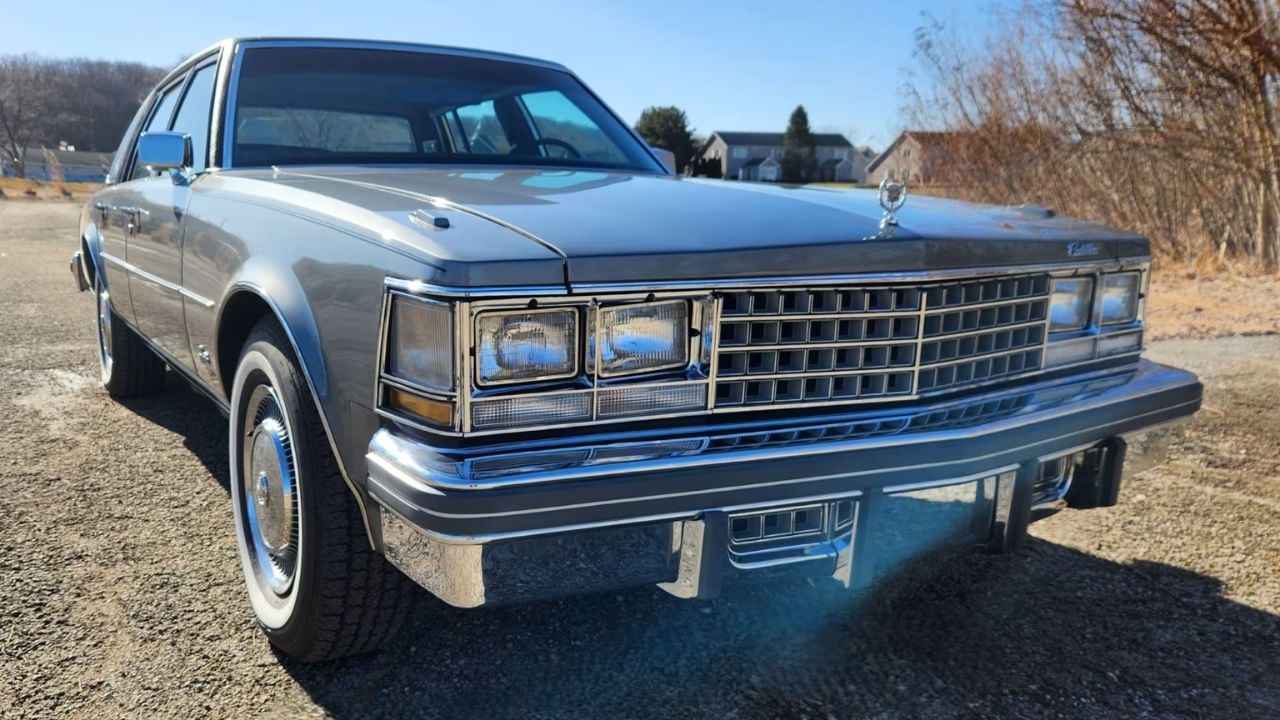
A 1976 Cadillac Seville is headed to Mecum Indy on Friday, May 8, 2026, and it arrives with much more significance than its tidy proportions first suggest. This is not just another preserved 1970s luxury sedan. It is one of the clearest snapshots of the moment Cadillac decided American prestige needed a new shape.
That decision mattered. The old formula of ever-larger luxury cars was starting to feel less secure, and Cadillac knew it. Buyers were noticing European sedans that felt more restrained, more agile, and more modern in their own way. The Seville was Cadillac’s answer, not by abandoning comfort but by repackaging it in a smarter, more deliberate form.
That is what still makes the car interesting now. The Seville did not arrive as a stripped-down compromise or a timid experiment. It arrived as a serious luxury statement, just one that happened to be smaller, cleaner, and more disciplined than the Cadillacs many people thought they already understood.
The Mecum example fits that story well. It captures the Seville at the point where Cadillac was trying to prove that refinement, prestige, and confidence did not have to come in the biggest body on the road.
A New Kind of Cadillac for a Changing Luxury Market
When Cadillac launched the Seville, it was making a deliberate break from its own habits. The car was introduced as a new range-topping model, but it did not rely on sheer bulk to make that point. Instead, it used cleaner proportions, a more formal shape, and a calmer kind of visual authority to suggest a different future for the brand.
That shift was the whole point. The Seville still looked unmistakably Cadillac, but it traded chrome-heavy excess for something more measured and more contemporary. In period context, that was a meaningful move. Cadillac was no longer simply defending its old idea of luxury. It was trying to redefine it.
The 1976 car remains one of the clearest expressions of that strategy. It has presence, but it is disciplined presence. It looks expensive without trying too hard, and that restraint is a big part of why the design still reads so well today.
Smooth V-8 Power and the Right Kind of Character
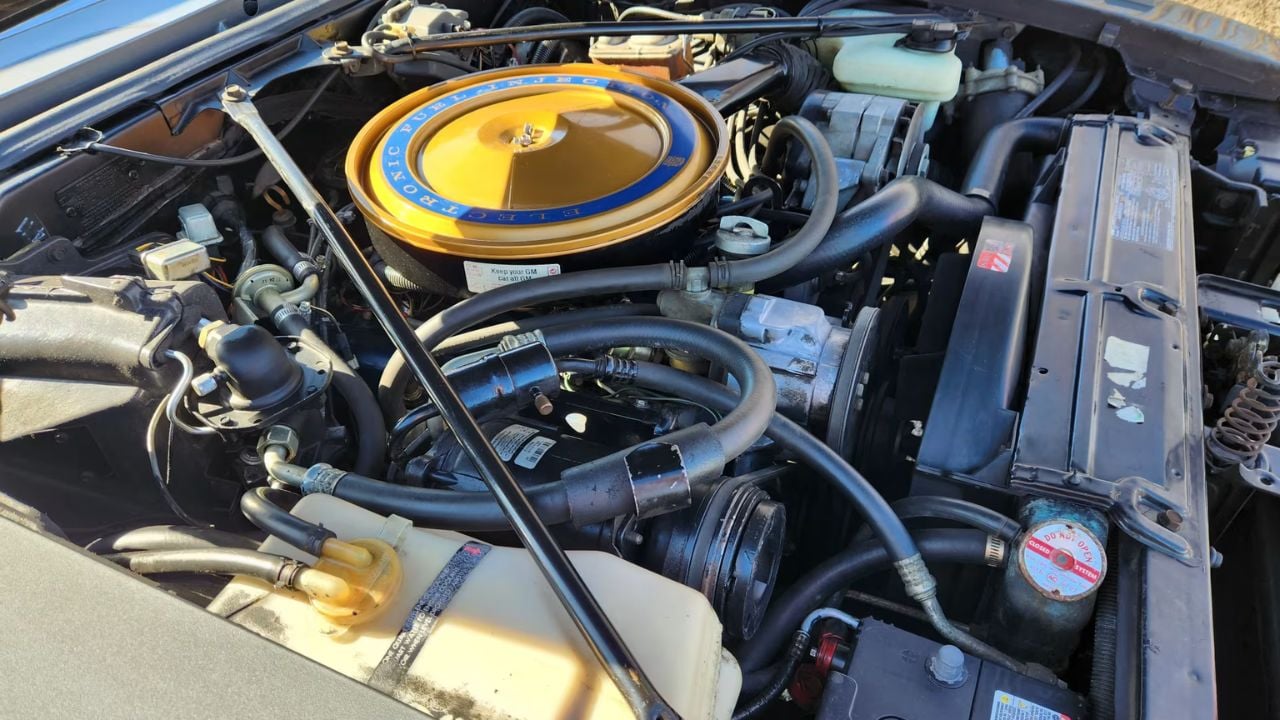
This Mecum Indy Seville is listed as Lot J120 and comes with a fuel-injected 5.7L/180 HP V-8 and a 3-speed automatic, which is exactly the kind of specification that suits the car’s personality. The engine was never about turning the Seville into a performance sedan. It was about giving the car smooth, quiet torque and the sort of relaxed power delivery luxury buyers actually used.
That matters because the Seville’s appeal was never rooted in aggression. It was built to cruise, to feel composed on the highway, and to deliver its prestige without strain. In that sense, the powertrain fits the design perfectly. Nothing about the package is frantic. Everything is meant to feel settled.
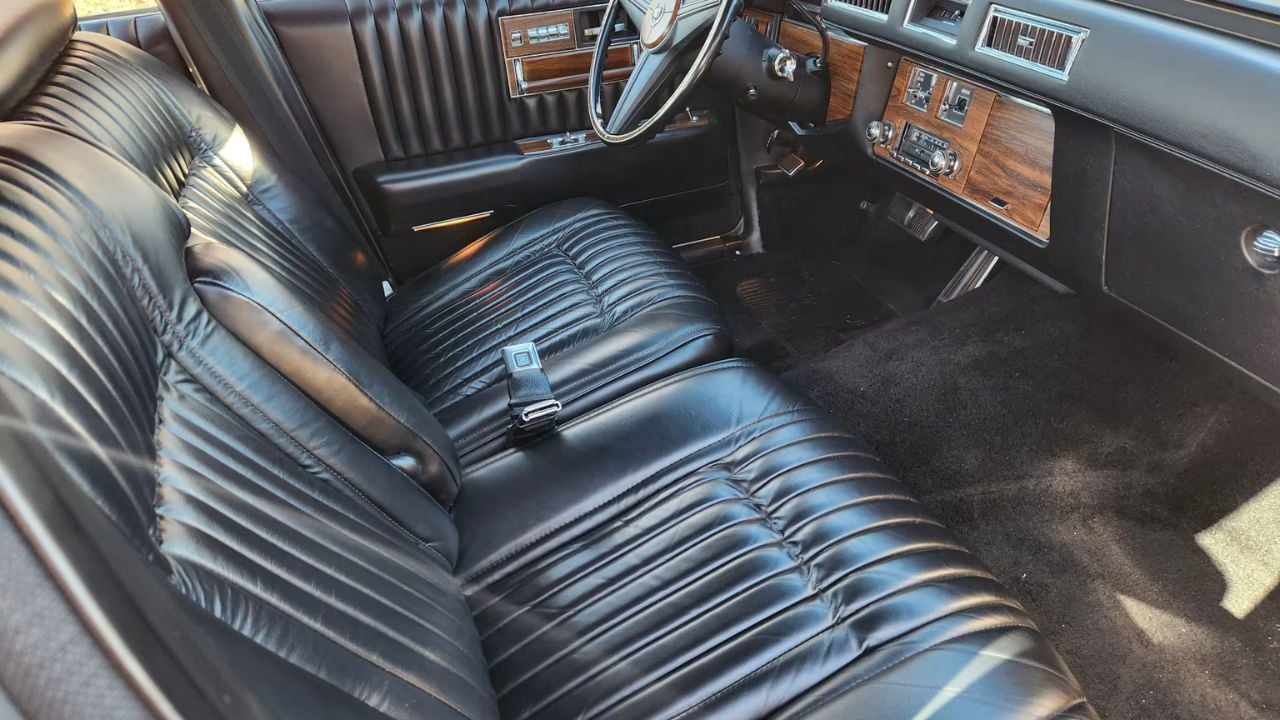
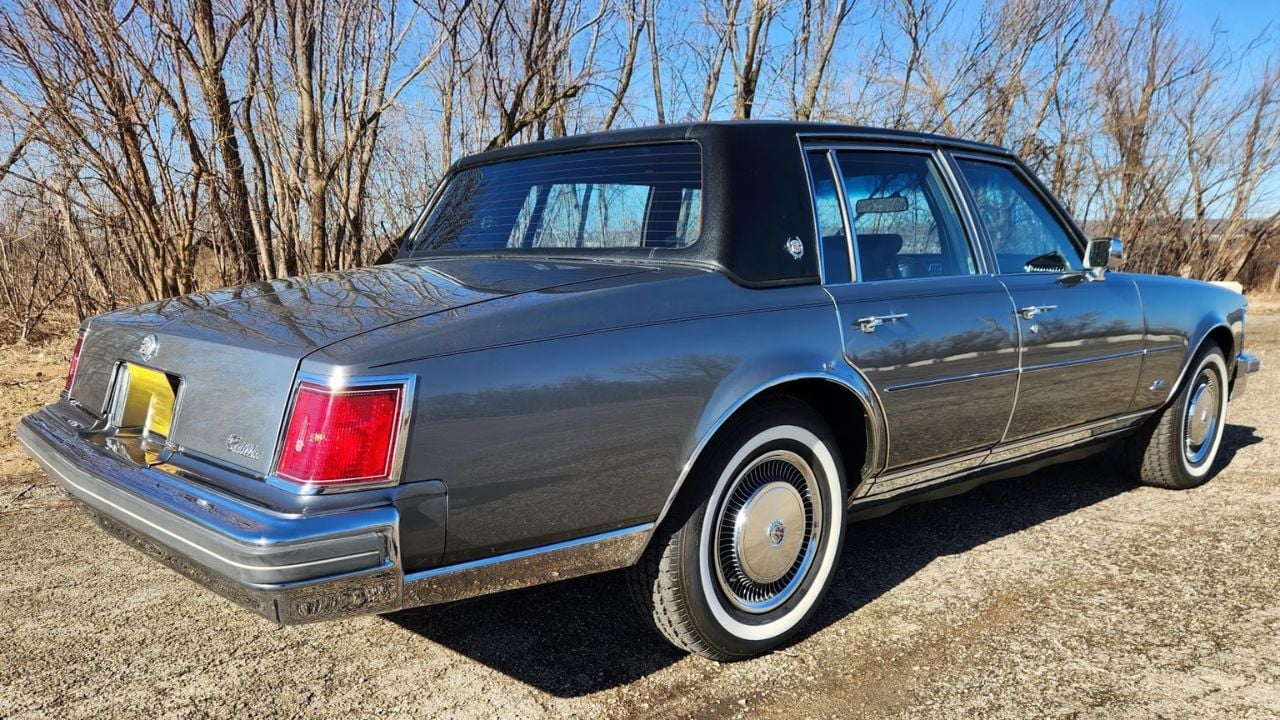
The rest of this example reinforces that impression. Mecum notes a black leather interior, automatic climate control, cruise control, power-adjustable front seats, power windows and locks, and the black padded vinyl roof that helps give the car its distinctly formal 1970s look. It feels very much like a Seville should.
Why the Seville Still Matters to Collectors
The 1976 Seville lives in an especially interesting place in the collector world. It is not a giant finned Cadillac from the brand’s most flamboyant years, and it is not a later front-drive Seville with 1980s excess built into every surface. It sits at the pivot point, the moment when Cadillac tried to stay Cadillac while also responding to a changing market.
That gives the car a different kind of historical value. It represents a strategic reset as much as a luxury sedan. For collectors who enjoy transitional cars, that matters a great deal. The Seville is not important because it was the biggest or the fastest thing Cadillac built. It is important because it showed how the brand was trying to evolve.
At Mecum Indy, that should give this example real appeal. It offers preserved 1970s Cadillac atmosphere, a well-equipped luxury cabin, and a direct connection to one of the brand’s most consequential shifts in direction. That makes it more than just an old luxury sedan. It makes it a very interesting piece of American automotive history.