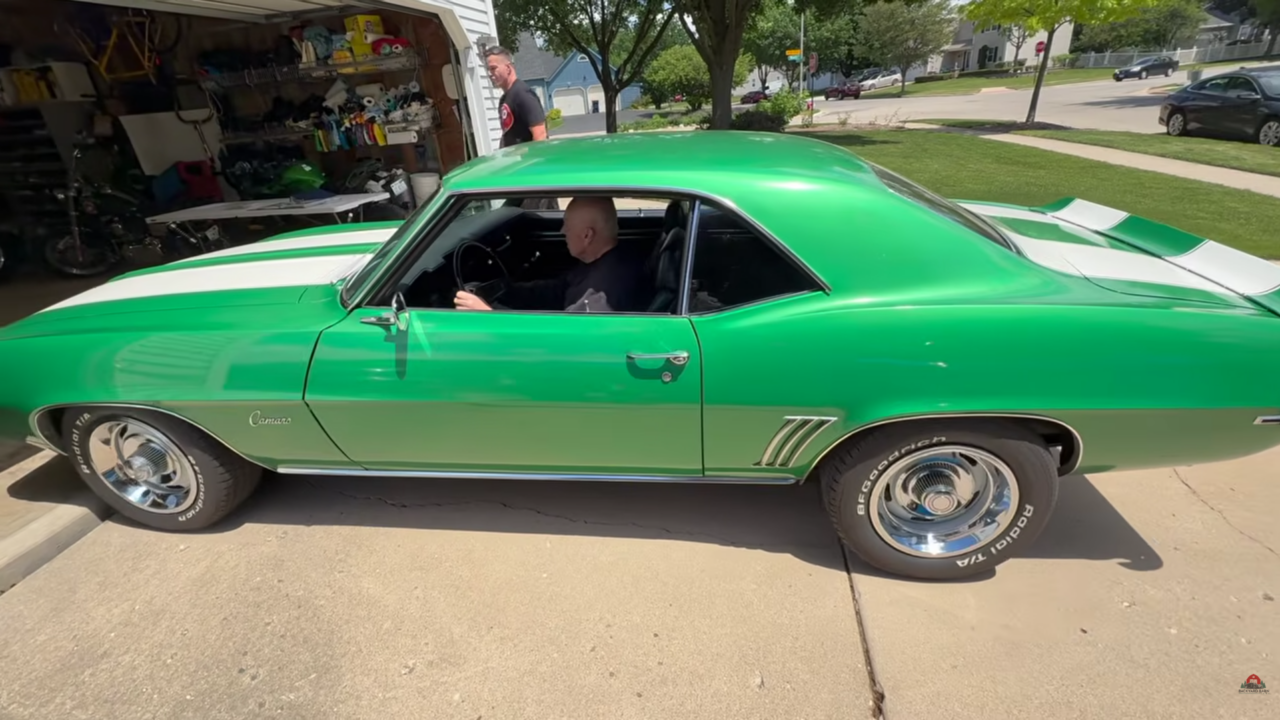
A remarkably preserved 1969 Chevrolet Camaro Z/28 has surfaced in Chicago, and it is exactly the kind of car muscle enthusiasts dream about finding. Featured by Backyard Barn Finds, this Rally Green survivor combines one-owner history, factory paperwork, and decades of drag racing memories.
The car was purchased new in April 1969 by Jim, who was only 16 at the time. Because he was too young to sign the paperwork, his mother handled the financing while he paid for the car himself.
What makes this Camaro special is not simply that it is a real Z/28. It is the condition, documentation, originality, and personal history that elevate it far beyond the usual barn-find story.
This car spent its early life doing exactly what many young owners did with muscle cars in the late 1960s and early 1970s. It raced, wore slicks, ran headers, and still somehow survived with most of its factory identity intact.
A One-Owner Z/28 With Real Drag History
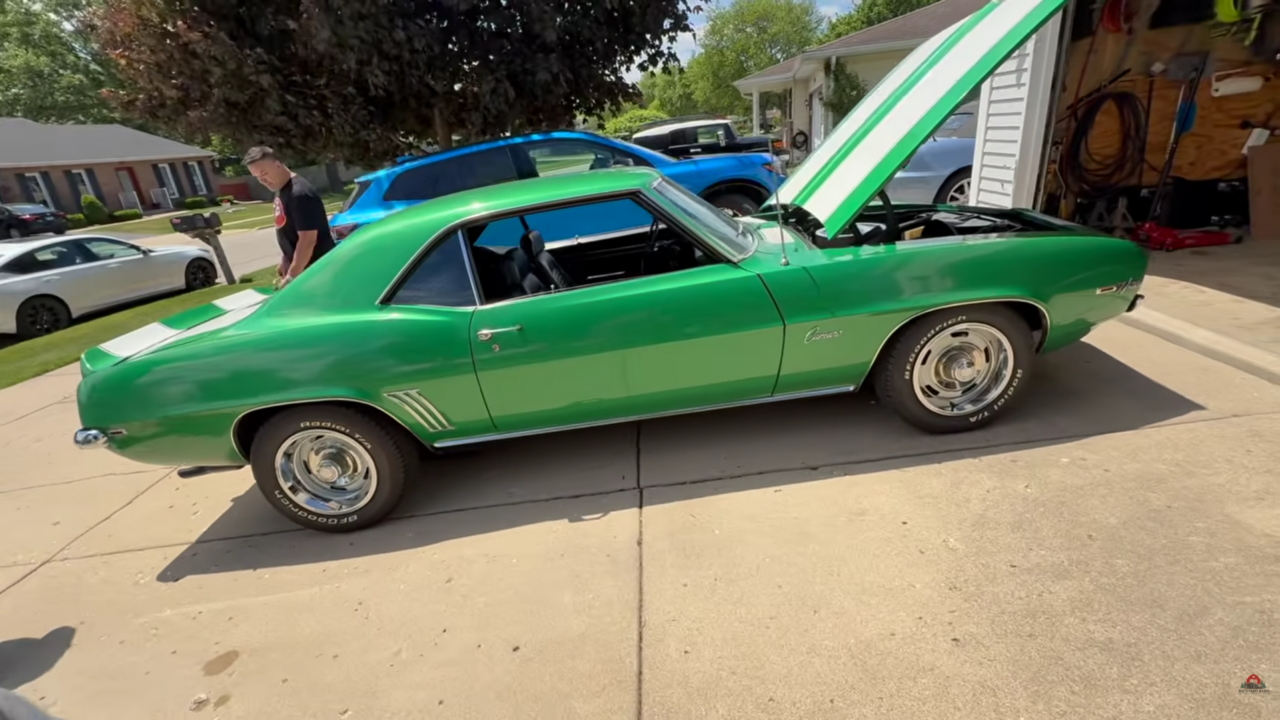
Jim bought the Camaro after his brother spotted it sitting on the showroom floor at Latoff Chevrolet. The car was finished in Rally Green with a black standard interior, making it one of the most eye-catching first-generation Camaro combinations.
He originally wanted a Shelby GT500, but the Z/28 quickly changed his mind. From that point on, green became his favorite color, and the Camaro became the car that defined his youth.
The car earned the nickname “Green Bean” during its drag-racing days. Jim still has more than 120 time slips proving the Camaro spent plenty of time at the strip.
According to him, the car ran in the 14-second range when stock. With slicks, headers, gearing, and Chevrolet’s off-road camshaft, it eventually became a consistent low-13-second car, with some slips showing 12-second passes.
The Originality Is The Real Story
Despite its racing past, the Camaro remains shockingly original. The paint is largely factory Rally Green, with only a small repaired area from an early accident involving a tree during a street race.
The car still retains its original window sticker, Protect-O-Plate, dealer paperwork, and ownership history. Even the dealer-installed undercoating remains visible, including under the hood.
Backyard Barn Finds inspected the car closely and verified several important numbers-matching components. The DZ-stamped 302 small-block, original-style engine stampings, correct rear-end housing, factory trim details, and early build characteristics all lined up with the car’s paperwork.
Small details tell the biggest story on survivor cars like this. Factory paint marks, original interior stitching, old trim pieces, and untouched door jambs show exactly how Chevrolet built these cars before restorers started trying to recreate them.
A Road-Racing Camaro That Lived At The Drag Strip
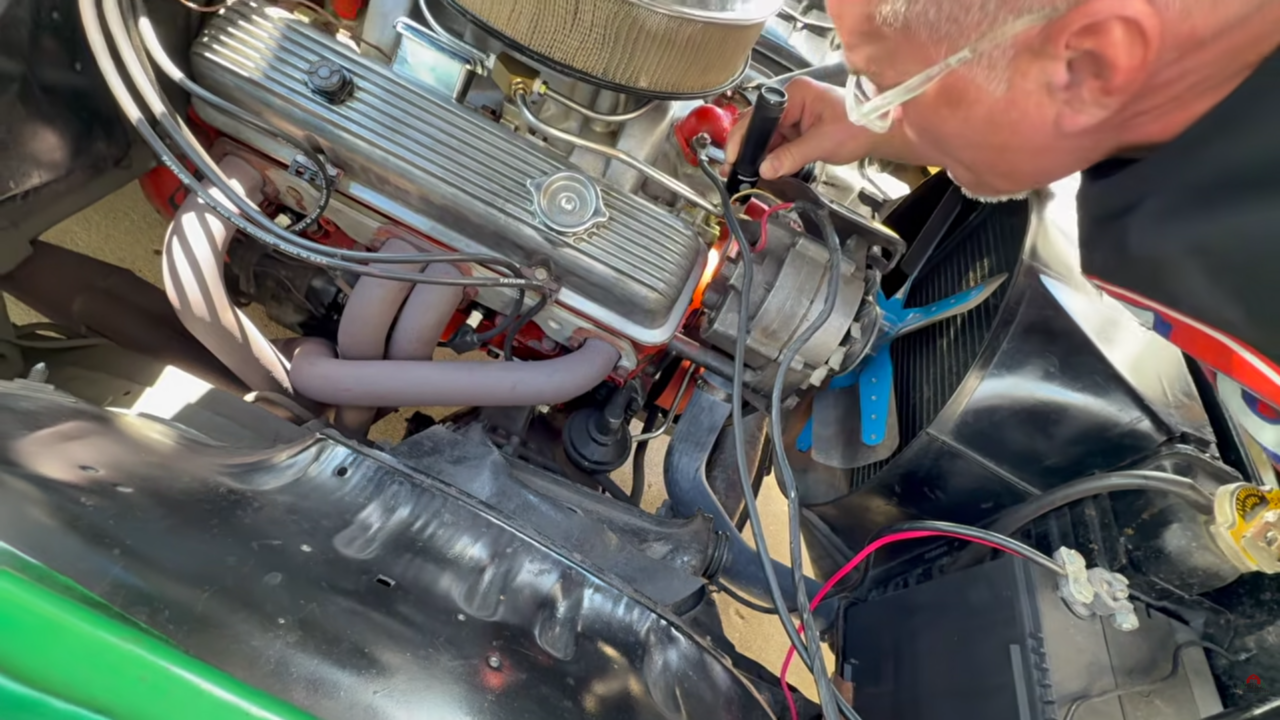
The Z/28 was originally created for SCCA Trans-Am racing, not drag racing. Its high-revving 302-cubic-inch small-block, four-speed manual transmission, and handling-focused hardware made it one of Chevrolet’s sharpest driver’s cars of the era.
That did not stop owners from taking them to the quarter-mile. With the right gearing and a driver willing to keep the engine screaming, a Z/28 could embarrass plenty of larger-displacement rivals.
Jim did exactly that. He raced big-block cars, small-block street machines, Mustangs, Corvettes, and even a Yenko Nova, building a local reputation around the little 302’s surprising speed.
The Camaro still carries reminders of that era. The original bellhousing was swapped for a scatter shield, a 4.88 gear replaced the factory 3.73 setup, and period drag parts like Cragar wheels remain with the car.
A Survivor That Should Not Exist This Clean
Many drag cars from this era were used hard, modified heavily, wrecked, or left to rot. This Z/28 somehow avoided that fate while still being enjoyed exactly as Chevrolet intended.
The interior remains especially impressive. Original seat covers, door panels, headliner, carpet details, and dashboard wear all show decades of age without losing the car’s authenticity.
Even the flaws add character. A lifted dash pad from an old tachometer mount, black paint touch-ups in the engine bay, and small racing-era modifications tell the story of a teenager who loved his car and kept it alive.
That is what makes this Camaro so compelling. It is not a sterile museum piece or an over-restored show car pretending to have history.
It is a real 1969 Z/28 that raced, survived, and kept its soul. After more than five decades, finding one this honest feels almost impossible.