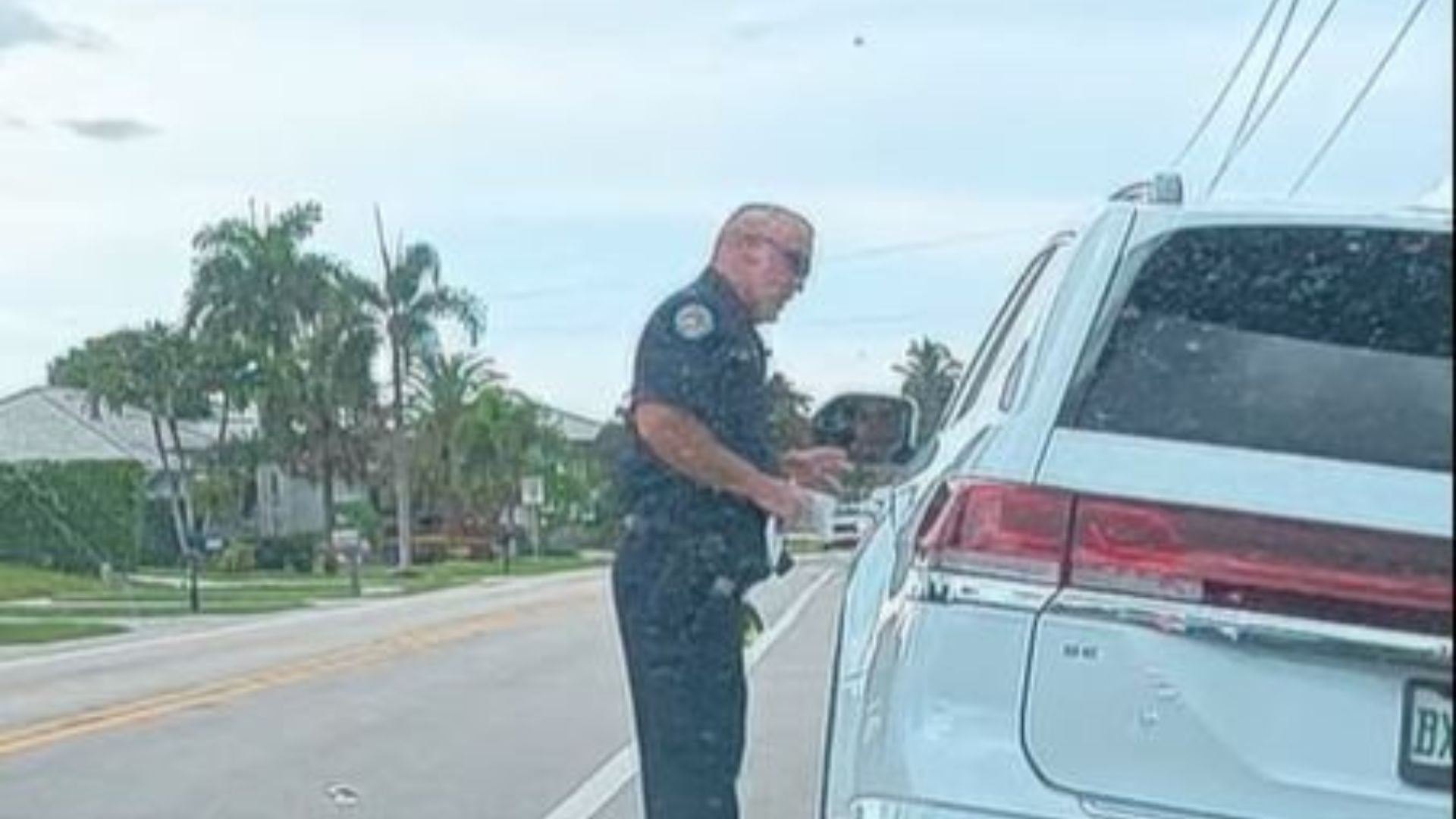
A routine traffic stop in Marco Island quickly turned into a conversation that has captured the attention of thousands online after a 19-year-old driver offered an emotional explanation for why she was traveling 61 mph in a 35 mph zone.
A video released by the Marco Island Police Department shows the young woman telling the officer she was rushing to help her grandmother, who she initially said had suffered a heart attack.
At first, the encounter appeared headed toward a warning. The officer listened patiently, asked several follow-up questions, and appeared sympathetic to what he believed might be a legitimate medical emergency.
However, as the driver’s explanation began to change, he decided to review her driving history before making a final decision. What he found transformed what looked like a routine warning into a lesson about repeated speeding offenses and personal responsibility.
Her Explanation Began To Change
The video begins with the officer greeting the driver at her window. Before he could explain why he had stopped her, she immediately said her grandmother had suffered a heart attack about 30 minutes earlier.
She said she was on her way to pick up her grandmother and drive her to a specialist in Fort Myers, apologizing for speeding and offering to show the officer what she described as credentials.
When the officer asked whether 911 had been called, the driver said EMS had responded but claimed her grandmother wanted her, not an ambulance, to provide transportation.
That answer prompted additional questions, and it wasn’t long before the officer realized the explanation wasn’t quite as straightforward as it first appeared.
Moments later, the driver clarified that her grandmother had not actually suffered a heart attack but instead had an ongoing heart condition monitored by a device that alerted family members when something was wrong.
Before returning to his patrol car, the officer told her the speed limit was 35 mph and that he had recorded her traveling at 61 mph. Once inside his cruiser, he noted that “the story’s changing a bit” and decided to review her record.
Nine Previous Speeding Stops Ended Any Chance of a Warning
When the officer returned, he told the driver he had seriously considered letting her go with a warning. Her driving history changed his mind.
The officer explained that the 19-year-old had already been stopped for speeding nine times despite having only been driving for a relatively short period. He also noted that her license had previously been suspended for 30 days because of her driving history.
He then explained that she had already used all three Basic Driver Improvement courses available to Florida drivers.
“You only get three of those in a lifetime, and it looks like you’ve used yours up,” the officer told her.
Given her record, he explained, another warning was unlikely to change her driving habits. He then issued a citation for driving 61 mph in a 35 mph zone over the Jolly Bridge.
Rather than simply handing her the citation and walking away, the officer reminded the young driver that she had her whole life ahead of her and warned that continued speeding could eventually cost her the privilege of driving.
He also questioned whether the situation justified such a high speed. If her grandmother’s condition wasn’t serious enough to require ambulance transportation, he said, it wasn’t serious enough to justify driving 26 mph over the limit.
Viewers Overwhelmingly Sided With the Officer
After the Marco Island Police Department released the body camera video, many viewers praised the officer for remaining calm, asking follow-up questions, and clearly explaining why the driver’s record made another warning inappropriate.
Others were skeptical of the changing story. One commenter wrote, “How she having a heart attack but able to wait on you to give her a ride to the ER. Lmao.” Another reacted to the driver’s history by writing, “Dayum. 9. She needs to be racing cars at this point.”
Several viewers also debated whether calling 911 would have been safer than waiting for a family member. Some noted the high cost of ambulance transportation, while others argued that paramedics can begin treatment before a patient reaches the hospital.
Regardless of whether the driver’s explanation was truthful, most commenters focused on the same concern: being stopped for speeding nine times by age 19 suggested a pattern that another warning was unlikely to correct.
Whether viewers agreed with the citation or not, many pointed to one thing the officer said before ending the stop. Rather than focusing on the ticket itself, he reminded the young driver that she had her whole life ahead of her and urged her to slow down before repeated speeding cost her far more than another citation.