
It’s easy to focus on rare cars that were always meant to be rare—low-volume halo models, collector specials, or vehicles whose scarcity was baked in from the start. Those cars were designed to exist in limited numbers, often as much for marketing as for engineering.
For a change of pace, let’s look at something different: cars that were never intended to be scarce by design. These were real production vehicles, built to sell, support their brands, and find a place in the market. Their rarity today isn’t the result of exclusivity or planned limitation, but of external forces that disrupted the pipeline—financial collapse, regulatory pressure, corporate missteps, or economic timing beyond anyone’s control.
Rarity here isn’t measured by how few were built, but by how sharply production diverged from what was originally planned.
They didn’t chase scarcity. Scarcity found them.
Tucker 48

The Tucker 48 is the clearest example of a car made rare by forces beyond the vehicle itself. Conceived in the late 1940s as a modern sedan intended for large-scale production, it was intended to challenge Detroit with advanced safety concepts, unconventional engineering, and bold design.
Production plans unraveled after a high-profile SEC investigation into the company’s financing practices, which froze capital, halted momentum, and eroded public confidence. Although Preston Tucker was acquitted in January 1950, the legal battle and its costs effectively ended the company’s chance to scale production, the legal battle exhausted the company’s resources before production could scale. The Tucker didn’t become rare because it failed as a car—it became rare because the business was stopped mid-stride.
Bricklin SV-1

The Bricklin SV-1 was envisioned as a modern, safety-focused sports car for real customers, not a collector novelty. Built in the mid-1970s, it featured integrated safety structures, energy-absorbing bumpers, and dramatic gull-wing doors, paired with V8 power sourced from AMC in 1974 and Ford (Windsor) for 1975–76.
Ambitious production goals relied heavily on government funding and aggressive expansion plans. When political support wavered and costs spiraled, the company collapsed before it could stabilize manufacturing. The SV-1’s rarity today reflects financial and political realities, not an intent to build a scarce or exclusive car.
AMC Eagle SX/4

Introduced for the 1981 model year, the AMC Eagle SX/4 represented the most performance-oriented expression of AMC’s ahead-of-its-time Eagle platform. Unlike the more common wagon and sedan variants, the SX/4 combined a compact two-door hatchback body with full-time all-wheel drive—an unusual and forward-thinking configuration for the early 1980s.
The SX/4 was not intended to be a niche curiosity. It was AMC’s attempt to expand the Eagle concept beyond utility and into something more youthful and sporty, offering car-like dynamics with all-weather capability years before the modern crossover existed. But AMC’s limited resources, shrinking dealer network, and ongoing financial instability prevented the idea from being fully developed or properly marketed. When AMC was absorbed by Chrysler, the Eagle line disappeared entirely. The SX/4’s rarity reflects what happened after launch, not initial availability.
Cadillac Allanté

Cadillac introduced the Allanté as a statement—an American luxury roadster designed to take on European rivals. Bodies styled and built by Pininfarina in Italy were flown to Detroit for final assembly in an expensive transatlantic process that quickly proved unsustainable.
That logistics experiment drove costs sky-high and pricing beyond what the market would tolerate. Later models benefited from Cadillac’s Northstar V8, but by then the business model had already collapsed. The Allanté’s short production run reflects ambition undermined by execution.
Merkur XR4Ti

Ford’s Merkur experiment aimed to bring European performance sensibilities to North America under a dedicated sub-brand. The XR4Ti offered turbocharged power, rear-wheel drive, and unconventional styling that set it apart from domestic competitors.
Despite capable performance, Merkur struggled with brand identity, weak dealer support, and unfavorable exchange rates that inflated prices. Without clear positioning or sustained marketing, the brand failed to gain traction. The XR4Ti’s scarcity stems from strategic missteps rather than niche intent.
Buick Reatta

The Reatta was Buick’s attempt at a modern halo car—sleek, technologically advanced, and built in a specialized Craft Centre. It offered solid build quality and distinctive design, but its front-wheel-drive layout and comfort-oriented tuning limited enthusiast appeal.
Pricing placed it uncomfortably close to more prestigious alternatives, leaving buyers unsure of its purpose. The Reatta wasn’t poorly executed; it was poorly positioned. Its rarity today reflects market confusion, not deliberate limitation.
Porsche 914/6

While the Porsche 914 sold well overall, the six-cylinder 914/6 tells a different story. Intended as a higher-performance variant using Porsche’s 2.0-liter Type 901/3 flat-six, derived from the 1967–1969 911T, it arrived priced too close to Porsche’s flagship model.
Internal competition sealed its fate. Buyers either stepped up to a 911 or opted for the cheaper four-cylinder 914. The 914/6 became rare not by design, but because Porsche’s own lineup squeezed it out.
Plymouth Prowler
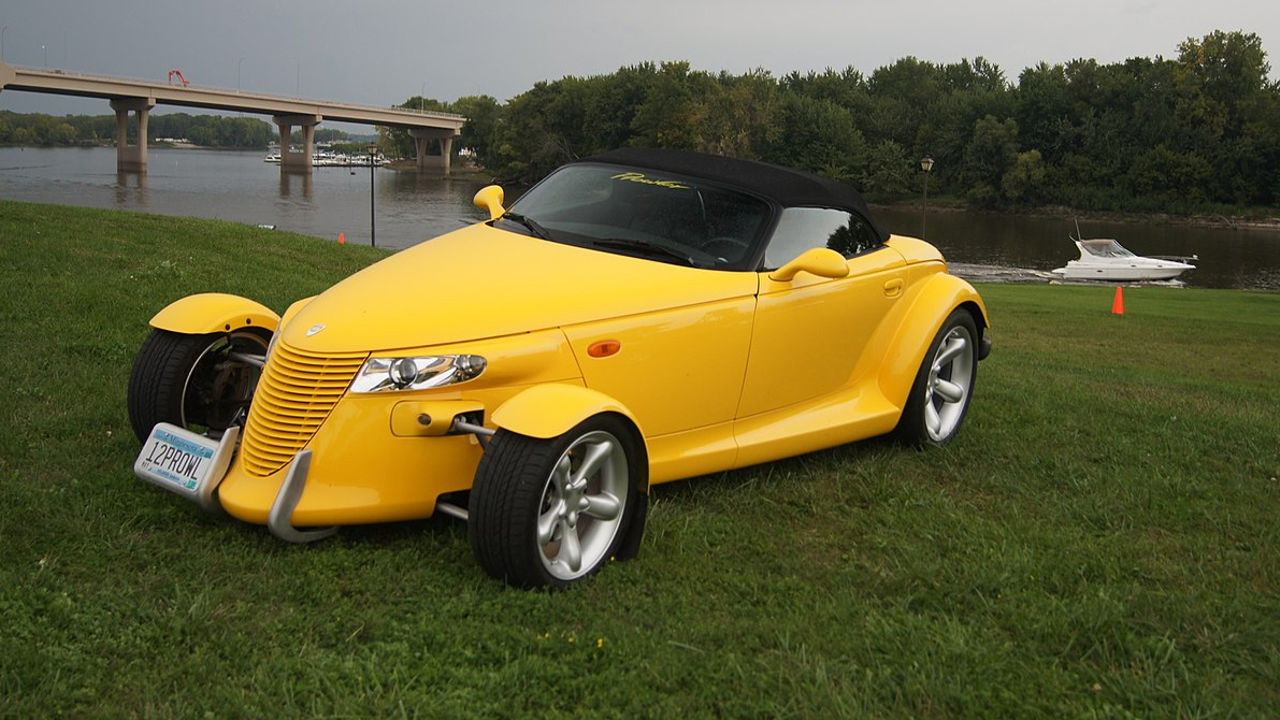
The Prowler was Chrysler’s bold effort to bring concept-car styling directly to production. Aluminum construction and dramatic retro design made it visually unforgettable.
What limited its success was a mismatch between appearance and execution. Enthusiasts expected a V8 and manual transmission but found a V6 paired exclusively with an automatic. The disconnect narrowed the audience, keeping production far below plan.
Mazda Eunos Cosmo

The Eunos Cosmo was Mazda’s technological flagship during Japan’s bubble era. Sold only in Japan, it offered advanced electronics, luxury features, and the only production triple-rotor rotary engine ever offered in a production road car (Mazda’s 20B-REW).
That ambition came at a cost. High complexity, premium pricing, and the collapse of Japan’s economy sharply curtailed demand. Mazda intended the Cosmo to elevate the brand, but economic reality shortened its run.
Jensen Interceptor FF
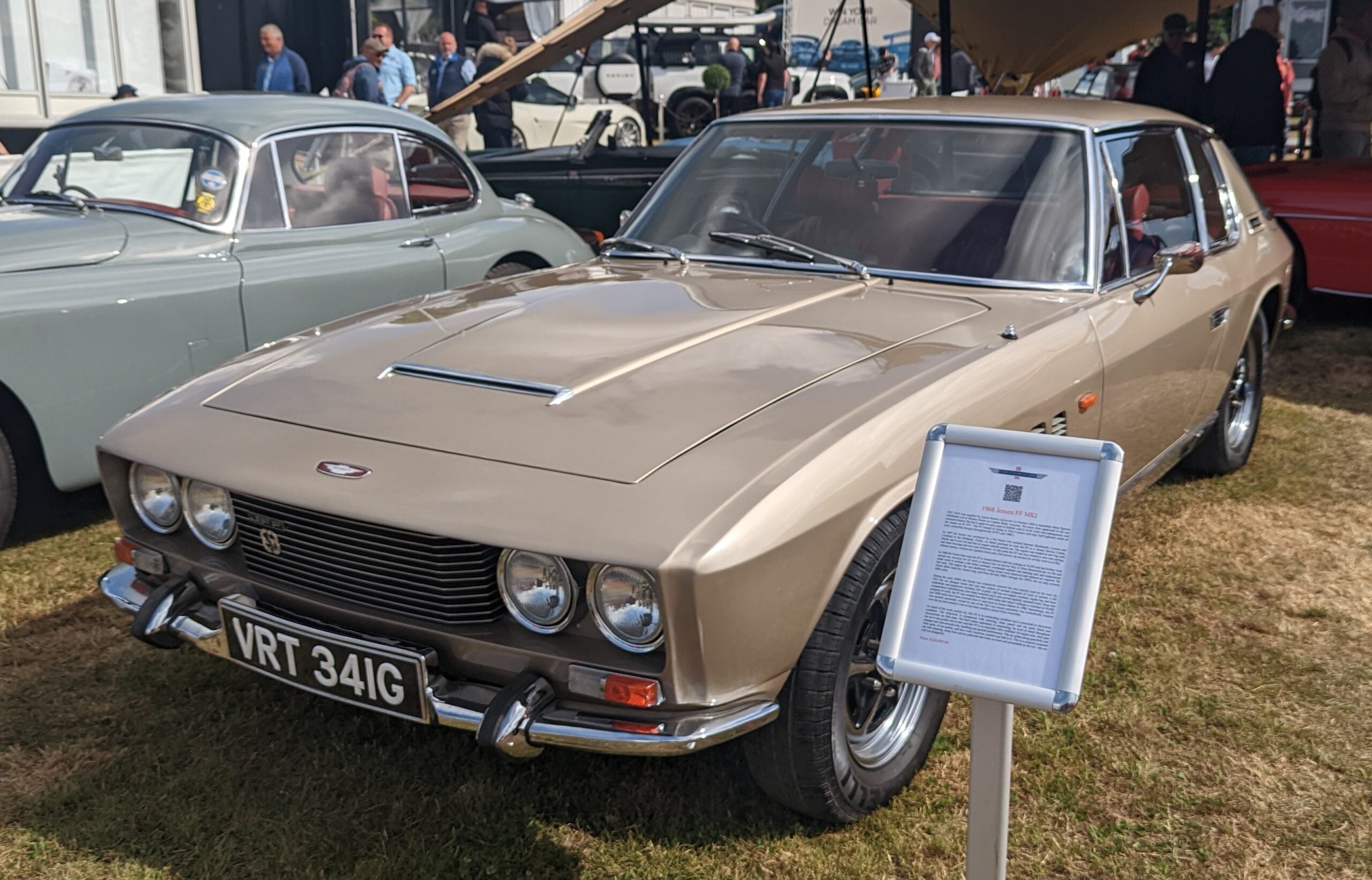
The Interceptor FF was decades ahead of its time. It combined full-time all-wheel drive with an early mechanical anti-lock braking system (Dunlop Maxaret).—technologies rarely seen together in production cars of the era.
That sophistication proved expensive and difficult to support. Added cost, complexity, and right-hand-drive-only configuration limited its reach, particularly in export markets. The FF wasn’t meant to be rare—it was simply too advanced for widespread adoption at the time.
Saab 9-5 Aero (Manual)

The Saab 9-5 Aero represented the brand’s performance-focused executive sedan—turbocharged, understated, and tuned for real-world drivability. Manual-transmission Aero examples offered an increasingly rare alternative as the market shifted toward automatics.
Its scarcity is tied directly to Saab’s decline. As financial pressures mounted and options were trimmed, production narrowed. The brand’s eventual collapse sealed the Aero’s fate. Its rarity reflects a company running out of time, not ideas.
Mazda Millenia S

Mazda positioned the Millenia as a near-luxury sedan, but the Millenia S took an unconventional path. Instead of a traditional V8, it used a supercharged Miller-cycle V6, emphasizing smoothness and efficiency through advanced engineering.
The approach was bold but misunderstood. Higher costs, unfamiliar technology, and Mazda’s mainstream brand image limited acceptance. The Millenia S wasn’t rare by design—it arrived before buyers were ready to understand it.
Peugeot 405 Mi16 (North America)
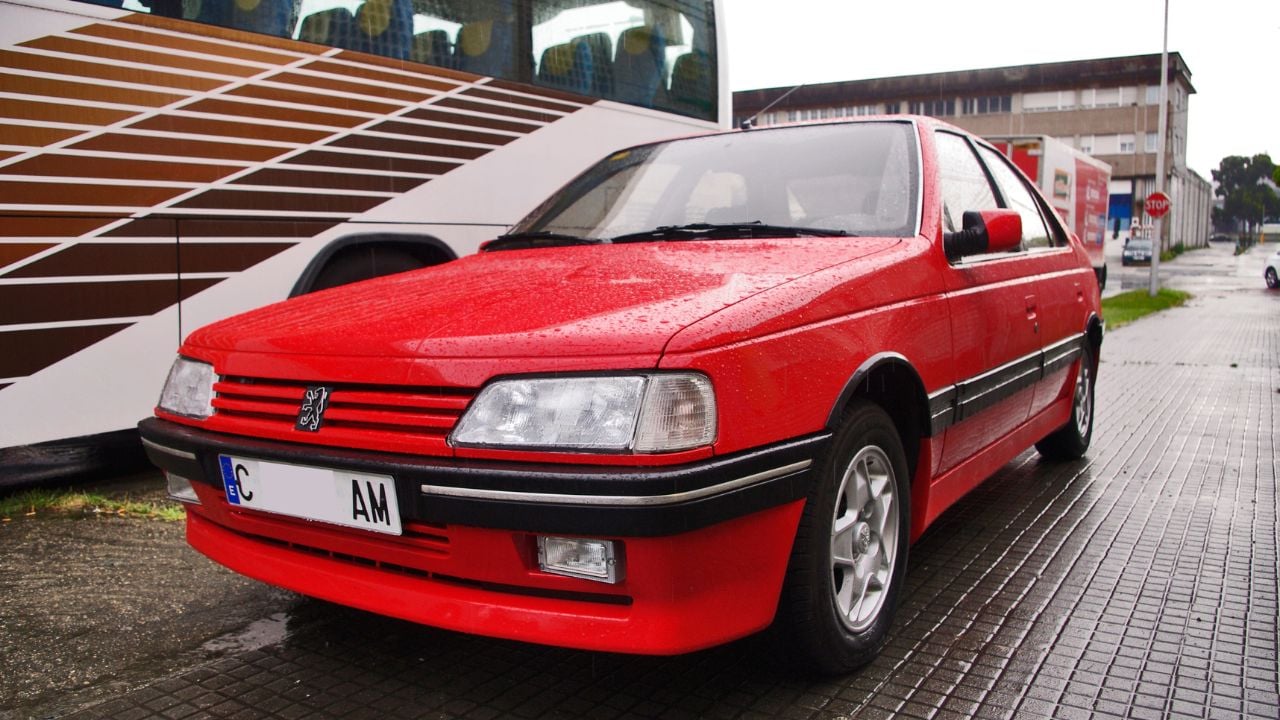
The 405 Mi16 was meant to anchor Peugeot’s performance image in the U.S. market. With sharp handling and a high-revving engine, it earned praise overseas and arrived with real intent.
What intervened was a corporate retreat. Regulatory challenges and declining sales led Peugeot exited the U.S. market in the early 1990s, cutting short the 405 Mi16’s already-limited presence here, abruptly ending the car’s presence. Its scarcity in the U.S. reflects brand exit, not consumer rejection.
Volkswagen Phaeton

The Phaeton represents one of Volkswagen’s most ambitious engineering efforts. Designed to rival flagship luxury sedans, it featured exceptional build quality, advanced climate systems, and engines ranging up to a W12 in certain markets.
Its challenge was perception. Buyers struggled to reconcile ultra-luxury pricing with a Volkswagen badge, regardless of the engineering underneath. The Phaeton became rare not because it was limited, but because the market rejected the idea behind it.
Oldsmobile Aurora (First Generation)
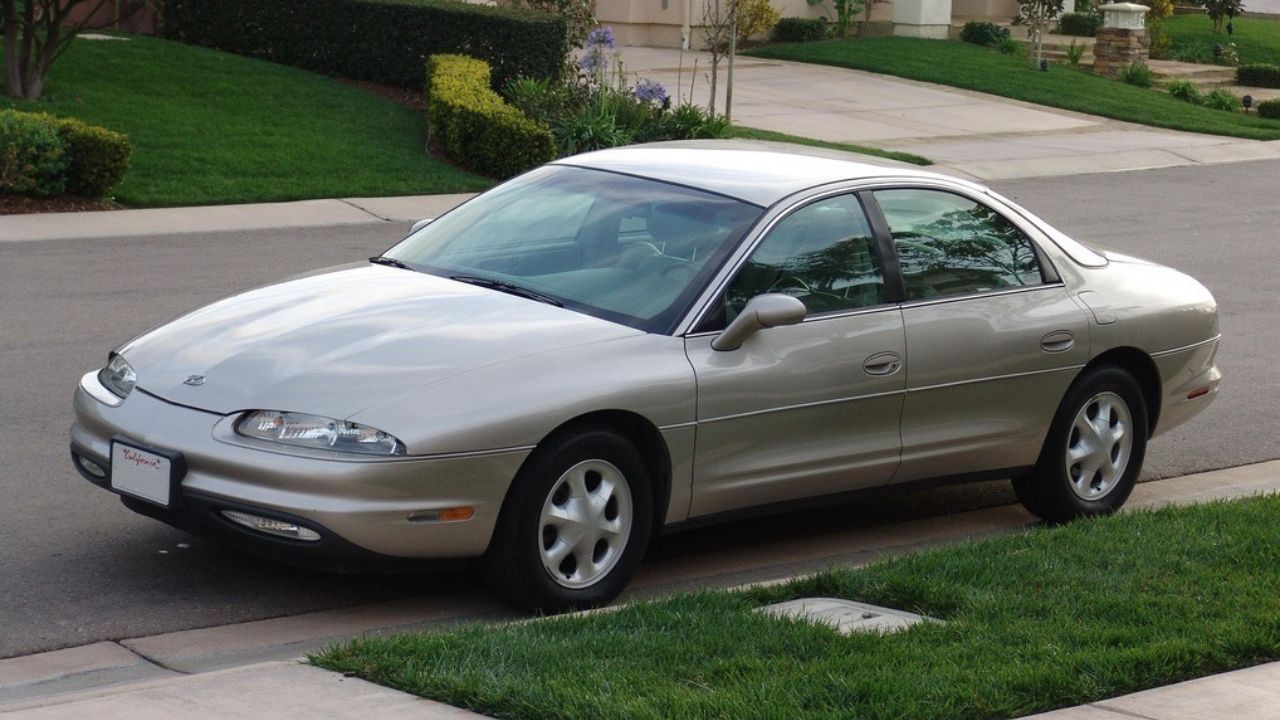
The first-generation Aurora was intended to redefine Oldsmobile. With bold styling, a distinctive interior, and a V8 based on Cadillac’s Northstar architecture (Oldsmobile L47), it marked a sharp break from the brand’s past.
Despite strong reviews and competitive performance, the Aurora couldn’t overcome Oldsmobile’s broader decline. As the brand lost relevance and was eventually discontinued, the car’s lifecycle was cut short. Its rarity today reflects the collapse of the marque it was built to save.
The Legacy of Scarcity

What unites these cars isn’t performance, prestige, or exclusivity. It’s divergence—between what manufacturers planned and what reality allowed.
Each was built with genuine production intent. Each was reshaped, limited, or ended by forces outside the product itself. Their scarcity isn’t a badge of perfection, but a record of ambition meeting circumstance—and that is what makes them worth remembering.