Three-cylinder engines have been around for decades, often found in economy cars or early two-stroke models, such as the original Saabs. Today, they serve a new purpose. With fewer moving parts than a traditional four-cylinder engine, they often deliver better fuel economy and lower emissions, all while maintaining a light and nimble design.
While some might question their place in performance cars, recent models have shown just how much fun you can have with only three cylinders. Engineers have pushed the limits of what these compact engines can do, and the results are surprising in the best way.
From hot hatches to oddballs, these machines show what a clever little engine can really do.
Toyota GR Yaris

Even though World Rally Championship rules no longer require road-going homologation specials, Toyota decided to build one anyway, and enthusiasts are glad they did. The GR Yaris has earned its reputation as one of the best hot hatchbacks in recent memory.
It features a unique three-door body, a rally-developed all-wheel drive system, and a turbocharged 1.6-liter three-cylinder engine now pushing 300 horsepower. Power is distributed through selectable torque splits, providing drivers with a taste of genuine rally dynamics. Inside, the newest models even borrow design cues from full-fledged rally cars, including a motorsport-style dashboard.
Ford Fiesta ST

The final Ford Fiesta ST marked a fitting sendoff for one of the best-loved hot hatchbacks in recent years. Built on the seventh-generation Fiesta, this version swapped out the older 1.6-liter turbocharged four-cylinder for a more compact and efficient 1.5-liter EcoBoost three-cylinder.
With 200 horsepower on tap and a chassis tuned for fun, the Fiesta ST proved that performance isn’t just about raw speed. It’s about balance, responsiveness, and the grin it puts on your face when carving through corners. Compact, agile, and full of character, this little hatchback left a lasting impression.
Renault Twingo GT

If you like your hot hatchbacks with a dash of rear-wheel-drive mischief, the Renault Twingo GT delivers in surprising ways. Based on the third-generation Twingo, this short-lived performance variant featured subtle exterior updates and a more purposeful stance.
The real changes were under the skin. A turbocharged 0.9-liter three-cylinder engine was tuned to produce 107 horsepower—plenty for a car this light. Unusually for a modern hatchback, the Twingo GT was rear-engined and rear-wheel drive, giving it playful handling and a unique layout that drew comparisons to a scaled-down Porsche. It may not have stayed on the market long, but it left a memorable impression.
Volkswagen up! GTI

Among small hatchbacks, the Volkswagen up! earned praise for being practical, refined, and surprisingly well-built for its size. It remained a strong seller for over a decade, but it wasn’t until later in its life cycle that Volkswagen gave it the GTI treatment.
The up! GTI featured a turbocharged 1.0-liter three-cylinder engine producing 115 horsepower. On paper, that may seem modest, but thanks to the car’s lightweight construction, the performance and driving feel were remarkably close to the original Mk1 Golf GTI. As a modern tribute to a performance icon, the up! GTI captured the essence of fun driving in a compact, affordable package.
Toyota GR Corolla

The GR Corolla brings Toyota’s rally-bred performance to a broader audience. While American buyers missed out on the GR Yaris, the GR Corolla more than makes up for it with its aggressive styling, serious engineering, and track-ready capability.
It shares the same turbocharged 1.6-liter three-cylinder engine, producing 300 horsepower and paired exclusively with a manual transmission. Power is sent to all four wheels, and in certain trims, even the rear seats are removed to save weight. In a nameplate known for reliability and practicality, the GR Corolla is a thrilling and unexpected twist—proof that even a Corolla can get your pulse racing.
Morgan Super 3

Morgan made waves with the original Three-Wheeler, a retro-styled oddity that proved far more capable than it initially appeared. Despite its niche appeal, the car developed a loyal following and proved that driving enjoyment doesn’t always require four wheels.
The latest evolution, the Super 3, replaces the exposed V-twin motorcycle engine with a more modern powerplant: Ford’s 1.5-liter EcoBoost three-cylinder, same block as the one in the Fiesta ST. Paired with a Mazda-sourced manual transmission, power is sent to a single rear wheel. It’s an unconventional formula, but the result is a lightweight, engaging machine that offers a truly unique driving experience.
Toyota Aygo

The Toyota Aygo was Toyota’s entry into the competitive A-segment city car market in Europe, developed in partnership with the PSA Group. While Citroën and Peugeot released their own versions, the Aygo stood out for its reliability and simplicity.
Most models came equipped with a 1.0-liter naturally aspirated three-cylinder engine. It wasn’t fast or particularly sporty, but it excelled where it mattered—durability and low running costs. With proper maintenance, the Aygo developed a reputation for being nearly indestructible, making it a smart, dependable choice for city drivers who just needed a car that would keep going.
Autozam AZ-1

Part of the revered kei sports car trio alongside the Honda Beat and Suzuki Cappuccino, the Autozam AZ-1 remains one of the most distinctive microcars ever produced. Its gullwing doors and mid-engine layout made it look like a scaled-down exotic, and it turned heads well beyond Japan’s kei car market.
Under the hood. Or rather, behind the seats, was a turbocharged 657cc Suzuki-sourced three-cylinder, delivering the class-standard 63 horsepower. That may not sound like much, but the engine revved to 9,000 RPM and paired perfectly with the car’s featherweight chassis. The AZ-1 offered a thrilling experience far greater than the spec sheet would suggest, earning its cult status among enthusiasts.
Caterham Seven 160 / 170

Caterham’s lightweight sports cars are best known for their high-revving four-cylinder engines, particularly the potent Duratec units found in models like the 310-horsepower Seven 620R. But the Seven 160, and its updated sibling the 170, take a very different approach.
Instead of chasing big numbers, these models use a turbocharged 660cc three-cylinder from Suzuki, producing just 80 horsepower. That may sound modest, but the car weighs so little that it still delivers an incredibly engaging driving experience. With minimal weight and pure mechanical feedback, the Seven 160 and 170 are a reminder that performance is often more about feel than figures—proof that “slow car fast” is still one of the best ways to enjoy driving.
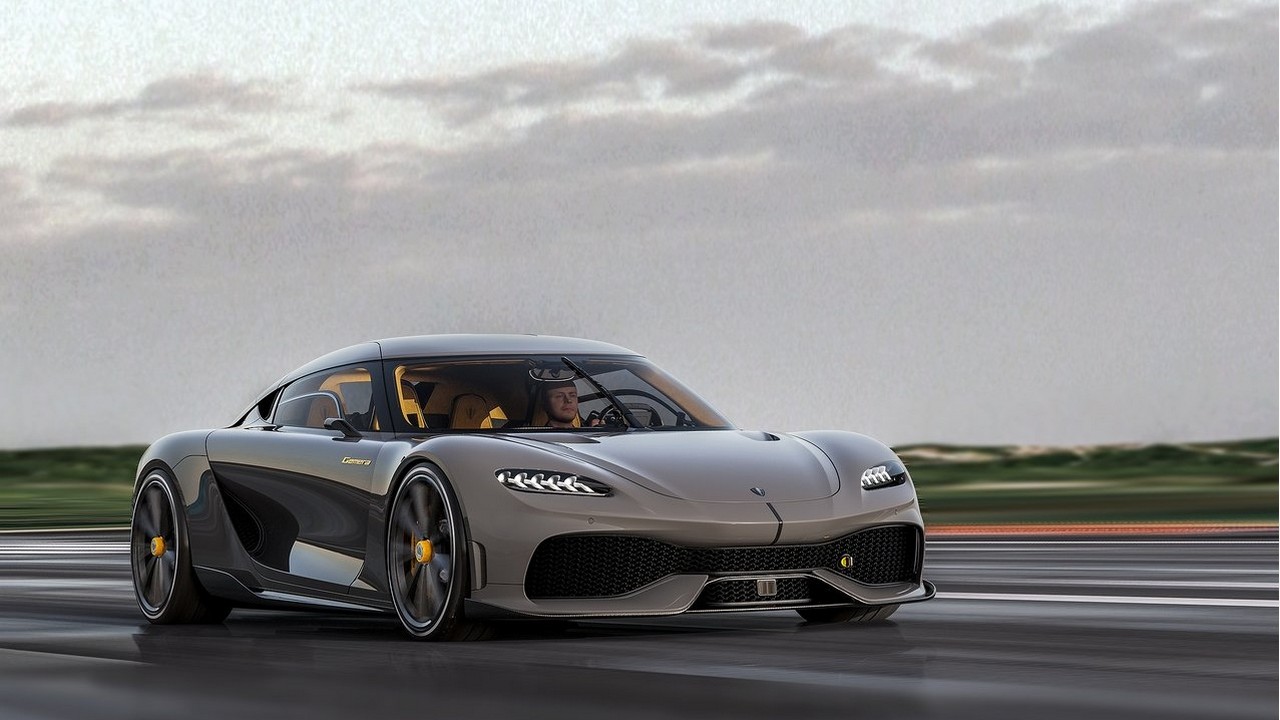
Koenigsegg Gemera

Though the production version has moved to a twin-turbo V8, the original Koenigsegg Gemera prototype made headlines with one of the most extreme three-cylinder engines ever imagined. Nicknamed the “Tiny Friendly Giant,” the 2.0-liter three-pot formed the internal combustion core of the hybrid system.
Despite its compact size, this engine alone produced a staggering 600 horsepower. When paired with the Gemera’s electric motors, the total output reached a jaw-dropping 2,000 horsepower. While it won’t see production in this form, the prototype stands as a bold reminder of how far innovation can stretch, even with just three cylinders.
Honda S660

In a nod to its beloved Beat roadster from the 1990s, Honda introduced the S660—a compact, mid-engined sports car that delivered a surprising amount of fun in a tiny package. Designed specifically for Japan’s kei car segment, the S660 blended retro inspiration with modern engineering.
Its 660cc turbocharged three-cylinder engine produced 63 horsepower, the class limit, but revved past 7,000 RPM and paired beautifully with a lightweight chassis and rear-wheel drive. The result was a spirited, high-revving driving experience that punched well above its weight. Unfortunately, the S660 was never officially exported and ended production in 2022, making it a modern classic that many enthusiasts only admire from afar.
Mini Cooper

While the spotlight often falls on the sportier Cooper S and John Cooper Works variants, the standard Mini Cooper deserves recognition of its own, especially in its three-cylinder form. Both the current Cooper C and the previous-generation Cooper One are powered by a turbocharged three-cylinder engine that delivers surprising pep and efficiency.
Despite having fewer cylinders, these models retain the sharp handling and playful spirit that make the Mini so beloved. And as a fun bit of trivia, the earlier three-cylinder engine shares architecture with the one found in the BMW i8. It may not be the most powerful Mini, but it’s certainly one of the most charming.
Opel Corsa Hybrid

A recent update to the Opel Corsa brought a new powertrain that quietly turned this everyday hatchback into a surprisingly enjoyable drive. The latest version features a 1.2-liter turbocharged three-cylinder engine paired with a mild hybrid system, producing either 100 or 134 horsepower, depending on the trim.
While those figures may seem modest, the Corsa’s compact size means it makes the most of its power. The addition of a quick-shifting dual-clutch automatic transmission enhances both responsiveness and efficiency. It’s the same Stellantis-sourced engine found across much of the group’s lineup, but in the Corsa Hybrid, it delivers a well-rounded mix of fun and practicality.