Most people will never spend more than a few thousand dollars on a car. A smaller group will stretch into six figures for something truly special. And then there is a different category entirely, one where bidding paddles go up past eight figures and the conversation shifts from transportation to history, artistry, and legacy.
These are not simply expensive cars. They are singular objects. Each one carries a story that justifies, at least to the right buyer in the right room, a price tag that most people would associate with a small country’s annual budget. One has clearly crossed the $100 million threshold in a documented sale, and a few others have come breathtakingly close or are now valued in that territory on paper. What they share is rarity in its most absolute form, engineering or design that defined its moment, and a provenance that connects them to something larger than any spec sheet could capture.
Here is a look at five of the rarest and most valuable cars ever offered at auction or private sale.
Ferrari 250 GTO
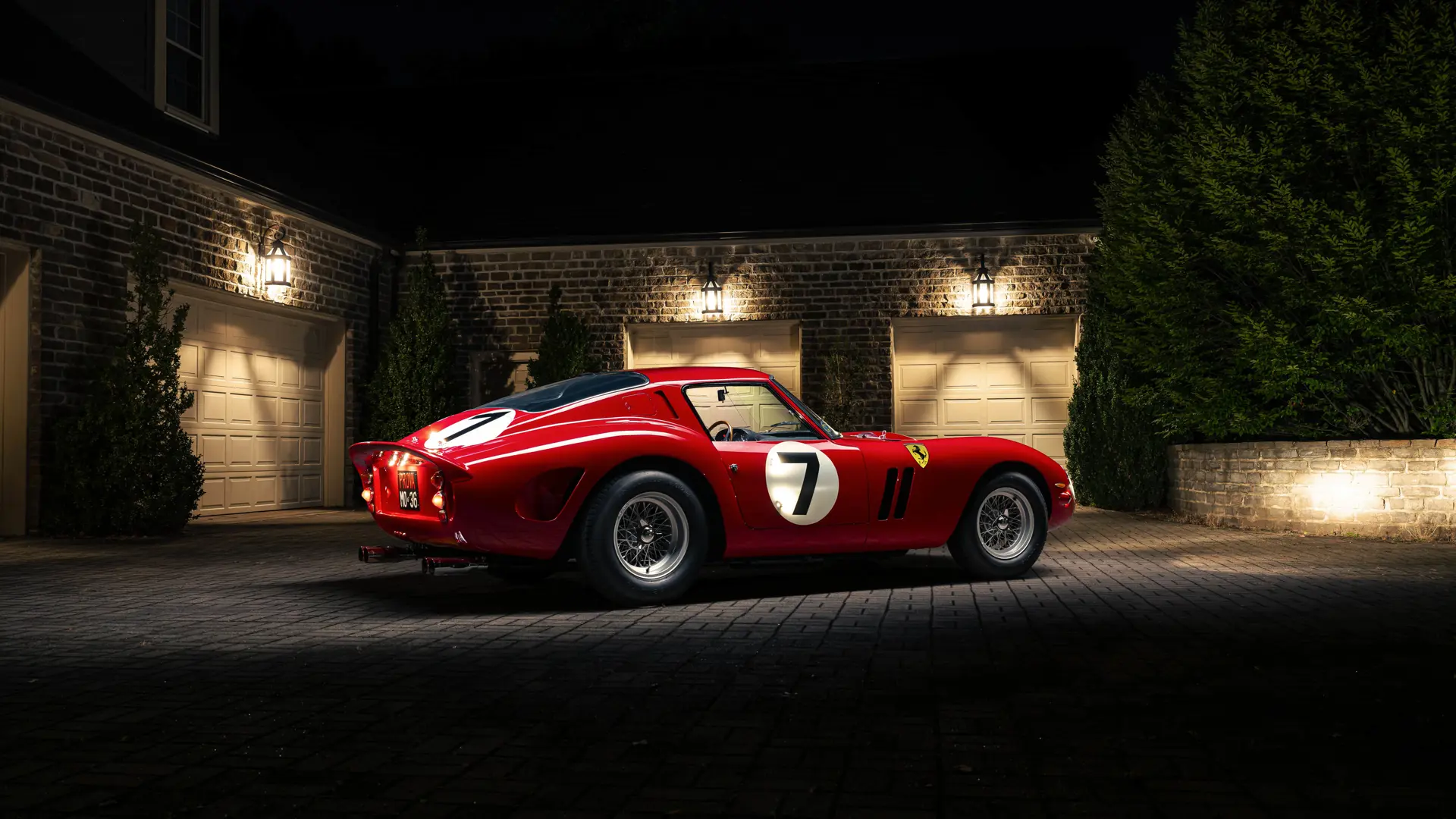
No conversation about ultra-rare automobiles goes very far before this name enters the room. Ferrari built the 250 GTO between 1962 and 1964, and only 36 examples were produced across all series. It was designed to compete in GT racing, and it did so with extraordinary success, winning its class at Le Mans and dominating European competition during its era.
What makes the 250 GTO so untouchable today is the convergence of everything collectors value. It is beautiful by virtually any standard, with a body shaped by aerodynamic necessity that still reads as pure sculpture. It won races at the highest levels of motorsport. It was built in small enough numbers that every surviving example is known and documented. And it represents a period in Ferrari’s history before the company became a global luxury brand, when Enzo Ferrari was still personally approving who could purchase one.
Prices have climbed steadily for decades. A well-documented example sold in a private transaction in 2018 for a figure reported to be in the range of $70 million. Other examples have changed hands privately for amounts believed to exceed that, with some estimates placing the upper end above $80 million depending on racing history and documentation. Whether the true ceiling has been reached is genuinely unclear. The cars simply do not come to market often enough to establish a firm upper limit.
Bugatti Type 57 SC Atlantic
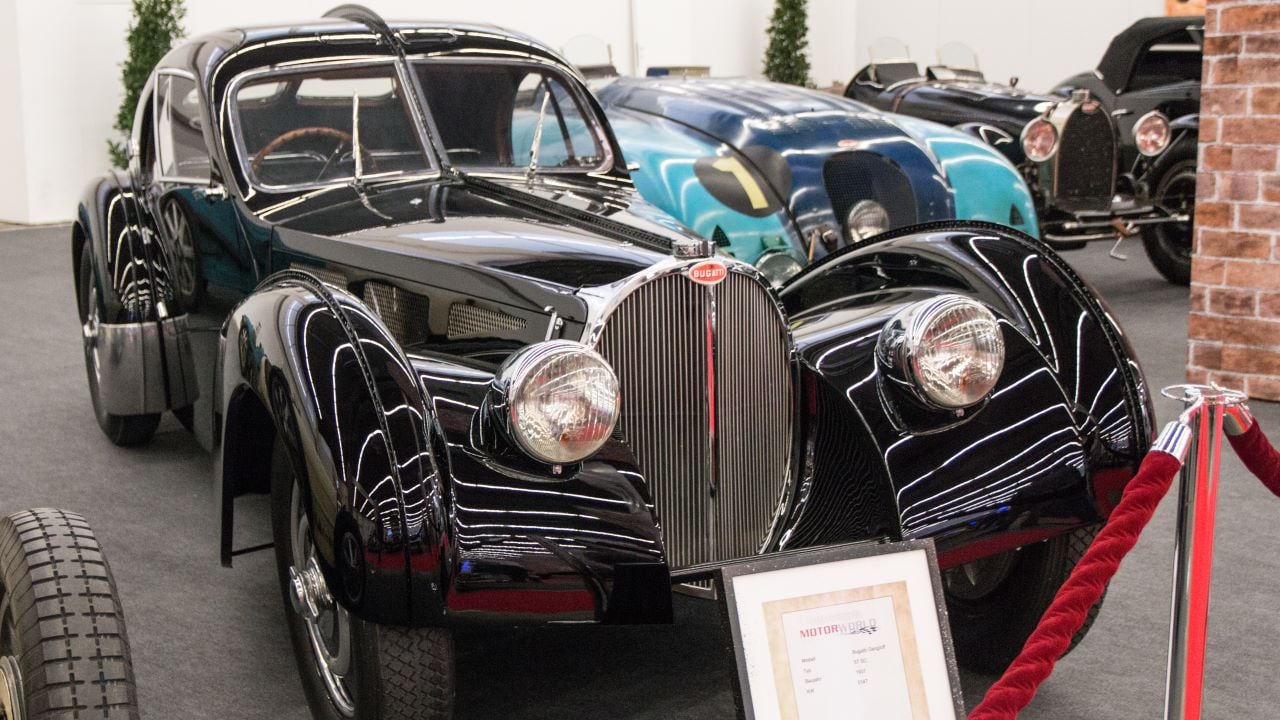
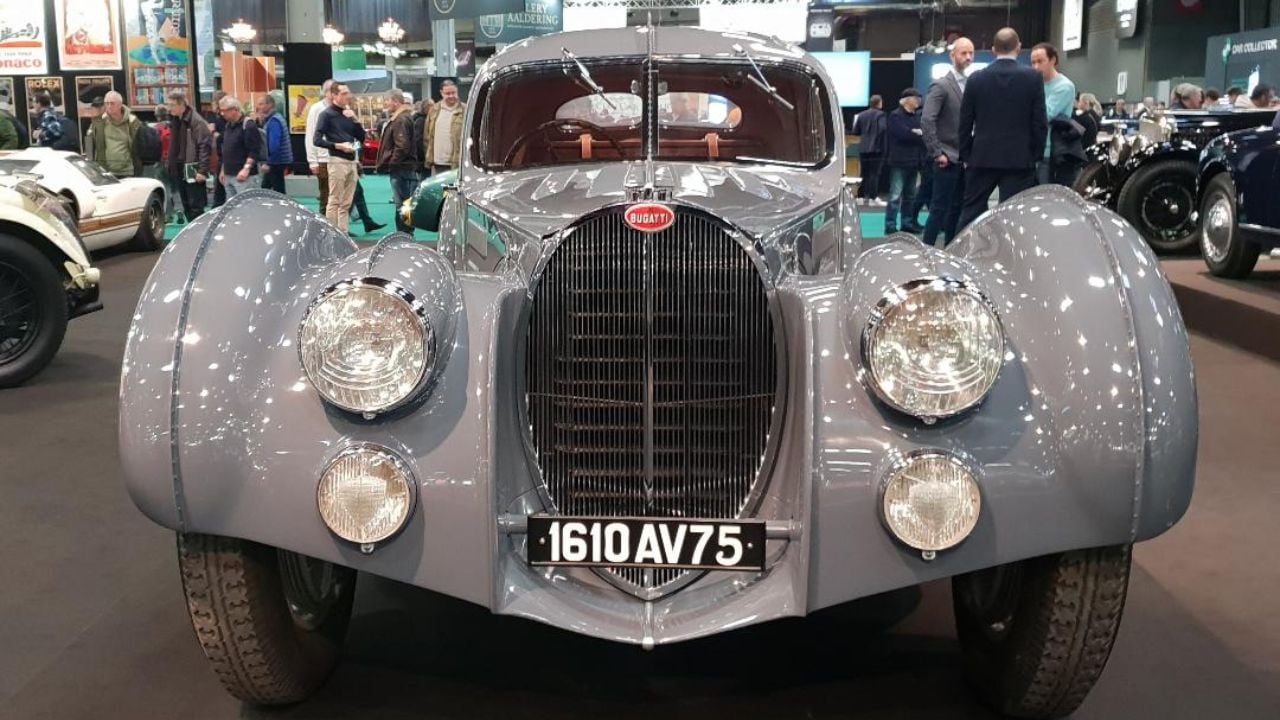
Only four Atlantic coupes were built. Bugatti says just two original examples survive today: one associated with the Mullin collection and the other owned by Ralph Lauren. A third car was almost entirely destroyed after a 1955 crash, while the fourth, the famous ‘La Voiture Noire,’ disappeared before World War II.
The car was designed by Jean Bugatti, son of founder Ettore, and completed between 1936 and 1938. Its riveted dorsal seam, dramatic fender lines, and deeply sculptural proportions made it unlike anything else produced during the period, or arguably since. It was built around an eight-cylinder engine producing power that was impressive for its time, paired with a supercharger on the SC variants.
One of the two privately held Atlantics, chassis 57374, sold in 2010 for a figure widely reported to be in the neighborhood of $30 to $40 million. Given appreciation patterns in the collector market since then, current estimates for either surviving example frequently reach $100 million or higher, though neither has come to public auction in modern memory. Their true market value remains theoretical, which in its own way says everything.
Ferrari 250 Testa Rossa
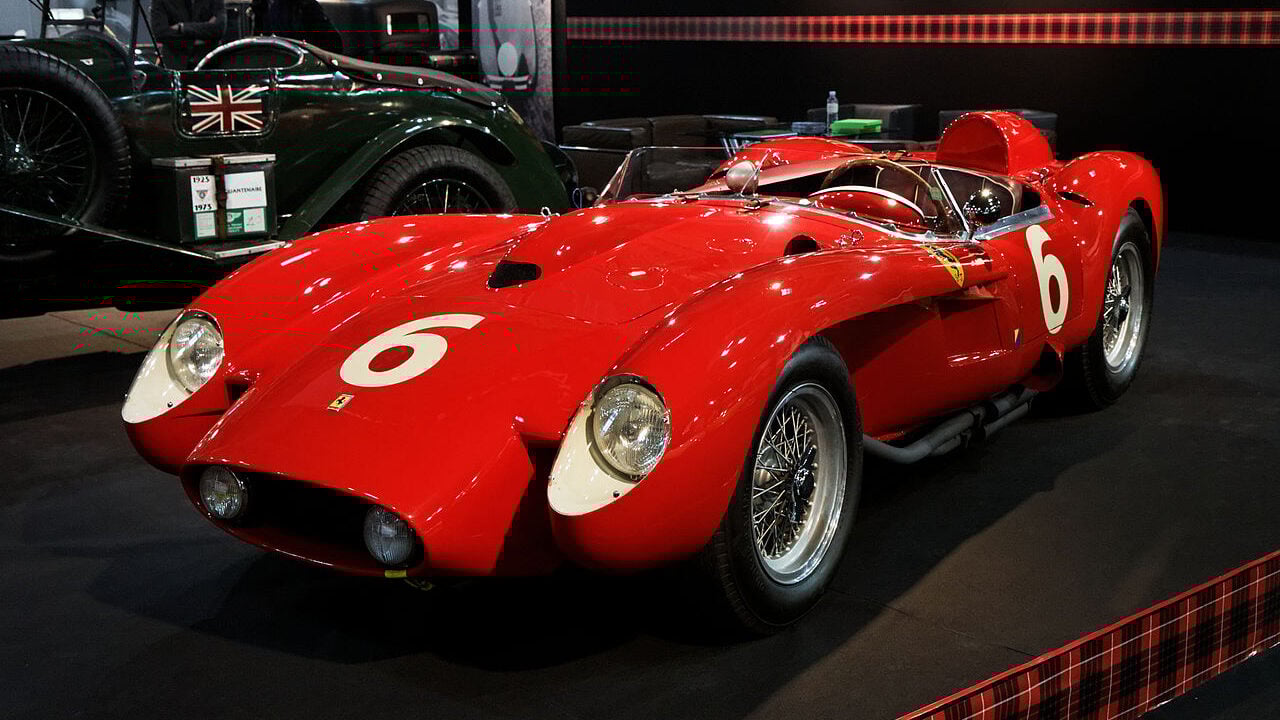
Creative Commons Attribution-Share Alike 3.0, WikiCommons.
Where the 250 GTO rules the GT racing conversation, the 250 Testa Rossa stands at the summit of Ferrari’s open-top sports prototype legacy. Built between 1957 and 1961 for endurance racing, it earned three outright wins at Le Mans and multiple World Sportscar Championship titles during its competitive years.
The name translates to “red head,” a reference to the red-painted cam covers on the engine rather than the car’s exterior color. Production numbers varied slightly by series, but the total across all variants sits below 40 examples, with the earliest pontoon-fender cars being the most prized.
A 1957 example sold at RM Sotheby’s in 2011 for just over $16 million, which was a record at that time. More recently, a 1957 Testa Rossa sold at Ferrari’s own auction in 2022 for approximately $21 million, demonstrating continued appreciation even decades after the model ceased production. Clean, documented examples with strong racing histories now regularly attract estimates in the $20 million to $30 million range or beyond.
Mercedes-Benz 300 SLR Uhlenhaut Coupe
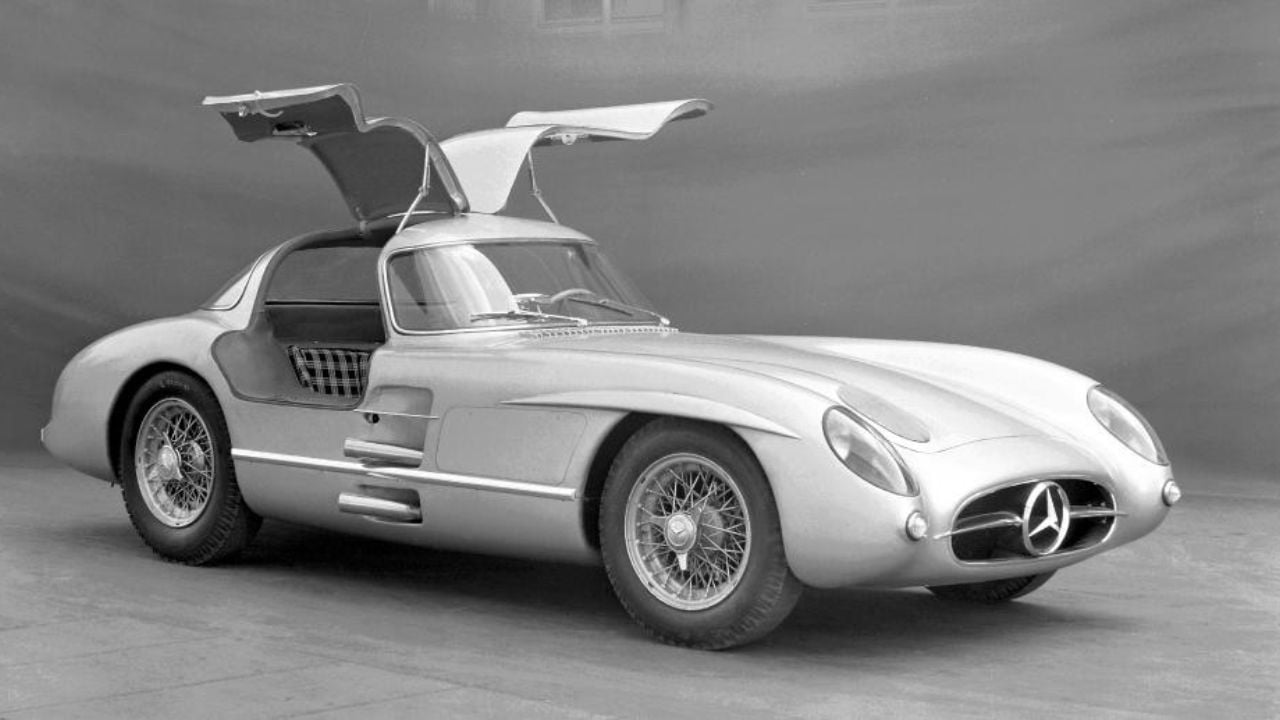
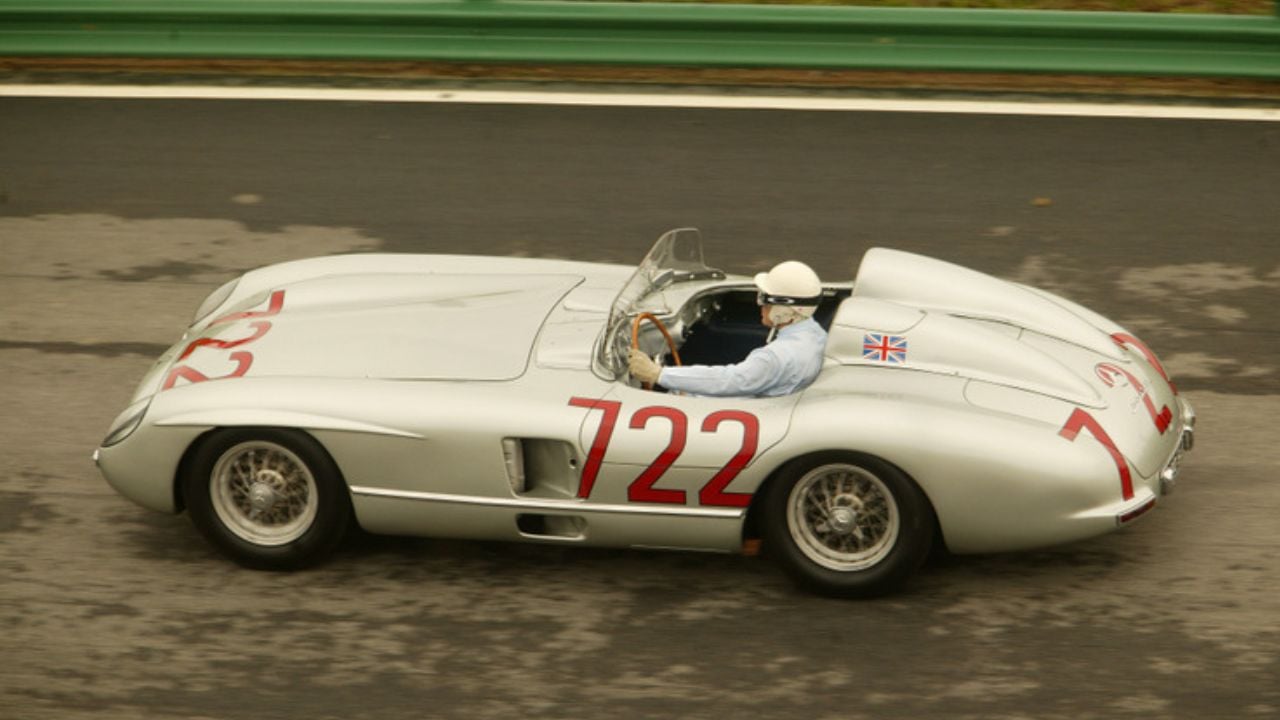
For decades, the existence of this car was known primarily among specialists. When one of the two surviving examples came to auction in 2022 through RM Sotheby’s, in a private sale to a single bidder, it became the most expensive car ever publicly sold at that point, achieving a price of approximately $142 million.
The 300 SLR was built in 1955 as a closed coupe version of the open sports racer that dominated that year’s Mille Miglia and Targa Florio. Rudolf Uhlenhaut, Mercedes’ chief engineer, used one as a personal road car after the factory withdrew from competition following the Le Mans disaster of 1955, in which a catastrophic accident resulted in the deaths of over 80 spectators and led Mercedes to exit motorsport for several years. Only two coupes were ever completed, and both were retained by Mercedes-Benz in its classic collection. The 2022 sale represented the first time either car was offered externally, making it a genuinely unprecedented event in collector car history.
The 142 million figure drew significant attention at the time, resetting the conversation about what was achievable in the market.
McLaren F1

The McLaren F1 is often discussed in the context of pure performance, but its rarity deserves equal attention. Production ran from 1992 to 1998, with a total of 106 cars built across road and race variants. Of those, 64 were road cars, and the remainder were configured for various racing programs.
At the time of its introduction, the F1 was designed to be the definitive road car, with Gordon Murray’s engineering philosophy guiding every decision. The central driving position, gold-lined engine bay, and naturally aspirated V12 engine producing around 620 horsepower made it technically and philosophically unlike anything available. It held the title of the world’s fastest production car for several years after its launch.
Values have risen dramatically as production numbers have remained fixed and existing examples have dispersed into private collections. Road cars in clean, low-mileage condition have achieved prices well above $20 million at auction, with certain LM-specification examples documented in the $25 million range or higher. Unlike many cars on this list, the F1 is not purely a museum piece. Owners regularly drive them, which is arguably part of what makes the car so respected among serious collectors.
Where Money Meets History
What separates these five cars from every other expensive object on the planet is that their value cannot be manufactured again. A new painting can be commissioned. A new yacht can be built. But no amount of money buys another Type 57 Atlantic, and no factory can produce a second Uhlenhaut Coupe. The rarest cars in the world sit at the intersection of engineering, history, and circumstance, and that combination, once fixed in time, never repeats. For the collectors who pursue them, the price is not the point. The object is there.