If you’ve ever driven down the road and heard a strange hum or felt a shake in your steering wheel, you’re not alone, and it might be time to check your wheel bearings. With the average age of vehicles continuing to rise (S&P Global Mobility put the U.S. average at 12.8 years in 2025), knowing how to catch problems early can save you a lot of money and maybe even prevent a breakdown.
Wheel bearings don’t get much attention until they go bad, but they play a crucial role in how smoothly (and safely) your car moves. When they wear out, they can cause everything from annoying sounds to dangerous driving conditions. Luckily, as @bcruz299 shows, there are a few easy-to-spot warning signs every driver can watch for.
How to Tell If Your Car’s Trying to Warn You
Bad wheel bearings can make themselves known in a few key ways. First up: strange noises. If you hear a grinding, humming, or growling sound that changes with your speed, chances are it’s coming from one of your wheels. A classic clue is that the noise may get louder when turning one direction and quieter when turning the other, as the load shifts from one bearing to the other. That sound means the bearings, which are supposed to spin smoothly, are wearing down and rubbing in ways they shouldn’t. Think of it like a shopping cart wheel that wobbles and squeaks, it’s the same idea, just faster and more dangerous on a car.
Next, vibrations in the steering wheel can be a sign of bearing trouble, though tire balance, tire wear, and brake issues can cause similar vibrations. When a bearing starts to fail, it can throw off the wheel’s rotation and cause a ripple effect up through the steering system. If your hands feel a steady shake or wobble, especially when turning, it’s worth getting checked.
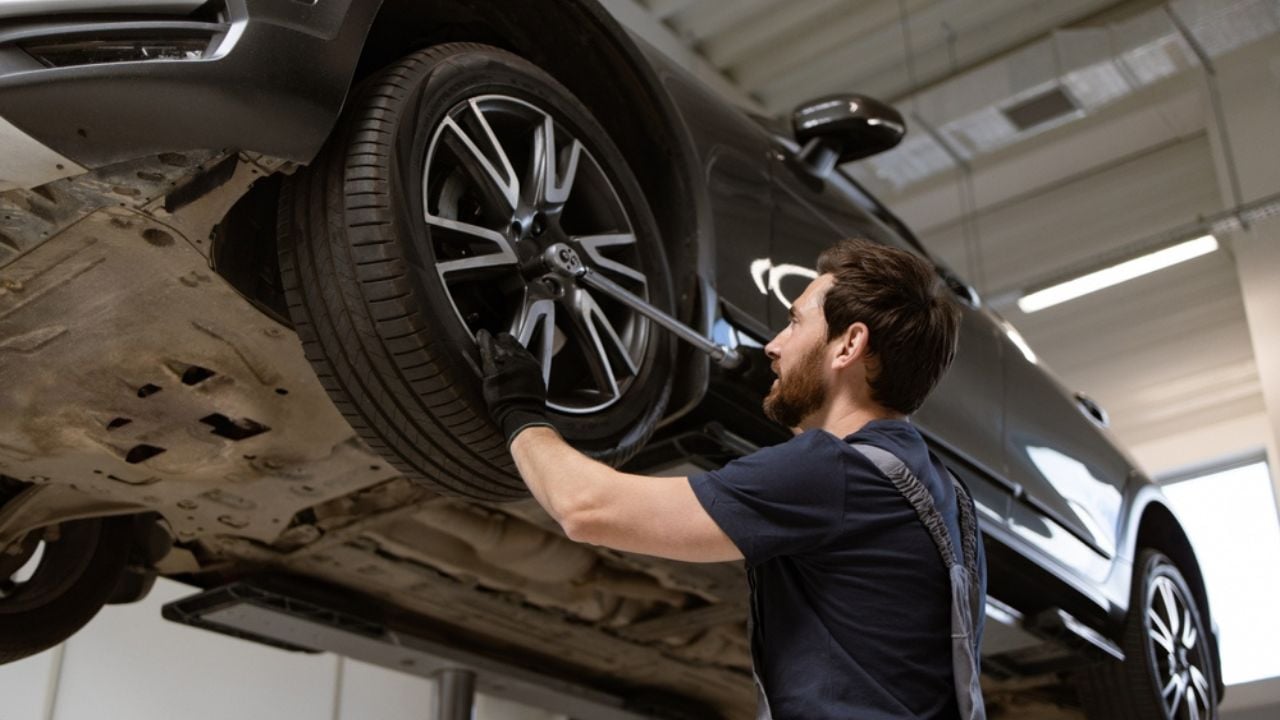
The third big sign? Wobbly wheels. If you lift the car and the wheel moves back and forth too much, it could be a worn bearing (or other worn suspension/steering components), and it’s worth having a shop confirm.
Why Wheel Bearings Matter More Than You Think
Wheel bearings sit inside the hub and help your wheels spin with as little friction as possible. They’re tucked away, but they’re under constant stress, supporting the entire weight of the vehicle while enduring road bumps, turns, and heat. What makes a bad bearing so risky is that failure can happen gradually or all at once. In the worst-case scenario, in extreme cases, a failed wheel bearing can contribute to wheel separation, which is rare but serious. That’s rare, but it highlights how important regular checks are.
Most modern vehicles use “sealed” bearings, which are designed to last longer and keep out dirt and moisture. But even these eventually wear out. Once a bearing starts to go, the damage can spread to nearby parts like the hub, axle, or even brakes. That’s why catching it early, before it gets noisy or causes vibrations, is the smart (and safer) move.
What Happens If You Ignore the Signs

When drivers ignore the signs of failing wheel bearings, it doesn’t just affect their ride, it affects everyone on the road. A car with compromised bearings can pull to one side, take longer to stop, or swerve unexpectedly. That creates risks not just for the driver, but for anyone nearby. On the flip side, staying ahead of bearing issues means smoother drives, more predictable handling, and peace of mind, especially at highway speeds.
Fleet operators and mechanics already know this. That’s why commercial vehicles often get regular bearing checks during routine service. For regular folks, a yearly inspection during tire rotations or brake service is a smart habit to build. It’s an easy add-on, and it could prevent a much bigger repair bill or, worse, an accident.
Getting It Fixed: What to Know Before You Go

One challenge is that wheel bearing issues often get mistaken for brake problems or alignment issues. That can lead to misdiagnosis and unnecessary repairs. Not all mechanics check wheel bearings unless asked, so it’s important to be specific when you hear that telltale hum or feel something off in your steering. If you’re unsure, ask them to inspect the bearings during your next visit. A good diagnosis usually includes checking for play with the wheel off the ground, listening for roughness, and ruling out tire noise and brake drag.
Replacing a single wheel bearing can often cost around $250–$500 per wheel at a shop, with some vehicles (especially hub-style units/AWD/luxury) running higher, depending on the vehicle. It’s not pocket change, but it’s a whole lot cheaper than replacing a wheel hub or dealing with a tow truck. Some DIYers with the right tools and know-how can tackle the job themselves, but most people are better off leaving this one to a pro.