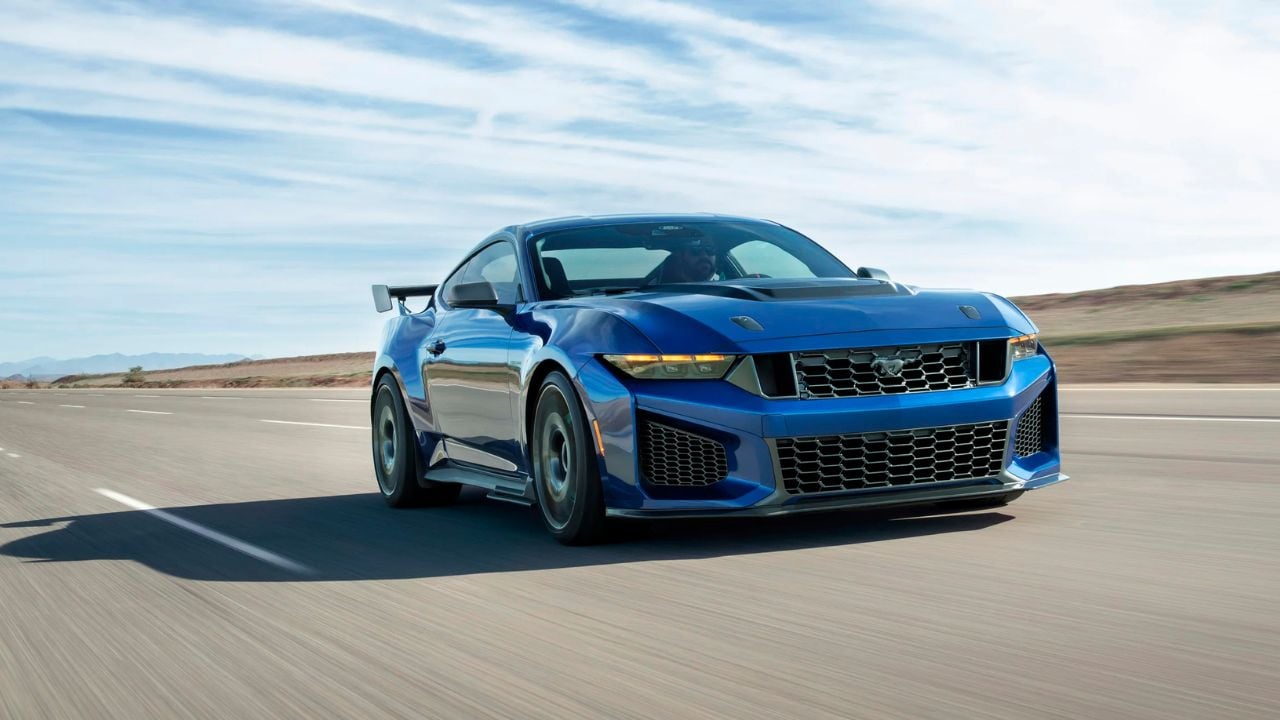
Ford has finally put hard numbers behind one of its most anticipated Mustang projects. The new Mustang Dark Horse SC takes the already serious Dark Horse formula and pushes it much deeper into Shelby GT500 territory, while still stopping short of the ultra-expensive Mustang GTD.
At the center of the car is Ford’s supercharged 5.2 liter Predator V8, the same basic engine family that powered the last GT500 and now sits in the Mustang GTD. In the Dark Horse SC, it produces 795 HP and 660 lb ft of torque, which immediately makes this much more than a cosmetic special edition.
That output also gives the SC a very specific role in Ford’s performance lineup. It lands well above the regular 500 HP Dark Horse but stays just below the GTD’s 815 HP peak, creating a new middle ground between the track-ready Mustang most buyers can understand and the near-exotic halo car few will ever own.
For American enthusiasts, that makes the Dark Horse SC one of the most interesting new Mustangs in years. It promises a huge share of the GTD’s drama and performance attitude without asking buyers to cross into the kind of pricing territory usually reserved for low-volume supercars.
A Familiar Engine With A More Focused Mission
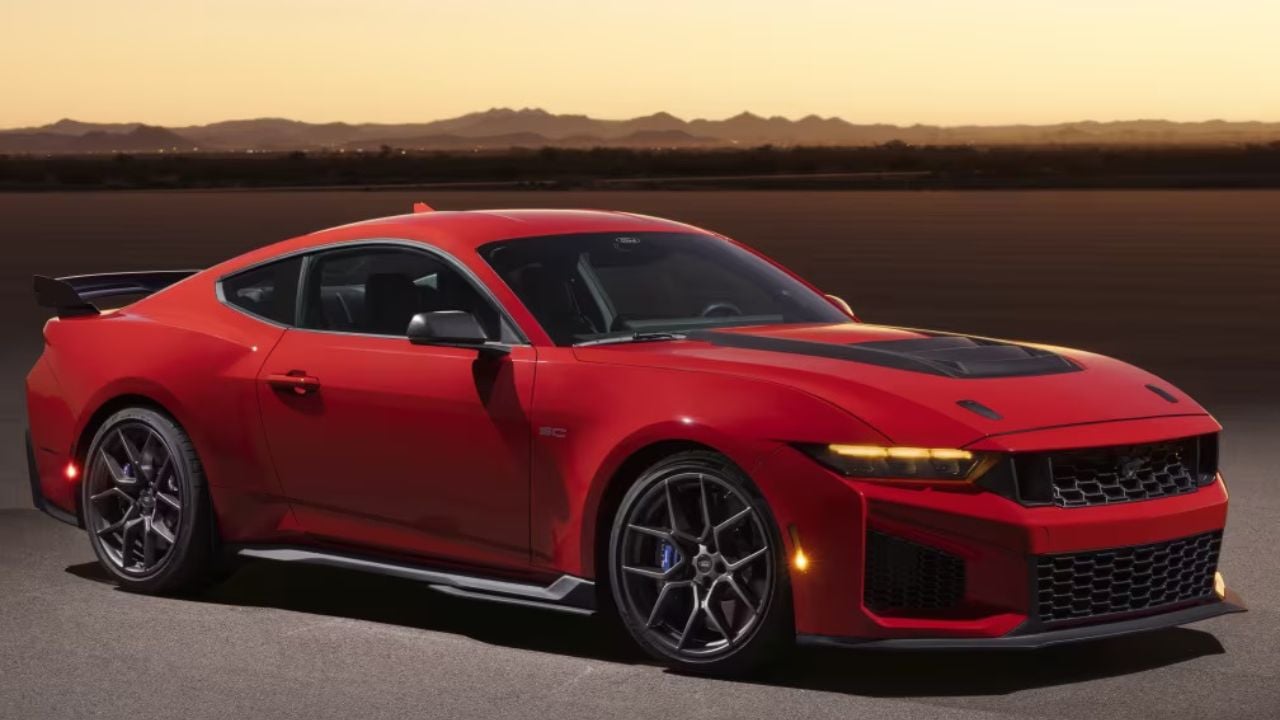
The Dark Horse SC sends its power to the rear wheels through a seven-speed dual-clutch transmission, keeping the same basic layout used by the old GT500 rather than the GTD’s more exotic rear transaxle setup. Ford says the car was developed alongside the Mustang GTD and Mustang GT3 race car, with lessons flowing directly from those programs into the SC’s road car engineering.
That link shows up in more than the engine bay. Ford Racing says the Dark Horse SC received revised springs, updated MagneRide hardware and software, new stabilizer bars, modified control arms, forged suspension links, and a lighter magnesium brace, all aimed at making the car feel closer to a true track machine than a simple power upgrade package.
Serious Hardware Beyond The Horsepower Figure
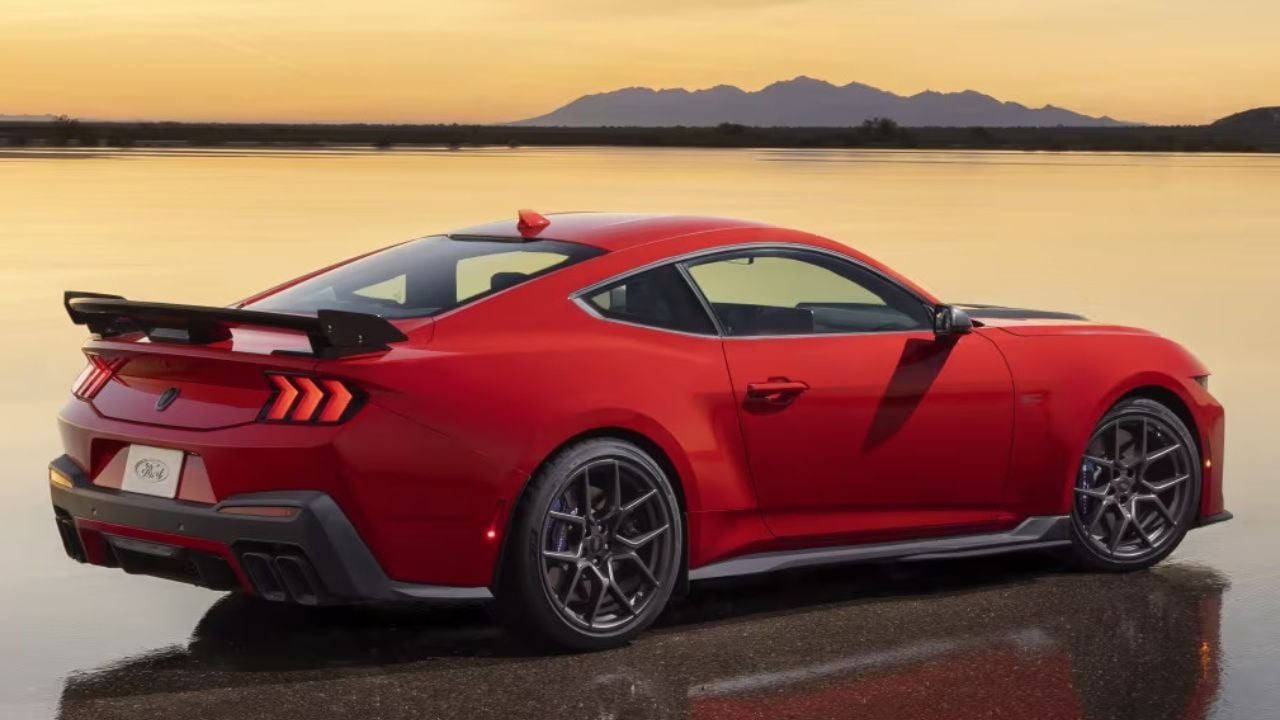
Ford did not stop at straight-line numbers. The standard Dark Horse SC uses Brembo brakes with six piston front calipers and four piston rear calipers, while the optional Track Pack adds the GTD’s carbon ceramic brake system, custom Michelin Pilot Sport Cup 2 R tires, carbon fiber wheels, and additional aero changes.
Ford says the Track Pack also brings a meaningful drop in weight and a major increase in rear downforce. According to the company’s own figures, the Track Pack setup produces about 620 pounds of rear downforce at 180 mph, showing that this version was engineered with road course use very much in mind.
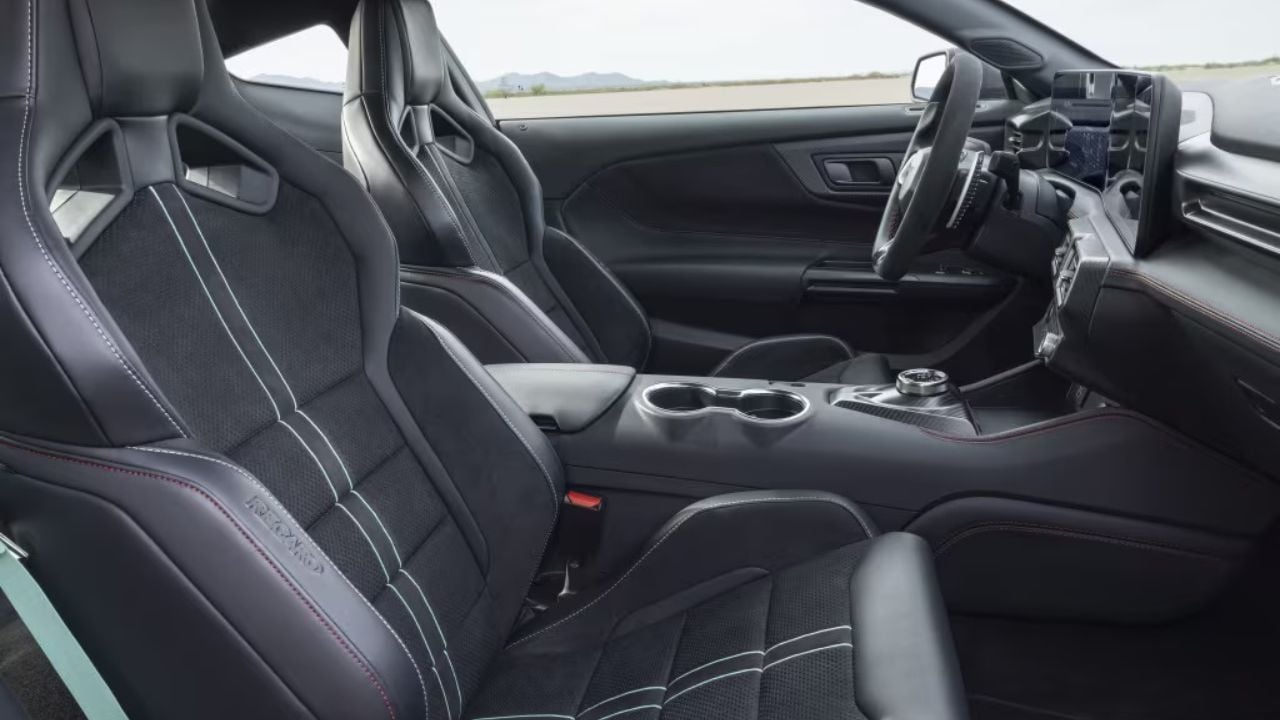
Inside, the theme continues with a flat-bottom steering wheel taken from the GTD, available Recaro sport seats, Alcantara and carbon fiber trim, and a rear-seat delete on Track Pack cars. Ford has also shown a limited Track Pack Special Edition with extra visual details and 3D printed titanium trim pieces derived from the GTD program.
The Price Gap Still Defines Its Appeal
Pricing is where the Dark Horse SC becomes especially interesting. Ford says the car starts at $108,485, and the Track Pack raises that figure to $144,985, with first customer deliveries expected in summer 2026.
That is a lot of money for a Mustang, but the broader context changes the picture. A confirmed 2025 Mustang GTD window sticker showed an official starting price of $327,960 before options, destination, and gas guzzler fees were fully considered, which means the SC offers about 98% of the GTD’s horsepower for roughly one third of the money. That is an inference from the published figures, but it helps explain why this car matters.
The GTD still sits in a very different league when it comes to chassis sophistication. It uses an eight-speed rear transaxle, race-derived suspension, and carbon-heavy construction and has posted an official Nürburgring lap of 6:40.835. At the same time, Ford’s Mustang halo car no longer owns the title of fastest American around the Ring because Chevrolet’s Corvette ZR1X and ZR1 have since gone quicker.
That leaves the Dark Horse SC in a smart position. It is not the ultimate Mustang, and Ford is not pretending otherwise. What it does offer is a huge, supercharged V8; real track-focused hardware; and a price that still feels grounded compared with the GTD, which may be exactly the balance many buyers were hoping Ford would find.
This article originally appeared on Autorepublika.com and has been republished with permission by Guessing Headlights. AI-assisted translation was used, followed by human editing and review.