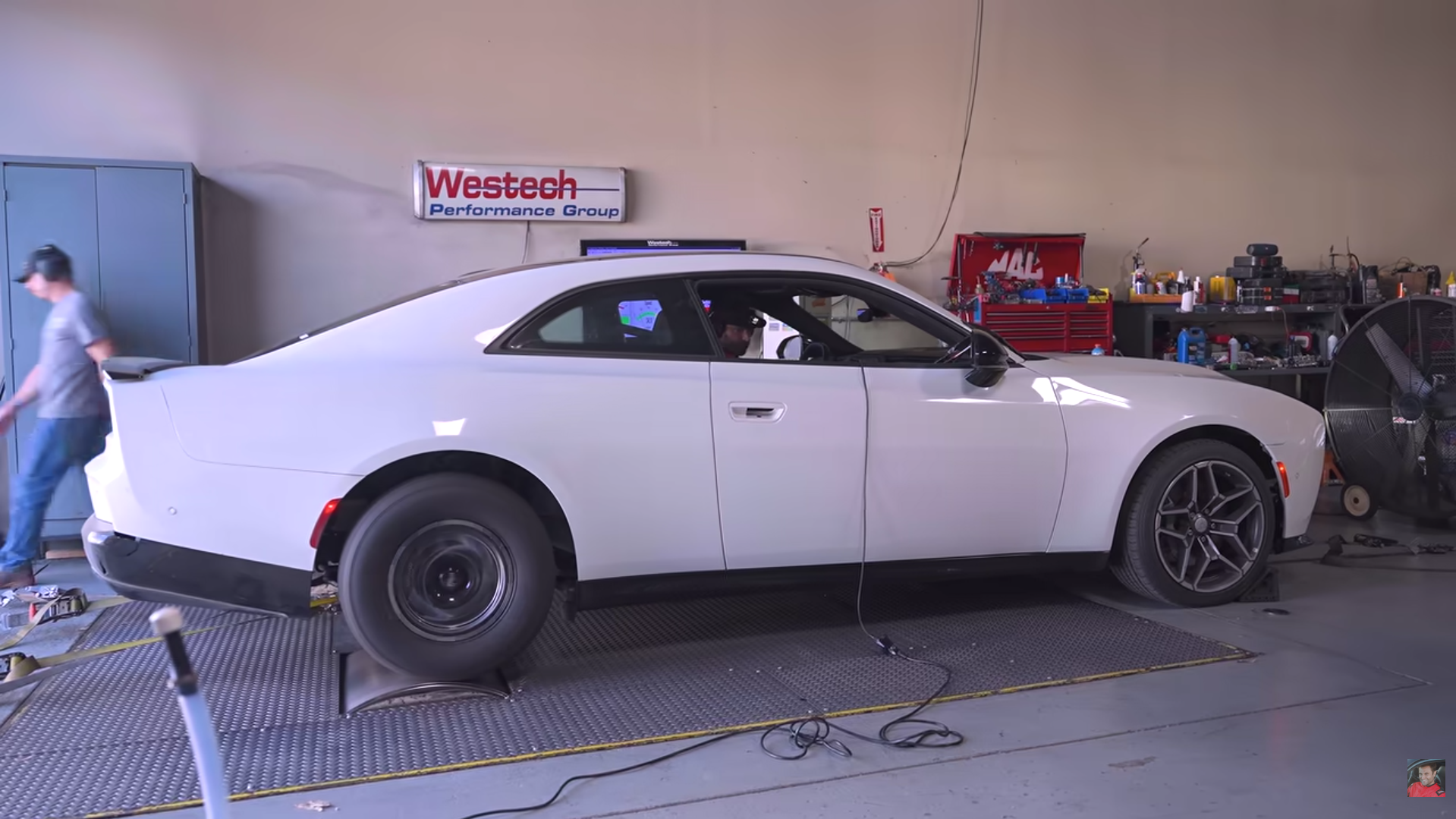
The return of the Hemi V8 has been a major talking point among Dodge enthusiasts, but the brand’s newer Hurricane inline-six is proving it deserves some attention too. One heavily modified Dodge Charger has just delivered an extraordinary result on the dynamometer.
Automotive YouTuber Rob Dahm has been pushing the twin-turbocharged Hurricane engine far beyond its factory output. His latest testing session produced approximately 960 horsepower at the rear wheels, putting the six-cylinder Charger firmly into four-digit horsepower territory at the crank.
To make things even more impressive, the engine is still running its factory internal components. That’s right! Despite the enormous increase in power, Dahm hasn’t replaced the pistons, connecting rods, or other internal engine hardware.
Of course, this is far from a stock Charger with a software tune. The build has extensive supporting modifications, including a larger turbocharger, additional fueling hardware, and nitrous oxide to extract this level of performance.
Nearly 1,000 Horsepower From A Stock-Internal Hurricane
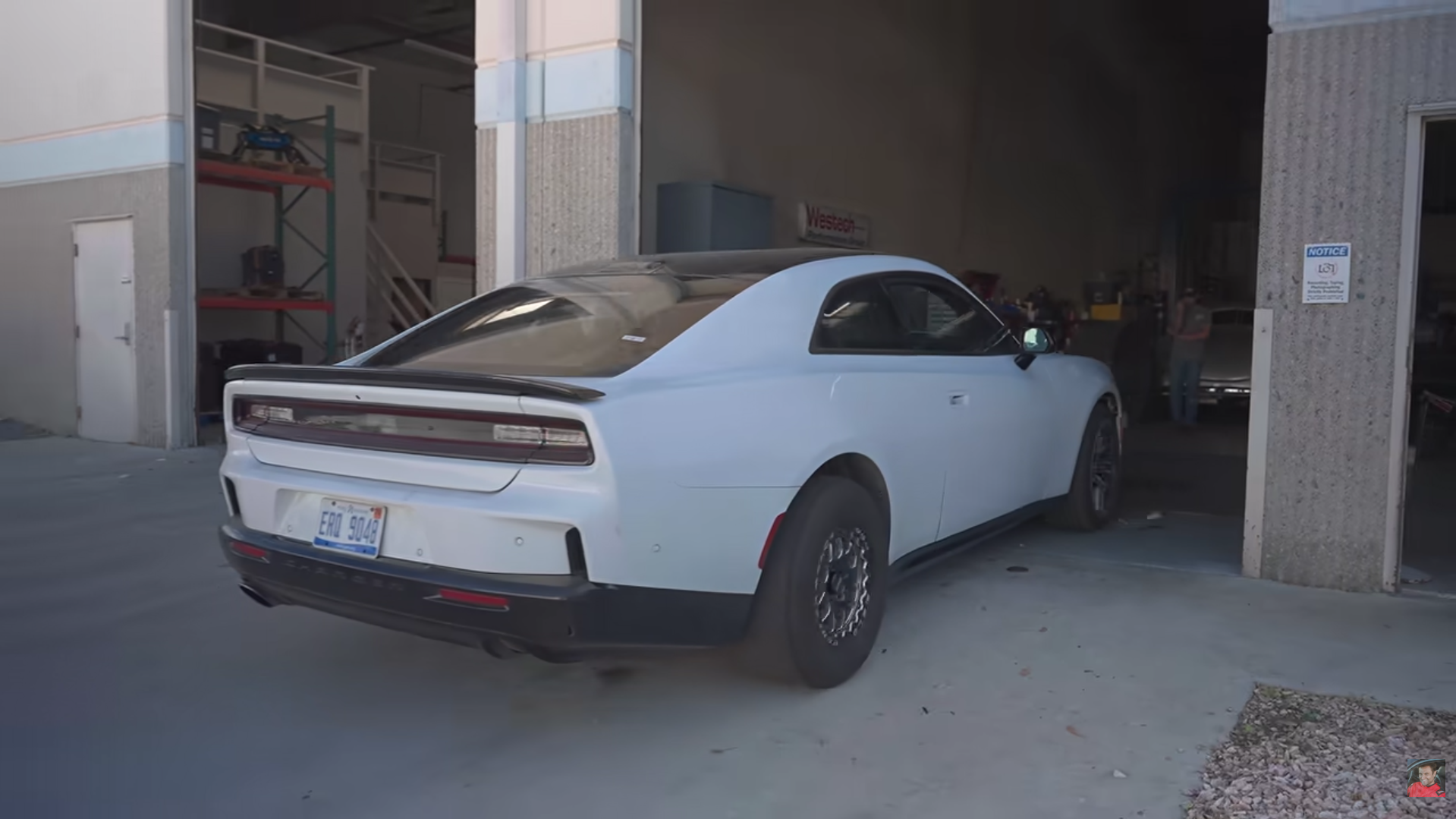
Dahm took the Charger to Westech Performance for a series of dynamometer runs, initially targeting approximately 30 psi of boost. However, testing proved challenging because the rear-wheel-drive dyno couldn’t reproduce the load the car normally experiences with its all-wheel-drive system engaged.
Early attempts struggled to generate sufficient boost, while fueling adjustments complicated subsequent runs. Eventually, the Charger produced 857 wheel horsepower with a complete exhaust system still installed.
Removing The Exhaust Unlocked Even More Power
Suspecting excessive exhaust backpressure, Dahm disconnected the exhaust after the turbocharger to reduce restrictions. Running just the downpipe showed immediate improvement, with the Charger producing approximately 920 wheel horsepower despite the electronic throttle partially closing during the run.
Further adjustments, combined with nitrous assistance, pushed output to a whopping 960 wheel horsepower and 863 lb-ft of torque. Dahm believes the engine has much more potential, although the factory transmission began slipping and automatically upshifting before he could explore higher engine speeds.
The Factory Drivetrain Is Holding On For Dear Life
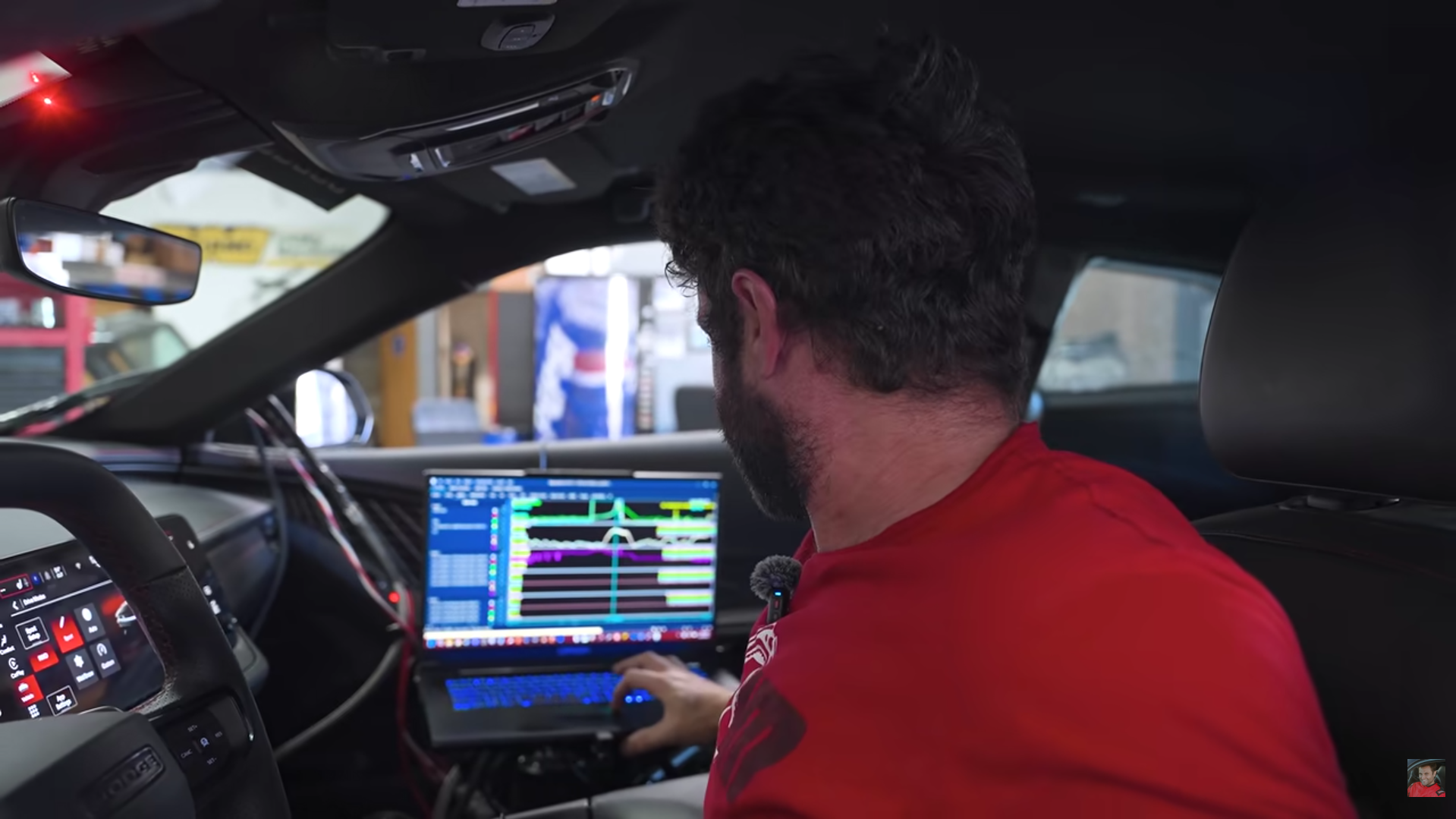
Perhaps the biggest surprise is that the Charger still uses its factory engine internals and drivetrain. Dahm said the vehicle was still operational after the testing session, despite the substantial boost pressures and torque involved.
That doesn’t mean the setup is ready for long-term daily driving at these power levels. The transmission’s protective behavior and the extensive modifications show the challenges of extracting such extreme performance from standard factory hardware.
Still, these results give us a glimpse of the Hurricane engine’s tuning potential. While the Hemi V8 has the sound and heritage, this six-cylinder Charger is actually making quite a compelling case for itself.