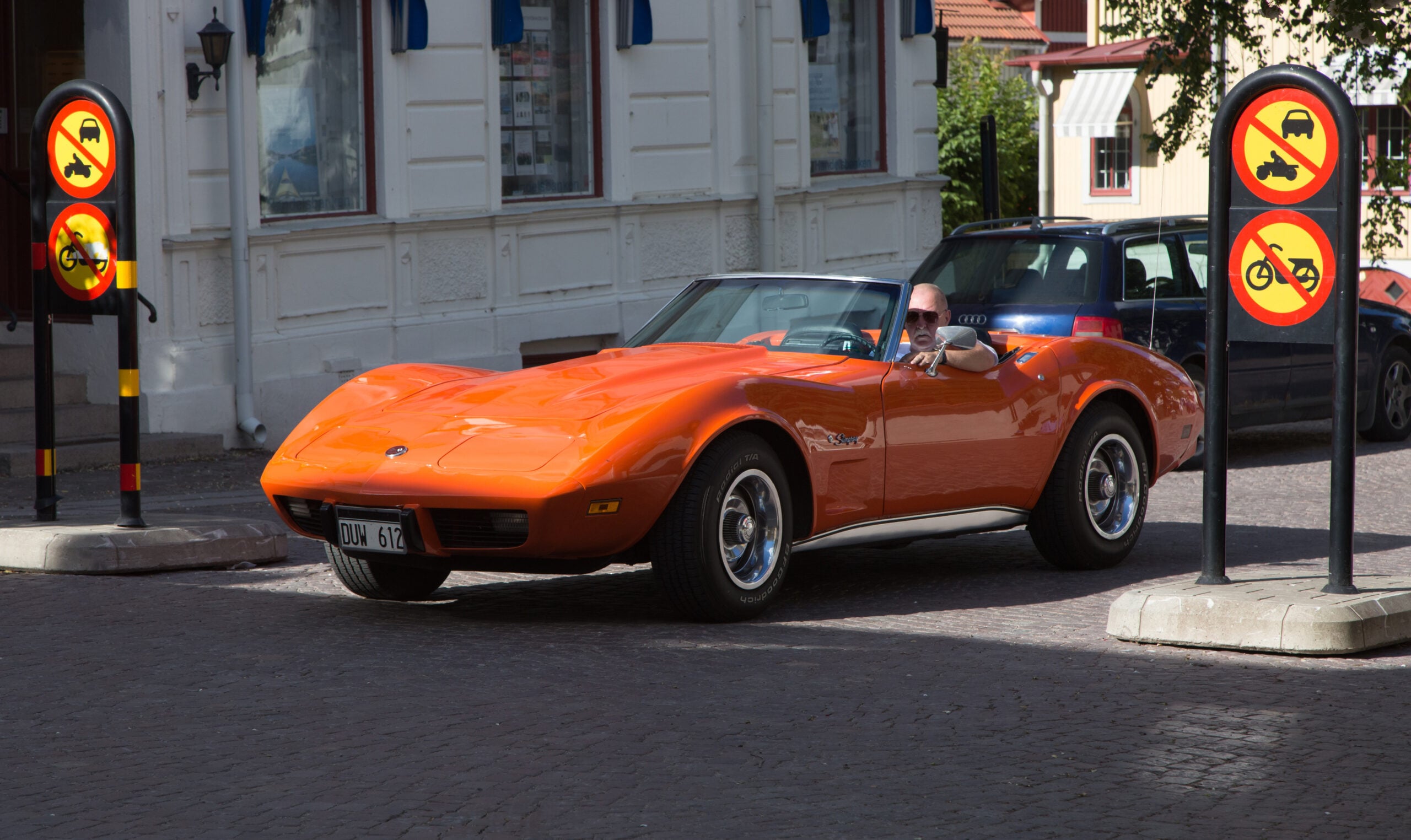
Here at Guessing Headlights, we love cars. We love driving them, working on them, and occasionally even writing about them. We also love language and the sometimes ridiculous debates it provokes, especially when it comes to what we call cars.
So let’s talk about it.
The Great Semantics Showdown: “That’s Not a Real Muscle Car”
Every editor on our team has, at some point, cautiously typed the phrase “muscle car” or “sports car” into a headline, knowing full well it may trigger a deluge of keyboard-warrior emails correcting us. And to those readers: we hear you. We see you. We even mostly agree with you.
We also stretch definitions, on purpose.
Not because we’re trying to dilute the sacred taxonomy of auto culture, but because we understand that language is a tool for communication, not a museum of static definitions. When we write “10 Muscle Cars You Can Actually Afford,” we know that not every car on the list has a 400+ cubic inch V8 and a quarter-mile slip to prove it. Yet, they evoke the vibe. They’re loud, rear-wheel drive (mostly), brash, fun, and get your heart rate up. Plus, they’re within budget.
That’s the editorial balancing act we do—crafting headlines that make sense to a wide readership while acknowledging we may be poking the definition just enough to make it more inclusive, more thought-provoking, and yes, sometimes a little provocative.
Until our editorial staff hits the Powerball and starts daily-driving investment-grade Ferraris, we’re going to keep redefining the boundaries of what fits a list for real-world buyers. And when we do win the lottery? One of us is still going to call his Pontiac Fiero a sports car. Loudly. And if you tell him it’s not, he’s going to start calling it a muscle car just to annoy you.
Irony is also a form of expression.
Most People Don’t Care if It’s Technically a GT Car

Car terminology is tribal. “Sports car,” “GT,” “hot hatch,” “grand tourer,” “personal luxury coupe”—these labels have storied histories and precise meanings. However, the average person buying their first fun-to-drive car doesn’t know (or care) about the distinction between a Miata and a BRZ and whether the BRZ is technically a coupe, a 2+2, or a budget GT. They’re looking for a fun, budget-friendly car that fits their lifestyle.
So when we write an article like “12 Sports Cars Under $20K,” we know that a Mercedes SLK isn’t a Lotus Elan. But for our readers, the function—the experience—is what matters. A “sports car” today often means a car that feels sporty, not necessarily a featherweight roadster with no roof and a manual transmission. Definitions are shifting. Again.
The “Real Sports Car” Reflex

Occasionally, when we publish articles comparing sedans to sports cars or list fun-to-drive vehicles under a certain price point, we’ll get a familiar kind of feedback. A reader will chime in to say: “None of these handle like a real sports car.”
And often, they’ll name a specific benchmark vehicle, something light, raw, and extraordinary, as the gold standard by which all others should be judged. Maybe it’s a Lotus. Maybe a 911. The message is the same: unless the cars we mention hit that level of precision or purity, they don’t deserve the comparison.
We get the enthusiasm. We share it. Many of us on staff own or have owned those kinds of iconic drivers’ cars. But here’s the thing: when we say a well-tuned sedan or affordable coupe handles like a sports car, we’re making a comparison about feel, not declaring war on sacred chassis geometry.
We’re trying to draw readers into a conversation about cars that bring a similar sense of joy, agility, and excitement, without needing to spend supercar money or endure a spartan interior and no cup holders.
What we often see, though, is less about preserving clarity and more about diminishing others. It’s the old fandom reflex: “You’re not a real fan unless…” Only now it’s, “That’s not a real sports car because…”
The Classic Car Conundrum

If “sports car” is a moving target, then “classic car” might be a linguistic minefield. And yet again, we walk willingly into the quicksand.
Technically speaking, the Classic Car Club of America (CCCA) offers a clear and time-honored definition: a Full Classic is a fine or distinctive automobile, typically coach-built or limited-production, manufactured between 1915 and 1948 (though most fall between 1922 and 1948). These cars include marques like Duesenberg, Cord, and Packard—vehicles imbued with history, craftsmanship, and elegance.
That’s the definition, official, precise, and used in the appropriate circles.
But outside of concours fields and Pebble Beach judging tents, that definition hasn’t exactly held the high ground in popular usage. Somewhere along the way, the term “classic car” was co-opted by DMVs, insurance agencies, car magazines, and the general motoring public, many of whom couldn’t pick a Duesenberg out of a lineup if you paid them.
Today, a “classic car” is broadly understood to mean any car that’s about 20 years old, is well-preserved, and holds some level of cultural relevance or scarcity. And right or wrong, that ship has sailed, capsized, been restored, and now shows up at the local cars & coffee with mismatched wheels and a “period-correct” bumper sticker.
No disrespect at all to our friends at the CCCA, but the PR battle has been lost. Decades of enthusiasts have grown up calling 20-year-old or older rides “classics,” and we’re probably not putting that linguistic genie back in the bottle. If you try to correct someone too earnestly on their use of the term, you’re more likely to get a knowing groan, an eye roll, or a soft ‘OK, Boomer’ than an appreciative nod.
The Classic Climb (and Why We Shouldn’t Kick the Ladder Out)

While we’re being honest (and self-aware—hi from atop this high horse), let’s not be the folks who climb the ladder to classic car status and then yank it up behind us.
Browse any recent Reddit thread debating what qualifies as a “true classic,” and you’ll see the goalposts shifting in real time. Some abandon the 20-year rule entirely, arguing that the cutoff should be 1974, or pre-fuel injection, or pre-direct injection, or based entirely on cultural significance. Others admit that even a once-common survivor, well-cared for and rare in today’s traffic, deserves the title.
We all tend to wax nostalgic for our formative years. That nostalgia just has different timestamps. For those who came of age in the late 1990s or early 2000s, seeing a clean first-gen Dodge Neon, complete with original wheels and maybe a faded “Sport” badge, can spark just as much joy as a Vega or Pinto does for someone a decade older. Those Neons were everywhere, and now? They’re nearly extinct.
One person’s grocery-getter is another person’s time machine.
So if someone calls their Saturn SL2 a “classic” with a straight face and a twinkle of affection, maybe let them have that moment. The car survived. And sometimes, that is what makes it classic.
I’m Not Calling a Mustang a Sedan, and Neither Are You

In preparing this article, I did some research—the kind that starts with Google, leads through Reddit rabbit holes, and ends with me talking to myself in the garage. One standout find was a Road & Track piece titled “No One Knows What ‘Sports Car’ Actually Means Anymore.” It’s a thought-provoking read, exploring the linguistic drift of automotive terminology and the cultural implications that come with it.
The author makes some solid points. Then he loses me.
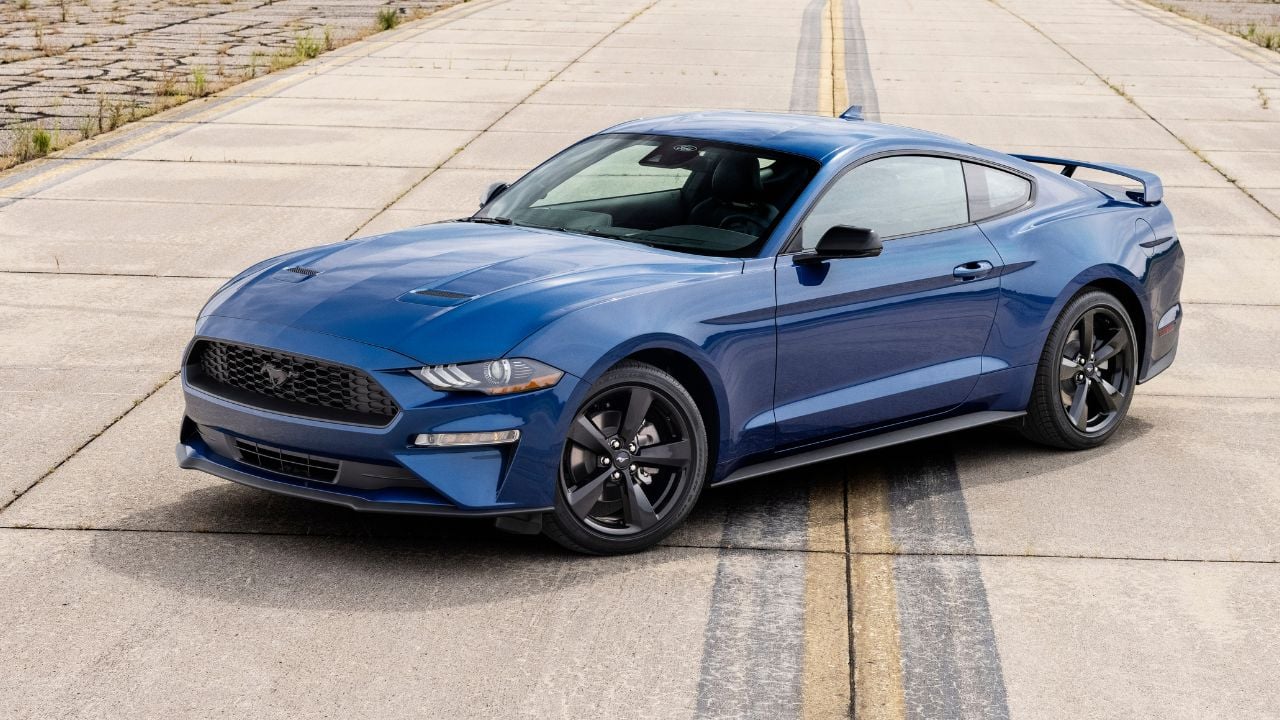
At one point, he argues, dead serious, that a Mustang is a sedan.
Now listen: we’ve stretched definitions in this article. We’ve made peace with calling a front-wheel-drive Eclipse a sports car. But calling a Mustang a sedan? That’s a bridge too far. I just can’t bring myself to repeat that unironically.
To justify this, the author offers a rather laborious analogy: if someone commits a crime in an Audi RS7, you wouldn’t report it to the police as a “coupe”—you’d call it a sedan, because that’s the formal body style classification. Okay. Point taken. In a purely descriptive, law-enforcement-on-the-scanner kind of way, that tracks.
But here’s the thing—if you saw a Mustang and a Camaro racing each other down Main Street, tires screeching and tailpipes roaring, you wouldn’t tell the cops, “Two sedans are drag racing.” You wouldn’t say “two coupes,” either. You’d say: two muscle cars or two sports cars were causing a ruckus.
And the cops? They’d know exactly what to look for.
No one’s going to pause mid-pursuit to play a game of “well, actually” over body-style nomenclature.
This is the fundamental issue with linguistic gatekeeping. Technical correctness is one thing, but so is functional clarity. When people describe what they saw, they don’t consult SAE class codes; they reach for what feels accurate. And in the automotive world, that’s often rooted in culture, sound, presence, and reputation, not just door count or roofline shape.
Call it what people recognize, what communicates clearly. That’s how language actually works in the wild.
Language Isn’t Killing Sports Cars—But Let’s Talk About What Did
The same Road & Track article that called the Mustang a sedan (we’re still recovering from that) also makes another claim: that language drift may be contributing to the death of “actual” sports cars.
Let’s be clear—this argument doesn’t hold up.
The disappearance of open-topped, lightweight sports cars has nothing to do with what people are calling them. Naming conventions didn’t kill the roadster. Regulations did. Insurance rates did. Safety mandates did. And perhaps most of all, buyers stopped buying them.
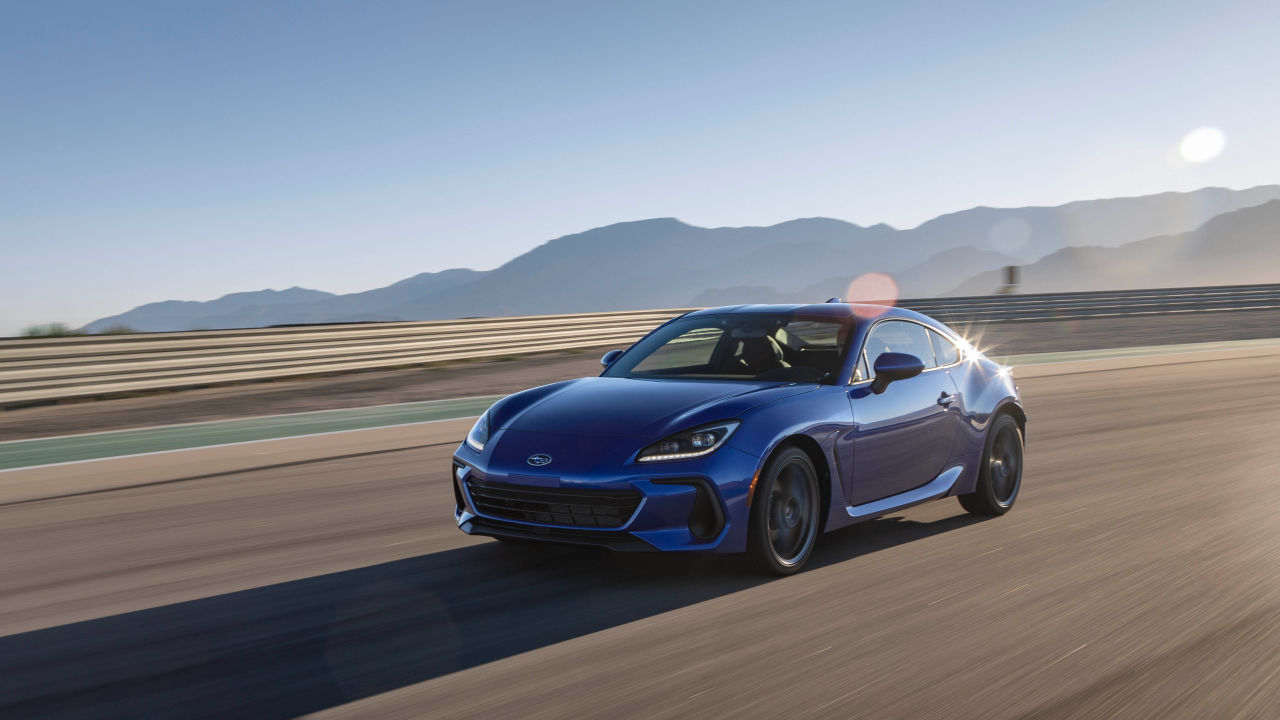
Consumer preference shifted. People wanted taller vehicles, more comfort, and more practicality. Convertibles and coupes became a niche. You can’t pin that on Gen Z journalists calling a BRZ a “sports car” in an article roundup.
And if we’re pointing fingers about who let these cars die off? It wasn’t the young blood writers taking a few creative liberties with terminology. It was the OG car enthusiasts who stopped buying “real sports.”. It was the voting public who supported the politicians and policies that made it harder to sell lightweight, emissions-lax, small-batch enthusiast machines.
Blame the market. Blame the margins. But don’t blame language.
Because if Audi and Mercedes can sell four-door sedans and call them “coupes,”
If Mitsubishi can slap the name Eclipse on a compact SUV,
If Ford can build an electric crossover and call it a Mustang Mach-E with a straight face—
Then let’s not pretend that linguistic purity has any bearing on what gets built.
Automakers don’t care about your definition of “sports car.” They care about what sells. And they’ll call it whatever they want to close the deal. Your preferred naming convention? It’s not in the product planning slide deck.
Headlines Need to Drive, Too

There’s also the matter of practicality. If we titled an article, “14 Lightweight 2-Door Performance-Oriented Personal Vehicles With Superior Handling Characteristics and High-Fun Quotients (That Don’t Fit a Strict Definition of a Sports Car),” well… no one would read it. It’s not a headline. It’s a hostage note.
Instead, we write: “14 Sports Cars for Under $15K.” And we clarify our terms within the article. It’s not about misleading readers. It’s about communicating quickly, clearly, and accessibly—while making room for both the Corvette and the Celica GT-S to share space in a broader conversation about driving pleasure.
And if you still feel strongly about it? Email us. We’ll read it. We might even agree with you. Then we’ll go back to wrenching on our ’86 project cars, knowing full well that “sports car” isn’t a fixed label, but a conversation—one that evolves with every generation of drivers.
Gatekeeping vs. Growth: What’s Your Intent?

To the readers who take the time to email us about our word choices—and we do get a lot of those—here’s something we’d like to ask in return:
What’s your intent when calling out our use of language?
Are you trying to educate and enrich the culture we all love? Or is there, even just a little, a need to feel correct, superior, or in control?
Car culture, like many fandoms, can suffer from gatekeeping. You’re not a real fan unless you know the rare JDM variant. You don’t truly love Star Wars unless you can recite the Expanded Universe. You don’t understand “muscle cars” unless you’ve rebuilt a carbureted big block by hand.
That sort of energy shuts doors instead of opening them.
There’s room in this culture for everyone—the purists who hold tightly to the original definitions, and the newcomers calling their Eclipse a sports car because it’s the first fun thing they’ve ever driven. We need both. One preserves the past, the other brings life into the future.
It reminds us of a quote from Whose Line Is It Anyway? that we’ll paraphrase for effect:
“The rules don’t matter, and the points are made up.”
Unless you’re talking about a sanctioned racing series or a rules-defined competition, being literally correct is often less important than being inviting.
Something I’ve learned to ask myself from long road trips with the family: Is it more important to be right or to have a good time?
It’s easy to get caught up in the minutiae and feel the urge to educate everyone, but at some point, that starts to sap the fun out of the experience. And honestly? Most of the time, it didn’t really matter anyway.
Let Language Evolve Like the Machines It Describes

Cars change. Definitions change. The way we talk about both has to adapt.
So if you see a headline that stretches a definition, take it as an invitation. Join the conversation, offer your take, and maybe—just-maybe—consider the spirit behind the term rather than the spec sheet.
Let’s make room in the garage and in the dictionary.
We love cars. We love language. And we’ll keep driving both as far as they’ll take us.