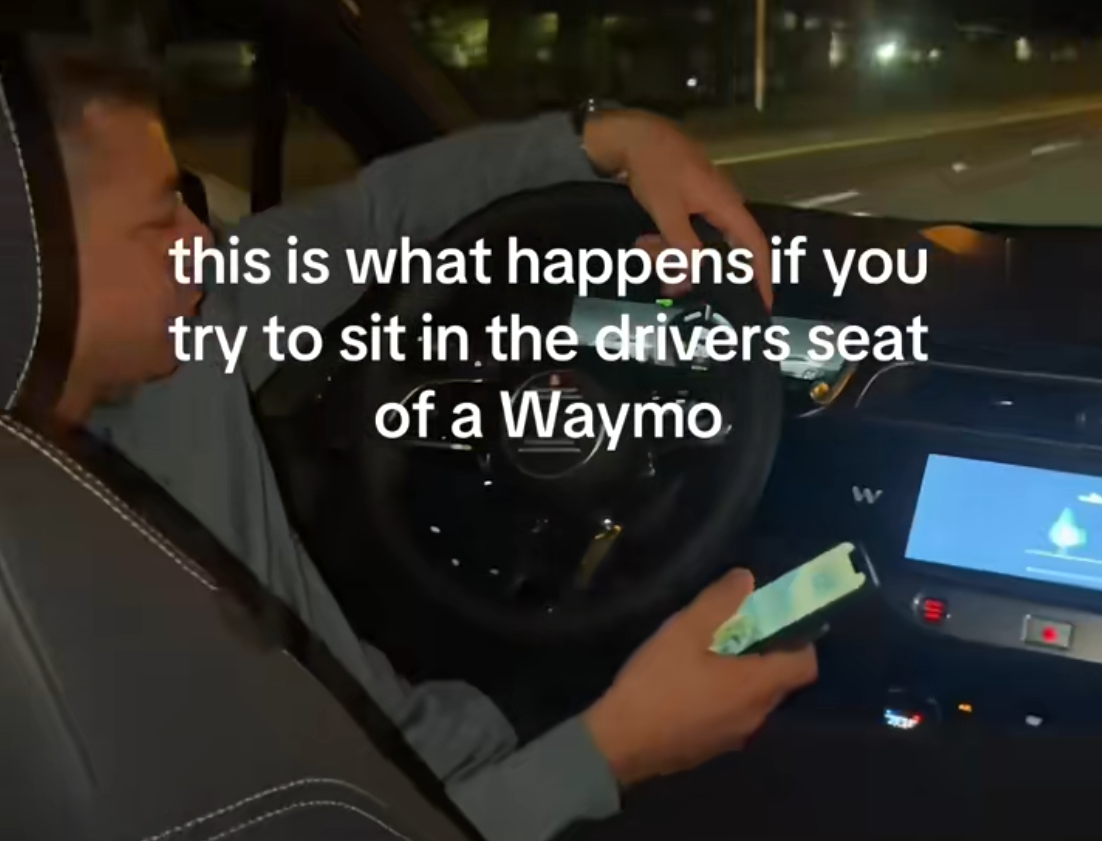
Autonomous taxis continue to divide public opinion, and a viral TikTok is adding even more fuel to the debate surrounding self-driving rides. This time, the conversation is not about a crash, a traffic stop, or a robotaxi freezing in the middle of an intersection. Instead, it centers on something surprisingly simple: sitting in the driver’s seat.
Waymo, the self-driving taxi company owned by Alphabet Inc., has become one of the most recognizable names in autonomous transportation. Its driverless Jaguar I-PACE vehicles operate in several major cities and are designed to transport passengers without a human behind the wheel.
But despite the futuristic setup, there is still a steering wheel and driver’s seat inside the vehicle. Naturally, some riders are tempted to test boundaries, especially when curiosity and social media collide.
That is exactly what happened in a now-viral video posted by TikTok user Steph, known online as @sunnysteph7. The clip has racked up millions of views after showing a passenger briefly climbing into the driver’s seat during a Waymo ride, only for the company to respond almost immediately through the vehicle’s speaker system.
Waymo Quickly Shut Down the Ride
@sunnysteph7 #waymo #selfdrivingcar ♬ original sound – Torrell Tafa
The video starts with a man climbing over the center console and into the driver’s seat of the autonomous taxi. Moments later, the car’s remote support system responds.
A Waymo representative can be heard warning the passengers that they were violating the company’s terms of service and that the ride may be canceled. The passenger quickly moved back into the front passenger seat, but the message was clear: the driver’s seat is off limits.
Waymo’s rider policies explicitly prohibit passengers from sitting behind the wheel, even though no human is actually driving the vehicle. The company allows riders to sit in the front passenger seat or the rear seats, but the driver’s seat is marked as restricted in official diagrams and onboarding materials.
The policy may seem strange at first glance, especially to people wondering why a self-driving car even needs a steering wheel. However, the answer largely comes down to safety regulations, engineering requirements, and emergency protocols.
Why Waymo Still Uses Steering Wheels
Even though Waymo vehicles operate autonomously, the cars are still based on production vehicles like the Jaguar I-PACE. That means they retain traditional driving hardware including pedals, steering wheels, and driver controls.
For many observers, the setup creates a psychological contradiction. If the car can drive itself, seeing a steering wheel naturally makes people think human intervention is possible.
Some commenters on Steph’s video joked that the presence of the driver’s seat feels like “setting people up for failure.” Others questioned whether riders should be allowed to take over if they feel unsafe during a trip.
However, reports from the Los Angeles Times indicate Waymo’s system cannot simply be overridden by passengers. The company has reportedly built safeguards that prevent riders from taking control of the vehicle, even if they sit behind the wheel.
Waymo also monitors situations where passengers attempt to enter the driver’s seat. According to reports, the company’s rider support team is immediately alerted when that happens.
Social Media Remains Deeply Split on Robotaxis
The viral clip quickly turned into a broader discussion about autonomous vehicles themselves.
Critics of robotaxis pointed to previous incidents involving self-driving vehicles, including reports of traffic violations, unexpected stops, and collisions involving animals. Supporters, meanwhile, argued that autonomous systems may eventually become safer than human drivers once the technology matures further.
Some commenters reacted with sarcasm, questioning why sitting in the driver’s seat triggers an immediate response while other widely publicized Waymo incidents have occurred in the past.
Others simply appreciated that someone else tested the rule first so they would not have to.
The fascination surrounding Waymo highlights how people are still adjusting to the reality of fully autonomous transportation. For many passengers, the technology feels both impressive and unsettling at the same time.
What This Incident Teaches About Self-Driving Cars
This moment may seem humorous on the surface, but it reveals a larger challenge facing autonomous vehicle companies: public trust.
Self-driving technology is advancing rapidly, but social acceptance is moving at a much slower pace. Riders are still figuring out what behavior is acceptable inside these vehicles, while companies are trying to establish boundaries that keep passengers safe and protect the integrity of the technology.
The incident also demonstrates how closely monitored these systems are. Many riders may assume they are alone inside a robotaxi, but Waymo clearly maintains active oversight through remote support teams and in-car monitoring systems.
For companies developing autonomous transportation, that level of supervision may be necessary during this transitional phase. While driverless cars promise convenience and efficiency, public confidence will likely depend on how reliably these companies handle unusual situations, curious passengers, and unexpected behavior.
For now, one thing is certain: if you are riding in a Waymo, the front passenger seat is fine. The driver’s seat, however, is apparently a very fast way to end your trip.