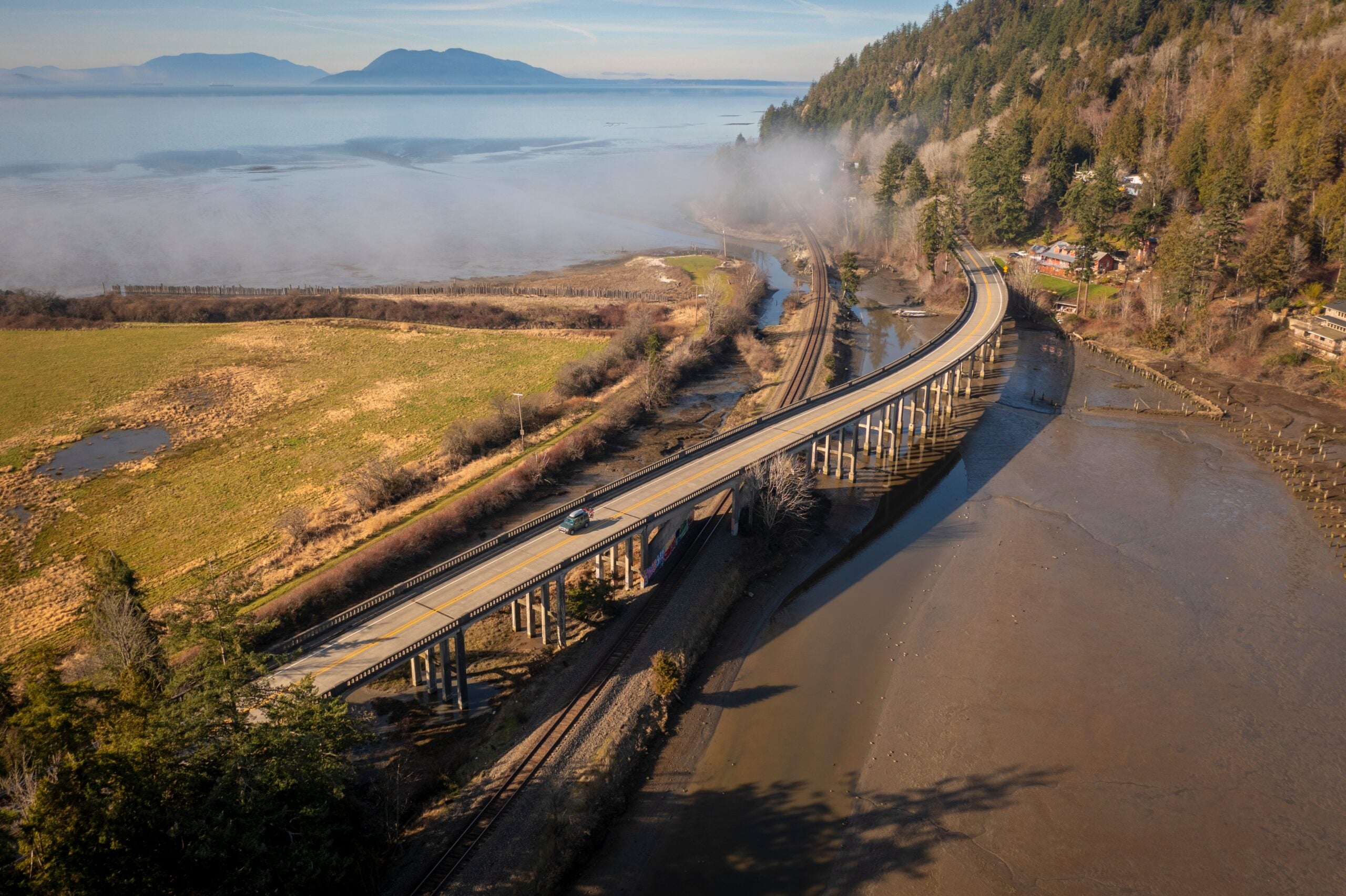
A story out of Skagit County, Washington is equal parts harrowing and miraculous. A 60-year-old woman survived three full days trapped inside her car at the bottom of a steep embankment after accidentally driving off Chuckanut Drive, one of the Pacific Northwest’s most scenic and unforgiving stretches of highway. She was eventually rescued Saturday morning after finally managing to reach 911, but the ordeal raised plenty of questions about what happened, how she survived, and what the rest of us can take away from it.
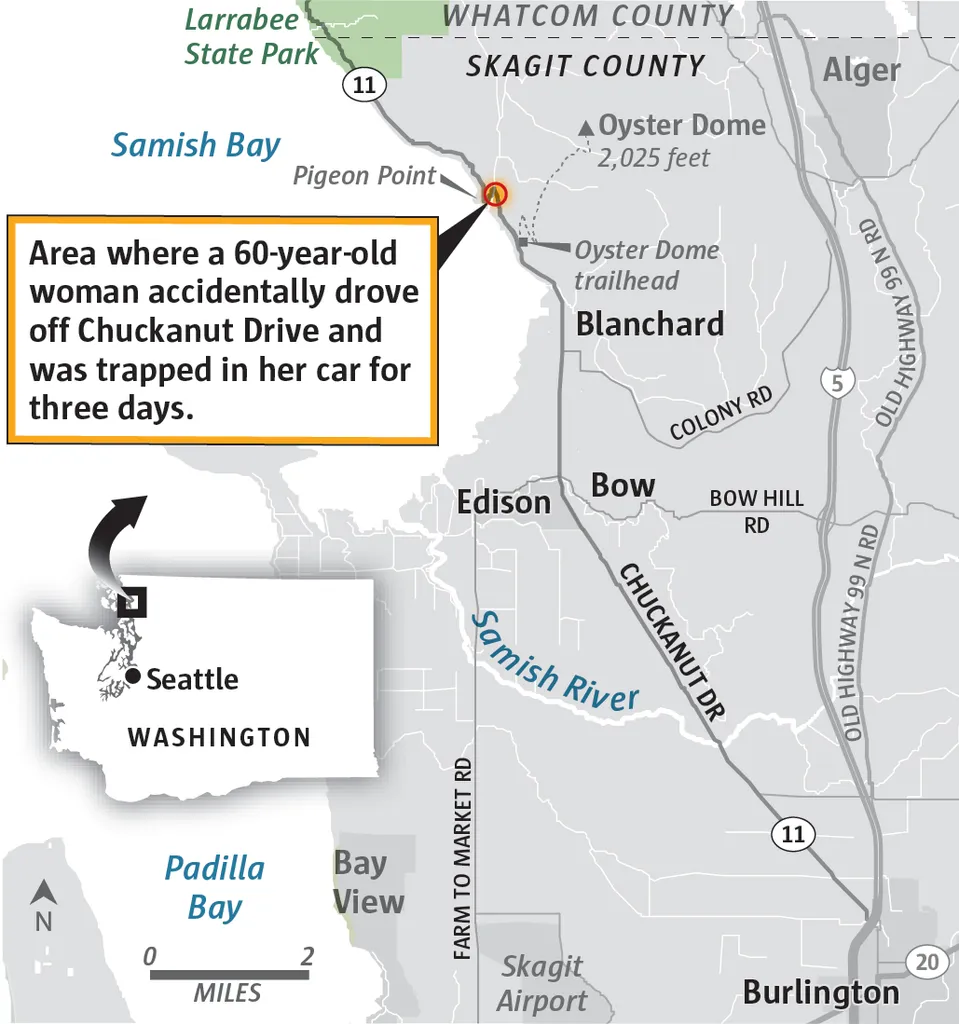
Chuckanut Drive, also known as Highway 11, runs along a narrow corridor where the Cascade foothills meet Samish and Bellingham Bays. It is a gorgeous drive, popular with cyclists, sightseers, and commuters alike. It is also the kind of road where a split-second distraction can send a vehicle off the edge and completely out of sight. That is exactly what happened here, roughly four miles north of the small community of Bow.
According to a copy of the 911 call obtained by The Seattle Times, the woman told dispatch she had driven over the side of the road after looking at her phone. Her car came to rest about 40 yards down the embankment, tucked away and invisible from the roadway above. She was alive, but she was also very much on her own.
The call did not come in until Saturday morning around 8:30 a.m. The crash had happened on Wednesday. That means she sat in that car, injured and increasingly dehydrated, for approximately three days before help arrived.
Why Did It Take Three Days to Call for Help?
This is the detail that will stop most people mid-scroll. A dispatcher on the 911 call asked the woman directly why she had waited so long to call, and her answer was simple: she could not get her phone to work.
That one detail says a lot. The embankment sits in a rugged stretch of terrain where cell coverage is inconsistent at best. Anyone who has driven Chuckanut Drive knows the signal has a tendency to drop in and out. For a woman 40 yards below the road surface, surrounded by hillside and vegetation, getting a signal out was apparently not a given. It took until Saturday morning for conditions to line up enough for the call to connect.
It is a sobering reminder that a phone is only as useful as its connection, and that connection is never guaranteed when you need it most.
What the Rescue Operation Looked Like
Once first responders were able to trace the location of the 911 call, they moved quickly. Washington State Patrol trooper Kelsey Harding confirmed that crews worked to rescue the woman from her vehicle and then pull the car itself out of the embankment. It was a significant enough operation that traffic on Chuckanut Drive had to be stopped in both directions for two hours.
For a road that sees regular commuter and tourist traffic, a two-hour full closure is no small thing. But given the circumstances, that inconvenience was more than worth it. The woman was transported to Skagit Valley Hospital in Mount Vernon, where she was treated for injuries from both the crash itself and the prolonged time spent trapped in the vehicle.
She told dispatch she was dehydrated. The full extent of her injuries has not been publicly released.
What Chuckanut Drive Is and Why This Stretch Is So Dangerous
For those unfamiliar with the area, Chuckanut Drive is frequently celebrated as one of the most beautiful roads in Washington State. It winds along the edge of the Chuckanut Mountains, offering sweeping views of the San Juan Islands and the bays below. It is also narrow, curvy, and bordered on one side by rocky terrain and on the other by steep drops toward the water.
The section where this crash occurred sits about four miles north of Bow, in Skagit County. There are no guardrails in many sections, and the vegetation along the slopes can be dense enough to completely hide a vehicle from anyone driving or walking past. It is entirely plausible that dozens of cars passed the spot where this woman was stranded without anyone knowing she was there.
That combination of natural beauty and genuine danger is what makes this road a popular subject of travel writing and, unfortunately, occasional accident reports.
What We Can Learn From This Incident
Beyond the immediate drama of the rescue, this story offers a few real takeaways worth holding onto.
First, distracted driving does not require highway speeds or heavy traffic to be deadly. A momentary glance at a phone on a quiet scenic road was all it took to send this car off the edge. The woman was lucky to be alive, and the outcome could have easily been different.
Second, the three-day delay underscores the value of having a backup plan when cell service cannot be counted on. Emergency satellite communicators, which have become more affordable and widely available in recent years, are worth considering for anyone who frequently drives or hikes in remote areas of the Pacific Northwest. Even a basic personal locator beacon could have dramatically shortened the time this woman spent waiting for help.
Third, if you do end up in a survival situation inside a vehicle, staying with the car is generally the right call. Vehicles are easier for rescuers to find than a person on foot, and they provide shelter. This woman did that correctly, even if the wait was brutal.
Finally, this is a good moment to revisit your own phone habits behind the wheel. No notification, no map adjustment, no quick glance is worth the risk. Chuckanut Drive has a way of reminding people that nature does not offer second chances lightly. This woman got one. Not everyone does.