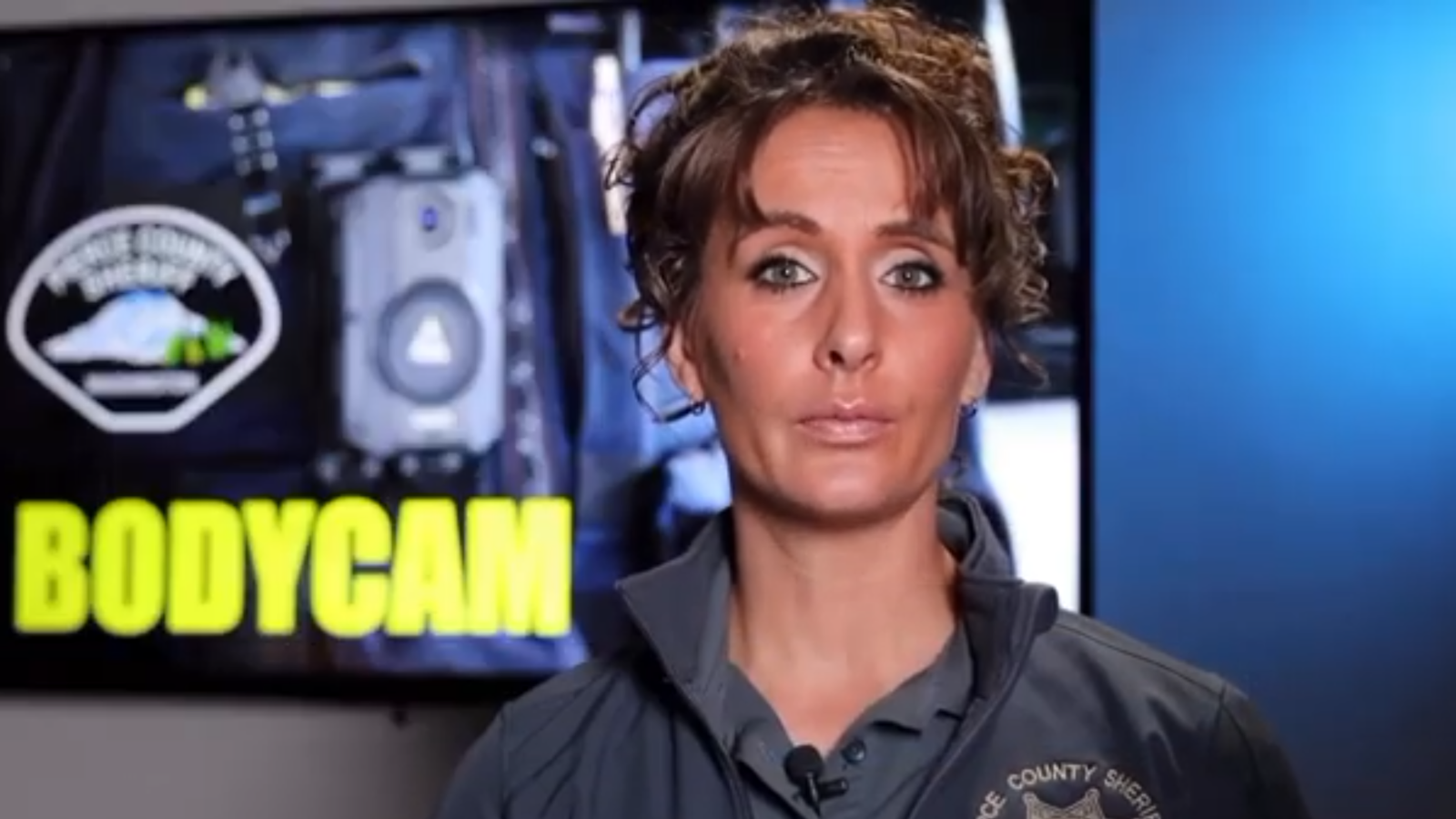
Thousands of dollars in cash were scattered across a roadway in Puyallup, Washington, on Monday evening after a driver forgot to remove a backpack from the roof of his car.
According to the Pierce County Sheriff’s Office, deputies were dispatched to the intersection of 94th Avenue East and 120th Street East at approximately 5:15 p.m. on November 23 following a report of money littering the roadway.
The cash had flown out of the backpack after its owner drove away, leaving members of the sheriff’s office and Washington State Patrol with the rather enviable task of picking up more than $7,000.
Deputies subsequently identified the rightful owner, who explained that he had collected the money from his workplace and was transporting it to another business. The sheriff’s office did not disclose how much money was originally in the backpack or whether every dollar was accounted for.
Christmas Comes Early, or So Some Motorists Might Have Hoped
Footage of the roadside cash collection prompted a mixture of amusement, admiration, and lamentations over missed financial opportunities among the sheriff’s office’s Facebook followers.
“I’m never in the right place at the right time!!!!” one commenter wrote.
While some struggled to comprehend how someone could be so absentminded with thousands of dollars, others commended the honesty of whoever reported the incident.
Perhaps the most candid response came from a commenter who said they were directly behind an officer when he pulled over.
“Glad he did cuz I didn’t want to get out and start picking up ones. But I didn’t want to not get out and start picking up ones either.”
That moment of moral ambivalence touches on a subject behavioral economists have explored on a surprisingly large scale, with results that suggest we may be overly cynical about human nature.
When More Money Is at Stake, Honesty May Prevail
A 2019 study published in the journal Science examined civic honesty through an experiment involving more than 17,000 wallets across 355 cities in 40 countries.
Researchers handed wallets containing varying amounts of cash to employees at establishments such as banks, hotels, and museums, then monitored whether the recipients contacted the owners using information supplied inside.
Across the 40 countries, the reporting rate increased from 40% for wallets containing no money to 51% for those containing approximately $13.45, adjusted for local purchasing power.
When researchers raised the stakes in the United States, United Kingdom, and Poland, the results became even more striking. Some 72% of wallets containing approximately $94 were reported to their owners, compared with 61% of those containing the smaller sum and just 46% of those containing no cash.
Both members of the public and professional economists had generally predicted that greater financial temptation would produce less honest behavior.
The researchers attributed the counterintuitive results partly to altruism and partly to people’s aversion to perceiving themselves as thieves. As the potential financial windfall grew, so did the psychological cost of pocketing it.
Granted, being entrusted with a wallet containing its owner’s contact information presents a different moral dilemma than encountering loose bills fluttering across a Washington roadway. The experiment offers no definitive answer as to how passing motorists might have behaved.
Nevertheless, thanks to someone reporting the scattered money and the subsequent recovery of more than $7,000, one forgetful driver found himself with considerably more to be thankful for just three days before Thanksgiving.