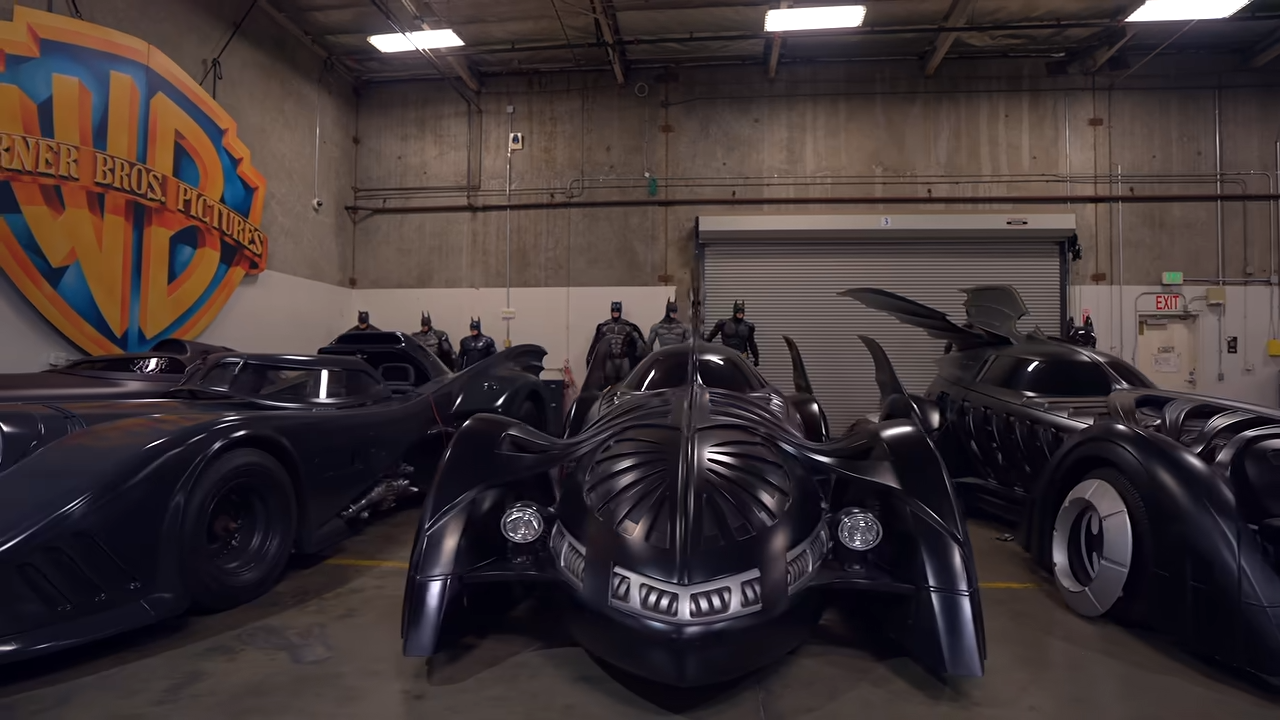
Most people know what the Batmobile looks like. Far fewer know what keeps one running after the movie is over. Warner Bros. has a collection of the famous cars, and they still need real mechanics to keep them in working order.
Some of these Batmobiles are nearly 40 years old. They have custom bodies, unusual lighting, and parts that were never meant for daily driving. Yet the studio keeps them ready to run rather than leaving them to collect dust.
A video released on October 1, 2026, takes viewers inside the Warner Bros. Archives in California. The tour, created with SkillsUSA and Skills Jam, includes a look at the Batmobile fleet and the people who care for it.
One of those people is Dennis McCarthy of Vehicle Effects. He explains what’s under the cars’ unusual bodies, why some parts are hard to replace, and how his team built a Batmobile that could jump through the air without falling apart.
Under The Hood
Embedded media follows; please allow a moment to load.
The Warner Bros. Archives confirmed that the tour included several screen-used Batmobiles. McCarthy explains that their strange appearance hides some fairly ordinary mechanical parts.
According to McCarthy, most of the movie Batmobiles use General Motors V8 engines. Beneath the fiberglass bodies are custom frames that look much like race car chassis. Many of the mechanical parts are available off the shelf, making repairs easier than people might expect.
The lighting can be another story. Some cars were built overseas and use different electrical systems. McCarthy says the crew couldn’t repair much of the neon lighting on one Batmobile because replacement parts were no longer available. The solution was to switch to LEDs, which use less power and are easier to maintain.
One Big Problem
Moving a Batmobile can be harder than fixing one. The cars sit extremely low and have long bodies that make loading them onto trailers difficult.
One model stands out. The Batmobile from *Batman & Robin* was so costly and complex to build that only one full-size example was made, according to the tour.
McCarthy says his crew can fit three Tumblers onto one transport truck. The *Batman & Robin* Batmobile, however, takes up an entire truck by itself.
Getting these cars loaded safely calls for special trailers, ramps, and sometimes hydraulic equipment. The crew must also avoid scraping the bodywork while getting the cars on and off.
Built To Jump
McCarthy also helped build the Batmobile for *Batman v Superman: Dawn of Justice*. That project came with a major problem before the car could even move.
The design left almost no space for an engine. His team placed it directly behind the two seats and built a custom drivetrain to make everything fit.
Director Zack Snyder wanted a car that could slide and jump. One plan called for the Batmobile to launch out of the Batcave, using adjustable suspension to raise the car before takeoff.
A location change ended that idea, but McCarthy pushed for a jump elsewhere in the movie. The crew eventually built one for a dock sequence.
The finished cars could make the jump repeatedly, he says, without breaking down.
Still Running
The work doesn’t stop when filming ends. McCarthy explains that the Batmobiles receive routine maintenance so they can be used when needed.
He says there is a big difference between a car that hasn’t been inspected in 10 years and one that hasn’t started in 10 years. Keeping up with maintenance helps avoid major repairs when a vehicle is needed on short notice.
The studio’s collection also serves as a reference for future productions. According to the Warner Bros. Archives, filmmakers can study original vehicles and props when planning new projects.
For McCarthy, the work began long before he entered the movie business. He started repairing bikes and skateboards as a child, later opened his own automotive business, and eventually began building vehicles for films. He says his career in the industry now stretches back nearly 30 years.