Few engines stir the soul like a V12. Built for moments when compromise isn’t an option, these powerplants have defined some of the boldest cars ever made.
For decades, automakers have turned to twelve-cylinder engines in pursuit of something greater: speed, refinement, and intrigue. Perfectly balanced and often breathtakingly powerful, V12s have found their way into everything from endurance racers and boutique supercars to opulent flagships and misunderstood outliers. Part of what makes them so captivating is their scarcity: these engines are reserved for machines that were never meant to blend in.
TVR Cerbera Speed 12
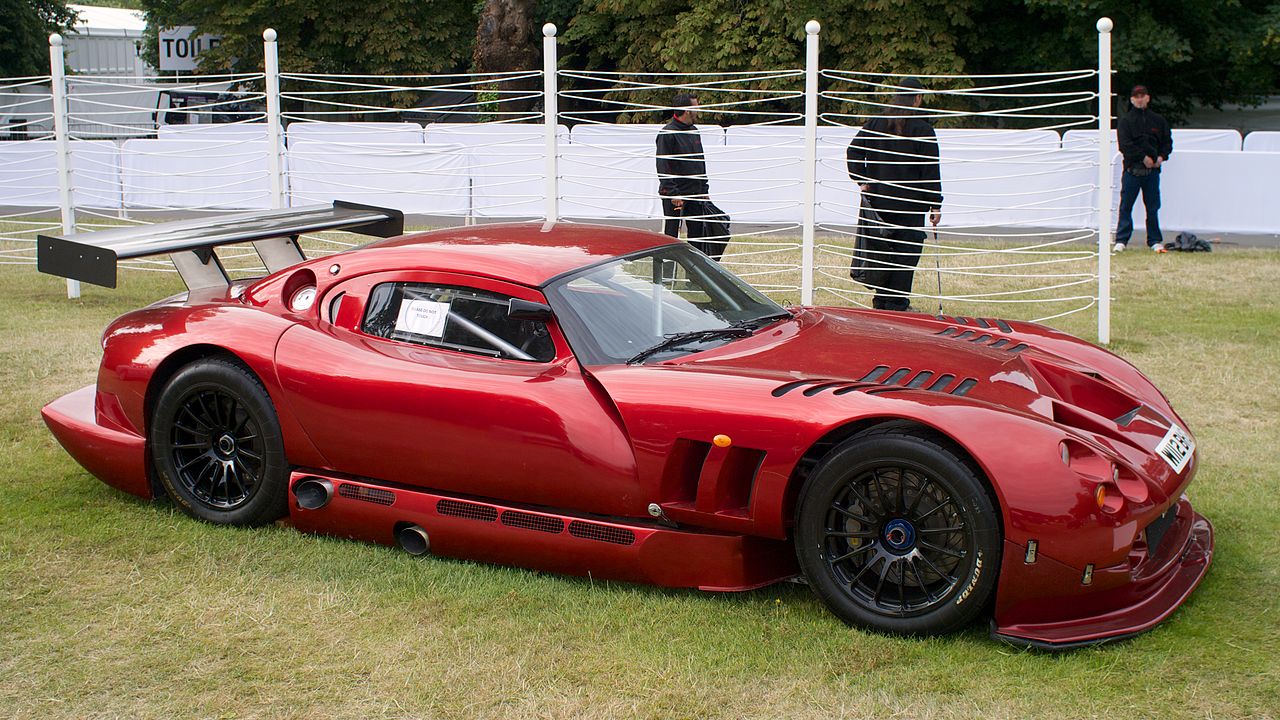
Troubled carmaker TVR built the Cerbera Speed 12, originally known as the Project 7/12, to claim the crown as the world’s fastest road car. It would also serve as the base for TVR’s GT1 endurance racer, but that project was shut down due to rule changes.
Once they’d built one example of the Cerbera Speed 12, TVR boss Peter Wheeler decided the car was too dangerous to be driven by mere mortals. He might’ve been right, as the car’s 7.7-liter V12 engine allegedly broke a dyno rated for 1000 horsepower. TVR only built one car and then sold it to a buyer who had to be vetted by Peter Wheeler. In 2023, Top Gear reported that it sold at auction for £601,500, a record for TVRs.
McLaren F1

The iconic McLaren F1, featuring a central driving position and two passenger seats, is among the most desirable supercars ever made. It’s also one of the hardest to keep on the road. Behind the driver, or passengers, hiding in a gold-covered engine bay (yes, real gold), there’s a 6.1-liter V12 engine developed by BMW.
That exceptional unit produces 630 hp, and the F1 remains the world’s fastest naturally aspirated car to this day, with a top speed of 240.1 mph – a record it has held since March 1998.
Bugatti EB110

In the 1990s, long before the Veyron changed the supercar scenery for good, French carmaker Bugatti made a brief, but very impressive comeback. Bugatti named the EB110 after the founder, Ettore Bugatti, and the number 110 was to celebrate what would’ve been his 110th birthday.
The EB110 was powered by a 3.5-liter quad-turbocharged V12 unit producing 550 horses, and there was even a Super Sport model with more than 600 hp. According to Hagerty, the EB110 was, for a short time, the world’s fastest car. It accelerated from 0 to 60 mph in 3.2 seconds and had a top speed of 216 mph — the Super Sport did a whopping 221 mph.
Ferrari 812 Superfast
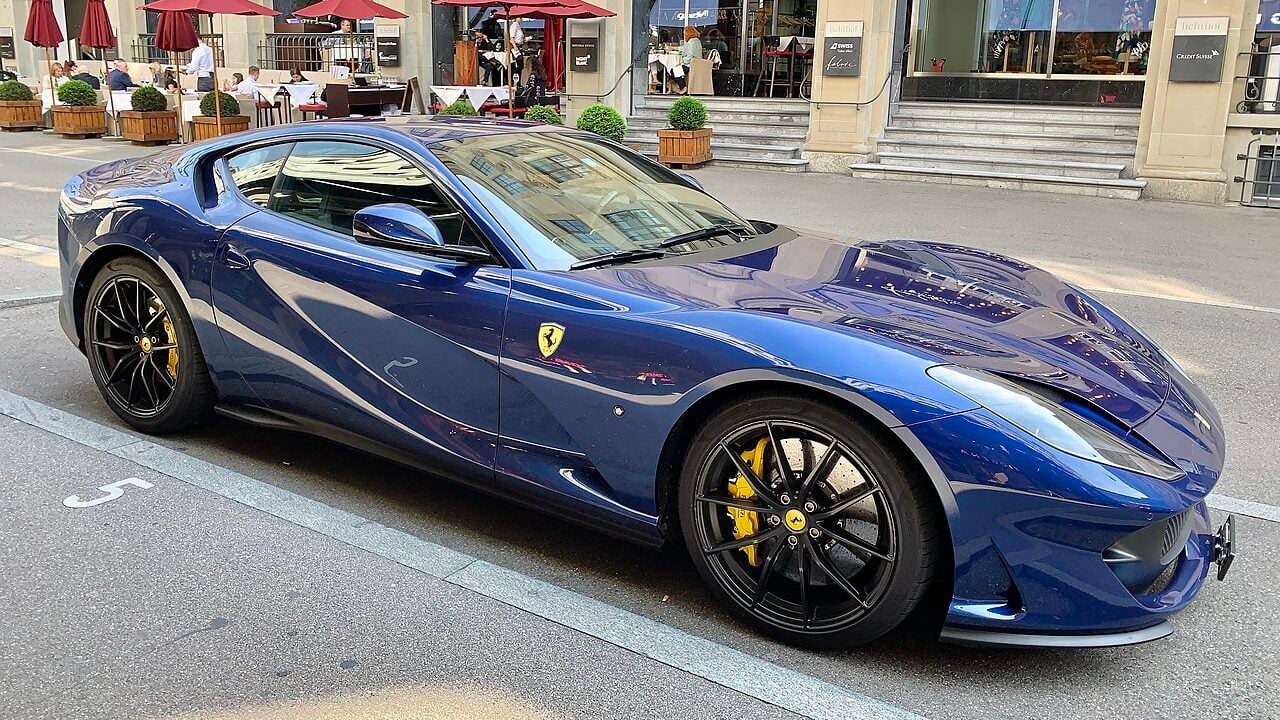
The Ferrari 812 Superfast is one of the meanest machines to ever emerge from Maranello. Car and Driver says its long, pointy hood hides a 6.5-liter V12 engine that houses 789 prancing Italian stallions. When burying the loud pedal in the carpet, the 812 Superfast literally screams all the way to its 9,000 rpm redline.
You’re forgiven for thinking that the 812 Superfast is a pure track weapon — it certainly can be — but Ferrari claims it’s a grand tourer. It all depends on your driving style, but with a 2.8-second 0 to 60 mph time and a top speed of 211 mph, the Superfast certainly lives up to its name!
Jaguar XJ13

In the mid-1960s, Jaguar wanted the top spot of the Le Mans podium, so the British company set out to build the gorgeous, mid-engined XJ13 to get it. Unfortunately, things didn’t go as planned.
Due to numerous delays, by the time the prototype was ready for testing, the rules had been changed. Jaguar axed the project and put the obsolete race car in storage. A shame, since MotorTrend reports this was the first Jaguar with a mid-engined layout. That’s right. It had a quad-cam, 5.0-liter V-12 behind the driver. In 1971, the XJ13 was in an accident at the MIRA test track and was later rebuilt.
Mercedes-Benz CLK GTR Straßenversion
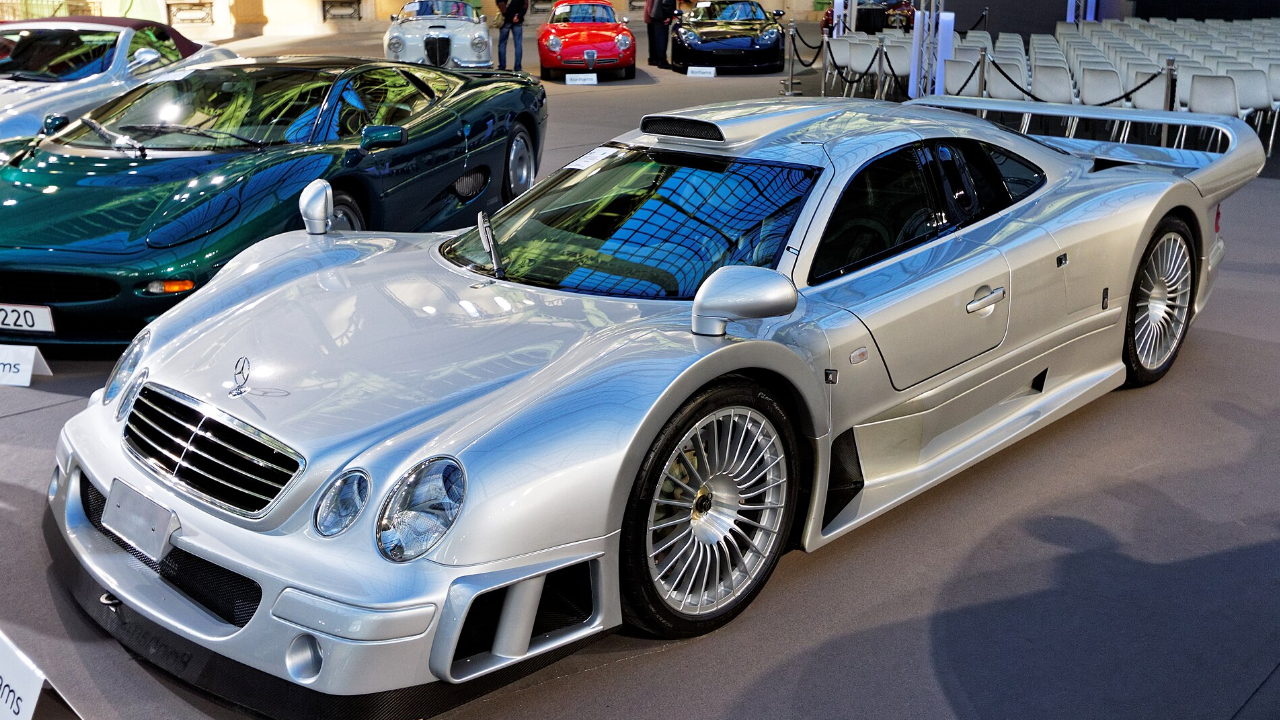
Mercedes-Benz built the CLK GTR Straßenversion to satisfy FIA GT1 endurance-racing homologation rules. The car looks nothing like the regular CLK that was displayed in Mercedes dealerships at the time.
The Straßenversion was Mercedes’s race car’s road-going version, and according to Top Gear, only 25 units were built. The engine was a 6.9-liter V12 that produced around 605 hp to the rear wheels, ensuring that the GTR could accelerate to 62 mph in 3.6 seconds and on to a top speed of 214 mph.
Pagani Zonda
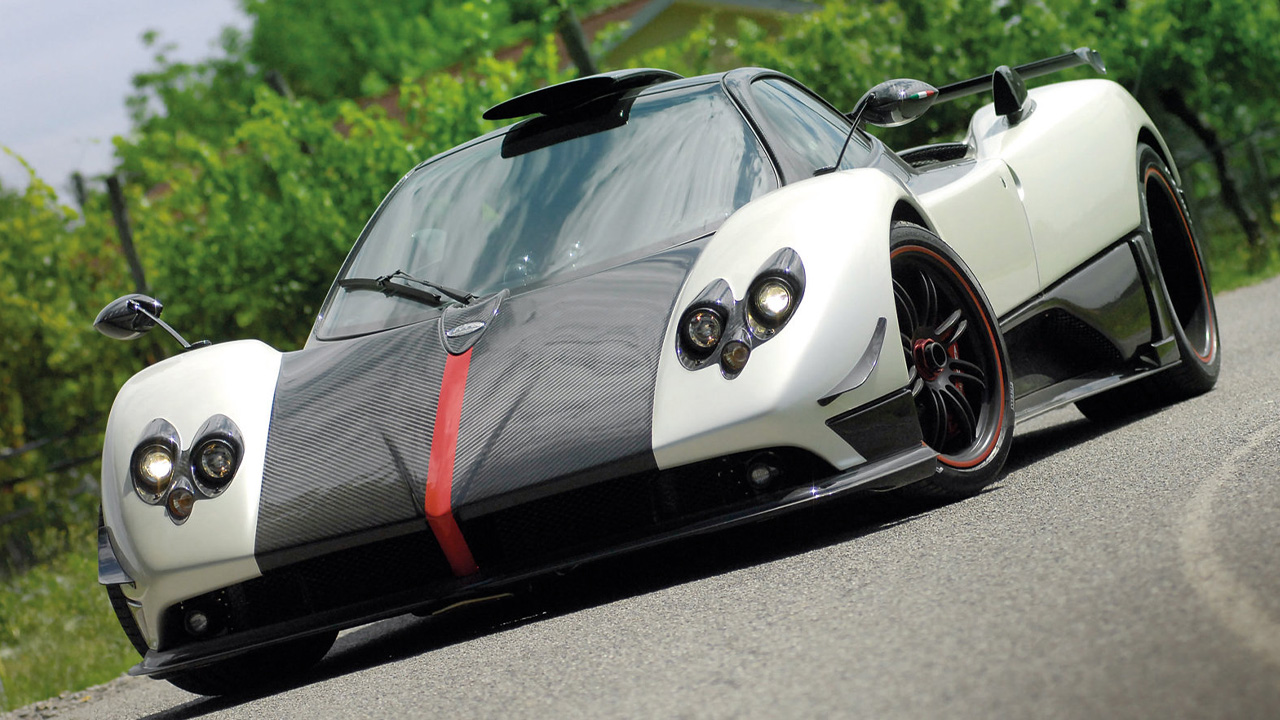
Pagani made jaws drop when it stepped onto the supercar scene with the Zonda in the 1990s. As a small, boutique manufacturer, the company didn’t have the resources to develop its own engines, so it made a deal with Mercedes-Benz and used the German 6.0-liter V12.
The Merc V12 had previously been used in the SL600, but AMG worked its magic on it before it was sent to Pagani. In the Zonda C12, it produced roughly 400 hp, but the power grew to an astonishing 790 ponies in the 2012 Zonda Revolución.
Aston Martin DB7 V12 Vantage

The Aston Martin DB7 marked the legendary British automaker’s return to its former self. Early DB7s were powered by a supercharged six-cylinder engine, but Aston introduced something a bit more special in 1999.
Aston’s DB7 V12 Vantage was powered by a 5.9-liter V12 engine with 420 horses and 400 lb-ft of torque. When fitted with the manual transmission, the V12 Vantage scrambled to 60 mph in 4.9 seconds and had a top speed of 186 mph.
Toyota Century

The Toyota Century proves that it’s not only supercars that benefit from V12 engines. Speed definitely isn’t Century’s forte; instead, you can think of it as a Japanese Rolls-Royce or Maybach. It’s the only road-going Japanese car fitted with a V12 engine, and it became an instant hit with Japanese politicians, business people, and Yakuza bosses.
The Toyota 1GZ-FE 5-liter takes advantage of the V12 engine’s refinement. Since it’s perfectly balanced, the ride is smooth as butter, and almost as silent as a modern EV.
Rolls-Royce Phantom

We couldn’t include the Toyota Century and leave out a Rolls-Royce, the yardstick of automotive opulence and luxury. In 1998, when BMW acquired Rolls-Royce, it reintroduced the V12 engine, as the British luxury brand had primarily used V8s since World War II.
The seventh-gen Phantom was the first model 100% developed under BMW ownership, and under its long hood was a 6.75-liter V12. This engine earned its status as one of the most refined units ever made, and Rolls-Royce famously replaced the tachometer with a “power reserve” gauge that showed how much of the engine’s power you still had left to play with.
Ferrari F50
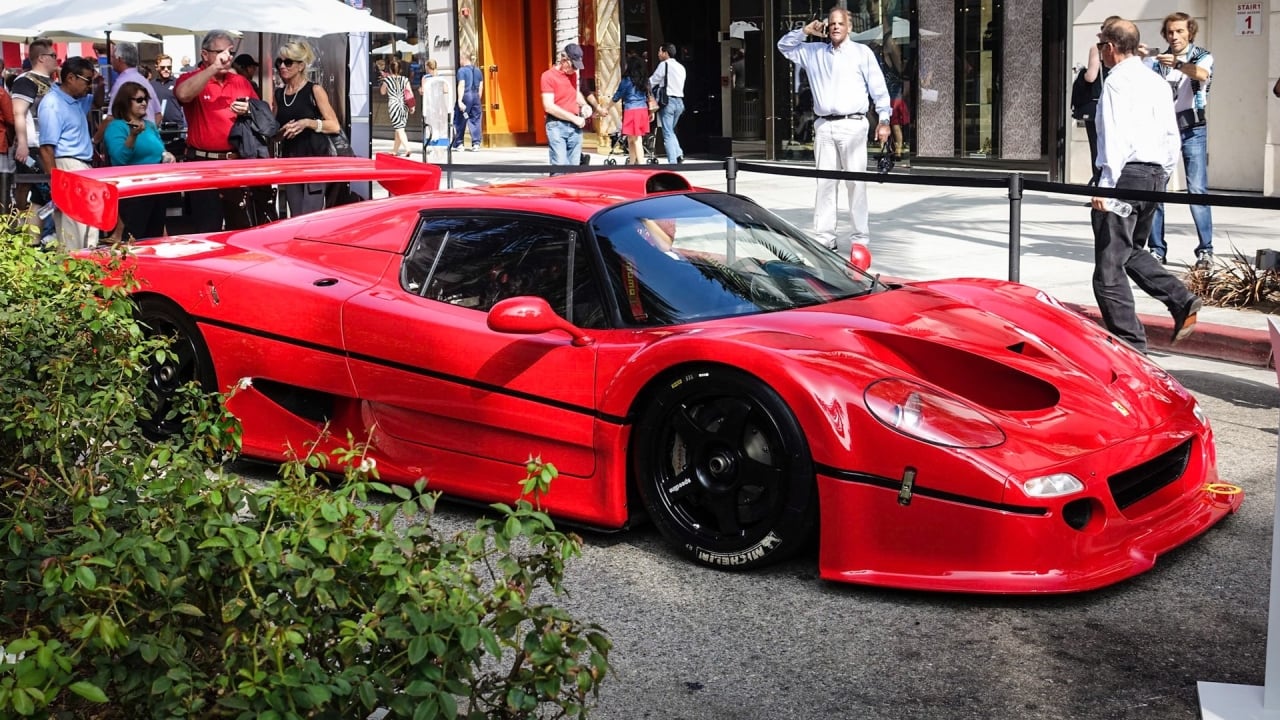
When the Ferrari F50 first arrived, it wasn’t as popular as it should’ve been. Taking over where the iconic F40 left off was never going to be an easy task, and it’s only recently that Ferrari enthusiasts have started recognizing the hidden charm of this flagship supercar.
Car and Driver states that the F50 features a 512-hp, 4.7-liter naturally aspirated V12, which was no ordinary engine. It’s derived from the unit Ferrari used in its 1990 Formula One race car, but connected to a manual transmission.
Jaguar E-Type

You’d be hard-pressed to find a list of the most beautiful cars in the world that doesn’t include the Jaguar E-Type. Early models had a straight-six engine under the endlessly long hood, and most E-Type enthusiasts agree that those are better than the later V12-powered ones.
That said, the V12 E-Type is still a gorgeous, highly collectible car. As for reliability, it’s a mixed bag. Some report that it’s outrageously poor, others claim it’s surprisingly good. Our advice? Make sure you carry the necessary tools with you, just in case. That way, you can get back home, too.
Lamborghini Miura

Lamborghini completely changed the supercar game with the 1966 Miura, and the Raging Bull still plays by the same rules today with their mid-engined V12-powered flagship cars. The Lambo Miura is commonly recognized as the first mid-engined supercar, and it just happens to be one of the most beautiful cars, too.
The engine was a 3.9-liter V12 unit first used in the front-engined 1963 350GT, and Lamborghini continued developing it until 2011, when it produced 660 horsepower in the Murcielago.
Aston Martin Valkyrie

Car and Driver says the Aston Martin Valkyrie is practically a road-legal F1 car. That’s not surprising, seeing as the British carmaker developed it in collaboration with the Red Bull Racing F1 team. Unfortunately, you need to be among the world’s wealthiest individuals to get your hands on one.
The wizards at Cosworth developed its naturally aspirated 6.5-liter V12 engine. It revs to 11,000 rpm and works alongside what’s probably the world’s most technologically advanced hybrid system.
Maserati MC12
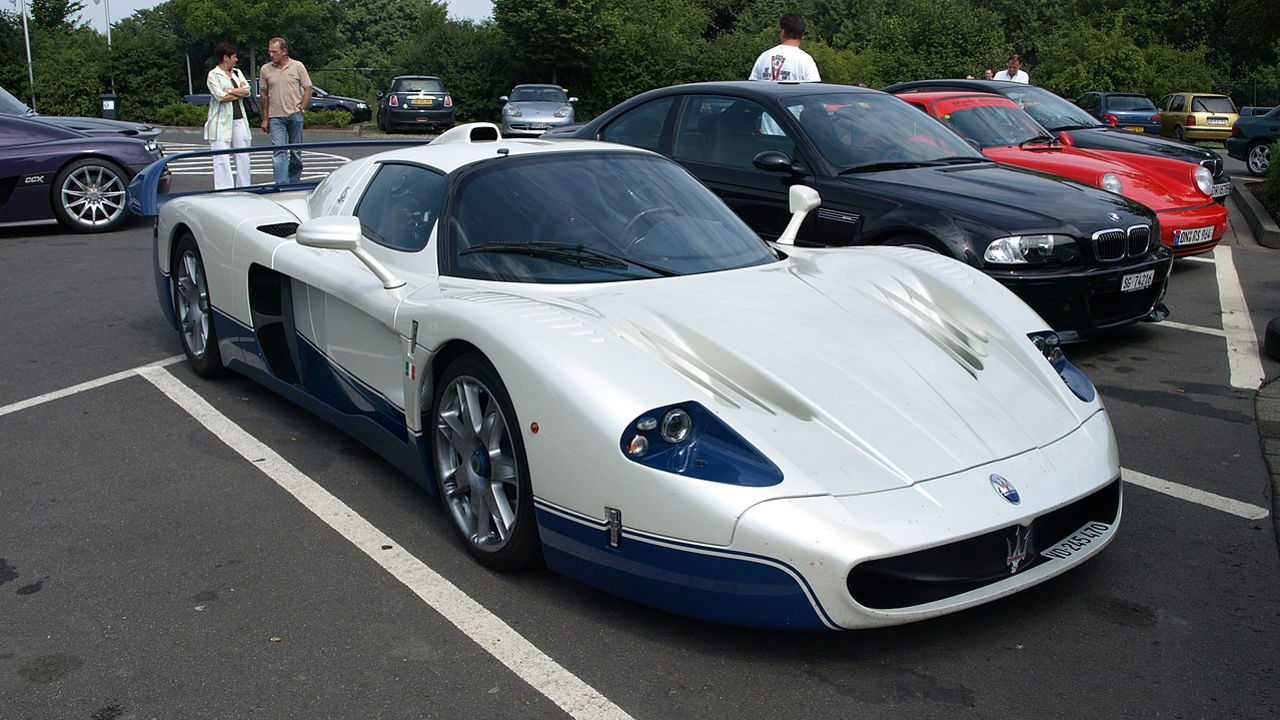
The MC12 was, essentially, Maserati’s version of the Ferrari Enzo. We chose the MC12 instead of the Enzo, as the Maserati was a homologation special with only 62 cars built, split into 50 road cars and 12 racers, whereas Ferrari made 400 Enzos.
Its 6.0-liter V12 engine was as good as ever when fitted in the Maserati MC12, and while it’s largely unknown outside car geek circles, the MC12 was a highly successful racer. Motor Authority reports that it won 40 of the 94 races it started in, and brought home six drivers’ championships, six teams’ titles, and two constructors’ titles in the process.
Jaguar XJR-15
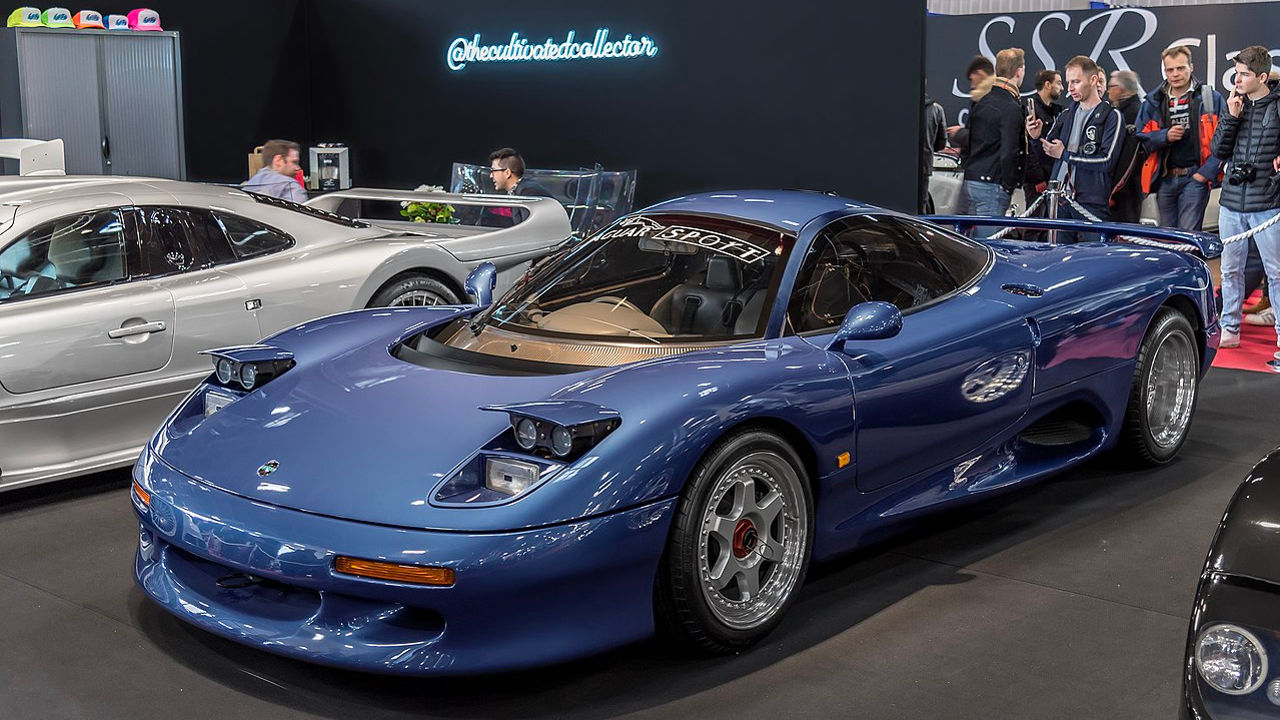
When Jaguar first teased the XJ220, they promised it would have a V12 engine, but that didn’t happen. However, the XJ220 has a sibling that most gearheads have never heard of. The XJR-15. Classic claims only 50 were built from 1990 to 1992, and only 27 of those were intended for road use. The best part? This Jag supercar actually has a V12.
The XJR-15 was based on the XJR-9’s chassis – a solid choice since it won Le Mans. Peter Stevens, who later went on to help create the McLaren F1, designed the body. Jaguar then dropped a 450-horsepower 6.0-liter V12 in there to ensure it was as fast as it looked.
Lamborghini Diablo

The Lamborghini Diablo doesn’t really need an introduction, does it?! This sleek bull carried the torch as Lambo’s flagship model after the wedge-shaped Countach was discontinued. While it remained in production for 11 years, MotorTrend reports that only 2,884 cars were produced — that’s considered a limited edition nowadays.
The Lambo Diablo had a 5.7-liter or 6.0-liter V12 in the middle, and thanks to its 485–600 horsepower, it became the first Lamborghini to smash through the 200 mph barrier. It was also the last Lambo built before the Volkswagen group took over.
Ferrari 250 GTO
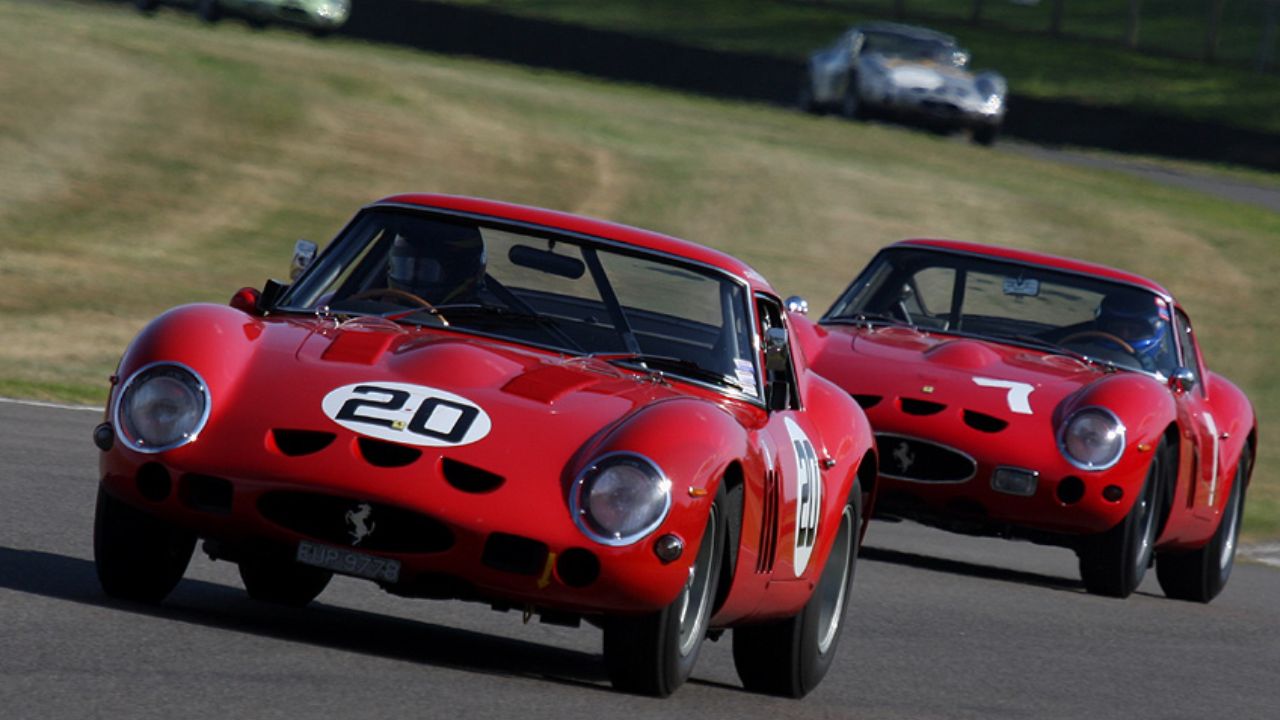
GTO stands for Gran Turismo Omologato, which gives us a hint at what the Ferrari 250 GTO is. Ferrari built the 250 GTO from 1962 to 1964 as a homologation special to race in FIA’s Group 3 Grand Touring Car series. If you’re wondering about the 250 number, that’s the displacement of each cylinder, measured in cubic centimeters.
The 250 GTO was powered by Ferrari’s Tipo 168/62 Colombo V12 engine. Ferrari only built 36 cars during its production run, and in 2018, one of them set a price record when it sold for $70 million.
GMA T.50
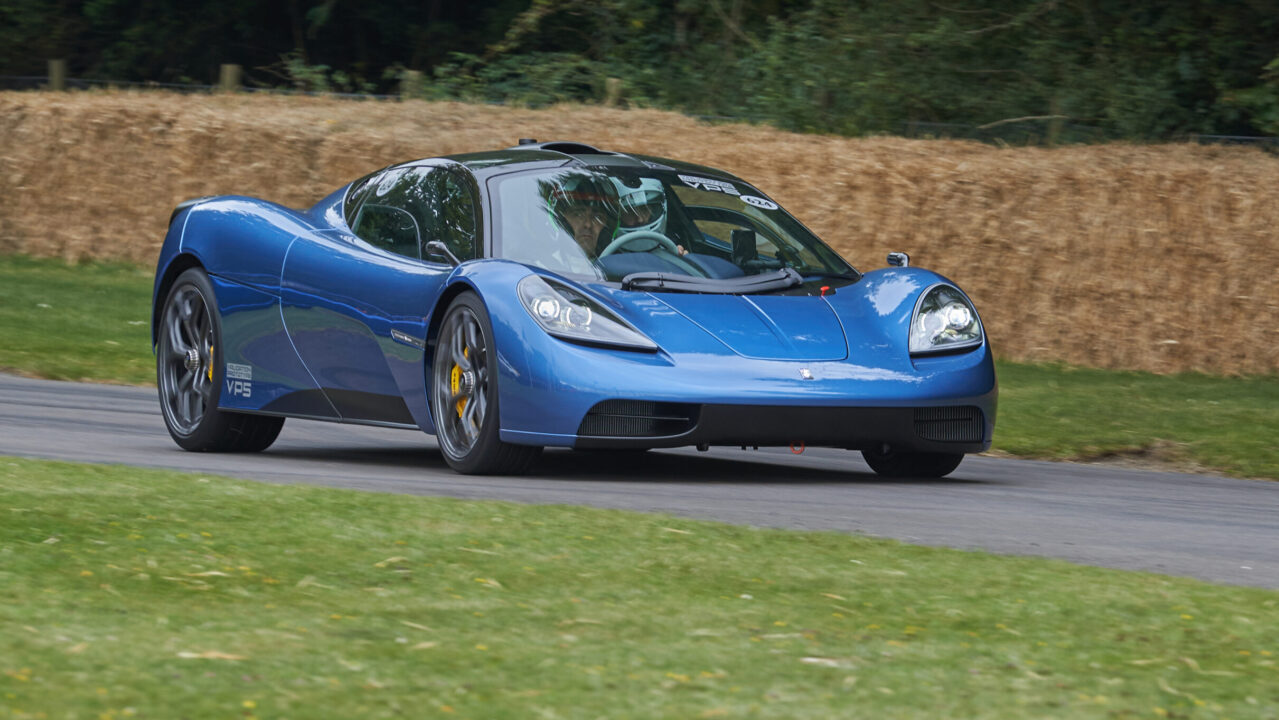
Gordon Murray is back at it! The man behind the McLaren F1, one of the most iconic V12-powered cars ever, has now created the GMA T.50. It’s the F1’s spiritual successor, but somehow, he managed to make it even better.
Powering the T.50 is a bespoke, naturally aspirated 4.0-liter V12 engine developed by Cosworth. It produces 654 hp at 11,500 rpm, and seeing as the T.50 has a dry weight of just 2,198 lbs, it has one of the highest power-to-weight ratios in its class.