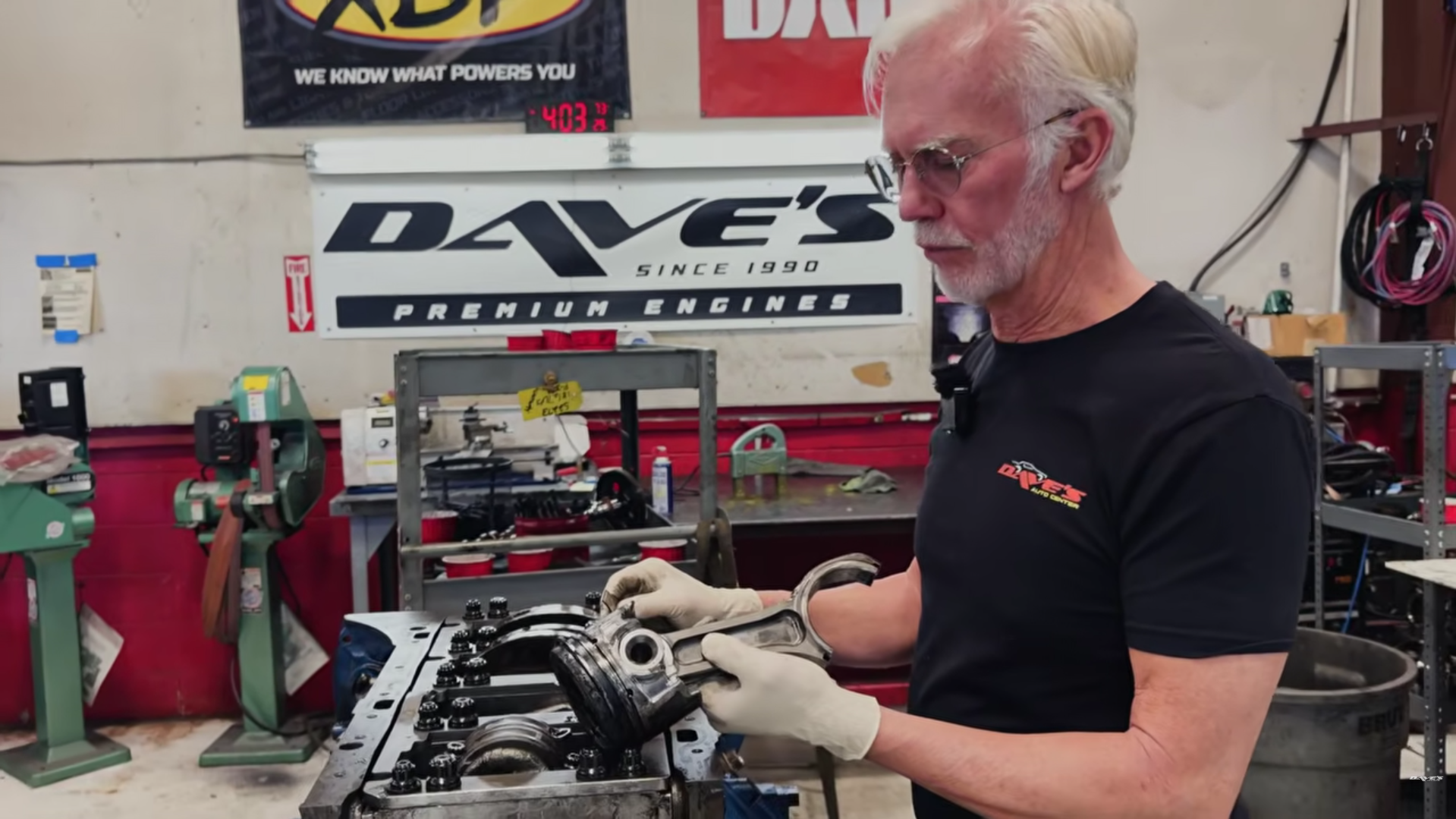
A Utah diesel shop expected to find evidence that a customer had destroyed his heavily modified Ford Power Stroke engine by pushing it too hard. Instead, a painstaking teardown revealed something far more uncomfortable: the shop’s own previous engine builder had apparently missed one tiny oiling detail that ultimately caused the entire motor to grenade itself.
Dave’s Auto Center had built the 6.7-liter Power Stroke roughly two years earlier with compound turbochargers, upgraded internals, race bearings, ARP hardware, and other serious performance parts. Because high-output diesel builds can fail under extreme boost and cylinder pressures, the customer had agreed that the engine would not carry a conventional warranty.
When the engine returned locked up and badly damaged, the initial assumption was that it had simply been over-boosted. The shop owner even noted that the compound-turbo setup was capable of producing extraordinary boost pressure, making customer abuse seem like the obvious explanation.
That assumption changed completely once the engine came apart. After tracing the failure through the connecting rod and wrist-pin assembly, the shop concluded that a bearing had blocked a critical oil passage during the original build. Dave’s Auto Center accepted responsibility and promised the customer a completely new engine at no charge.
The Engine Looked Like a Grenade Went Off Inside
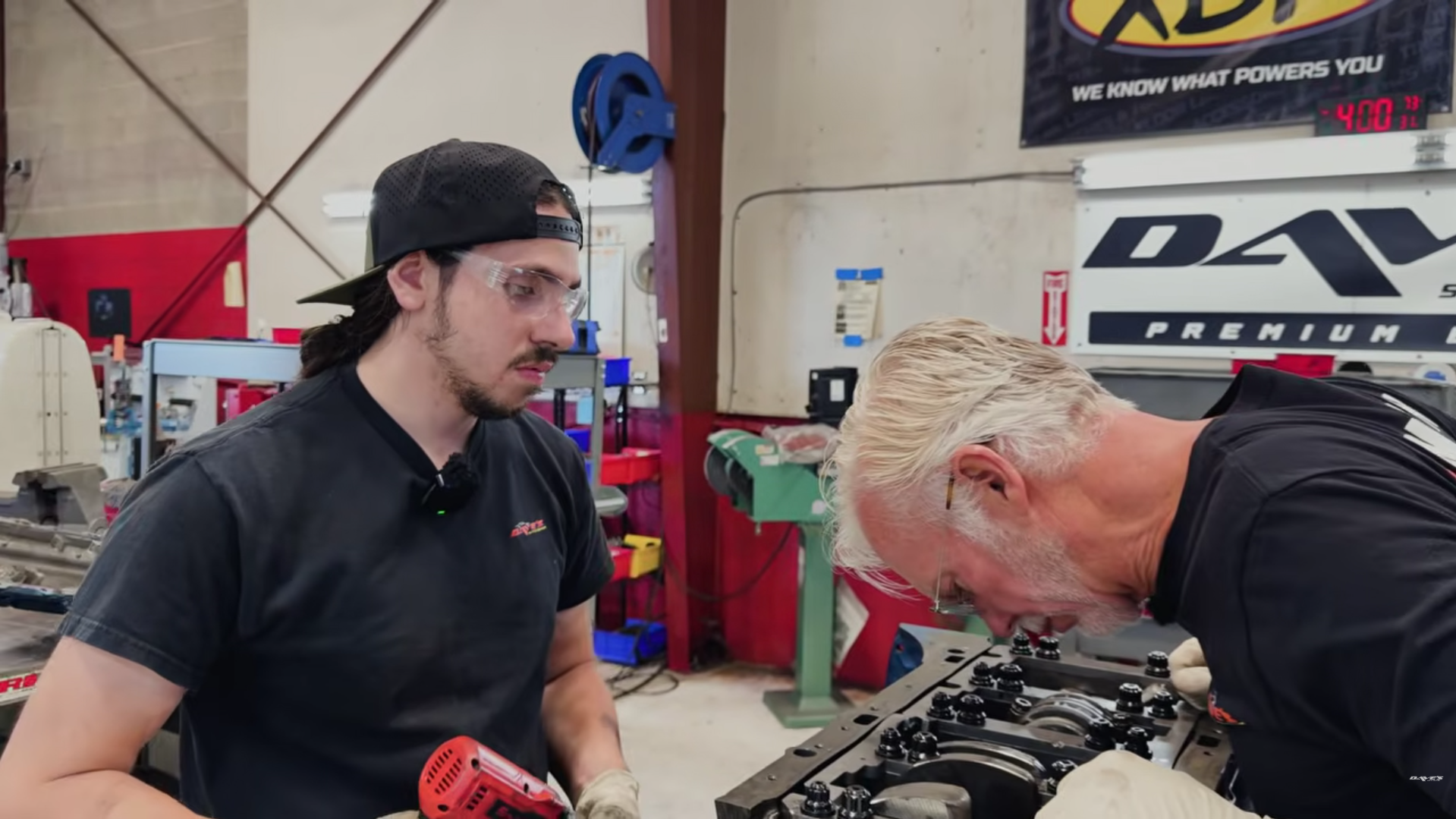
The damage was severe. Pieces of piston and connecting rod were found in the oil pan, while the failed rod had struck other internal components and damaged the camshaft and block.
At first, the evidence still seemed consistent with an engine that had simply been pushed beyond its limits. The bearings appeared to have received plenty of oil, the crankshaft still turned, and there were no obvious signs that poor air filtration or lack of lubrication had caused widespread wear.
Then the team noticed that one wrist pin had seized. The connecting rod used a gun-drilled internal oil passage designed to deliver pressurized lubrication from the crank journal up toward the wrist-pin bushing.
The rod and bushing were configured correctly, but the aftermarket race bearing installed during the original build did not have a corresponding hole drilled through it. That meant the oil passage was effectively blocked.
One Missing Hole Destroyed the Entire Motor
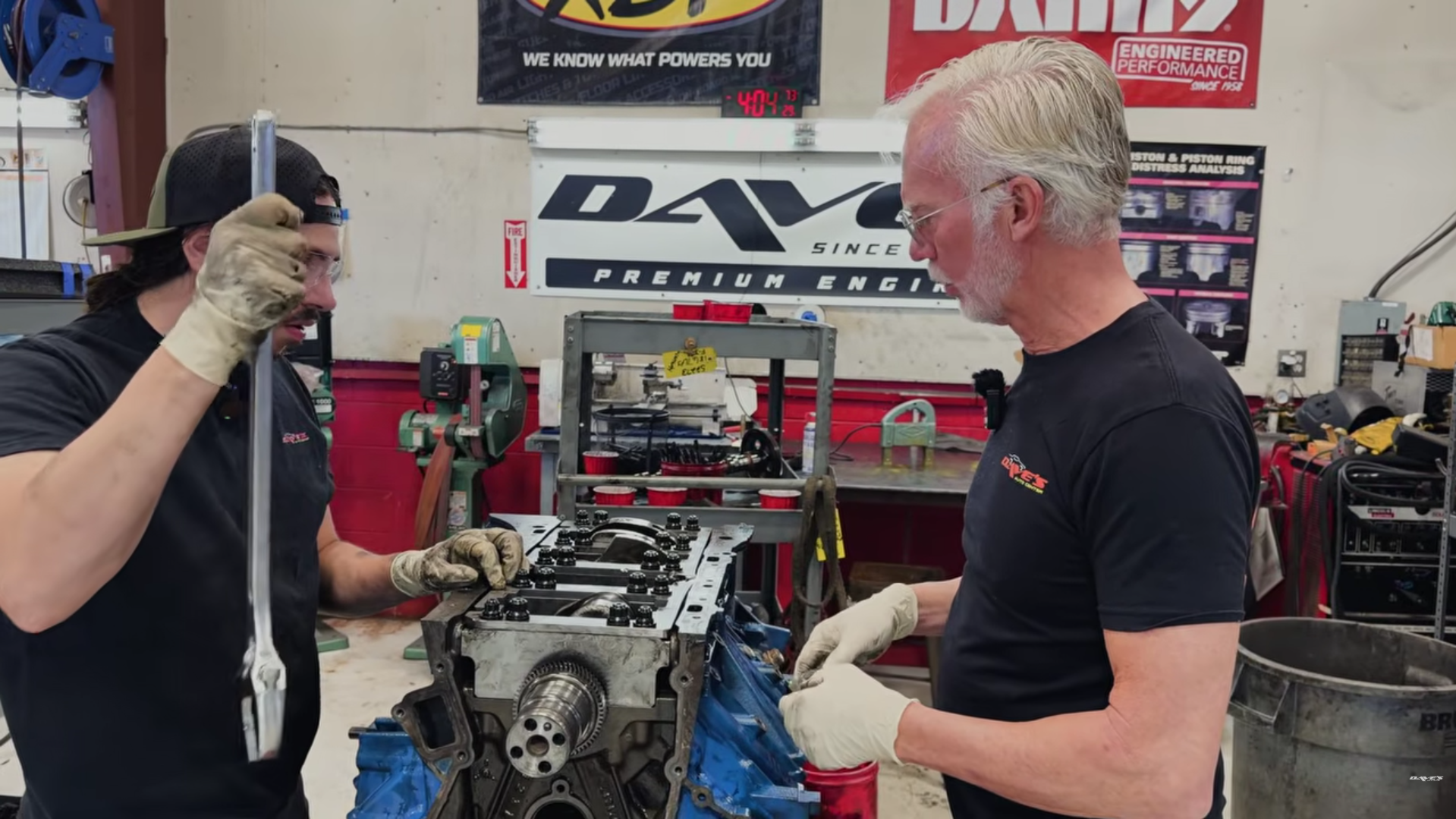
Without pressurized oil reaching the wrist pin, the extremely tight-clearance floating pin gradually galled and seized inside its bushing. Once the pin could no longer move freely, the forces generated by the high-output engine had nowhere to go. The connecting rod bent and broke, triggering a chain reaction that destroyed much of the engine.
According to the shop owner, drilling a small oil-feed hole in the bearing during assembly would likely have prevented the entire failure. The engine builder responsible for the original assembly had already left the company more than a year before the teardown. That detail did not change the shop’s response.
After confirming the cause, the owner called the customer, Eric, apologized directly, and told him the engine would be replaced free of charge. The customer had originally agreed to a no-warranty performance build, but the shop distinguished between a part failing under abuse and an assembly mistake it believed was its own responsibility.
The Replacement Engine Gets a Different Oiling Strategy
The new build is also being revised to eliminate the same failure mode. Instead of relying on the previous gun-drilled connecting-rod oiling arrangement, the replacement engine uses rods designed to receive splash lubrication from dedicated oil squirters beneath the pistons.
The teardown also revealed separate valvetrain problems, including cracked rocker stands and broken rocker bolts. The shop believes the stock-style valvetrain may have struggled with the increased spring pressures used in the performance setup.
As a result, the replacement engine is being upgraded with a more robust Jesel valvetrain system. Other components include coated performance pistons, billet main caps, a girdle, ARP fasteners, and heavy-duty bearings.
Before being installed back into the truck, the completed engine will undergo simulated testing for compression, oil pressure, and cooling-system integrity. Dave’s Auto Center also plans to load-test the finished truck on a chassis dynamometer once the installation is complete.
The Mistake Became a Lesson in Shop Accountability
Perhaps the most interesting part of the story isn’t the mechanical failure itself, but how the shop handled it publicly. Rather than quietly replacing the engine or disputing the claim, the owner filmed the teardown, explained the mistake, and used the incident as an example of the standard he expects from his employees.
While discussing the promotion of another engine builder, he framed honesty as one of the most important qualifications for the job. His question was simple: who can be trusted to make a $20,000 mistake and actually admit it?
That number gives some sense of the financial pain involved. Replacing a heavily modified 6.7 Power Stroke with this level of machine work and performance hardware is not a cheap goodwill gesture.
Still, the shop ultimately decided the responsibility was clear. The customer may have purchased a performance engine without a traditional warranty, but once the teardown showed that an assembly oversight likely caused the failure, Dave’s Auto Center chose to stand behind the work.
In the performance world, where engines can fail for dozens of expensive reasons, figuring out who is responsible is rarely simple. This time, one missing oil hole told the whole story.