
Some trucks are legends, you still see at every car show or hear about in every classic car conversation. Others made their mark, shaped truck history, and quietly faded from the spotlight — not because they weren’t great, but because time moves on and fewer of them survive today.
This is a tribute to the pickups that helped define the segment, brought real innovation or character, and deserve to be remembered by a new generation of truck fans.
Methodology
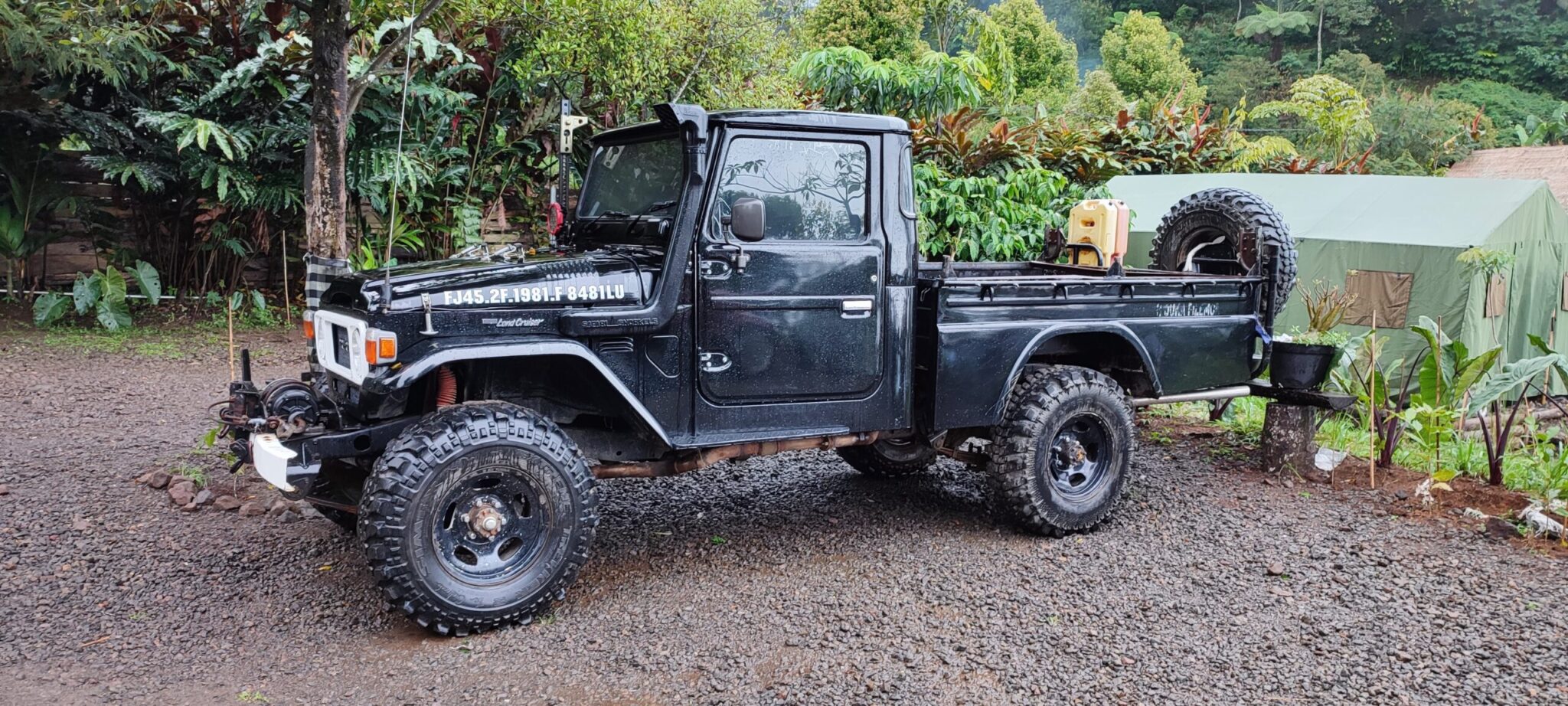
We selected vehicles that have made a meaningful impact on pickup or truck history through innovation, design, or utility, but often don’t receive as much attention as they deserve. Some might be considered SUVs by today’s standards, like the Bronco, Land Cruiser, or Scout, but were included for their strong pickup roots.
Some of these vehicles have built a cult following over time, but we included them because of their lasting influence on truck design and culture.
1967-1972 Chevrolet C/K

The second-generation Chevy C/K series was a turning point for the American pickup, blending work-truck grit with car-like comfort in a way that hadn’t been done at scale before. It wasn’t rare, but it was revolutionary, setting the tone for what a pickup could be in the modern era.
With multiple engine options, simple mechanics, and clean styling, the C/K became a favorite among builders and collectors. It’s easy to work on, endlessly customizable, and still affordable in many markets. Despite its popularity, it doesn’t always get the credit it deserves for reshaping the segment.
1977-1979 International Harvester Scout SSII Rancher Special

The Scout II was International Harvester’s punchy response to the rising wave of off-roaders, aimed squarely at competitors like the Jeep CJ and Ford Bronco. With its minimalist styling, roll bar, and removable soft top, the SSII leaned hard into its rugged identity while still feeling modern for its time.
Only about 4,000 were built, making it a rare find today. Engine options ranged from a 196ci inline-four to a hearty 345ci V8, giving buyers real variety. Tough, capable, and dripping with character, the Scout SSII deserves more attention than it usually gets in the vintage 4×4 scene.
1948 Willys-Overland Jeep Truck

After World War II, Willys-Overland shifted from military production to civilian vehicles, and the Jeep Truck was one of its most compelling postwar efforts. Designed by Brooks Stevens, this rugged pickup debuted in 1947 with a choice of two- or four-wheel drive, bringing battlefield utility to American backroads.
While it wasn’t a powerhouse on paper, the Willys Jeep Truck stood out for its durability and industrial, military-inspired design. Its dieselpunk charm and no-nonsense function helped cement Jeep’s identity in the civilian market—and earned it a rightful place in pickup history.
1956-1957 Dodge Town Wagon

Before SUVs were a segment, Dodge quietly helped invent it. The Town Wagon took the bones of the Town Panel delivery van and transformed it into a people hauler, adding windows, rear seats, and off-road chops. In 1957, Dodge upped the ante by offering a 4×4 version—something rare at the time outside of military rigs.
With styling that stood shoulder to shoulder with the Suburban and International Travelall, the Town Wagon brought utility and rugged charm in equal measure. It was ahead of its time, and by the early ’60s, government agencies were snapping them up as official fleet vehicles.
1949-1953 Studebaker 2R Truck

Post-war optimism shaped everything from architecture to cars, and the Studebaker 2R pickup was no exception. Sleek, modern, and refreshingly different from the boxy designs of its rivals, the 2R brought real style to the work truck segment without sacrificing function.
It wasn’t just pretty. The 2R introduced innovations like double-walled bedsides for added durability and came in multiple bed lengths and cab configurations. Ahead of its time in both looks and engineering, the Studebaker 2R deserves far more credit than it usually gets.
1948 Ford F-1

The 1948 Ford F-1 was the start of a dynasty. As the first model in Ford’s now-legendary F-Series, it marked a major shift toward purpose-built pickups, rather than trucks adapted from car platforms. With its one-piece windshield, wider cab, and improved suspension, the F-1 offered more comfort and usability than any Ford pickup before it.
Part of the post-war “Bonus-Built” line, the F-1 was designed for durability and everyday function. Its handsome design and no-nonsense capability helped cement the pickup’s place in American life. It’s not just a classic; it’s a cornerstone.
1962 Datsun 320

Long before compact pickups became a fixture in American garages, the Datsun 320 helped set the blueprint. Small, simple, and surprisingly capable, it offered a practical alternative to full-size trucks at a time when that concept was still new to most buyers.
With a tidy 97.2-inch wheelbase and a 1.2-liter engine, the 320 wasn’t built for power—it was built for efficiency and accessibility. Its torsion bar front suspension and leaf-spring rear gave it a surprising ride quality for its size. More importantly, it paved the way for the mini-truck boom that would follow in the 1970s and 80s.
1955 GMC “Town and County” Suburban Pickup

Built between 1955 and 1957, the GMC Town and Country was a rare, stylish cousin to the Chevy Cameo with some flair of its own. With a production run of only about 1,000 units, it’s an elusive gem among vintage truck collectors.
Under the hood, it was powered by a 287.2 CID V8, producing around 180 horsepower. However, its real appeal lay in the design: sleek body lines, a panoramic windshield, and unique taillights that gave it a distinctly upscale appearance for a pickup of its time. It’s proof that trucks could be both tough and good-looking, long before luxury trims became the norm.
1947-1968 Mercury M-Series

At a glance, the Mercury M-Series looks just like a classic Ford pickup—and that’s because it essentially is. Built exclusively for the Canadian market, these trucks were Ford F-Series models rebadged and sold through Mercury dealerships, offering rural buyers a way to get a work truck from their local Ford-Mercury showroom.
Produced in Ontario and briefly in California, the M-Series came in several variants, including medium- and heavy-duty models. Its rarity and novelty as a Mercury-branded truck give it unique appeal among vintage collectors. When Canada and the U.S. signed the Auto Pact in 1965, the M-Series slowly faded out, leaving behind a curious and collectible piece of North American automotive history.
1964 Dodge D-100

Before the term “muscle truck” ever existed, Dodge planted the seed with the 1964 D-100. Packing serious heat under the hood and eye-catching style inside and out, this pickup helped lay the groundwork for performance-oriented trucks decades ahead of their time.
The available High-Performance Package (HPP) delivered a 413-cubic-inch Street Wedge V8 pumping out 360 horsepower, later replaced with a 426-cubic-inch version rated at 365. Meanwhile, the Comfort Special Package added upscale flair with bucket seats, a center console, and chrome bumpers. It may not get as much attention as GM or Ford pickups of the era, but the D-100 was a bold and brilliant outlier that deserves far more love.
1966 Ford Bronco

While the SUV version gets most of the spotlight, the original Ford Bronco pickup deserves its own recognition. Designed to compete with the Jeep CJ and International Scout, the Bronco truck blended rugged off-road ability with everyday utility in a compact, purposeful package.
Its 92-inch wheelbase gave it impressive maneuverability, while the coil-spring front suspension offered a smoother ride than most 4x4s of the era. It was also the first U.S. 4×4 to feature a fully synchronized manual transmission. Though short-lived and often overlooked, the Bronco pickup was a trailblazer in the sport-utility space and a worthy addition to any vintage truck conversation.
1950-1953 Toyota “Jeep”

Before the Land Cruiser became a global icon, Toyota built a rugged utility truck simply known as the “Toyota Jeep.” Developed in response to a Japanese military contract, this early 4×4 was heavily inspired by the Willys Jeep but quickly evolved into a uniquely Toyota design.
Powered by a 3.4-liter six-cylinder engine producing 85 horsepower and 156 lb-ft of torque, it was the brand’s first serious off-roader. It also set the stage for Toyota’s reputation for durable, go-anywhere vehicles. Legal disputes with Willys forced Toyota to rename it the Land Cruiser in 1954, but the original “Jeep” helped define a legacy that continues to this day.
1989 Shelby Dakota

Carroll Shelby is best known for turning Mustangs into monsters, but in 1989, he brought that same spirit to the pickup world. The Shelby Dakota was one of the first performance-oriented mid-size trucks, marking the beginning of a new chapter in sport truck history.
Under the hood was a 5.2-liter (318-cubic-inch) V8, producing 175 horsepower and 270 lb-ft of torque—more than enough to embarrass other trucks of its size at the time. With a 0–60 time under 9 seconds, it was a genuine performer in an era when trucks weren’t expected to be quick. Only about 1,500 were made, making it a rare and underrated part of Shelby’s legacy and a trailblazer in the muscle truck segment.
Why These Trucks Deserve Another Look

Each of these classic pickups played a role in shaping modern trucks through innovative engineering, distinctive design, or practical utility. Some were built in small numbers, while others were more mainstream, but all have stories worth rediscovering.
For collectors, enthusiasts, or anyone curious about the roots of today’s pickups, these classics are well worth a closer look. Did we miss a classic? Do you have a favorite overlooked truck of your own? Please let us know in the comments — we’d love to hear your thoughts.