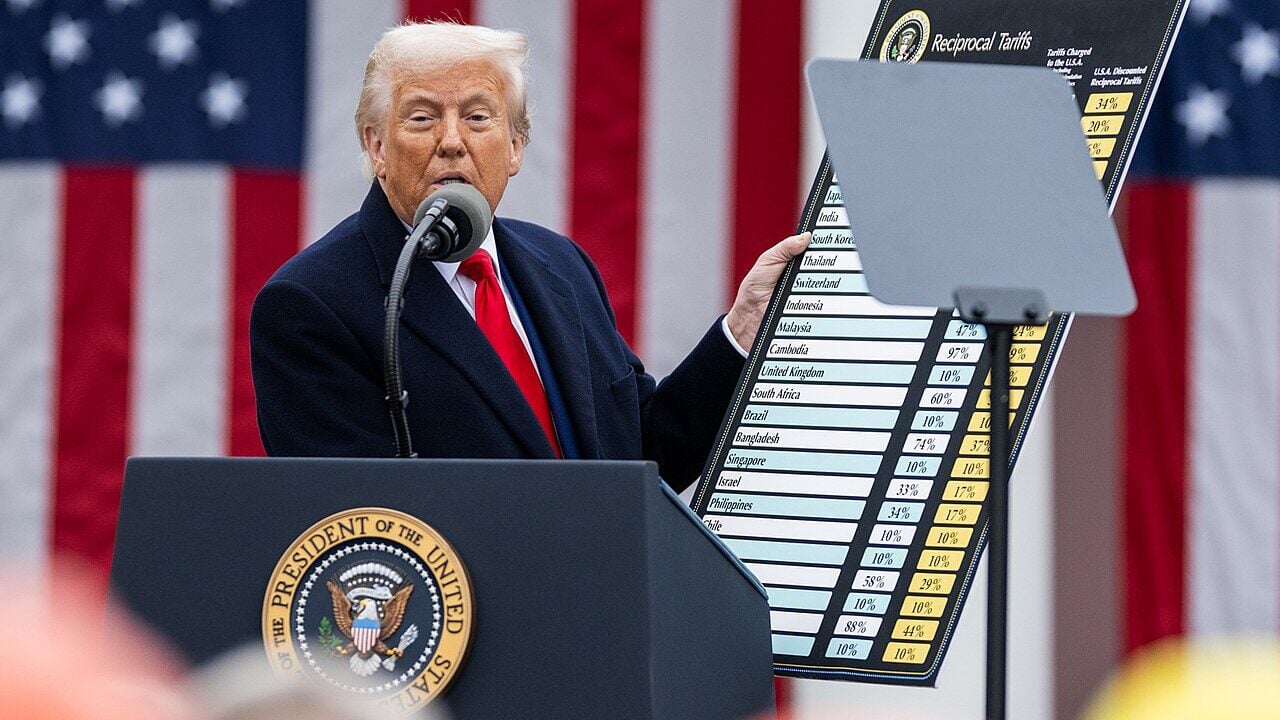
The U.S. government has started the massive task of refunding billions of dollars in tariffs imposed under former President Donald Trump, but the process is already revealing a complicated reality. The companies getting the money back are not necessarily the ones who paid the real cost.
Here’s the jaw-dropper: Before the Supreme Court knocked them down in 2026, the government raked in about $166 billion in tariffs under the International Emergency Economic Powers Act.
Now, officials have to untangle what’s easily one of the biggest trade reversals we’ve seen in decades.
A Massive Refund Operation
Carscoops reports the refund process officially began in April with a new digital system run by U.S. Customs and Border Protection. Importers and customs brokers can submit claims through the platform, which is expected to handle more than $160 billion in repayments.

Early estimates suggest around $127 billion will be returned in the first phase alone, with tens of thousands of businesses already filing claims.
In total, more than 330,000 importers paid tariffs across roughly 53 million shipments, showing just how widespread the policy’s impact was.
Refunds are expected to be issued as lump sums and could take 60 to 90 days once claims are approved, though delays are likely due to the scale and complexity of the process.
Who Actually Paid the Price
While the refunds are being sent to importers, the bigger question is who ultimately bore the cost.
Despite political claims that tariffs mainly target foreign producers, economic data shows much of the burden was passed on to U.S. businesses and consumers through higher prices.

That creates a clear disconnect. The companies receiving refunds are not required to pass that money back to customers who may have paid more over the past year.
For many businesses, the refunds represent a major financial boost. Companies that paid large sums could recover that money with interest, improving cash flow and potentially funding expansion or investment.
At the same time, smaller businesses may struggle with the paperwork and costs required to file claims, raising concerns that the system could favor larger firms.
A Complex Process With Lasting Impact
Even with a dedicated digital system, issuing refunds on this scale is far from simple. The government must verify millions of transactions, confirm eligibility, and calculate interest payments. Some refunds could take months or even years to resolve.

There are also technical complications. Some tariff entries have already been finalized, while others remain in intermediate stages, meaning refunds will likely be distributed in phases.
The refund program marks the end of one chapter in U.S. trade policy, but not the end of the broader strategy. New tariffs are already being considered under different legal authorities, suggesting that trade tensions and policy shifts will continue.
The situation highlights a deeper truth about tariffs. While often framed as a tool against foreign competitors, their effects ripple through supply chains and frequently land on domestic businesses and consumers.
Now, as billions are returned to importers, the key question remains whether those funds will benefit the wider economy or stay concentrated among the companies receiving the checks.