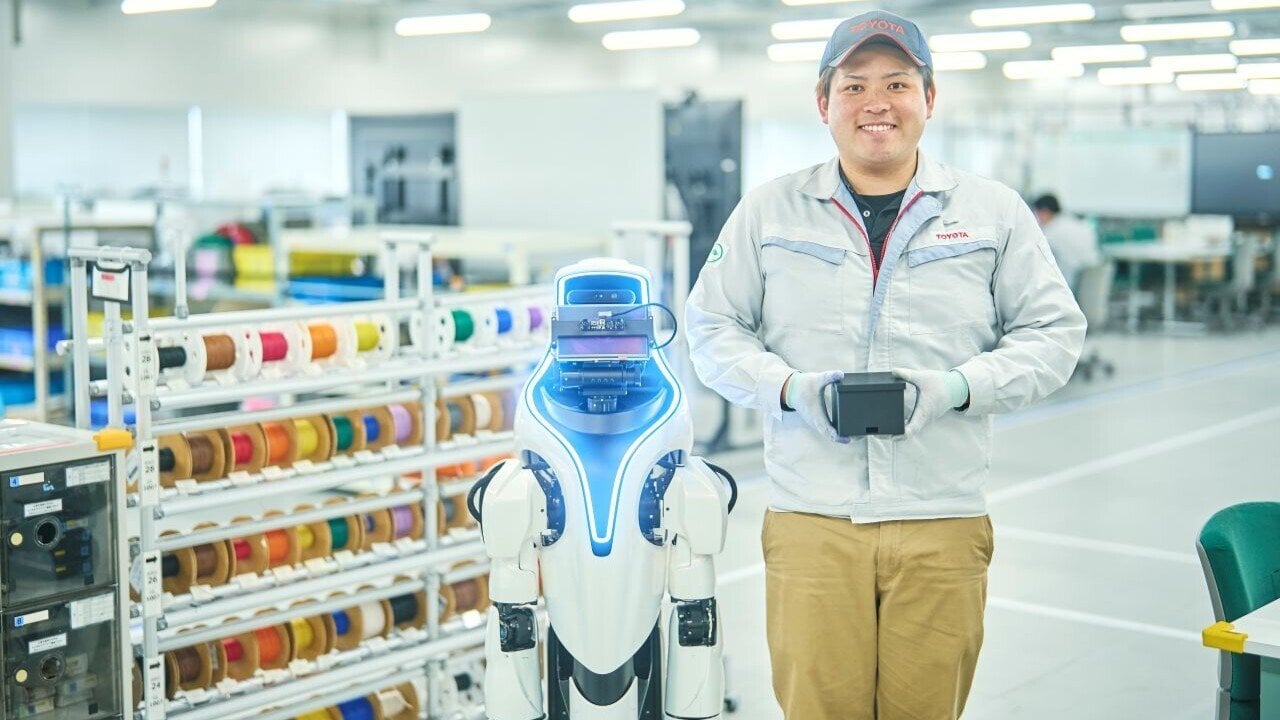
Robots building cars is hardly a new concept. Automated machinery has been welding, painting, and assembling vehicles for decades, performing repetitive jobs with a speed and consistency humans can’t match.
Toyota, however, is preparing for automation on an entirely different scale. Its future factories could eventually contain enough robots to populate a decent-sized city.
We’re not exclusively talking about the giant mechanical arms already commonplace on assembly lines, either. Toyota’s plans span industrial machinery, automated logistics, and next-generation robots designed to work alongside people.
According to Nikkei Asia and Reuters, Toyota has told investors that around 400,000 robots could be needed across its manufacturing network, group companies, and major suppliers. The potential modernization effort could cost as much as 1 trillion yen, or roughly $6.4 billion, annually from 2028.
400,000 Robots Is A Lot Of Automation
That enormous figure includes both replacements for existing machinery and new installations, covering humanoid and non-humanoid robots. Reuters reports that the investment is an estimate, with Toyota yet to confirm whether it will spend the full $6.4 billion or how many years the program could continue.
Nikkei Asia reports that Toyota expects roughly 150,000 robots to operate at its own factories, with another 250,000 deployed across group companies. The automaker operates dozens of factories globally, making this a potentially enormous transformation of its manufacturing operations.
Toyota Wants Robots To Learn From Humans
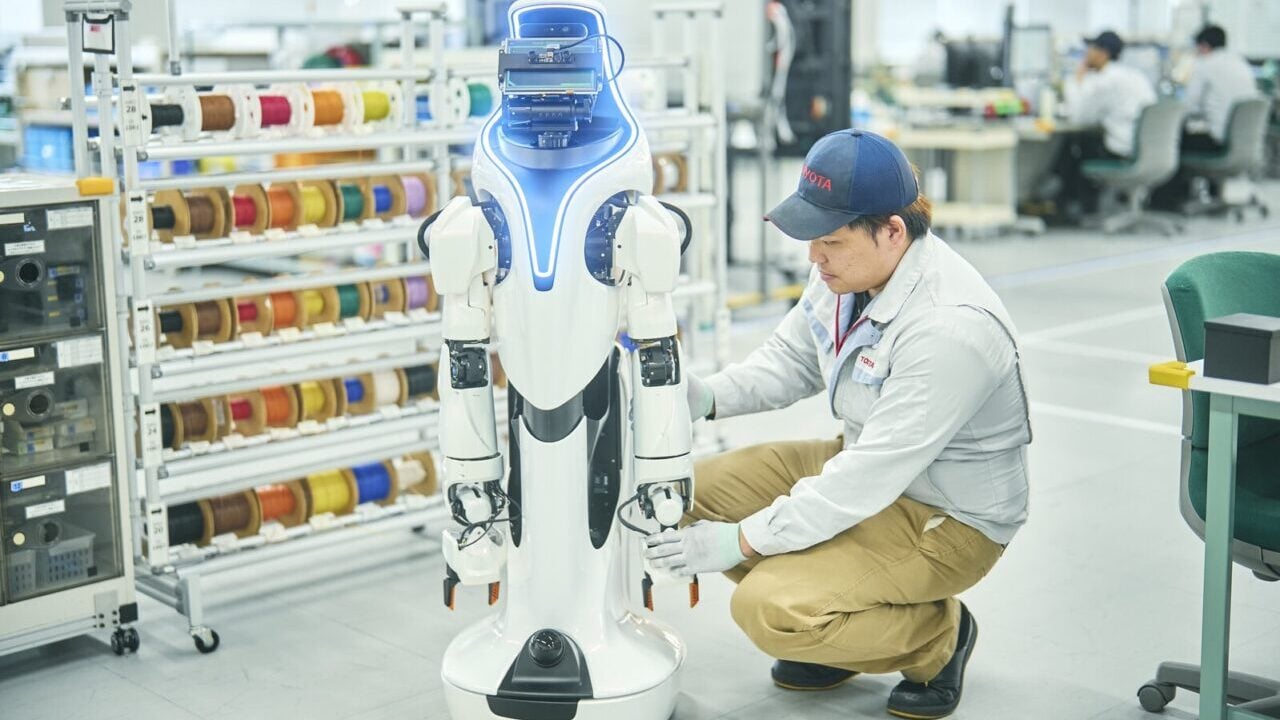
Toyota’s approach isn’t solely about putting humanoid machines on two legs and sending them down an assembly line. One of its robots, called Eley, instead travels on wheels and uses specialized two-fingered hands.
The idea is to have machines learn directly from experienced employees. Workers can repeatedly demonstrate manufacturing tasks, generating training data that can eventually be shared with robots across Toyota’s global production network.
That could also help preserve knowledge accumulated by Toyota’s veteran manufacturing specialists. Rather than disappearing when experienced employees retire, their techniques could effectively become training material for both robots and future workers.
Toyota Says Humans Aren’t Going Anywhere
Naturally, plans to deploy hundreds of thousands of robots raise an obvious question about what happens to the people currently doing factory jobs. Toyota says its vision isn’t to simply replace them.
“We aim for a world where robots coexist with humans, rather than replacing them,” Toyota Executive Vice President Hiroki Nakajima told Nikkei Asia.
Toyota isn’t alone in pushing deeper into factory robotics. Hyundai, which owns Boston Dynamics, plans to begin deploying humanoid robots at its Georgia plant from 2028, as automakers increasingly explore automation to address labor shortages, aging facilities, and manufacturing costs.
If Toyota ultimately reaches that 400,000-robot number, the car factory of the next decade could look very different from the one we’re familiar with today.