The Ford Mustang is one of the most iconic cars in automotive history, and you probably recognize its silhouette from blocks away even if you’re not into pony cars yourself. However, there are some Mustang variations that are out of the ordinary. They look like a Mustang and sound like a Mustang, but there’s something a bit different going on.
Over the years Ford let the Mustang stretch its legs in unexpected ways, and the results created moments that felt both daring and unforgettable. Sometimes the car took on the role of a Hollywood star, other times it chased down the track with race-ready intent, and in more recent years it reinvented itself as a futuristic electric cruiser. Each twist in the Mustang story carried a different energy, and drivers discovered versions that spoke to performance, style, or pure cultural identity.
Looking back, the most memorable turns reveal just how flexible the Mustang badge has been and how it shaped American roads with a bold voice. These six cars represent moments when the Blue Oval said, “Let’s see what happens if we try this,” and the results were anything but boring.
Our Guide to Mustang Madness

Finding the truly wild Mustangs meant looking beyond just horsepower numbers or production figures. We wanted the cars that made people stop and say, “Wait, that’s a Mustang?” Whether through radical styling, cutting-edge tech, or completely reimagining what a pony car could be, these models broke the mold in ways that still get enthusiasts talking decades later.
Each car on this list represents Ford taking a genuine risk, betting that Mustang buyers were ready for something completely different. Some paid off big time, others were ahead of their time, but all of them proved that the Mustang badge could stretch further than anyone imagined.
1969 Mach 1: The Original Street Fighter

The Mach 1 wasn’t just another trim level: it was Ford’s declaration that the Mustang was ready to throw down with the big boys. When it debuted in 1969, the Mach 1 came loaded with a 351 Windsor V8 as standard, but the real party started with the optional 428 Cobra Jet that pumped out 335 horsepower (though everyone knew it was making more than that).
What made the Mach 1 special wasn’t just the power, it was the complete package. Ford gave it a shaker hood scoop that literally moved with the engine, competition suspension that could actually handle the power, and those iconic matte black stripes that ran the length of the car. Inside, you got a wood-grain steering wheel, rally gauges, and bucket seats that held you in place when things got serious.
With the 428 Cobra Jet, the Mach 1 could hit 60 mph in 5.5 seconds and run the quarter-mile in the high 13s. But more importantly, it looked like it could do it while parked. Production hit about 72,458 units that first year, proving that buyers were hungry for a Mustang with real teeth.
1976-1978 Cobra II: Making the Best of Tough Times
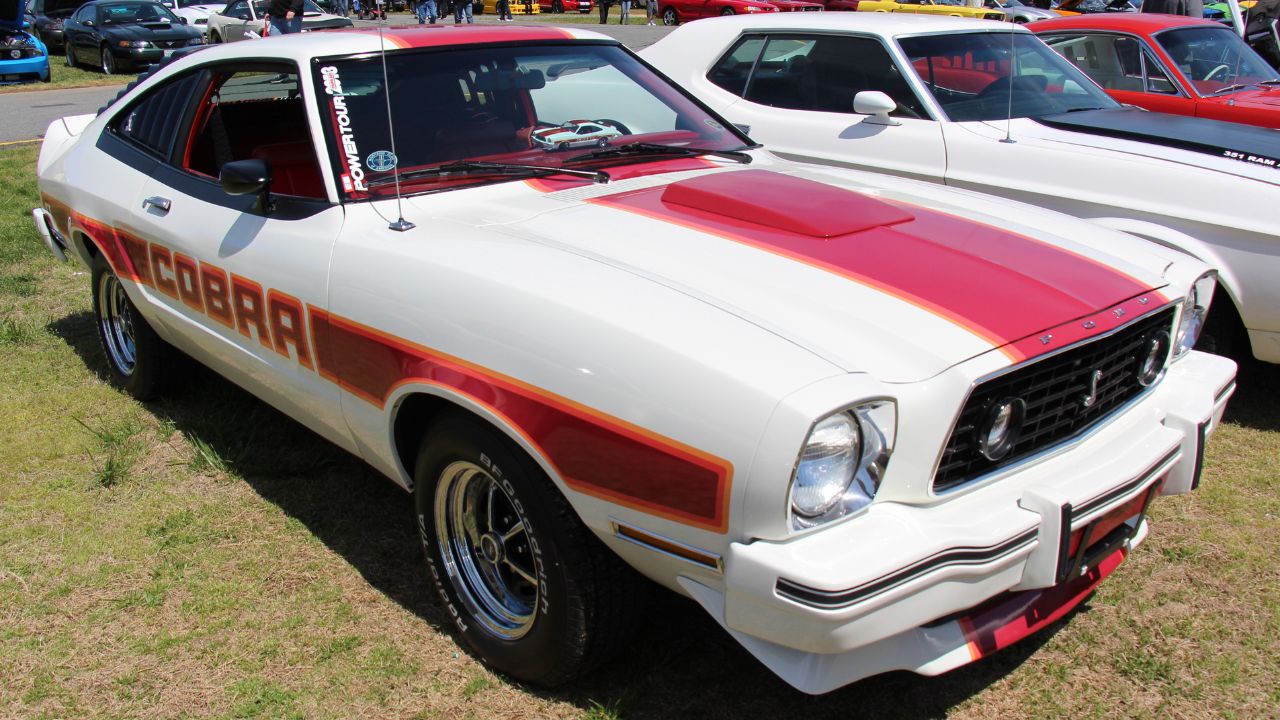
We try to sorta forget about it, but the mid-’70s were rough for performance cars. Emissions regulations and insurance costs were killing the muscle car dream, but Ford found a clever way to keep the Cobra spirit alive with the Cobra II. Built on the smaller Mustang II platform, it couldn’t match the raw power of its predecessors, but it nailed the look of a street racer.
The Cobra II package included bold racing stripes, front and rear spoilers, and side graphics that screamed performance even if the available 302 V8 made about 134 horsepower (SAE net) in 1976, with output varying by year and emissions calibration. But here’s the thing, it worked. So. Well. The car looked fast, and in the context of 1976, it was reasonably quick with a 0-60 time around 9 seconds.
Ford sold tens of thousands of Cobra IIs during the three-year run, and they became cultural icons thanks to TV shows and movies. The car proved that sometimes attitude matters as much as horsepower, and it kept the performance flame burning during some dark years for American muscle.
1984-1986 SVO: The Turbo Pioneer

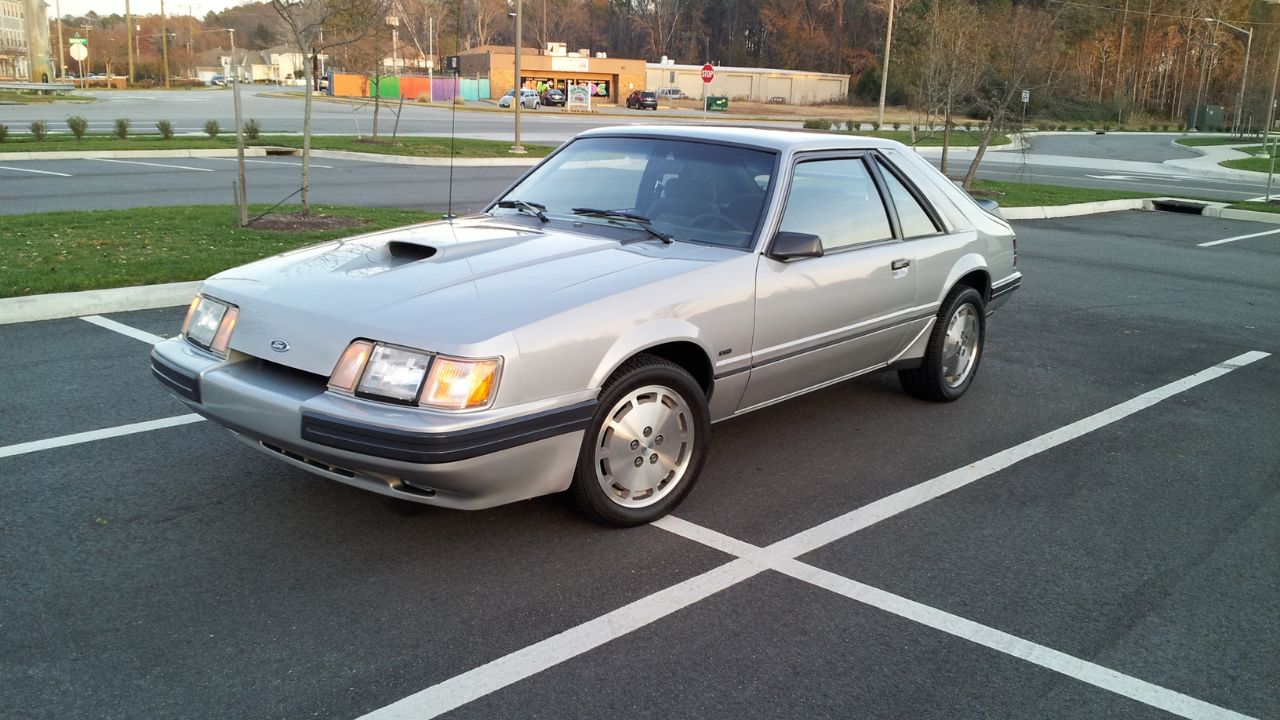
The SVO might be the most misunderstood Mustang ever built, but that’s likely because it was absolutely ahead of its time. While everyone else was obsessing over V8s, Ford’s Special Vehicle Operations team built a Mustang around a turbocharged 2.3-liter four-cylinder making 175 horsepower early on, rising to about 200–205 horsepower depending on the year, and more importantly, 210 lb-ft of torque.
This wasn’t just about the engine, though. The SVO underwent a complete chassis overhaul, featuring Koni adjustable shocks, upgraded springs, a larger anti-roll bar, and four-wheel disc brakes. The result was a Mustang that could actually handle European sports cars in the twisties while still running 0-60 in 7.5 seconds.
Ford only built 9,844 SVOs over three model years, making them rare birds today. The distinctive biplane rear spoiler, functional hood scoop, and unique front fascia made them instantly recognizable. Inside, you’ve got Recaro seats, an engine-turned dash, and a boost gauge that lets you monitor the turbo’s work.
The SVO proved that there was more than one way to build a performance Mustang, even if the market wasn’t quite ready for a four-cylinder pony car in the ’80s.
1993 & 2000 SVT Cobra R: Pure Racing DNA
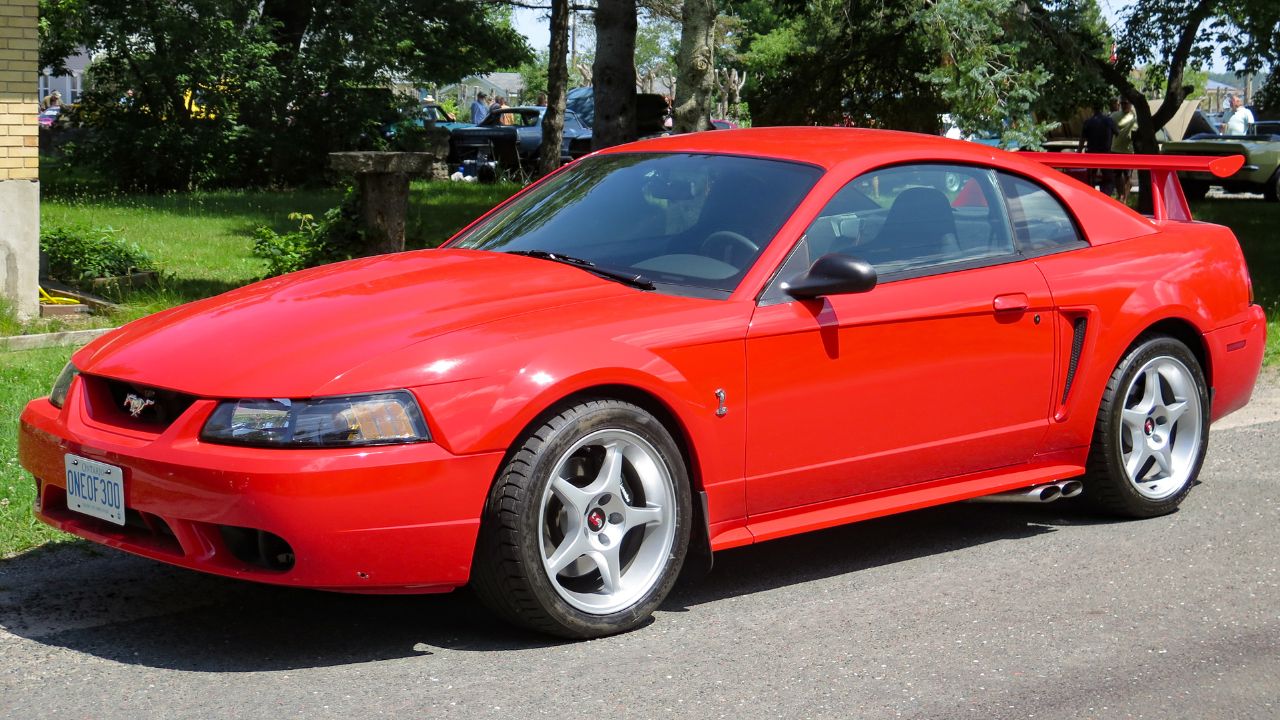
Want to know what a street-legal race car feels like? The SVT Cobra R was Ford’s answer. This wasn’t a Mustang with racing bits bolted on: it was a race car that happened to have license plates.
The first-generation Cobra R in 1993 started the formula: strip out the rear seat, air conditioning, and radio, then add a naturally aspirated 5.0-liter making 235 horsepower, a Borg-Warner T-5 5-speed manual, and suspension tuned specifically for track use. Only 107 were built, and every one had a buyer before production ended.
But the 2000 Cobra R was the real monster. Ford stuffed a 5.4-liter DOHC V8 making 385 horsepower under the hood, added massive Brembo brakes, and wrapped the whole package in aerodynamic bodywork. The result? 0–60 in the mid-4-second range and a quarter-mile around 13.2 seconds at about 110 mph.
With just 300 examples built and a $54,995 price tag (about $95,000 today), the 2000 Cobra R was more expensive than a Corvette Z06. But for serious track junkies, it delivered performance that embarrassed cars costing twice as much.
2001 & 2008-2009 Bullitt: Hollywood Comes Home
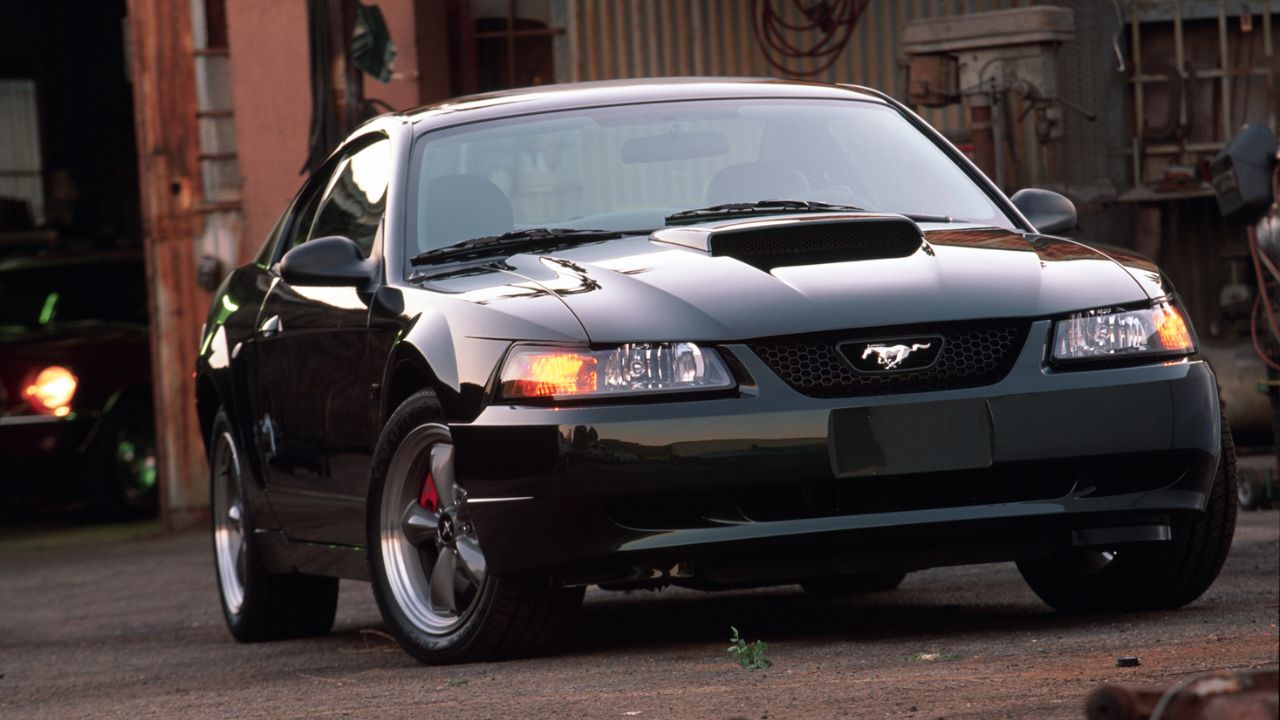
Sometimes the wildest thing you can do is strip away all the flash and focus on pure essence. That’s exactly what Ford did with the Bullitt editions, paying tribute to Steve McQueen’s Highland Green fastback from the legendary 1968 chase scene.
The 2001 Bullitt started with a 4.6-liter V8 bumped to 265 horsepower, but the real Hollywood magic was in the details. Ford removed all the badges except the horse logo, added 17-inch wheels inspired by the movie car, and tuned the exhaust for that distinctive rumble. Only 5,582 were built, all in Dark Highland Green or True Blue.
The 2008-2009 version kicked things up with a 315-horsepower 4.6-liter V8, capable of 0–60 in the low-5-second range. Again, Ford kept the styling subtle, no stripes, no spoilers, just clean lines and that perfect green paint.
Both Bullitt editions proved that sometimes the coolest Mustang is the one that doesn’t try too hard. They captured the understated menace of McQueen’s original and gave buyers a chance to own a piece of automotive cinema history.
2021-Present Mach-E: Redefining Everything

Here’s where Ford really went off script: they took the Mustang name and slapped it on an electric crossover. The purists screamed, the internet exploded, but you know what? The Mach-E actually works as a Mustang. Sort of. Don’t hate us; we’re still torn too.
Base Mach-E output varies by configuration, starting around 266 horsepower on some trims, but the GT Performance Edition cranks out 480 horsepower and does 0-60 in 3.5 seconds, that’s genuinely quick by any standard. The tri-bar taillights, long hood proportions, and aggressive stance maintain visual DNA with traditional Mustangs.
Inside, the Mach-E feels like a tech showcase with a 15.5-inch touchscreen running Ford’s SYNC 4A system and over-the-air updates. EPA-estimated range hits up to 312 miles, depending on configuration, and towing capacity depends on market and configuration; in Europe, Ford has rated certain models for up to 1,000 kg (about 2,205 lb) braked towing
Ford has produced its 150,000th Mustang Mach-E since launch, proving that buyers are ready for an electric Mustang – even if it doesn’t sound like one. The Mach-E represents Ford betting big on the future while keeping one foot planted in Mustang heritage.
Gallops Into Memory
Looking back at these Mustangs, what strikes you is how each one captured the spirit of its era while pushing the envelope in different directions. The Mach 1 embodied the raw power of the muscle car peak. The Cobra II kept the dream alive during lean times. The SVO explored European-style handling dynamics. The Cobra R delivered pure track focus. The Bullitt celebrated heritage. And the Mach-E embraces the electric future.
Each of these cars could have been safe, predictable choices. Instead, Ford took risks, tried new things, and created Mustangs that stood apart from the crowd. Some were misunderstood in their time, others were instant classics, but all of them proved that the Mustang badge could stretch further than anyone imagined.
That willingness to experiment, to try something different, to occasionally fail in spectacular fashion, that’s what keeps the Mustang story interesting after nearly six decades. And honestly, that’s what makes it feel like more than just a car. It’s proof that sometimes the wildest ideas turn out to be the most memorable ones.