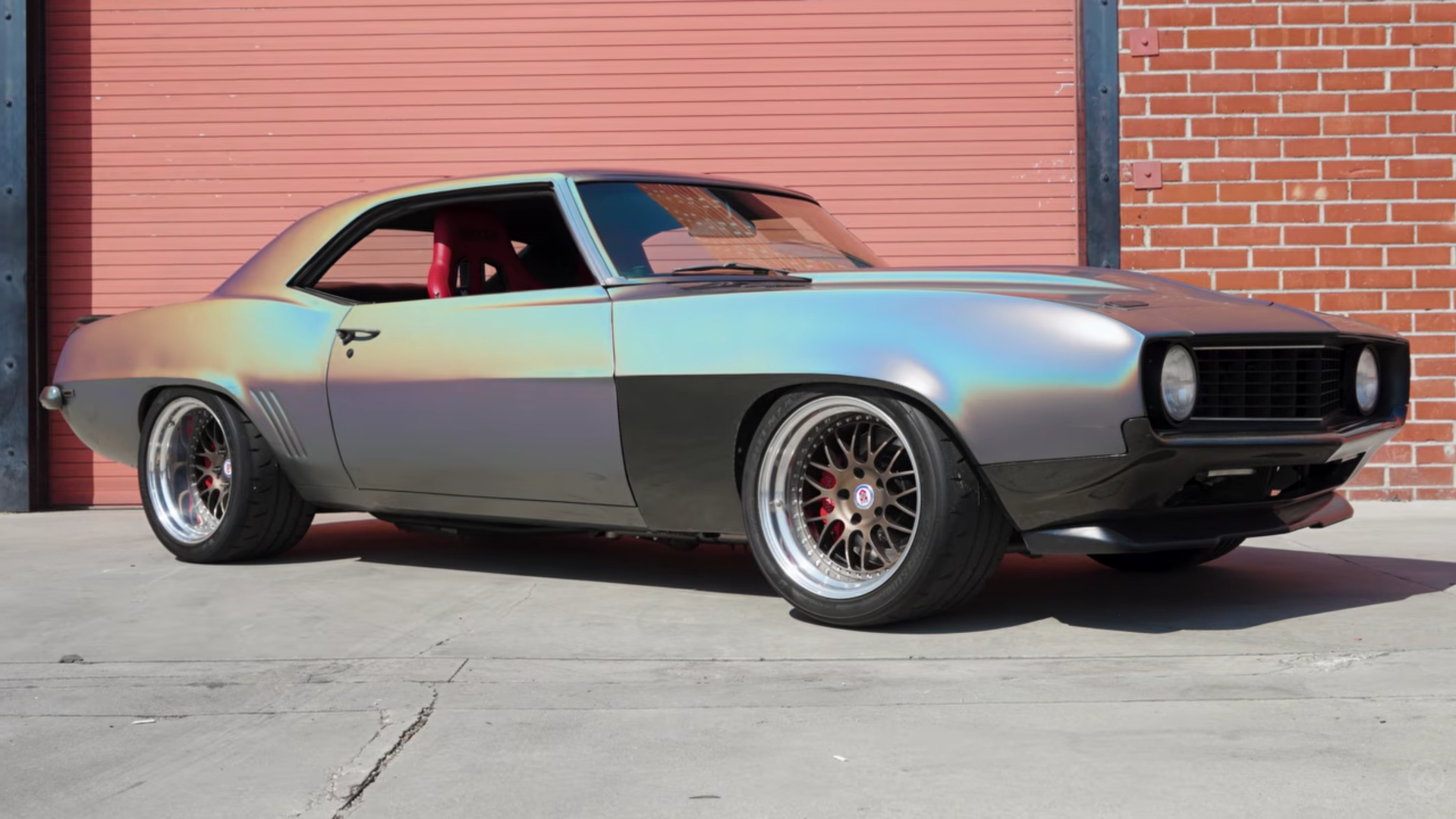
First-generation Chevrolet Camaros are hardly strangers to big horsepower, but finding one built to do something besides annihilate its rear tires in a straight line is a little more interesting.
Victor Figueroa’s home-built Pro-Touring ’69 Camaro regularly sees autocross and road-course duty, including competition at events such as Holley LS Fest and DriveAutoX.
That means nearly everything underneath has been reworked to make the old Chevy turn, stop, and survive repeated abuse. Figueroa isn’t particularly concerned with flawless paint or building something destined to spend its life parked at car shows.
Autotopia LA recently got to take a closer look at the machine, and the resulting drive makes the Camaro’s mission pretty obvious. With 630 horsepower at the rear wheels, 335-section tires at all four corners, and a manual transmission, this thing was built to be driven hard.
An LS7 That Loves 8,000 RPM
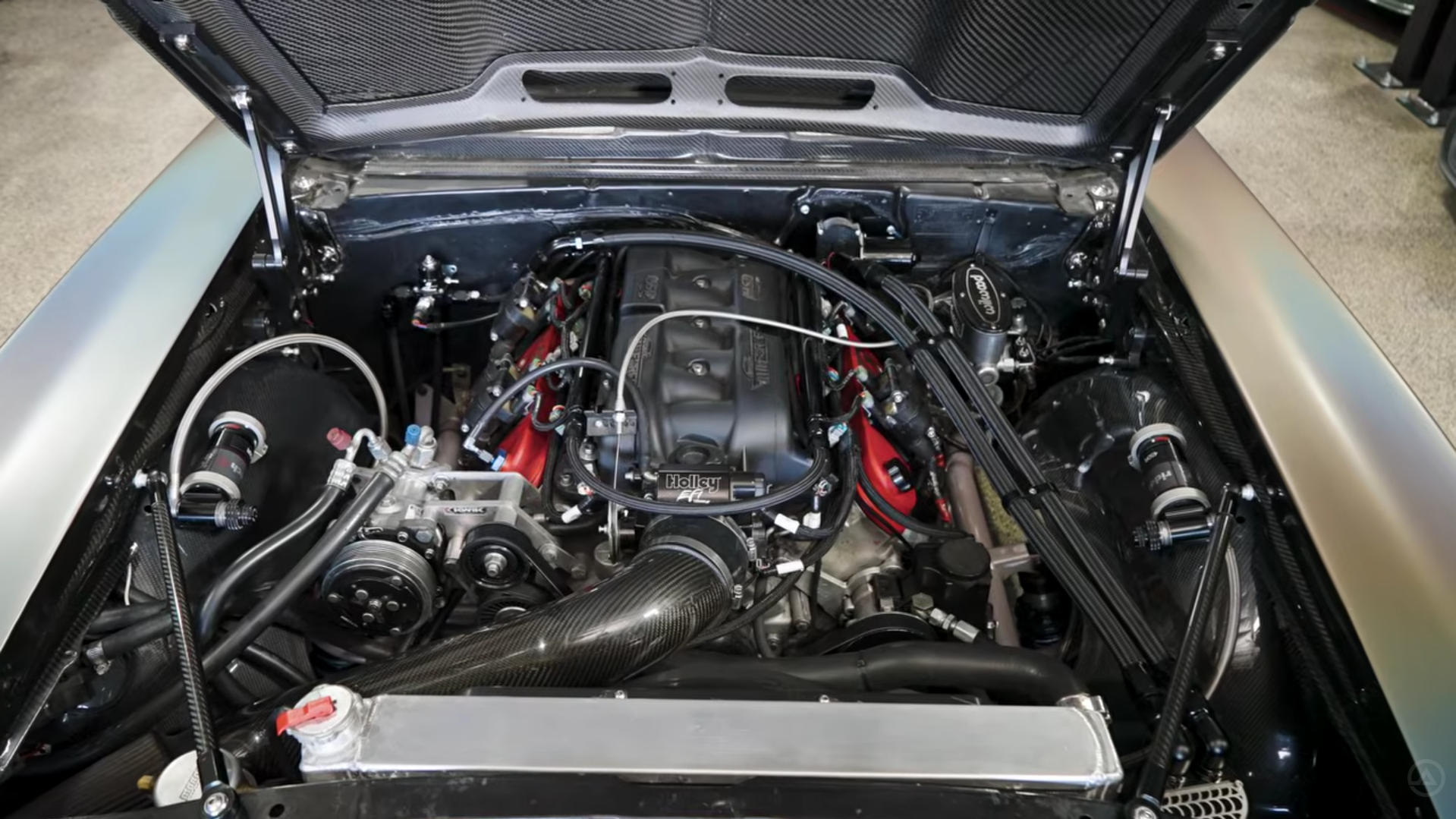
Under the carbon-fiber hood sits an LS7-based V8 built by Figueroa himself after Wayne’s Engine Rebuilding handled the machine work. It uses a sleeved Dart block, PRC 265 heads, a BTR Stage 4 V2 camshaft, and an MSD Atomic intake.
Running E85, the combination produced 630 horsepower at the wheels, while 91-octane gasoline resulted in 596. Figueroa says the engine is built to spin to 8,000 rpm.
A heavily upgraded T56 Magnum manual handles the punishment, using PPG gears, billet components, and a pump system. It’s paired with an aggressive carbon twin-disc clutch and a Ford 9-inch rear end with 4.11 gears and 35-spline axles.
Built To Turn, Not Just Launch
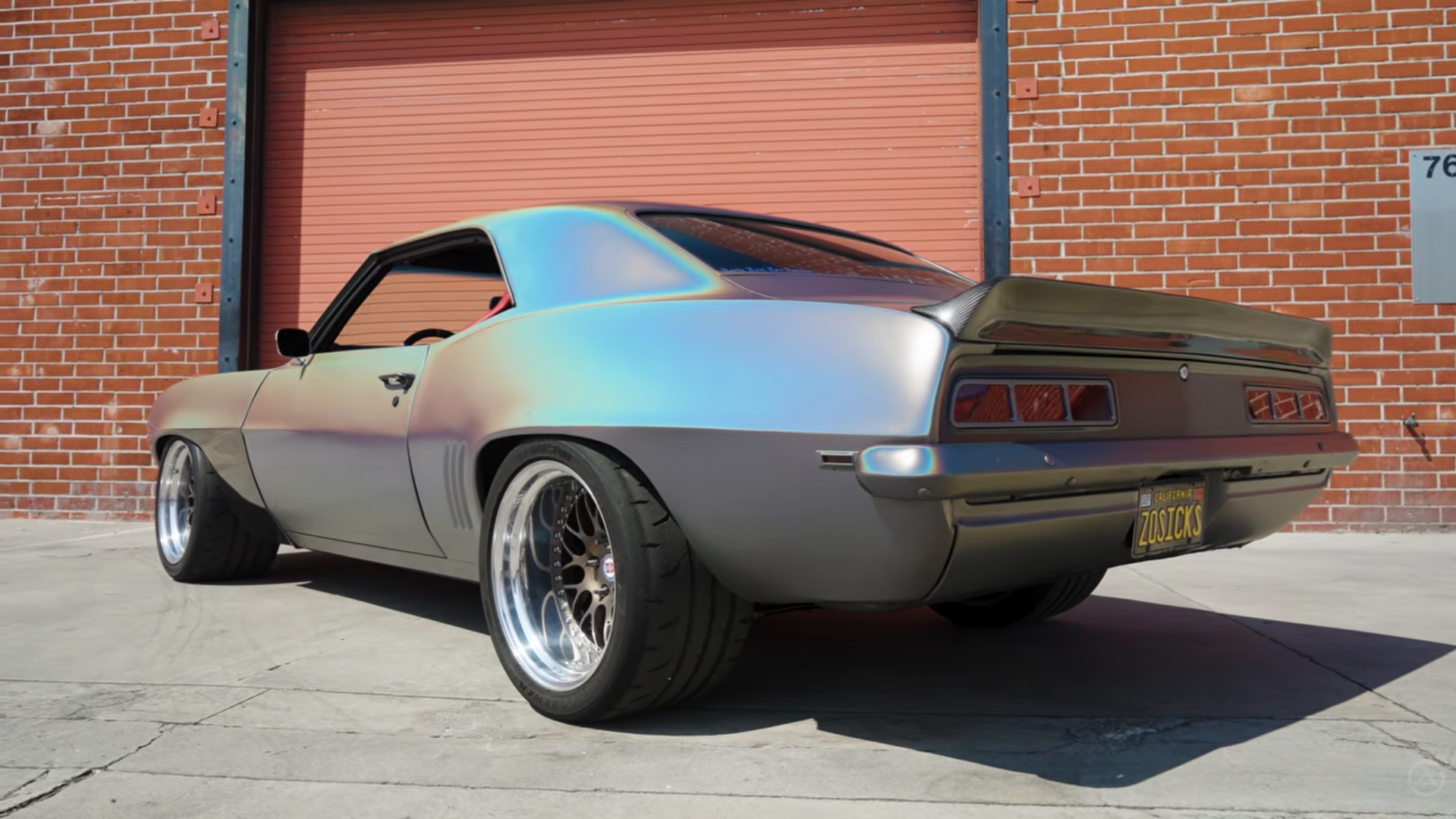
The chassis is where this Camaro really separates itself from the typical restomod. A TCI independent front suspension works with a Detroit Speed QuadraLink rear setup, while 14-inch Wilwood brakes use six-piston front and four-piston rear calipers.
Figueroa insisted on a square wheel-and-tire setup, fitting 18×12-inch HRE wheels and enormous 335-section tires at every corner. Shawn from Autotopia LA commented on the lack of body roll and how eagerly the car changes direction.
Weight has also been trimmed with carbon-fiber body panels, including the hood, fenders, and inner wheel wells. The body itself is still largely as Figueroa bought it back in 2012, now covered in a color-shifting 3M Satin Psychedelic wrap.
A Race Car You Can Still Drive Home
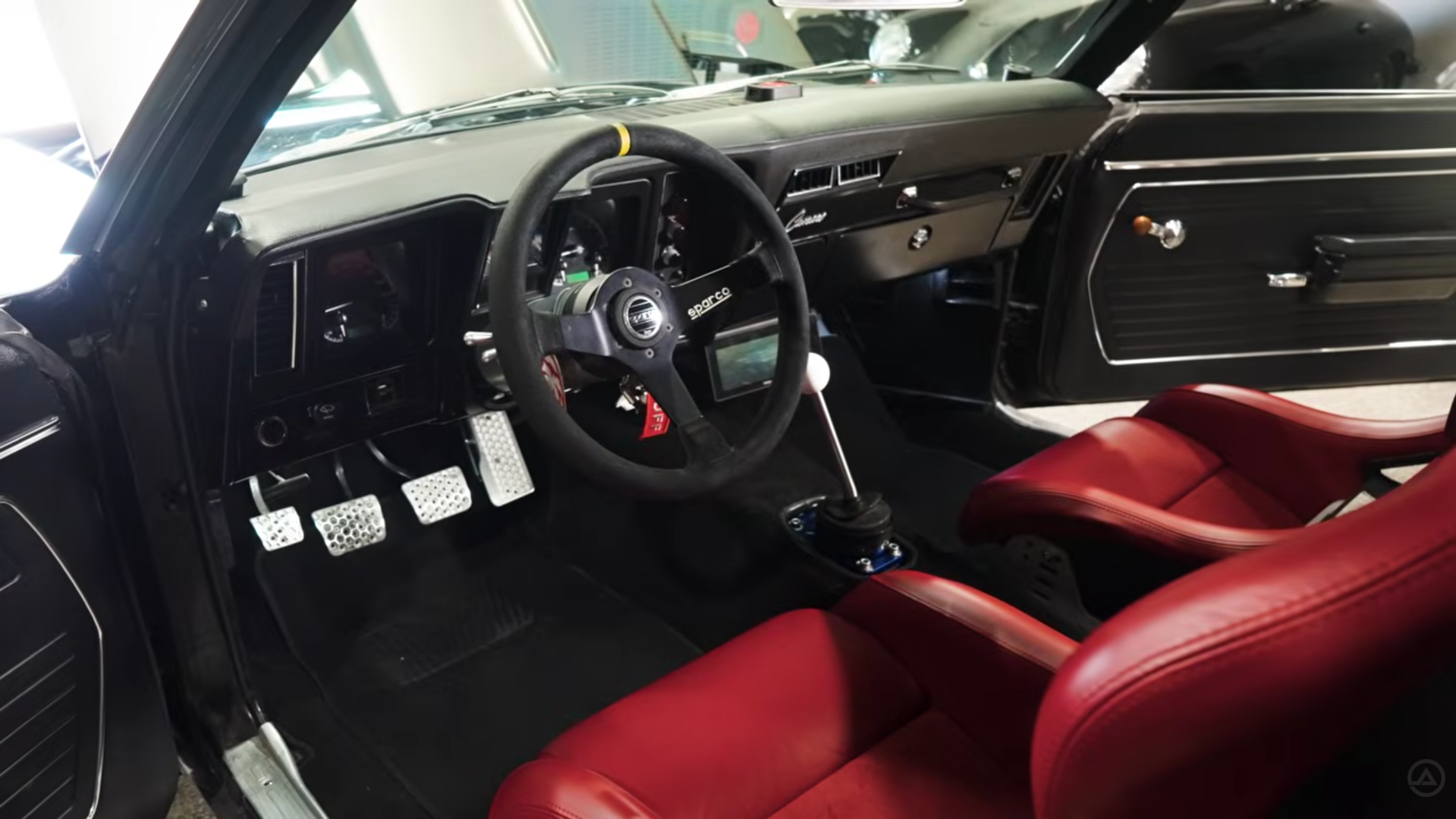
Despite its competition focus, the Camaro has a recognizable classic interior, air conditioning, and even a stereo. Figueroa deliberately wanted the cabin to still feel like a 1969 Camaro rather than a stripped-out modern race car.
That balance pretty much sums up the entire build. It’s brutally capable and unapologetically noisy, yet it’s still a street-driven car its owner put together mostly in his own garage.