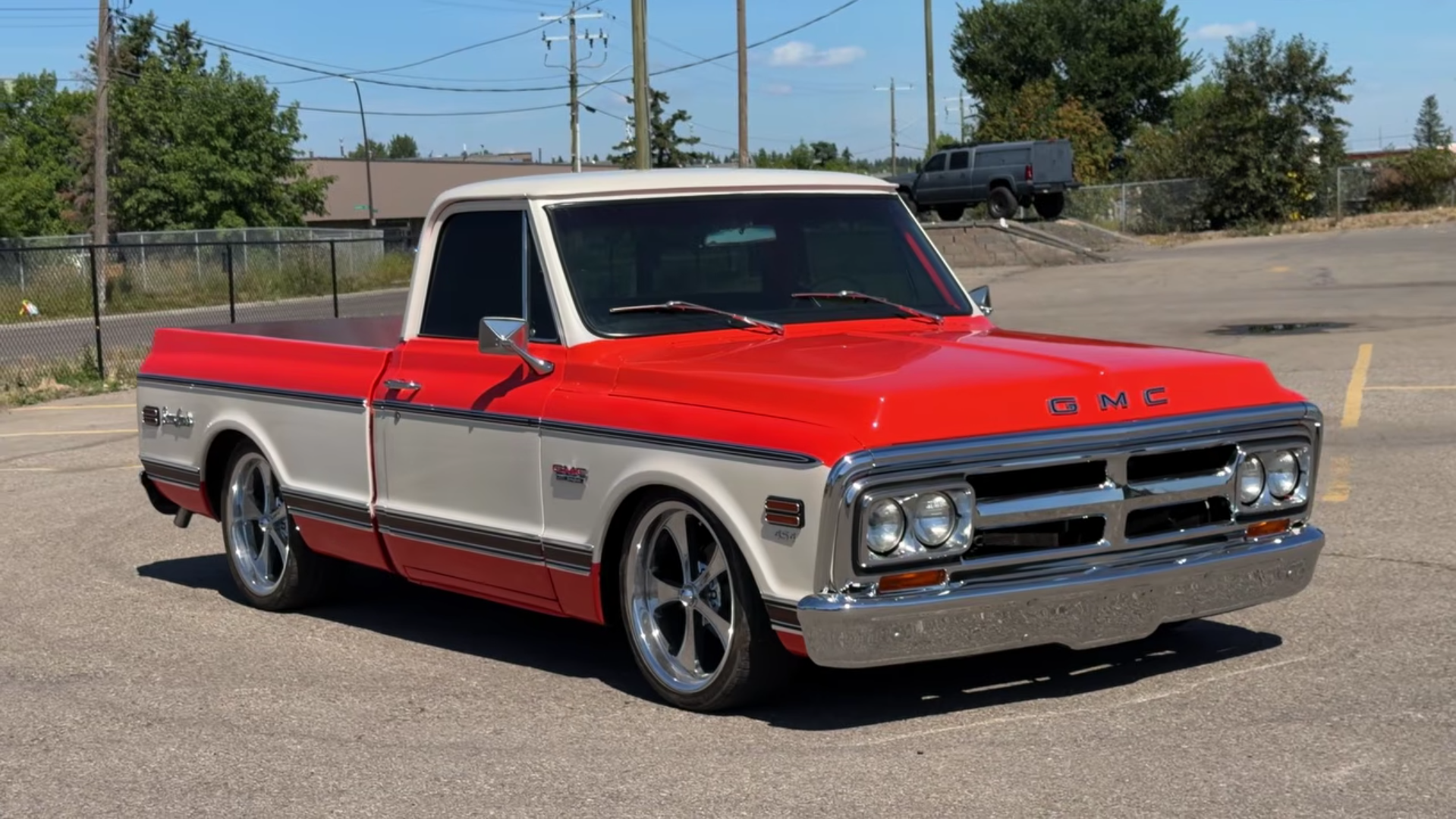
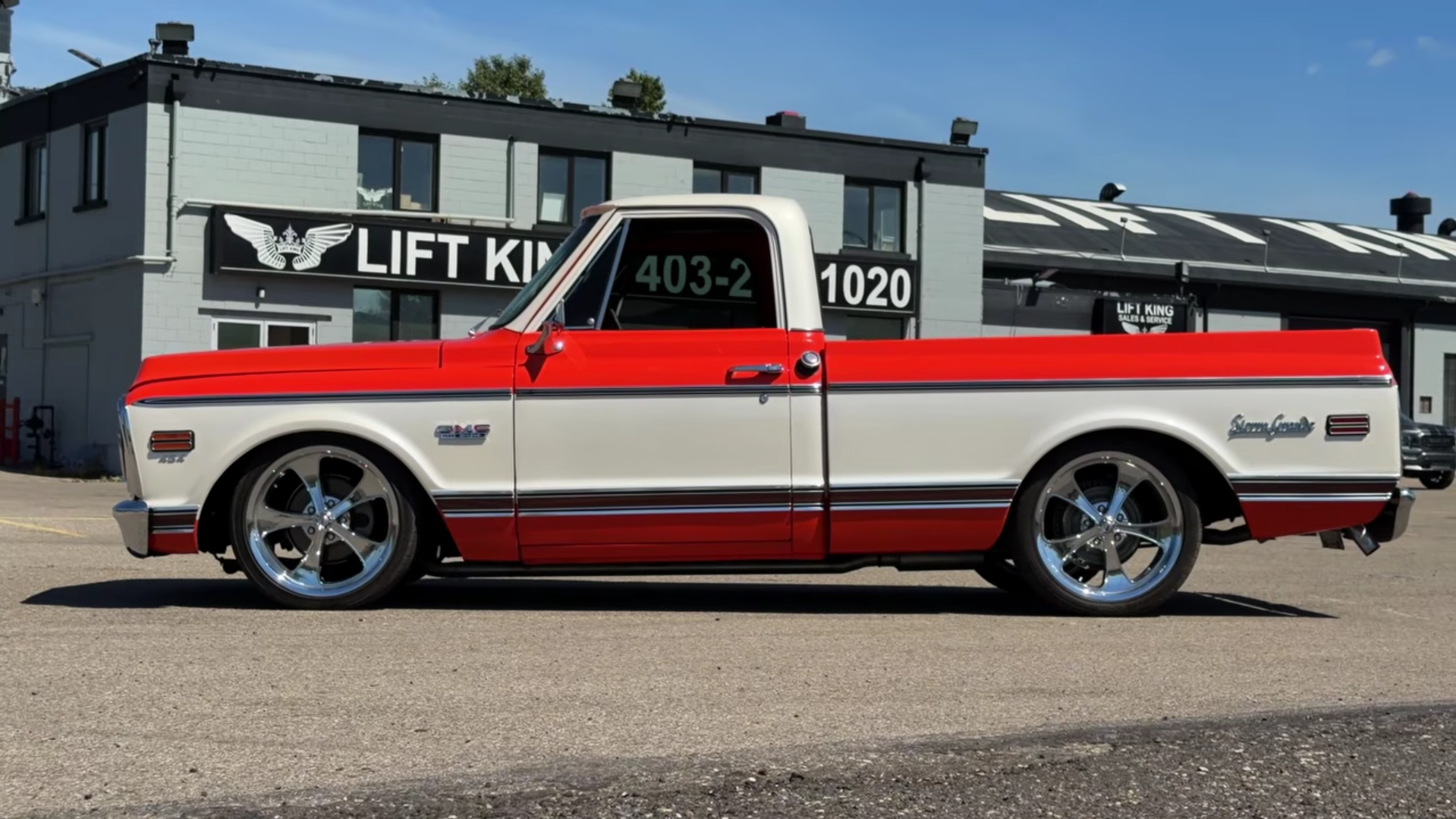
There is no shortage of restored Chevrolet C10s, yet their GMC siblings tend to be considerably harder to spot. This 1970 Sierra Grande makes an especially strong case for choosing the less obvious badge.
Speaking to YouTuber Magnacars, its owner, Ross, said he has owned around a dozen short-bed GM pickups from the 1967-1972 generation over the years. Even with that experience, the orange-and-white Sierra Grande immediately caught his attention when the opportunity arose to add it to his collection.
Part of the attraction is obvious from the first glance. The combination of its bright two-tone paint, houndstooth interior, short-bed proportions, and big-block V8 creates exactly the kind of vintage pickup that is difficult to ignore.
Ross clearly enjoys having it around, although he also views himself as a temporary caretaker of many of the cars and trucks passing through his collection. That philosophy means this GMC could soon be moving into somebody else’s garage.
A 454 V8 Now Lives Under The Hood
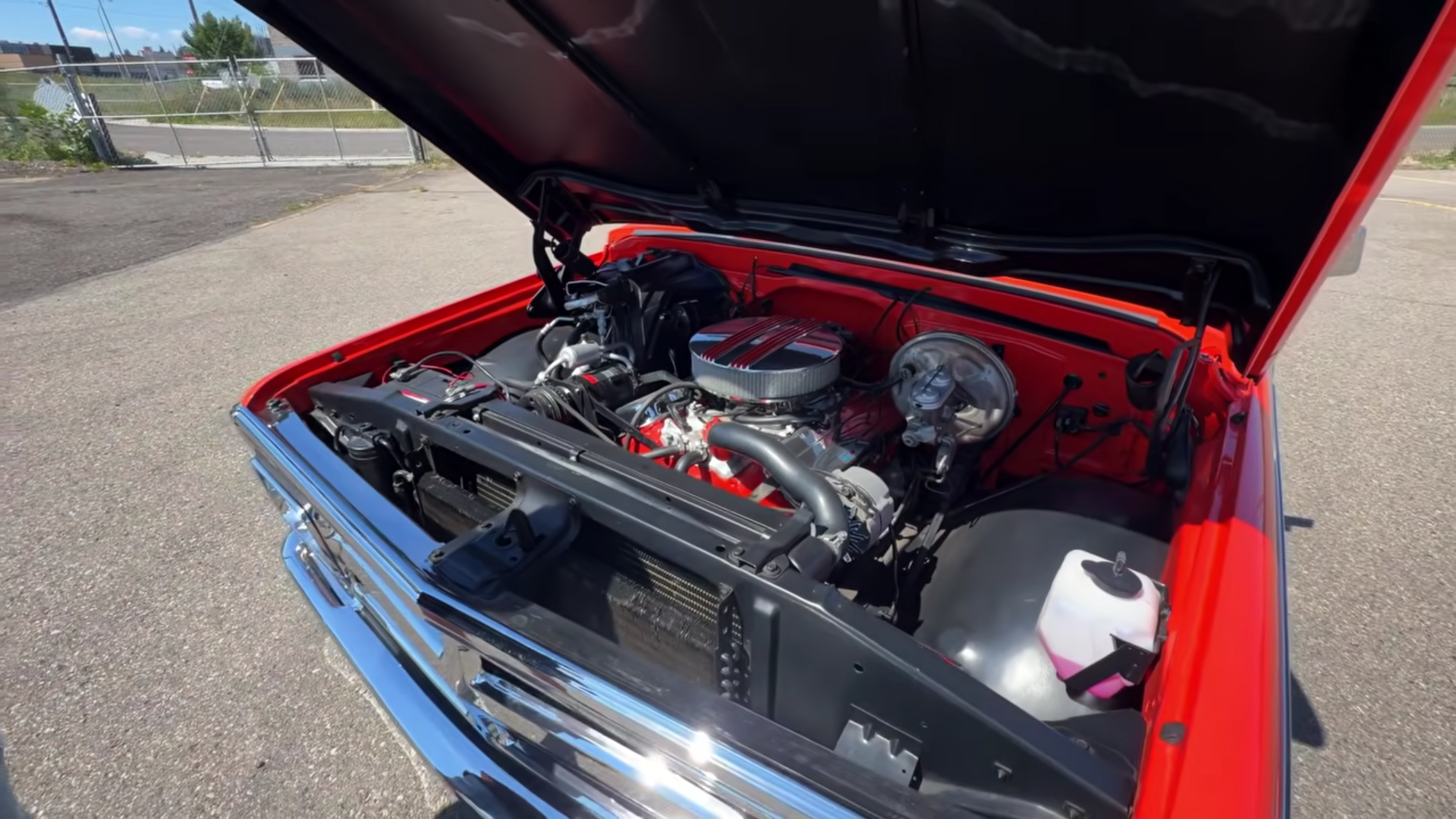
The Sierra Grande is currently powered by a 454-cubic-inch big-block V8, and it produces exactly the soundtrack you would want from a classic GM pickup, although Ross readily acknowledges that it is not the truck’s original engine. He says the GMC was originally equipped with a big-block before its factory engine was replaced at some point during its life.
There is another important modification hiding beneath those proportions. This Sierra Grande originally left the factory as a long-bed truck but was subsequently converted into a short box, so buyers looking exclusively for a factory short-bed example should take note.
The truck also wears Riddler wheels and has front disc brakes, while its restored bed features an attractive wood floor with aluminum strips. Ross says the restoration was completed in 2018, after which the truck spent roughly six years in another collection and saw relatively little use.
Sierra Grande Was The Fancy GMC
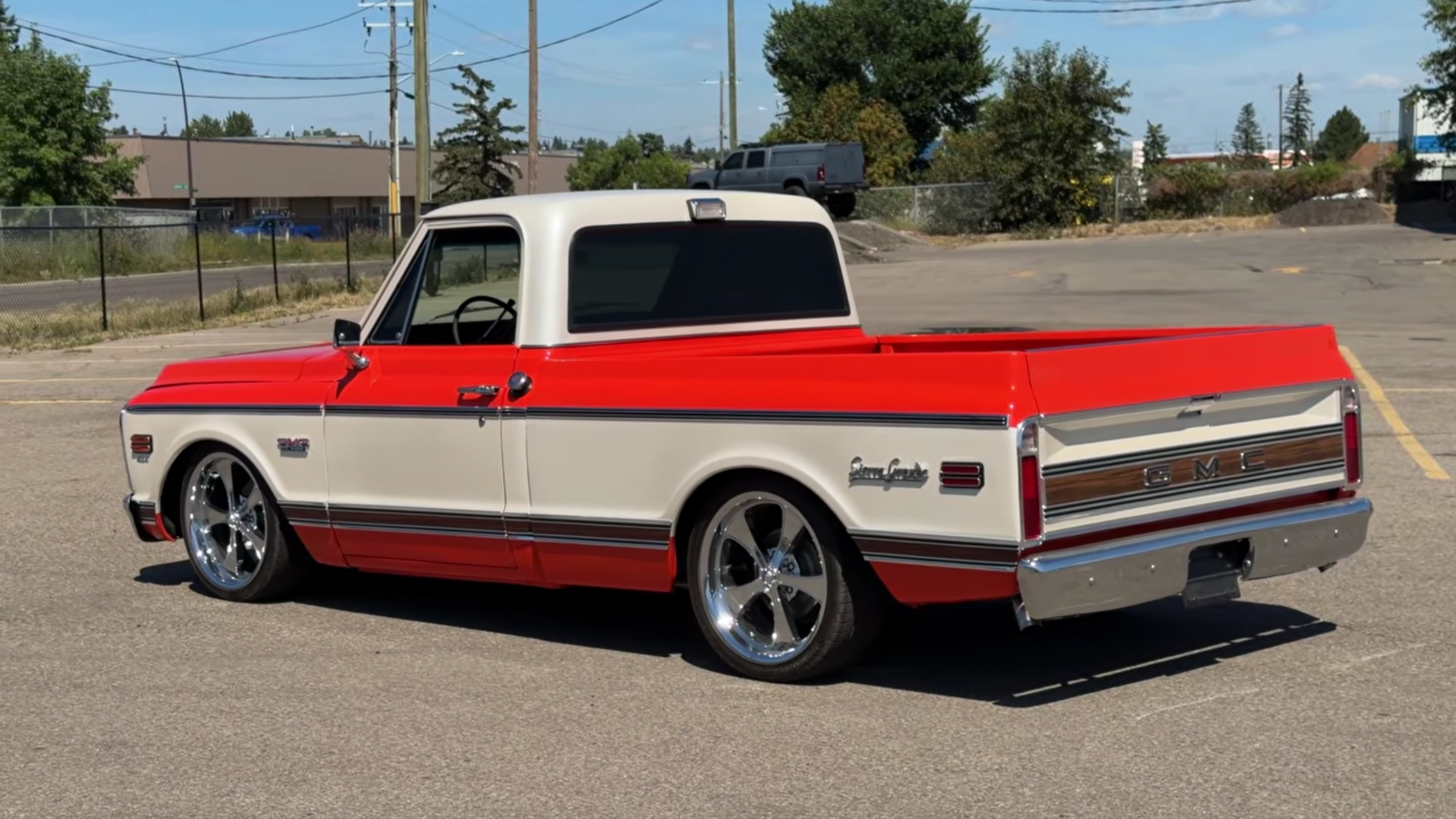
Where the equivalent Chevrolet pickups are familiar territory for most enthusiasts, the Sierra Grande gives the same basic formula a slightly more upscale flavor. Ross describes it as the GMC equivalent of a modern high-end trim, with additional comfort and appearance equipment separating it from more utilitarian pickups.
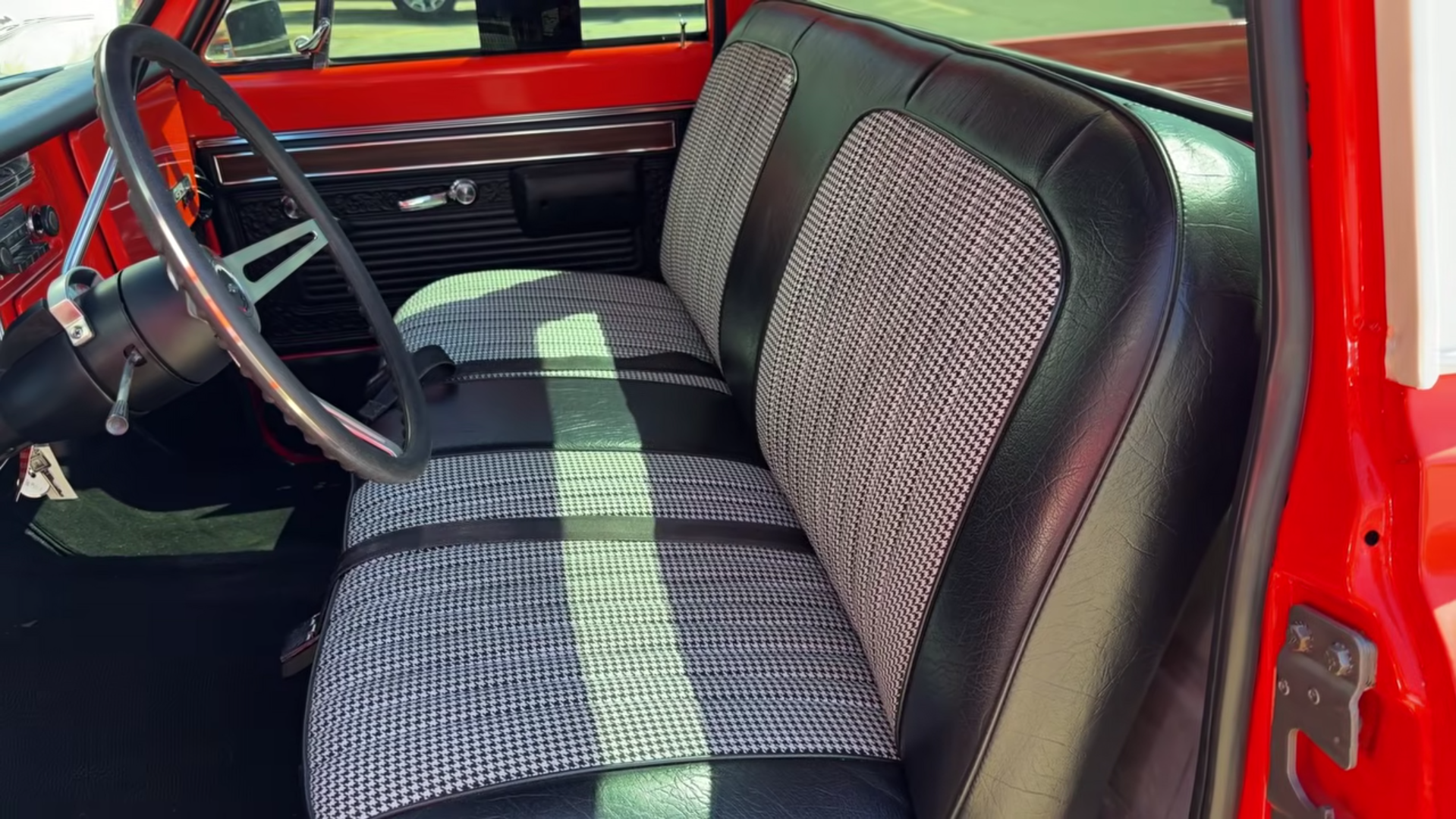
Inside, that means carpeting rather than the basic rubber flooring common in work trucks, upgraded door panels, additional instrumentation, and an eye-catching houndstooth bench seat. The restoration retained the truck’s original-style orange-and-white color combination, which is one of Ross’s favorite things about it.
A surviving option plate is also still present on the truck. Small pieces of documentation like that can become particularly valuable on heavily restored classics, where confirming how a vehicle was originally equipped is not always straightforward.
GMC and Chevrolet pickups from this generation share plenty beneath the skin, of course. Grilles, badging, trim, and equipment helped distinguish the two brands, while the basic body architecture remained closely related.
It Still Gets Attention Everywhere
Modern trucks are vastly quicker, quieter, and easier to live with, but Ross says this old GMC offers character his newer performance trucks cannot replicate. The big-block soundtrack, bench seat, vivid paint, and distinctly analog driving experience turn an ordinary cruise into an occasion.
That character apparently translates into plenty of attention on the road. Ross considers the 1970-1972 trucks the sweet spot of the generation, particularly because of their grille designs, and says younger enthusiasts still gravitate toward classics like this despite their rising values.
Affordability is becoming the larger obstacle. Nicely finished examples have climbed beyond the reach of many younger buyers, pushing some toward 1980s and 1990s vehicles instead, although Ross believes movies and broader car culture have helped maintain interest in older American machinery.
Loving It Doesn’t Mean Keeping It Forever
The Sierra Grande came to Ross as part of a trade involving another custom car, rather than being something he had spent years hunting down. The color combination happened to match a truck he had long wanted, so keeping it for a while was an easy decision.
During the video, Ross suggested it might be time to sell, and the truck was subsequently promoted as being available through eBay. He admits he will miss it when it leaves, yet that is part of the appeal of rotating through a collection. Somebody else gets to enjoy a beautifully restored vintage GMC, while he makes room for whatever catches his attention next.
For prospective buyers, Ross offers straightforward advice: inspect the restoration quality, look carefully for rust, verify the mechanical work, and arrange a proper pre-purchase inspection. With a modified classic like this, knowing exactly what you are buying matters almost as much as falling for that orange-and-white paint.