Some destinations are fun in person but stubborn on camera. Great lakes often do the opposite. They give you clear reflections, sharp ridgelines, saturated color, and just enough shoreline drama to make even a quick phone photo look considered.
Across the United States, a handful stand out because the setting does so much of the visual work for you, whether that means volcanic blue water, alpine peaks, polished stones, or granite boulders glowing beneath the surface. These are the places where composition arrives almost prebuilt.
The best version of this list is not built around one look repeated five times. Tahoe gives you cobalt water and pale rock, Crater Lake delivers almost unreal color inside a collapsed volcano, Jenny Lake frames the Tetons at close range, Lake McDonald brings its famous multicolored pebbles, and Maroon Lake adds one of Colorado’s most recognizable mountain backdrops.
Together, they cover five very different kinds of lake beauty, which is exactly what makes them such strong photo-trip material. This is less about ranking one kind of scenery over another and more about showing how many ways a lake can become visually unforgettable.
1. Lake Tahoe, California and Nevada
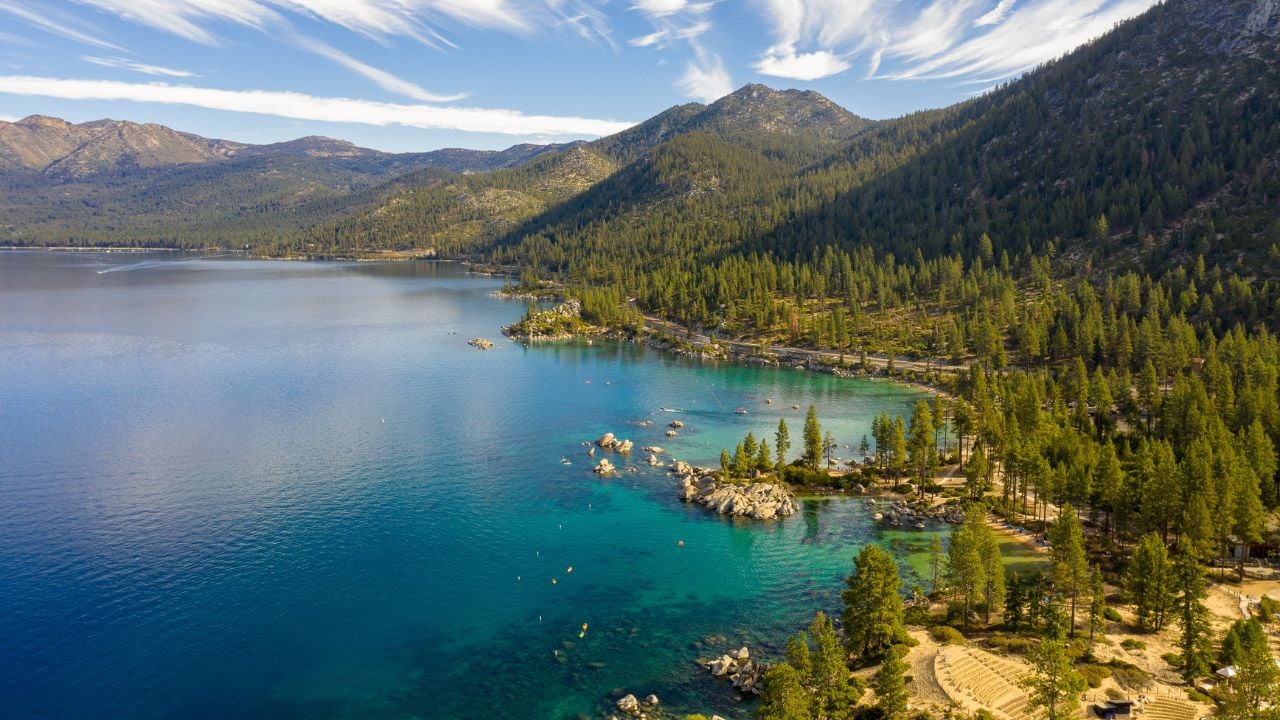
Lake Tahoe looks camera-ready because the ingredients are so clean and simple. Official South Lake Tahoe tourism material notes that Tahoe is North America’s largest alpine lake, with 72 miles of shoreline and peaks rising as high as 10,000 feet, while Nevada State Parks describes Sand Harbor with crystal-clear water, gently sloping beaches, and distinctive rock formations. That combination helps explain why so many Tahoe images feel instantly recognizable even before you know exactly where they were taken.
For the most photogenic stop, Sand Harbor is the obvious choice. The state park page highlights the same features photographers already love, and the practical detail matters too: day-use reservations are required at Sand Harbor from May 15 through September 30, with reserved visitors needing to enter by 10:30 a.m. This is one of those rare beauty spots where the smartest photo strategy is not just where you go, but how early you plan it.
2. Crater Lake, Oregon
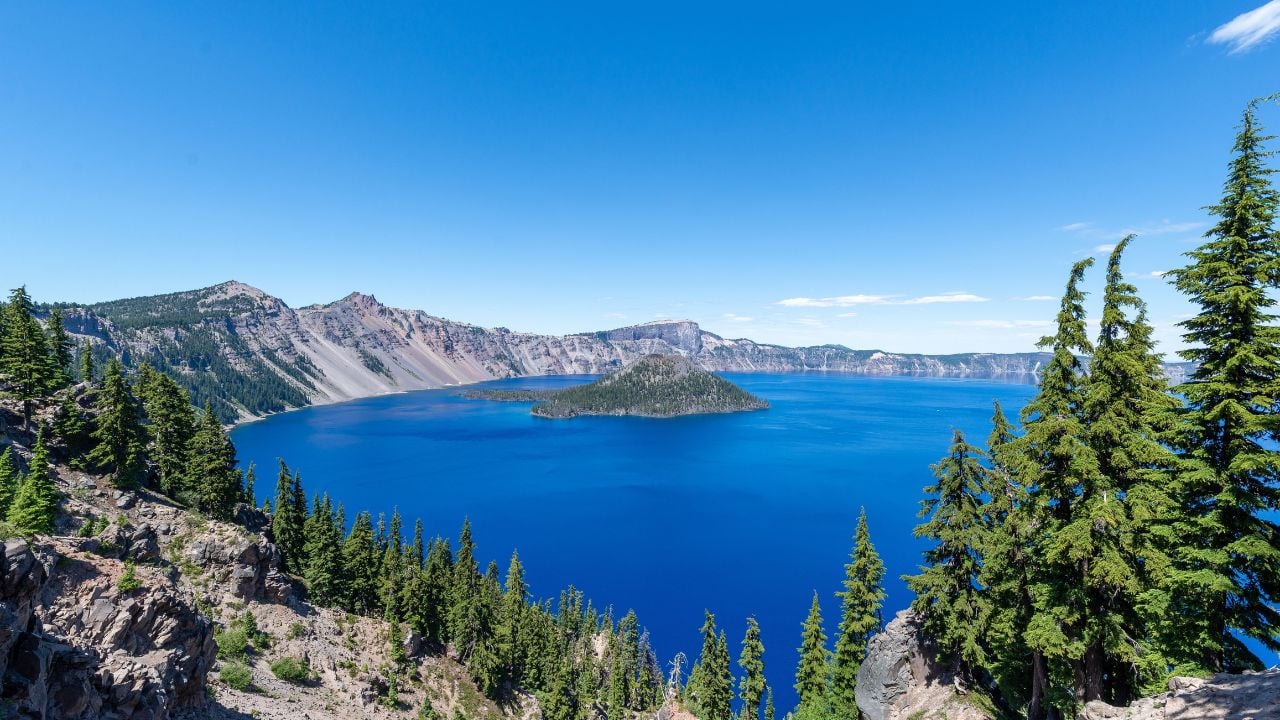
Crater Lake has the kind of color that can make edited photos look almost suspicious, except the official park description backs it up. The National Park Service says it is widely known for its rich blue color and extreme clarity, averaging 102 feet, and identifies it as the deepest lake in the United States at 1,943 feet. That mix of depth, purity, and caldera setting is what gives the lake such an unusually saturated visual identity.
It also helps that steep walls ring the lake and Wizard Island breaks up the view, so the composition rarely feels flat. The park service describes the setting as a sleeping volcano in the Cascade Range and notes that artists, photographers, and sightseers have long been drawn to it. In practical terms, this is one of those places where the overlook is not a compromise. The view itself is the main event.
3. Jenny Lake, Wyoming
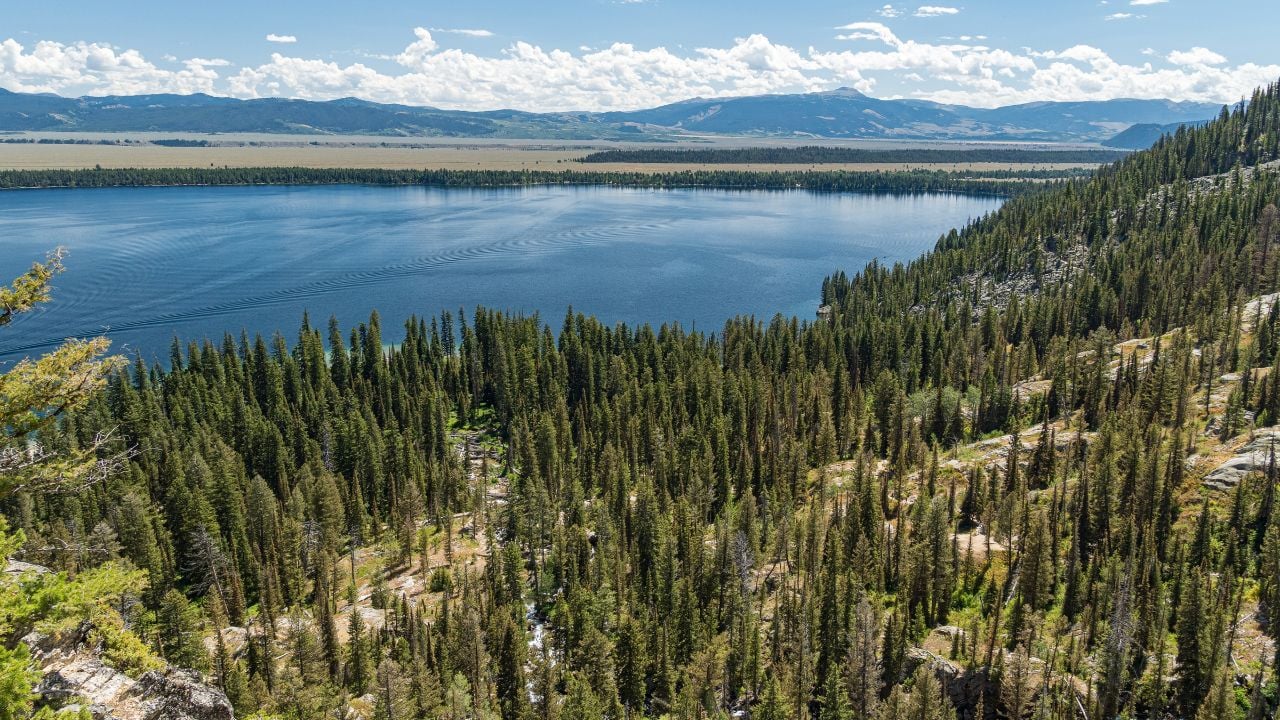
Jenny Lake earns its place by bringing the Teton Range right to the water’s edge. The National Park Service calls it a centerpiece of Grand Teton National Park and notes that the east shore gives visitors views of Teewinot Mountain, Mount St. John, and Cascade Canyon. That kind of immediate mountain framing gives even simple shoreline photos a lot of depth.
The lake also works especially well for travelers who want a few different photo angles without needing a major expedition. The park service says you can hike around either end of the lake or use the shuttle boat to reach the west side, where trails lead to Hidden Falls and Inspiration Point. From the west dock, Hidden Falls is just 1 mile round-trip and Inspiration Point is 2 miles round-trip. That means you can collect shoreline shots, waterfall views, and elevated lake perspectives in the same outing.
4. Lake McDonald, Montana

Lake McDonald gives Glacier National Park one of its most photogenic signatures: colorful stones visible through the shallows. The National Park Service says the pebbles and rock faces around Glacier owe their varied colors to iron minerals, and its photo tips page specifically calls the colorful pebble shorelines around Lake McDonald famous, with especially good spots along the southeastern edges. Few lakes in the country reward a low-angle shoreline photo quite like this one.
The surroundings help just as much. The park service describes Lake McDonald Valley as the hub of activity on Glacier’s west side, filled with spectacular sights, trails, wildlife, historic chalets, and the grand Lake McDonald Lodge, while the lodge itself is identified as a classic Swiss chalet-style building on the shore of the park’s largest lake. The visual appeal is not limited to the water. You get mountains, heritage architecture, and those glassy pebble shallows in one frame-friendly setting.
5. Maroon Lake, Colorado
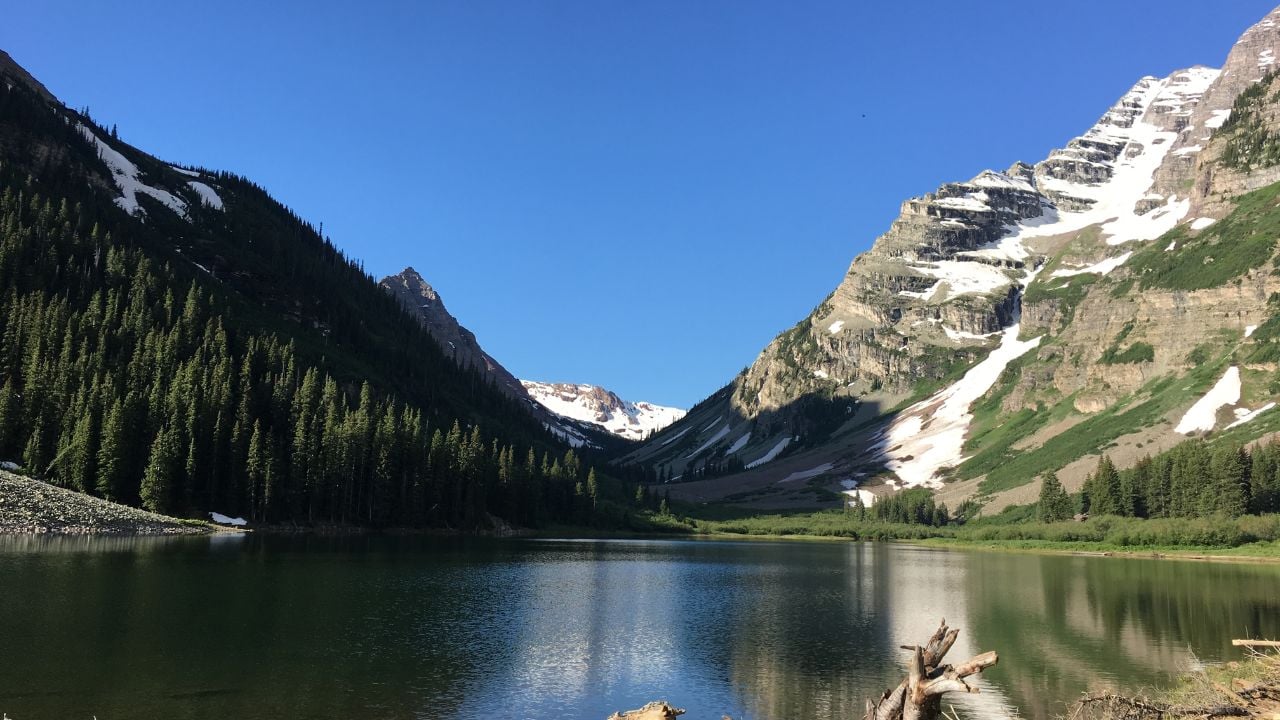
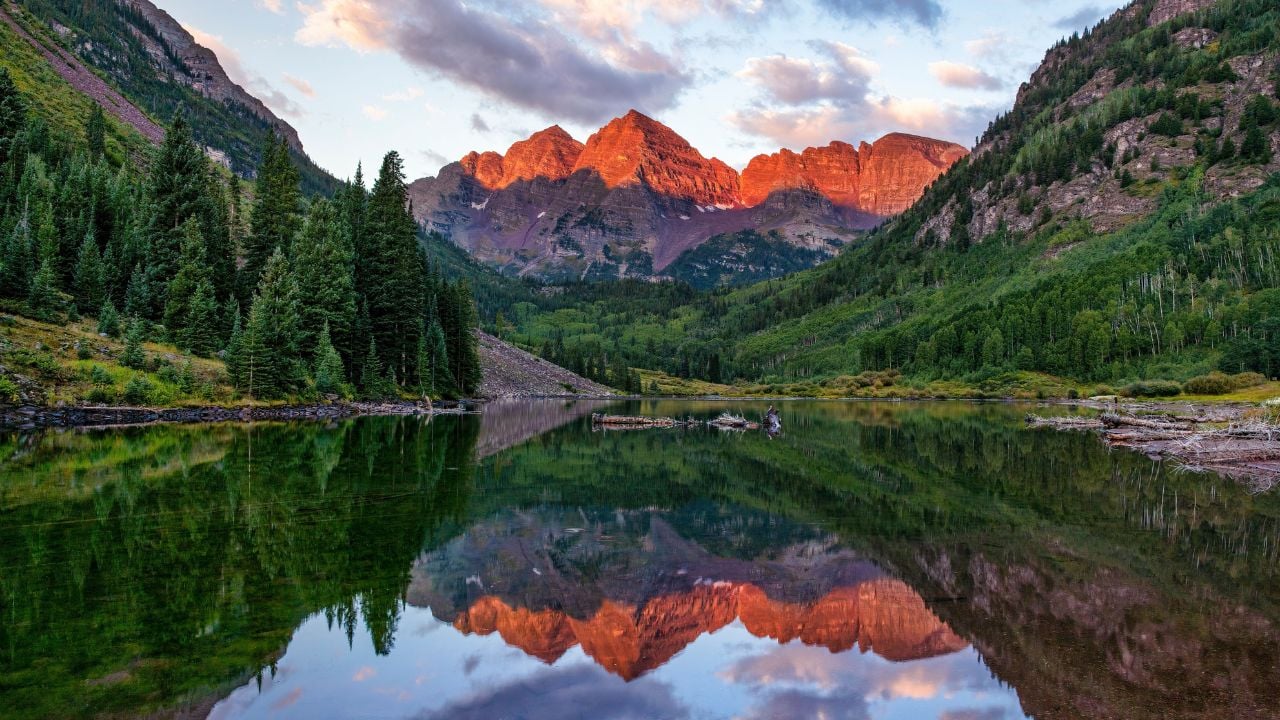
Maroon Lake makes the list because the backdrop is one of the most famous in the Rockies. The U.S. Forest Service says the Maroon Bells Scenic Area is extremely popular and serves as a major access point to the Maroon Bells-Snowmass Wilderness, and the wider White River National Forest is described by the agency as home to iconic destinations such as the Maroon Bells. The appeal is easy to understand once you see the twin peaks reflected above the lake.
This is also one of the best fall-photo lakes in the country. The Forest Service’s fall-colors page specifically highlights White River National Forest as home to the famed Maroon Bells, where vast groves of quaking aspens turn brilliant gold in late September. Planning matters here too, because the Forest Service says fees apply for parking and shuttle reservations at Maroon Bells Scenic Area. The images may look effortless, but getting them usually goes more smoothly when the logistics are handled first.
Put together, these five lakes show how varied American water-and-mountain photography can be. Some win through impossible color, some through reflections, some through stone detail, and some through scale. That range is exactly what makes a lake-focused photo trip feel stronger than a list built around one repeated look.