On July 4, 1776, the Declaration of Independence was signed, signifying the beginning of freedom and democracy for the United States of America. Over time, the U.S. grew into the vast country we know today- one that inspired songs like “America the Beautiful” and “This Land is Your Land.”
In 2026, the U.S. celebrates a major anniversary, making it the perfect time to plan a trip that highlights the nation’s complex yet fascinating history.
America’s cities, monuments, National Parks, memorials, and museums highlight its diverse landscape, culture, and history. Instead of doomscrolling or endlessly browsing streaming services, seize the chance to go outside and discover something new.
In celebration of America’s 250th Anniversary, let’s explore the most prominent and iconic historic destinations that will teach, inspire, and move travelers of all ages.
1. The Lincoln Memorial (Washington, D.C.)
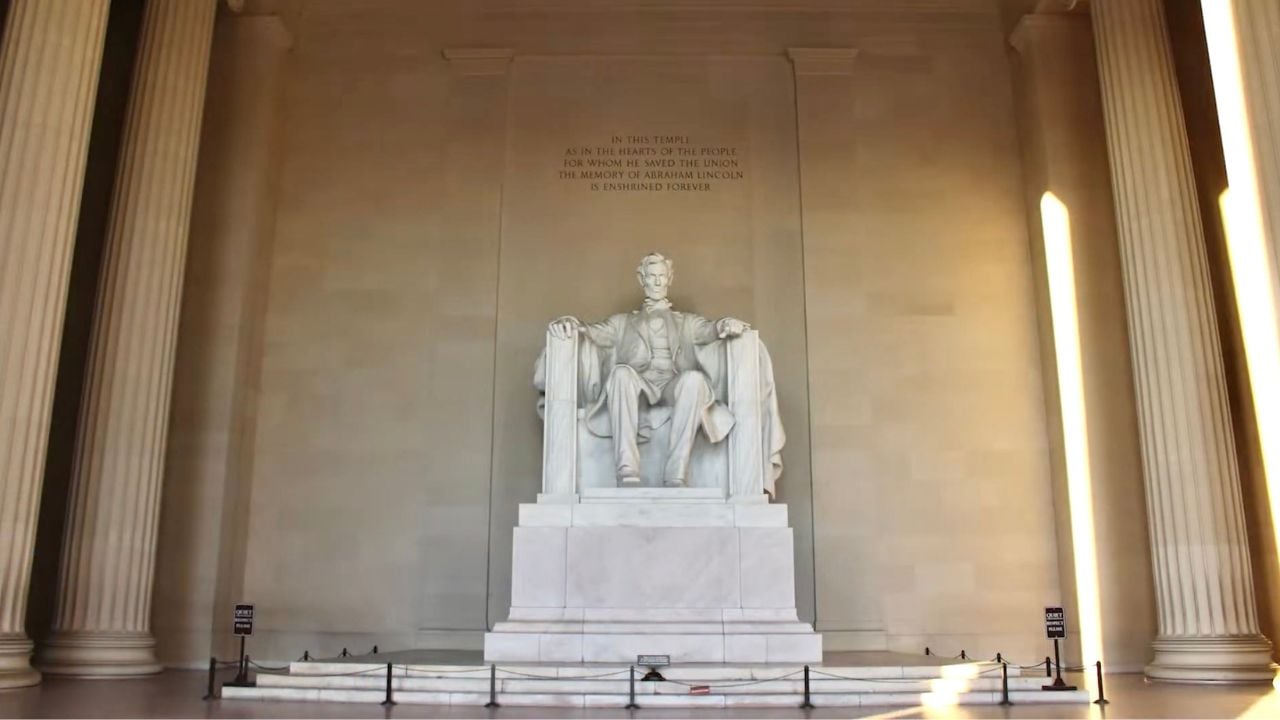
Arguably the most beloved and undeniably one of the most significant Presidents in United States history, Abraham Lincoln has inspired generations. As the 16th President, he was known for leading the country through the Civil War and the abolition of slavery, his famous Gettysburg address, and, sadly, his untimely death by assassination in 1865.
The Lincoln Memorial is located at the Western end of the National Mall in Washington, D.C. It is a neoclassical style building (modeled after Greece’s Parthenon) designed by Henry Bacon, featuring a large statue of Lincoln inside, designed and sculpted by Daniel Chester French and the Piccirilli Brothers. The imposing statue has Lincoln sitting proudly with a strong but stoic expression. Two of Lincoln’s speeches are also carved inside the memorial, while a large mural “portrays the governing principles in Lincoln’s life,” including Justice, Law, Faith, Hope, and Charity.
The Memorial had been the site of numerous significant events, most especially Martin Luther King Jr.’s “I Have a Dream” speech. Today, countless people visit this monument that honors one of the nation’s finest leaders in history.
2. Independence Hall and the Liberty Bell (Philadelphia, Pennsylvania)
Called the “birthplace of America” by the National Park Service, Independence Hall is a “must-see” for anyone interested in America’s early history. Both the Declaration of Independence and the Constitution were discussed, debated, and signed at Independence Hall in 1776 and 1787, respectively, making it synonymous with freedom and democracy. Visitors can take a guided tour for only $1 per ticket daily, from 10 am until 4:20 pm. Quite the popular tourist spot, guests should expect long waits.
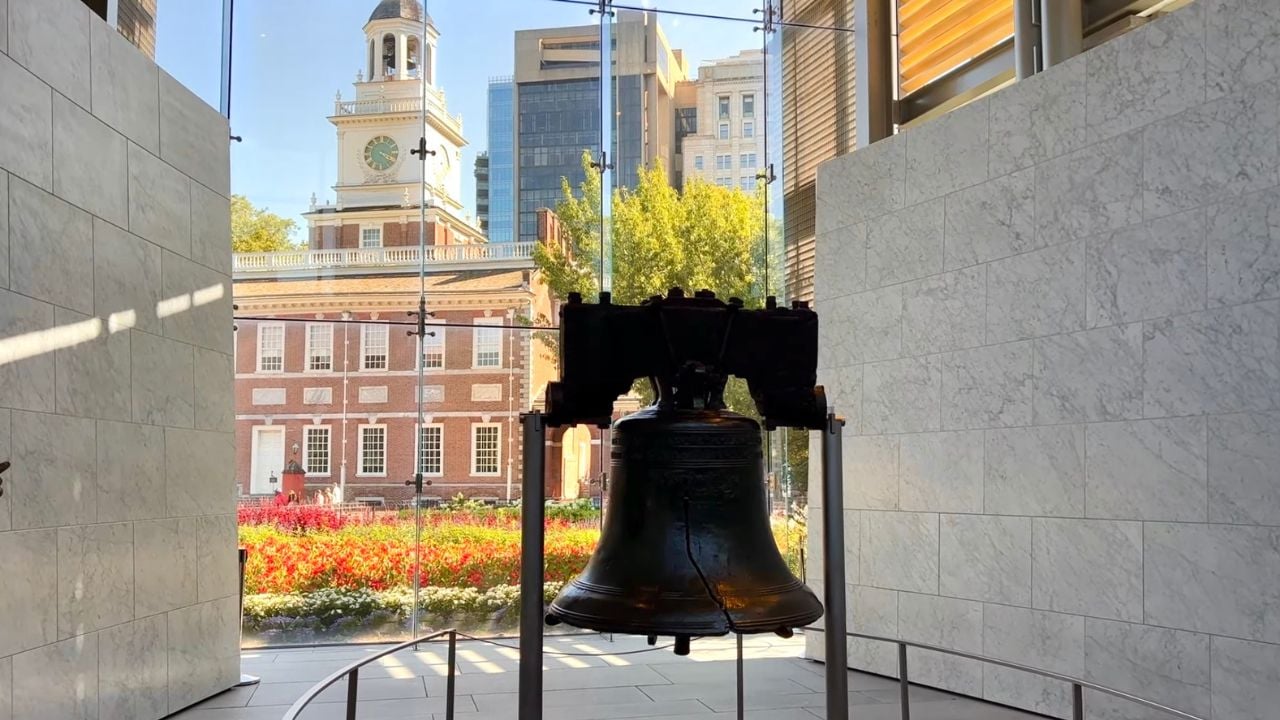
In front of Independence Hall, visitors can also see the Liberty Bell, another historical landmark synonymous with freedom and liberty. The bell originally hung in the tower of Independence Hall, its famous crack a result of years of unsuccessful repairs. After its initial crack upon testing, the bell was recast by John Pass and John Stowe. However, in 1846, another fracture formed after being rung for George Washington’s Birthday celebration, cracking it beyond repair.
In 2003, the bell was moved below to a permanent display, encased in glass, in the Liberty Bell Center. Inscribed upon it reads “Proclaim LIBERTY Throughout All the Land Unto All the Inhabitants thereof.” Admission to see The Liberty Bell is free and available every day. Visitors must simply pass through security. For more information on tours to Independence Hall, visit nps.gov.
3. The White House (Washington, D.C.)

No matter one’s feelings about who is currently in office, there’s no denying the historical significance of The White House- especially in celebration of America’s 250th Anniversary. After all, every President has taken up residence here except for the first President, George Washington. And that is only because the building wasn’t completed until after his term.
The White House, located at 1600 Pennsylvania Avenue, has gone through multiple renovations, refurbishments, repairs, and additions over the years. A fire in 1814 led to rebuilding it with stronger durability. Theodore Roosevelt led the addition of the West Wing, the famous Oval Office was added in 1909 under the Presidency of William Howard Taft, and Harry S. Truman had the entire interiors reconstructed in 1948.
The White House has become known for its famous rooms, such as the Oval Office, Blue Room, Red Room, Situation Room, James S. Brady Press Briefing Room, and Lincoln Bedroom. To request a tour, visit the official website. It’s suggested to do so months in advance as they fill up quickly.
4. Mount Rushmore (Keystone, South Dakota)
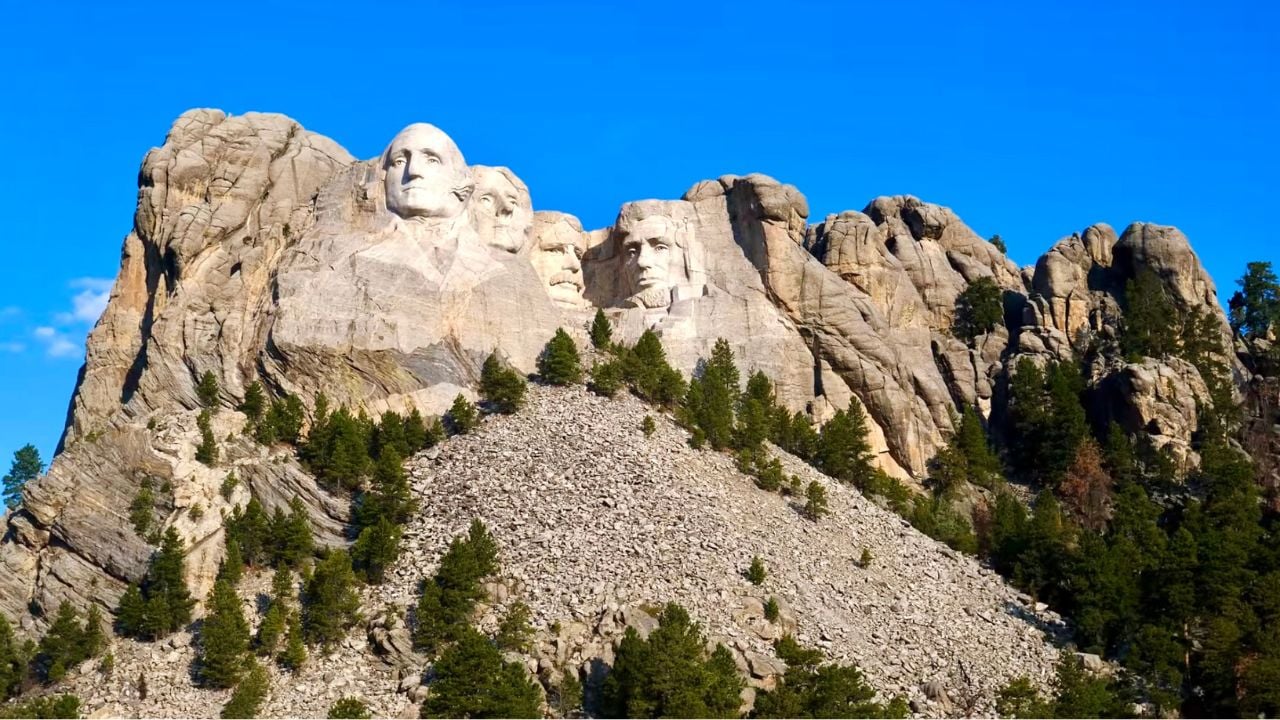
Amongst the Black Hills of South Dakota sits Mount Rushmore, a resolute representation of American history carved out of stone with miraculous precision and specific choices. Designed and sculpted primarily by Gutzon Borglum, the project took 14 years from start to finish. From the blasting and drilling of rock to the sculpting process and delays due to weather and Gutzon’s death, Mount Rushmore was finally completed in 1941 by his son, Lincoln.
Mount Rushmore includes four U.S. Presidents, each chosen by Gutzon because they represented significant aspects of America’s history: George Washington (America’s birth), Thomas Jefferson (America’s growth), Theodore Roosevelt (America’s development), and Abraham Lincoln (America’s preservation). With over two million visitors each year, it’s one of the most recognizable landmarks in the U.S., and not just because of its significant inclusion in popular films like North by Northwest and National Treasure 2– although that does hold a certain appeal for film lovers.
Not without its controversy, Mount Rushmore has been heavily protested by those who consider the land sacred. Still, for those making a historical U.S. travel list, Mount Rushmore remains a must-do.
5. The Grand Canyon (Arizona)
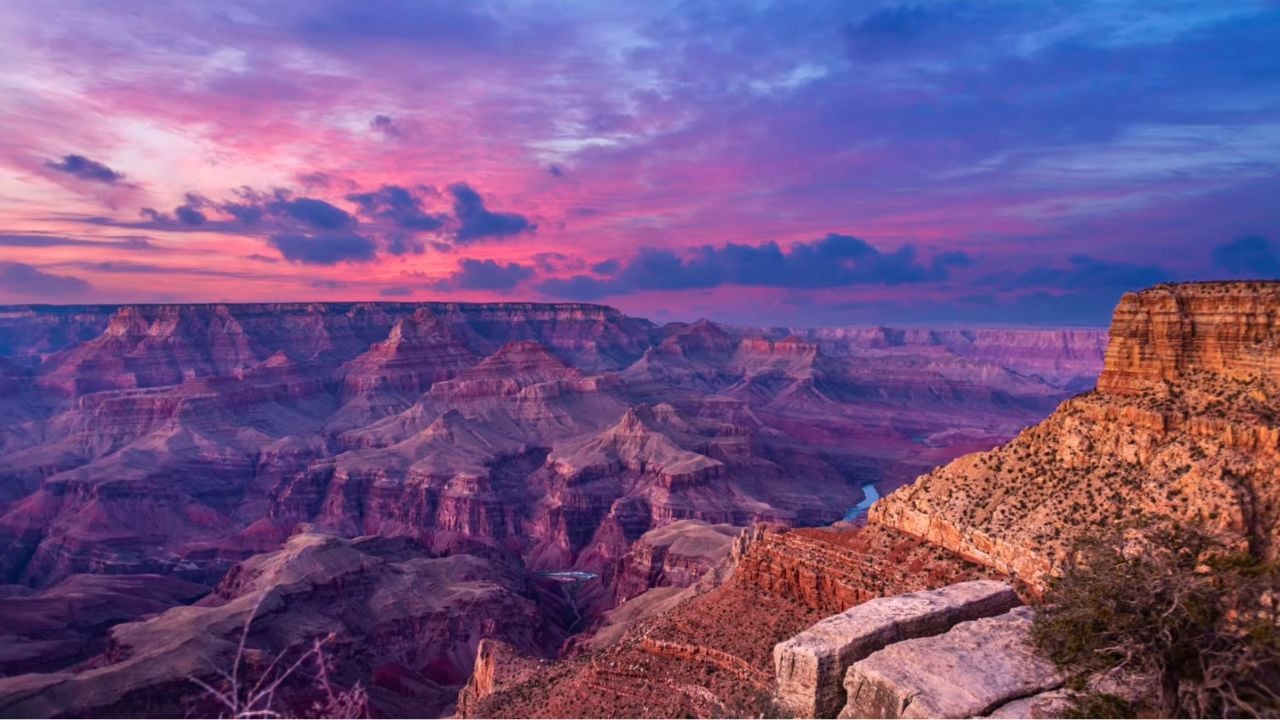
Speaking of miraculous places, the Grand Canyon is the perfect representation of one of nature’s miracles. One of the Seven Wonders of the World, the Grand Canyon is the result of erosion, specifically the Colorado River slowly carving out the canyon over many, many years. The canyon is more than a mile deep, 277 miles long, and 18 miles wide.
The awe-inspiring National Park attracts millions of visitors annually who enjoy camping, hiking, or merely looking upon the canyon in wonder.
The Grand Canyon may not be a part of America’s history in the same way as others, but it remains a pristine example of the glorious, natural landscapes that exist in the United States.
6. The Statue of Liberty (New York City, New York)
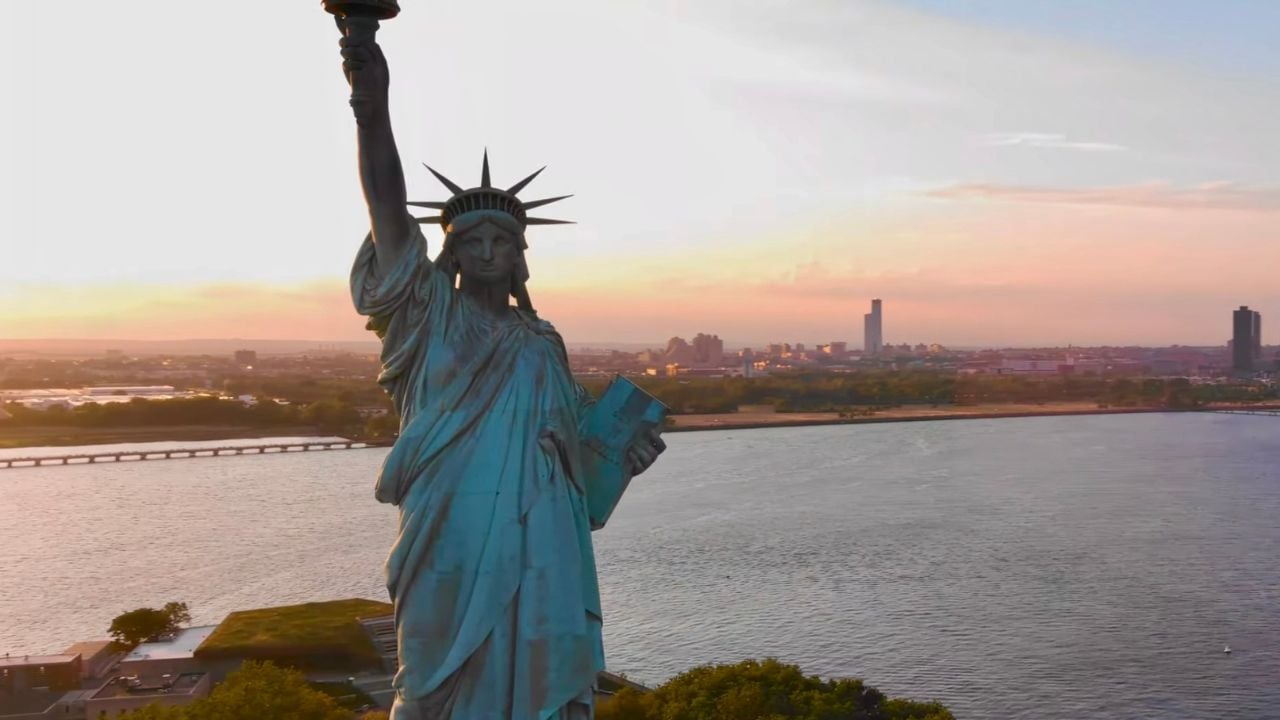
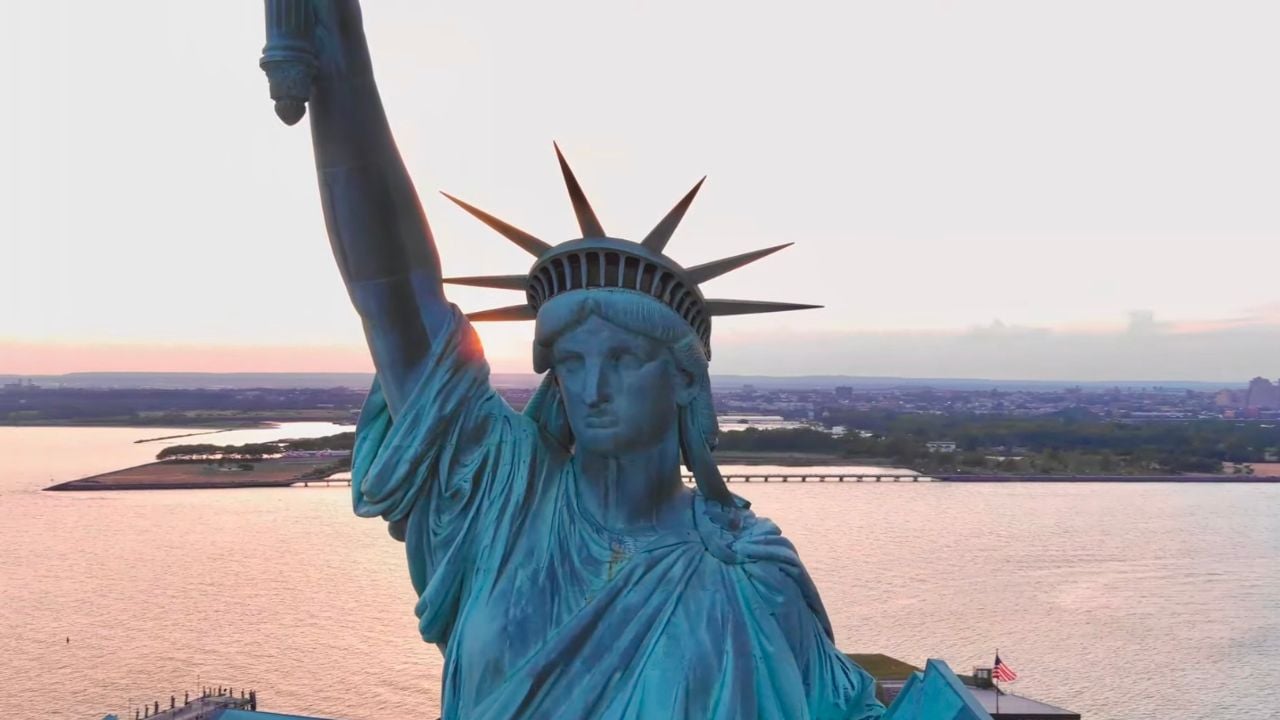
Without a doubt, the most iconic landmark in the U.S., the Statue of Liberty, or “Statue of Liberty Enlightening the World,” was a gift from France to the United States to honor the friendship between the two countries and celebrate the centennial of the Declaration of Independence. Conceived by Édouard de Laboulaye and sculpted by Frédéric-Auguste
Bartholdi, “Lady Liberty” has become America’s trademark symbol- one that encompasses all that the country stands for.
According to TheStatueofLiberty.org, her design is also deeply symbolic: “ her crown representing light with its spikes -[evokes] sun rays extending out to the world; the tablet, inscribed with July 4, 1776 in Roman numerals, noting American independence; to symbolize the end of slavery, Bartholdi placed a broken shackle and chains at the Statue’s foot.”
Indeed, perhaps no other landmark has as much recognizable and seminal a legacy as the Statue of Liberty. A list celebrating the 250th Anniversary would be incomplete without it. Those looking to visit must book tickets through Statue City Cruises, including entering the pedestal and crown, which book up months in advance. For information, visit the Cruise Official Website.
7. Ellis Island (New York)
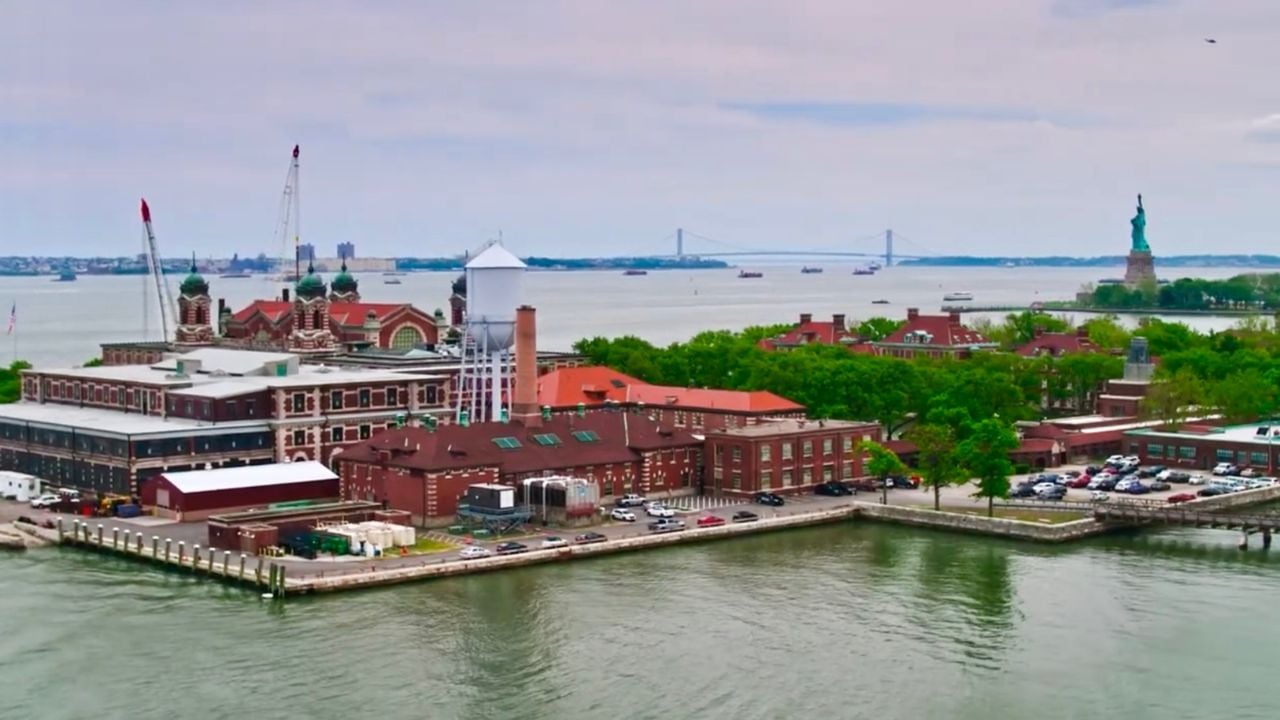
A trip to the Statue of Liberty must also include a visit to Ellis Island, as the two are indelibly connected. Located across from the Statue in New York Harbor, Ellis Island holds a special and significant cultural place in history.
As a nation made up of immigrants, individuals from various countries would enter the U.S. by way of Ellis Island, with a dream of becoming citizens and making a good life for themselves and their family members.
With a searchable database, a trip to Ellis Island could prove meaningful for many visitors looking for the history of their own ancestors.
8. Gettysburg (Pennsylvania)
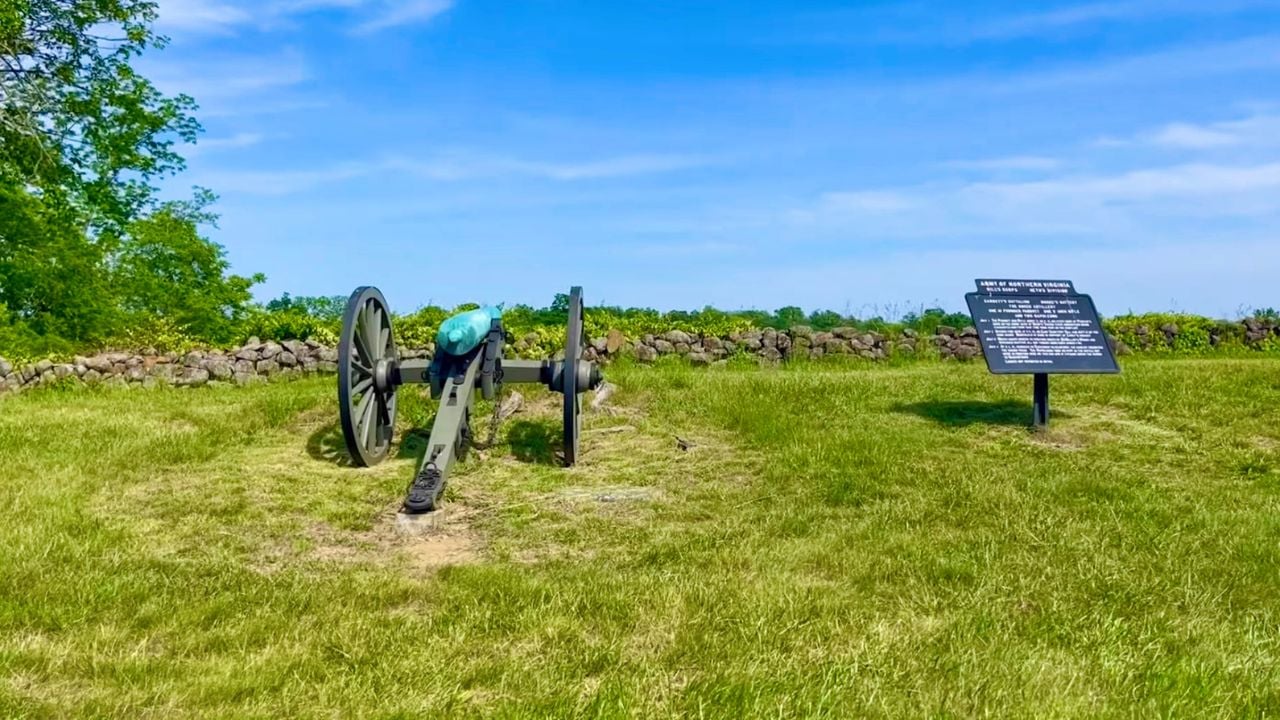
Some places hold historical significance in poignant and profound ways. Such is the case for Gettysburg, the site of the Battle of Gettysburg, a pivotal battle that was considered the turning point in the Civil War in 1863.
Taking place over a 3-day period, the death toll, wounded, missing, and overall casualties reached astronomical heights and are considered one of the bloodiest battles in American military history. Consequently, a visit here comes with a sense of sadness, but also respect and reverence for the souls lost. It’s the type of place where the weight of what occurred will be felt the minute one steps on these hallowed grounds. YouTube traveler JustinScarred showcases just such feelings in this video.
There’s more to explore in Gettysburg besides the battle site, including the Museum and Visitor Center and National Cemetery. To plan your visit, go to the National Park Service website.
9. Pearl Harbor (O’ahu, Hawaii)
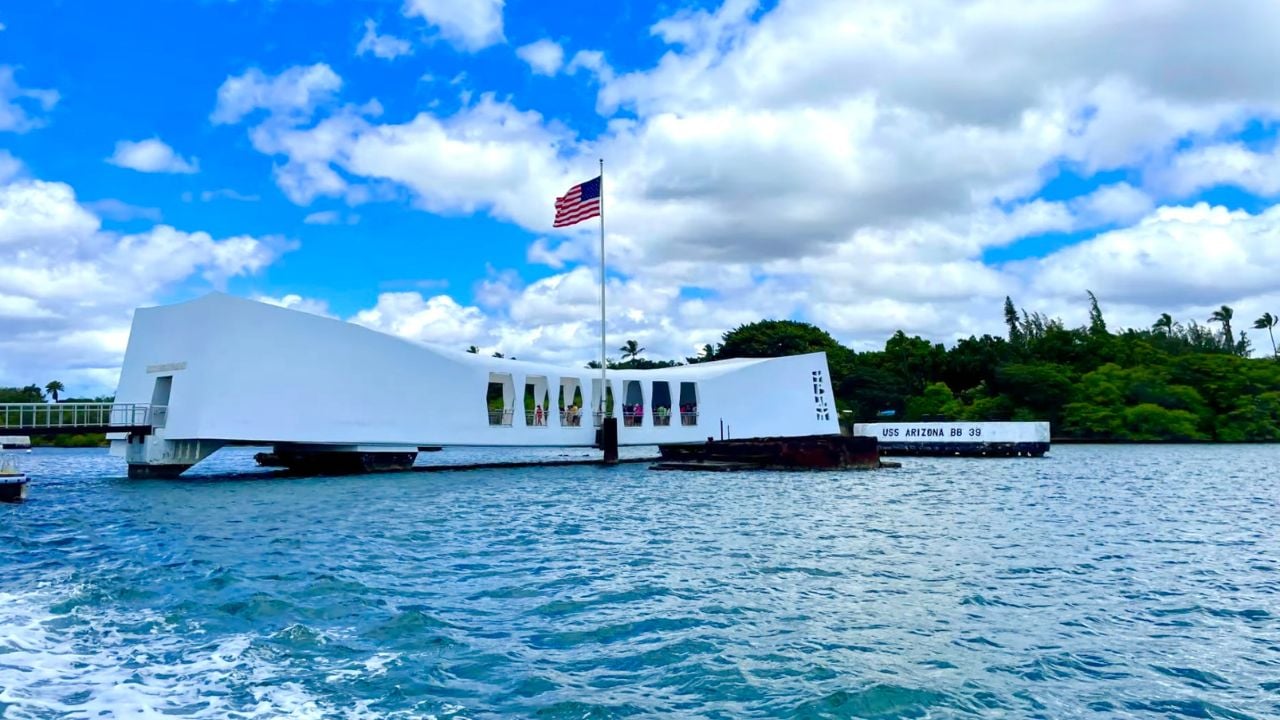
Much like Gettysburg, Pearl Harbor represents a tragic moment in U.S. history, but now remains forever immortalized to honor the fallen, lost on the day that will “live in infamy,”
December 7, 1941. On that fateful morning, the Japanese launched a massive air strike on the U.S. military base in Hawaii, resulting in thousands of casualties among soldiers, sailors, civilians, battleships, submarines, planes, and more.
The devastating impact led to the U.S. officially entering WWII and is remembered as one of the most devastating events in American history. A visit here, especially to the USS Arizona Memorial, will be somber, but also memorable and poignant, reminding all about the devastation of war and the fragility of life.
10. Colonial Williamsburg (Virginia)
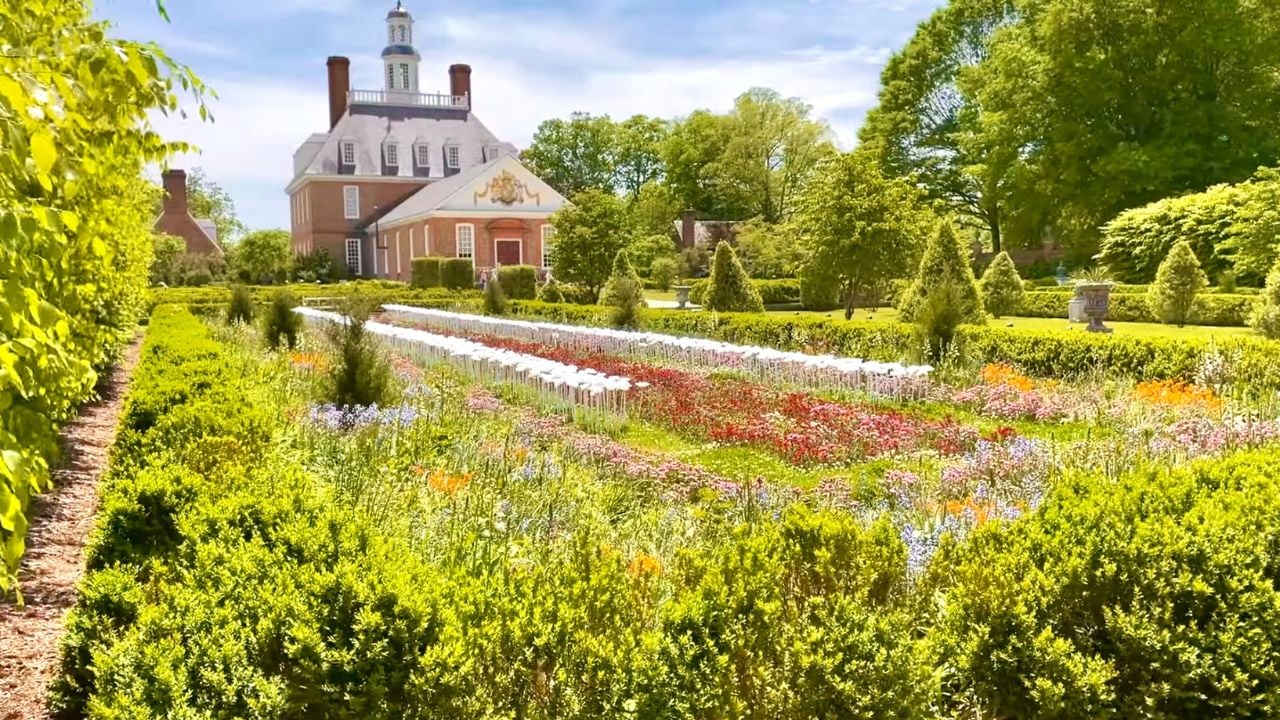
Of all destinations one should visit to celebrate America’s 250th anniversary, no other feels more like a whole experience than Colonial Williamsburg. Indeed, more than just a single landmark, these 301 acres feel like a full-blown 18th-century town frozen in time.
With over 89 buildings, 30-plus gardens, and 20 historic trades on display, the authentic architecture, experiences, and actors all add to the Colonial experience, making it one of the most fun and educational travel spots on this list for U.S. history buffs. As the official website states, “Imagine a bustling 18th-century city. The ping of the anvil in the blacksmith shop. People are discussing news outside the courthouse. The market is in full swing. This is Williamsburg, the thriving capital of Virginia, where a revolution took hold.”
Colonial Williamsburg has fun events all year round and special packages with accommodations. With the 250th anniversary of the U.S. and the 100th anniversary of Williamsburg, there are special events in honor of both. Visit the official site for more information.
11. The Freedom Trail (Boston, Massachusetts)
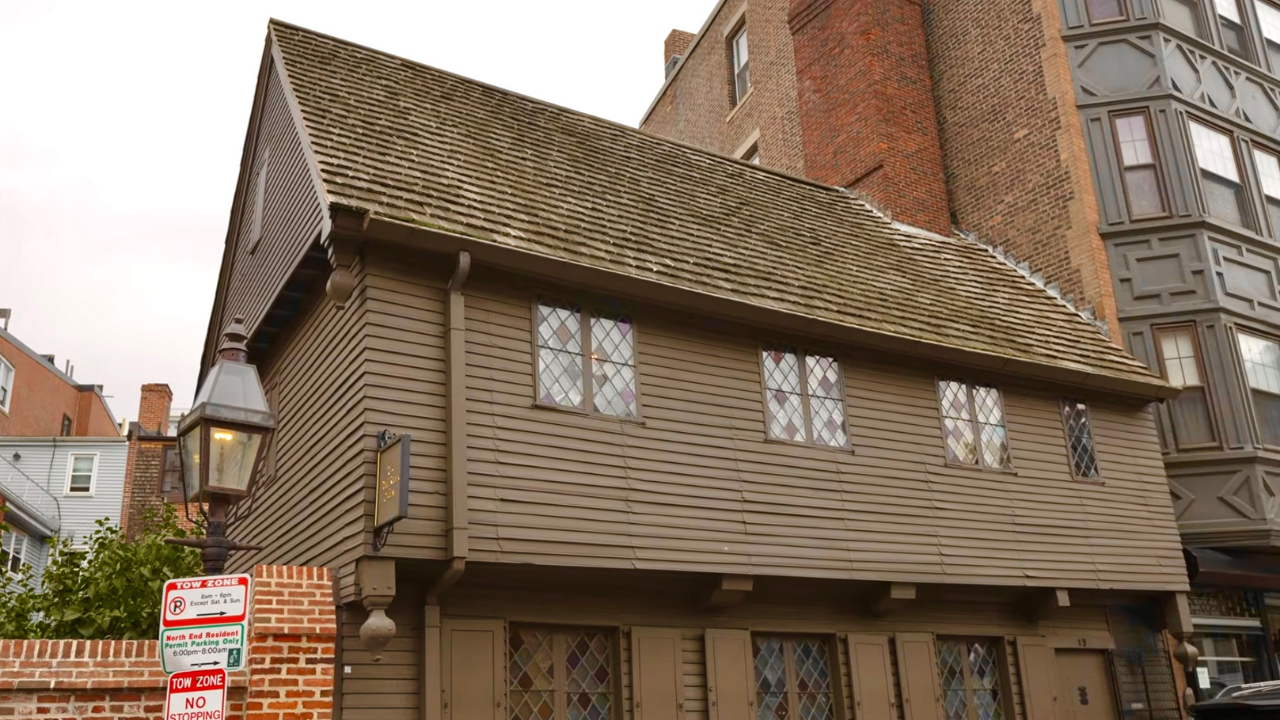
Although not as vast as Colonial Williamsburg, the Freedom Trail presents another in-depth and fascinating experience for visitors. A literal path of red brick through Boston, Massachusetts, the trail connects 16 historic locations that proved significant during the American Revolution and the founding of the United States.
Some of these sites include Paul Revere’s House, the Old North Church, the Bunker Hill Monument, the Boston Massacre site, and the USS Constitution tall ship. Visitors can walk the trail and explore each site for free, and at their own pace. Or, if they so choose, take a guided walking tour for $17 for adults, $15 for seniors and students, and $8 for children aged 6-12.
12. George Washington’s Mount Vernon (Virginia)
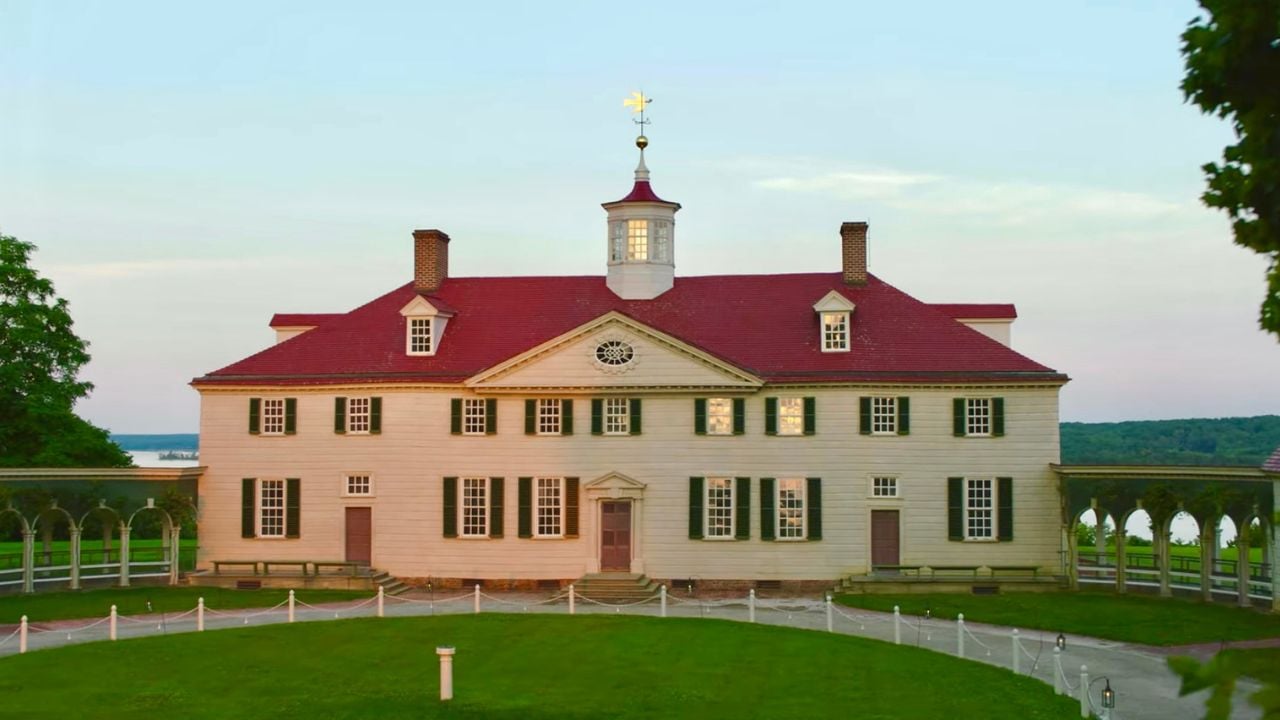
Along the banks of the Potomac River in Fairfax County, Virginia, 15 miles South of Washington, D.C., sits Mount Vernon. This beautiful, regal estate was the home to George
Washington and his wife, Martha, and is a National Historic Landmark. Today, it’s maintained by the Mount Vernon Ladies Association.
The estate’s interiors have been meticulously restored to their original glory, while the various gardens remain well-kept and lovely. The grounds also include a family tomb where
Washington and his wife have been interred.
Mount Vernon is open daily from 9 am to 5 pm, with tickets running $30 for adults and $16 for children aged 6 to 11. Kids 5 and under are free.
13. The Smithsonian (Washington, D.C.)

The Smithsonian Museum has an illustrious reputation for being one of the most spectacular and prestigious museums in the world, and deservedly so. After all, the Smithsonian is not one singular museum, but an entire institution of 17 museums, galleries, and even a zoo. Visitors could spend all day here and not see everything.
Brimming with fascinating history, these museums hold anything from artifacts and elaborate displays to art, dinosaur bones, and planes. The various museums include the Museum of Natural History, the National Air & Space Museum, the American Art Museum, and the Renwick Gallery.
For this list, the most significant is the National Museum of American History with a collection of 1.7 million items. Visitors can see anything from pop culture icons like Dorothy’s Ruby
Slippers from The Wizard of Oz to American artifacts such as the literal Star Spangled Banner that inspired the country’s National Anthem.
The museums are open every day, except Christmas, and entry to many is free.
14. The Alamo (San Antonio, Texas)
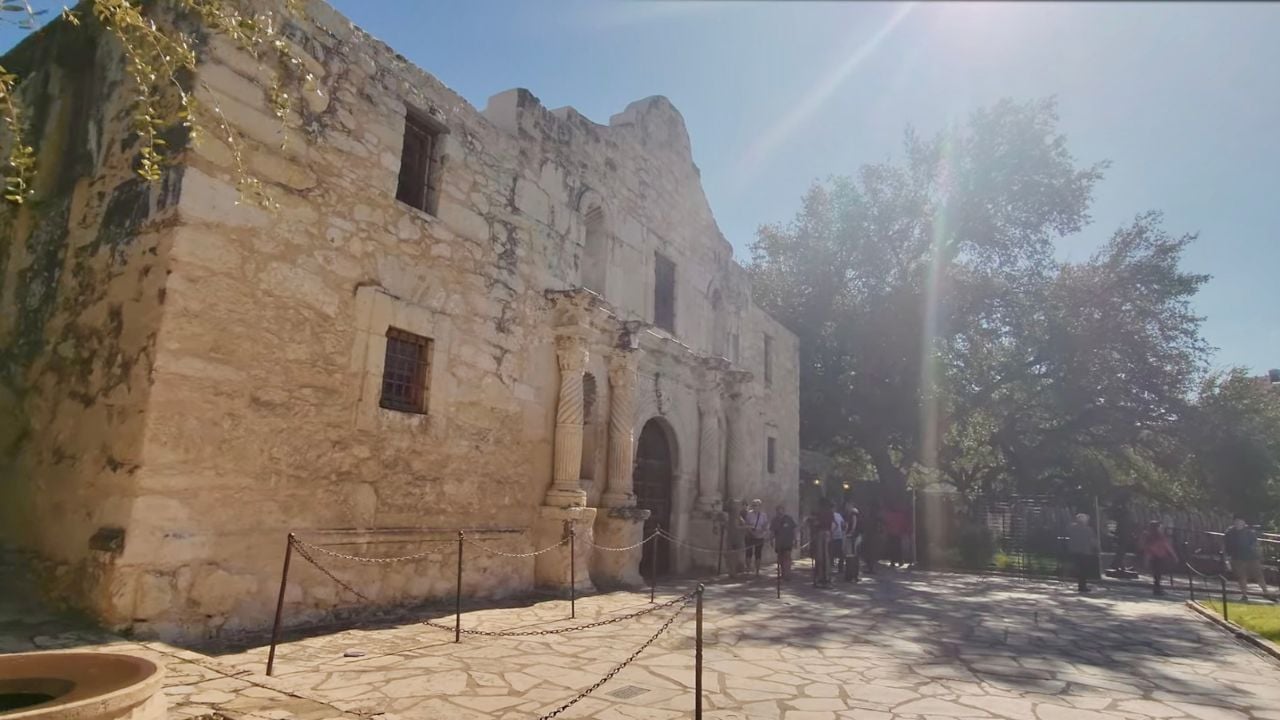
As the famous phrase goes, “Remember the Alamo!” Whether one visits or not, anyone interested in American history will never forget the Battle of the Alamo, which took place on
March 13, 1863. On the 13th day of a siege by the Mexican Army, led by General Santa Ana, the troops broke through the Mission’s defenses and eliminated almost all of the Texas defenders in only 90 minutes.
Though they fought valiantly, the losses included notable individuals, Davy Crockett, James Bowie, and William B. Travis. Despite the tragedy, the Battle of the Alamo ignited the final spark that led to victory in the Texas Revolution.
Those looking to visit the Alamo can book a guided tour or a self-guided experience for $48 or $20 for adults, and $38 or $18 for children. Just remember not to ask about the Alamo’s basement because it doesn’t exist- if you know, you know with that reference.
15. Yellowstone National Park (Wyoming and Montana)
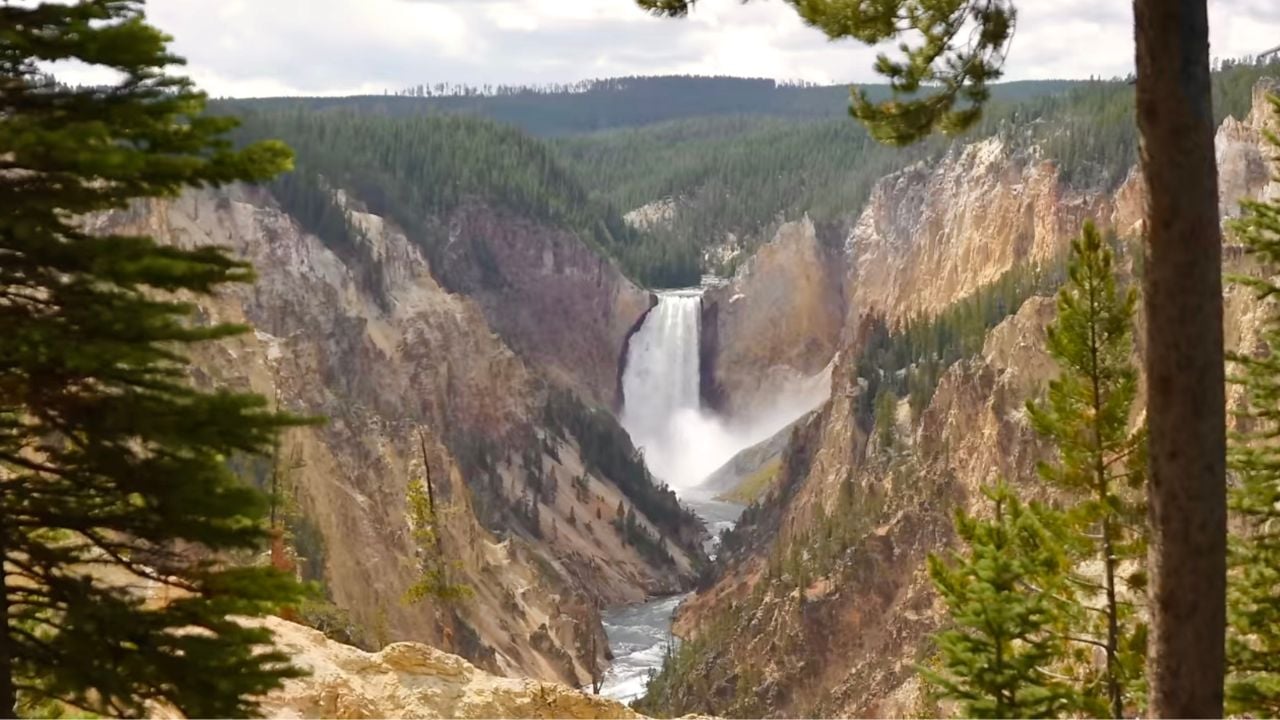
Deemed “the world’s finest National Park,” Yellowstone further showcases the rich, wondrous beauty that exists in the U.S. As exciting and thrilling as big cities can be, the purity of nature’s wonders cannot be matched.
Each year, Yellowstone welcomes millions of visitors looking to camp, hike, explore, and take in all the park has to offer. From the tall trees to the mountains and waterfalls, Yellowstone has a majesty all its own.
The most important thing when visiting Yellowstone is planning. Weather varies from season to season, and safety must be a top priority as these varied weather conditions and wildlife guests may encounter remain an imperative part of one’s experience. Lodging also fills up months in advance, so plan accordingly.
16. The Henry Ford Museum (Dearborn, Michigan)
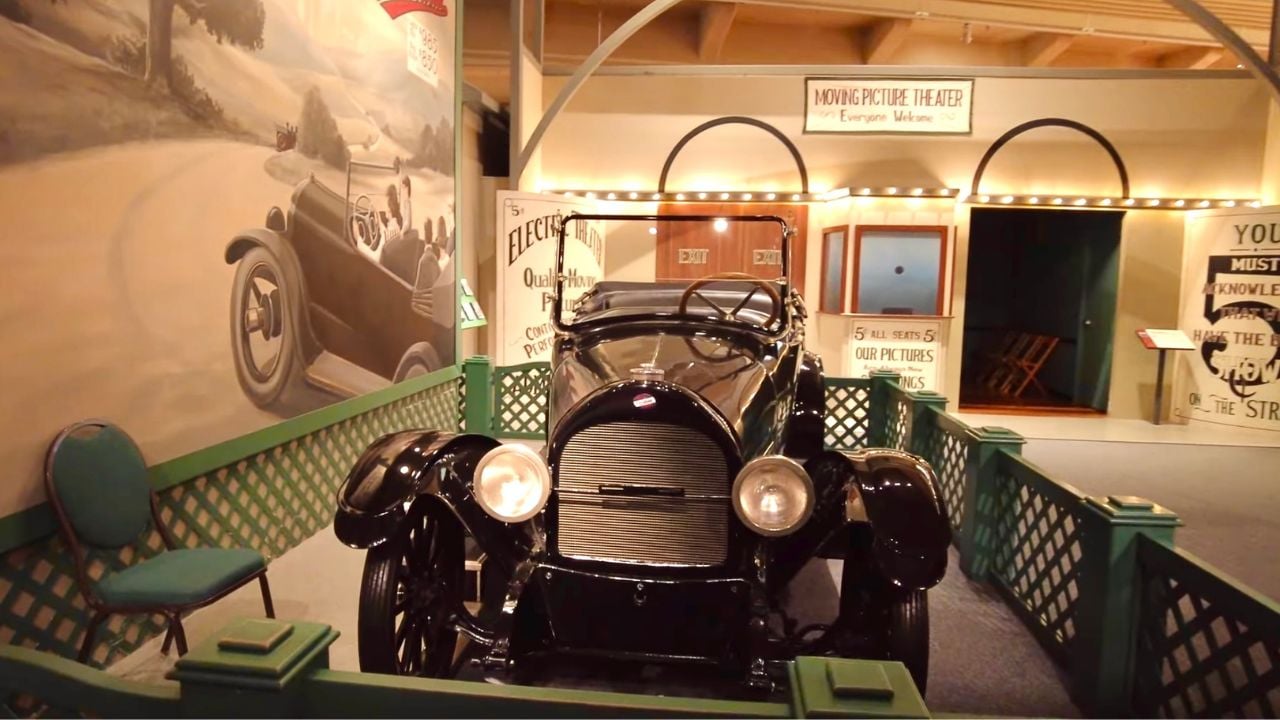
The Henry Ford Museum is similar to the Smithsonian Institution in that it encompasses a 250-acre complex. It was also named a U.S. National Historic Landmark.
The Henry Ford Museum of American Innovation holds numerous historical artifacts, large and small, such as the chair Abraham Lincoln sat in before his assassination, a collection of Stradivarius violins, steam engines, airplanes, and more.
Outside, Greenfield Village includes authentic 17th-century buildings, some of which are historically important. These include the Wright Brothers Bike Shop and a replica of Thomas Edison’s laboratory.
A visit here will surely leave many in awe. It makes an ideal choice for any travel list celebrating U.S. history, as it celebrates the innovation, ingenuity, resilience, and spirit of the American people.
Hello Marianne,
I enjoyed your article, however I found a misspelling of my home island. Pearl Harbor is on your list, however you spelled “Oahu” incorrectly. Please revise the spelling. Thank you.
Just fixed. You can read over things multiple times and still miss mistakes. Thanks for pointing it out and for reading!