
The muscle car era represents one of the most celebrated periods in American automotive history, when raw power and accessible performance ruled the streets. These tire-smoking, V8-powered machines captured the imagination of enthusiasts from the mid-1960s through the early 1970s, offering incredible performance at prices ordinary Americans could afford.
However, a combination of economic, regulatory, and social factors brought this golden age to an abrupt end. Today, we’re witnessing a similar transformation as modern muscle cars face their own set of challenges.
Understanding why these icons fell then — and why they’re struggling now — tells us much about how cars, culture, and priorities have evolved over the decades.
First, What Is a Muscle Car?
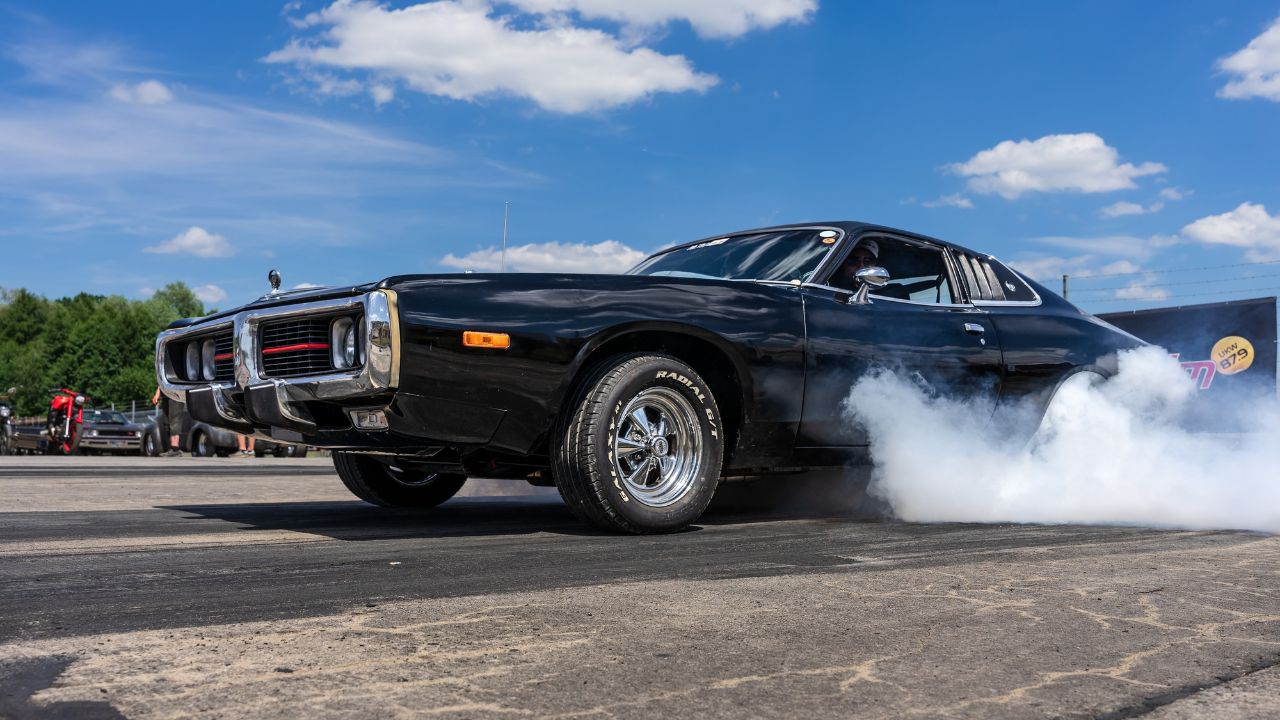
The general consensus amongst muscle car enthusiasts is that muscle cars only exist from the late 1960s to early 1970s — the true muscle car era. These are Detroit-built monsters with a big engine, a performance package, and aggressive styling that dominated the drag strip until society left them in the dust far too soon.
I am usually one to agree with this (very strict) definition, but I believe that we should acknowledge the existence of “modern muscle cars.” Yes, they are not the OGs, but these cars are keeping the spirit of American muscle alive with powerful engines, insane horsepower, and massive bodies that can still haul tail. While the Mustang was once considered a strict pony car, the newer models are sometimes considered “modern muscle cars.”
Purists may not like it, but you gotta give the Mustang credit either way: it’s one of the only remaining cars keeping muscle cars alive as we turn to EVs and SUVs.
Here’s how we got there.
The 1973 Oil Crisis Changed Everything

When OPEC implemented its oil embargo in 1973, gas prices quadrupled almost overnight, and suddenly those 10-mpg muscle cars didn’t seem so practical. Lines at gas stations stretched for blocks, and Americans began questioning whether burning through a gallon of premium every eight miles made sense anymore.
The crisis hit right when muscle cars were at their peak popularity, and the shift in priorities happened remarkably fast. Manufacturers who had spent years perfecting big-block engines were suddenly scrambling to develop fuel-efficient vehicles. While enthusiasts still loved the power, the economic reality of feeding these thirsty beasts became impossible for many owners to justify.
The carefree days of cheap gas and unlimited cruising vanished, taking much of the muscle car’s appeal with it.
Emissions Regulations Strangled Power Output

The Clean Air Act of 1970 marked the beginning of the end for high-performance engines as manufacturers knew them. New regulations required catalytic converters and unleaded fuel, technologies that initially came with significant performance penalties.
Compression ratios dropped dramatically as engines were detuned to meet emissions standards, and the horsepower numbers that had defined the era plummeted. A 1971 Hemi Cuda produced around 425 horsepower, but by 1975, the most powerful production engines struggled to break 200. Engineers eventually learned to work within these constraints, but it took decades to return to the power levels of the early 1970s.
The immediate impact was devastating for muscle car fans who watched their favorite models become shadows of their former selves.
Insurance Companies Declared War on Performance

As muscle cars got faster and younger drivers got bolder, insurance companies took notice of the accident statistics and responded accordingly. By the early 1970s, insuring a high-performance car could cost as much as the car payment itself, especially for drivers under 25.
Some insurers simply refused to cover certain models altogether, effectively pricing young enthusiasts out of the market. The manufacturers’ target demographic couldn’t afford to own the cars they were building, creating an unsustainable business model. This financial pressure pushed buyers toward more sensible vehicles and forced automakers to reconsider their performance-focused strategies.
The bean counters had spoken, and the numbers didn’t favor cars that could do wheelies off the line.
Safety Standards Added Weight and Complexity

Federal safety regulations introduced in the late 1960s and early 1970s required features that added hundreds of pounds to vehicle curb weights. Reinforced bumpers, side-impact protection, and additional safety equipment transformed the lightweight rocket ships of 1969 into notably heavier machines by 1974.
The classic muscle car formula relied on stuffing big engines into relatively light bodies, but that equation stopped working when the bodies gained 400 to 600 pounds. Engineers found themselves fighting physics as they tried to maintain performance with the same engines pulling considerably more mass. While these safety features undoubtedly saved lives, they fundamentally changed the character of performance cars.
The nimble, raw experience that defined early muscle cars gave way to something more substantial and less immediate.
The Economy Went Into Recession

The economic downturn of the mid-1970s hit discretionary purchases particularly hard, and muscle cars definitely qualified as non-essential. Unemployment rose, wages stagnated, and families focused on basic transportation rather than weekend toys.
Performance cars represented the opposite of practical spending during uncertain economic times, and sales figures reflected this shift in priorities. Manufacturers saw their performance divisions hemorrhaging money and made the difficult decision to scale back or eliminate these programs entirely. The few muscle cars that remained in showrooms sat unsold as buyers chose economy cars and practical sedans.
Economic recovery would eventually come, but by then the muscle car market had fundamentally transformed.
Changing Cultural Attitudes Toward Performance

The counterculture movement of the late 1960s and early 1970s increasingly questioned American consumerism and excess. Muscle cars, with their conspicuous consumption of fuel and resources, became symbols of the wastefulness that critics condemned.
Environmental awareness grew, and the idea of burning rubber just for fun started seeming less appealing to a broader swath of the population. The rebellious image that had once sold muscle cars began working against them as values shifted. Performance enthusiasts found themselves on the defensive, and manufacturers responded by repositioning their marketing toward different priorities.
What had been celebrated as American ingenuity and freedom became viewed by many as outdated and irresponsible.
Foreign Competition Offered a Different Approach

Japanese and European manufacturers demonstrated that performance didn’t require displacement, introducing Americans to efficient, nimble sports cars. Models like the Datsun 240Z and BMW 2002 offered engaging driving experiences with better fuel economy and handling.
These imports attracted younger buyers who might have previously chosen muscle cars, particularly as domestic performance options dwindled. The formula of massive straight-line acceleration gave way to appreciation for balanced, well-engineered vehicles. American manufacturers found themselves outmaneuvered in a market they had once dominated completely.
This competition would eventually make the domestic industry stronger, but it contributed to the decline of the traditional muscle car formula.
Modern Muscle Cars Face Electrification Mandates

Today’s modern muscle cars are encountering challenges as significant as those their predecessors faced in the 1970s. Government regulations around the world are pushing toward electrification, with some regions planning to ban new internal combustion engine sales entirely by 2035.
The V8 rumble that defines modern Mustangs, Challengers, and Camaros seems incompatible with an electric future, even as manufacturers work on performance EVs. Enthusiasts struggle with the idea of silent muscle cars, though electric powertrains can deliver impressive acceleration numbers. The transition represents not just a technological shift but a fundamental change in what these cars represent.
Manufacturers are attempting to thread the needle between heritage and innovation, but the path forward remains uncertain.
Modern Fuel Economy Standards Create Difficult Choices

Corporate Average Fuel Economy (CAFE) standards continue to tighten, making V8-powered cars increasingly difficult to justify in manufacturer lineups. Automakers face significant fines if their fleet average doesn’t meet regulatory targets, creating pressure to discontinue low-volume, thirsty performance models.
The Dodge Challenger and Charger ended production in 2023 partly because keeping them compliant with regulations became economically unviable. Ford’s Mustang survives but with an increasing focus on turbocharged four-cylinder engines rather than V8s. Chevrolet discontinued the Camaro in 2024, though performance variants may return in different forms.
The economics of muscle car production have shifted dramatically, and the business case for these vehicles has become much harder to make.
Changing Consumer Preferences Favor SUVs and Trucks

American buyers have decisively shifted toward crossovers, SUVs, and trucks, leaving traditional cars fighting for a shrinking piece of the market. Performance enthusiasts increasingly choose vehicles like the Ford F-150 Raptor or Jeep Grand Cherokee Trackhawk over two-door coupes.
These vehicles offer practical space for families and gear while still delivering impressive power and acceleration. The emotional appeal of a rumbling coupe has been overshadowed by the practicality of a vehicle that can haul kids to school and tow a boat on weekends. Muscle car sales have declined steadily even as the overall market has grown, indicating a real shift in preferences rather than just economic factors.
Manufacturers follow the money, and currently the money is in high-riding utility vehicles.
The Price Point Has Shifted Beyond Accessibility

Classic muscle cars succeeded partly because they offered tremendous performance at prices working-class Americans could afford. A 1970 Plymouth Road Runner started around $3,000, equivalent to roughly $23,000 today, making it accessible to a wide range of buyers.
Modern muscle cars have moved significantly upmarket, with well-equipped V8 models often exceeding $50,000 or even $60,000. This pricing puts them in competition with luxury sports cars rather than serving as everyman performance vehicles. Younger buyers, who might be most interested in these cars, find themselves priced out of the market entirely.
The democratic spirit that defined the original muscle car era has been lost as these vehicles became premium products.
Cultural Relevance Has Shifted to New Technologies

The automotive enthusiasm that once centered on muscle cars has increasingly moved toward electric performance, autonomous driving, and connectivity features. Younger generations grew up with technology as the defining aspect of progress, making electric motors and software updates more exciting than carburetor tuning.
Social media conversations about cars now often focus on Tesla’s acceleration or Rivian’s capabilities rather than the latest Mustang. The muscle car’s cultural moment has passed, though dedicated enthusiast communities keep the flame alive. Performance cars will continue existing, but they’ll likely look and feel very different from what defined the category.
The evolution isn’t necessarily bad, but it does represent the end of an era that shaped American car culture for decades.
Conclusion

The fall of the muscle car — both in the 1970s and today — reflects broader changes in society, economics, and priorities rather than any failure of the vehicles themselves.
These machines delivered exactly what they promised: accessible, thrilling performance that made driving exciting for millions of Americans. However, external factors from fuel crises to emissions regulations to shifting cultural values created conditions where muscle cars could no longer thrive in their traditional form.
Today’s challenges mirror those of the past while introducing new complications around electrification and changing consumer preferences. The muscle car legacy will endure through collector vehicles, enthusiast communities, and the occasional modern interpretation, even if the glory days are behind us.
What remains is appreciation for what these cars represented: a uniquely American expression of power, freedom, and the simple joy of acceleration.