For more than 20 years, Lexus has treated hybrid technology as a core part of its brand identity. The company itself has described its modern lineup as building on more than two decades of hybrid experience, and today electrification reaches across much of the range.
That is what makes the GX stand out. While Lexus has steadily expanded hybrid choices in crossovers and SUVs, the GX has remained the rugged outlier, holding onto a more old-school formula long after the rest of the brand moved in a different direction.
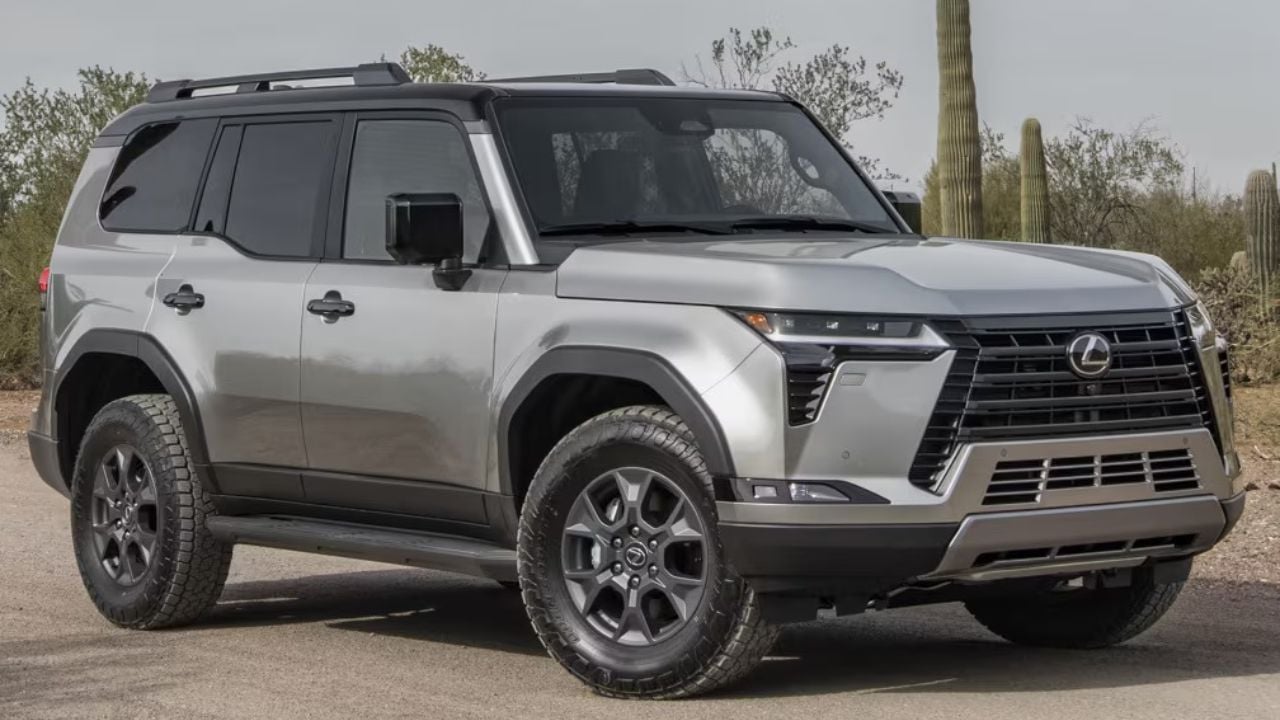
For years, that formula meant V8 power and body-on-frame toughness. The current generation already moved away from the previous V8 and into a 207-cubic-inch twin-turbo V6, but it still arrived without any hybrid assistance.
Now that may finally be changing.
The Last Holdout In A Hybrid Brand

The GX has occupied a unique place in the Lexus world ever since its original launch in 2002. When the current generation debuted, Lexus itself framed it as the first full redesign since that original model, which helps explain why the vehicle carried so much of its traditional character for so long.
That character was built around durability, trail credibility, and strong conventional powertrains. Lexus says the current GX 550 makes 349 horsepower and 479 lb-ft of torque, which is already stronger than the old V8-powered GX it replaced.
Even so, the absence of a hybrid version has become more noticeable with every passing year. On the current Lexus U.S. site, the GX is still presented only with its twin turbo V6 setup, while other parts of the Lexus lineup increasingly lean on electrified powertrains.
A Trademark Filing Changes The Conversation
The strongest clue yet comes from the legal side rather than a product announcement. A trademark filing for the name GX550H was submitted on March 16, 2026, and the public record shows it as a new application that was awaiting assignment to an examining attorney when that filing snapshot was captured.
That alone does not guarantee a production model. Automakers register names all the time, and some of them never make it to the showroom.
Still, this does not look like an isolated move. Autoblog reported that related GX550h trademark applications also appeared in markets including Cambodia, Canada, Peru, and the Philippines, which gives the filing a broader and more deliberate feel.
Two Powertrain Paths Make Sense

The more exciting possibility is the hardware Lexus already uses in the LX 700h. That setup pairs a twin-turbo 207 cubic inch V6 with hybrid assistance for a combined 457 horsepower and 583 lb ft of torque, which would give a GX hybrid a meaningful performance step over today’s GX 550.
There is also a more pragmatic route. Toyota’s current Land Cruiser uses a 146 cubic inch turbo four-cylinder hybrid system with 326 combined horsepower and 465 lb ft of torque, and that package already exists within the same broader family of rugged body-on-frame vehicles.
From a cost and efficiency standpoint, that second option would make plenty of sense. From a brand positioning standpoint, it would ask GX buyers to accept a very different kind of powertrain than the one that has shaped this model’s image for decades. That is an inference, but it follows naturally from the GX’s long emphasis on toughness, towing, and strong combustion power.
What A Hybrid GX Would Really Mean

A GX hybrid would do more than add one new trim to the order sheet. It would close one of the last obvious gaps in Lexus’ electrification story and bring one of the brand’s most recognizable SUVs into line with the direction Lexus has been signaling for years.
It could also reshape the way the GX is perceived. With the V6 version, Lexus already proved that buyers were willing to follow the model into a new mechanical era. A hybrid would push that evolution much further, especially if the brand chooses the more efficient four-cylinder route instead of the more muscular LX-style setup.
For now, the filing is the story, and the hardware remains the mystery. But if the GX550h does become reality, it will mark the end of a very long chapter for Lexus and the start of a new one for an SUV that has spent more than 20 years doing things its own way.
This article originally appeared on Autorepublika.com and has been republished with permission by Guessing Headlights. AI-assisted translation was used, followed by human editing and review.