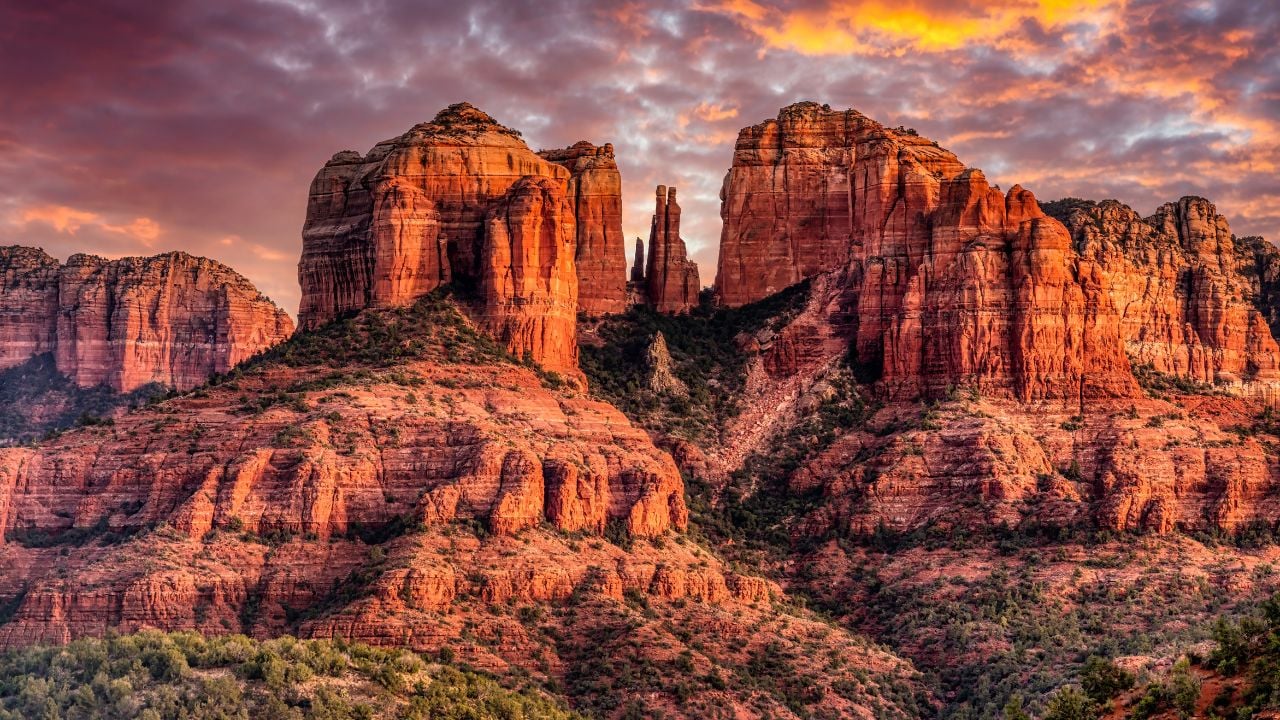
Four days in Arizona is not enough for every famous place on the map. Add the Grand Canyon, Page, Antelope Canyon, Monument Valley, Sedona, Tucson, and Phoenix to one short route, and the trip quickly becomes more windshield than desert.
This version skips the Grand Canyon on purpose and keeps the route focused: Sedona for red rocks, Flagstaff for a structured stargazing night, and Tucson for the Sonoran Desert and saguaro silhouettes. The trip still feels huge, but it does not ask travelers to spend every day chasing the next faraway landmark.
The route works best with a rental car, early starts, and realistic expectations about heat, clouds, and drive times. Spring and fall are easier for walking, while summer needs sunrise outings, shade, water, and longer indoor breaks. The point is not to prove how much Arizona can fit into four days. It is to give each landscape enough time to register: sandstone in Sedona, pine and night sky in Flagstaff, and cactus forest around Tucson.
Flagstaff also changes the trip in a useful way. This is not a pure low-desert itinerary from start to finish. Sedona brings red rock country, Flagstaff adds cooler high-elevation air and astronomy, and Tucson finishes with the saguaros, cholla, ocotillo, palo verde, and wide Sonoran views most people picture when they imagine the Arizona desert.
1. Day One: Use Sedona for Red Rocks Without Overloading the Arrival
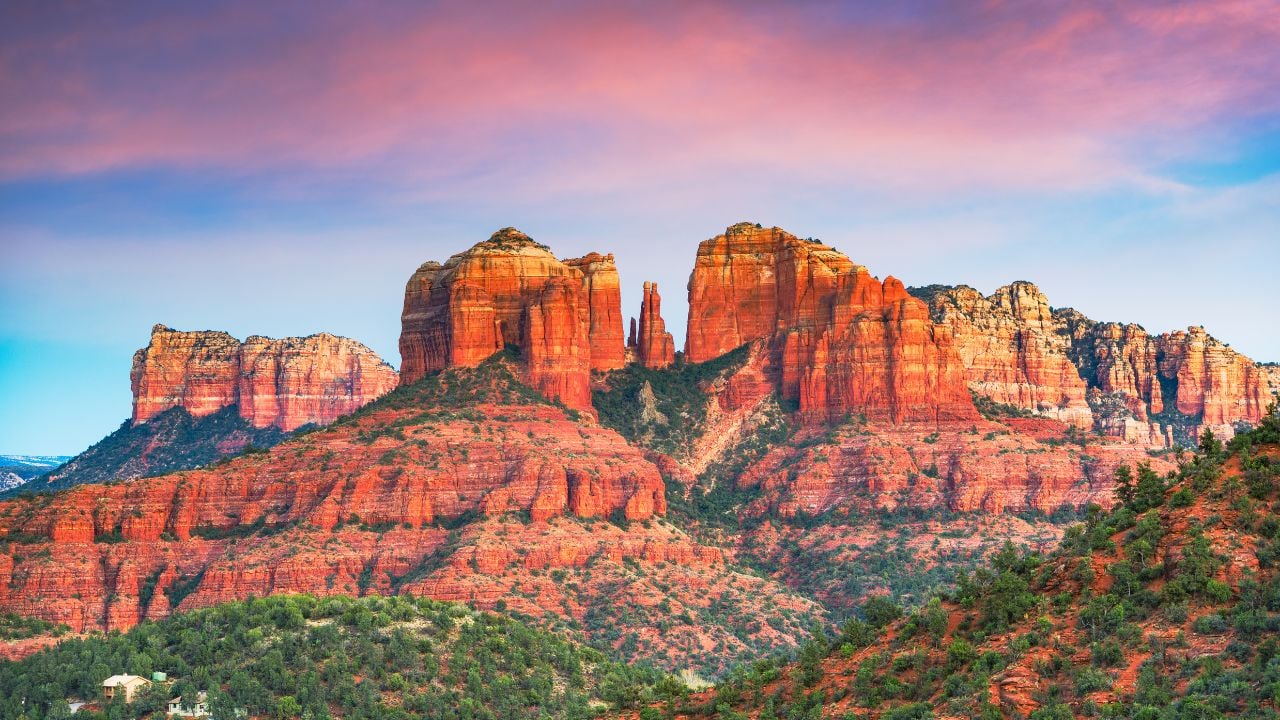
Start with Sedona because the scenery begins before the itinerary has to work hard. The byway describes the Red Rock Scenic Byway as 7.5 miles through Sedona’s Red Rock Country, about 110 miles north of Phoenix and roughly 40 miles south of Flagstaff. That makes it a useful first-day entrance if travelers are coming up from Phoenix.
The road brings red cliffs, juniper, desert shrubs, open sky, and sandstone formations close to the windshield. Bell Rock and Courthouse Butte-style scenery can make even a short drive feel like the trip has started properly, without needing a long hike right after arrival.
Keep the rest of the day deliberately small. Walk a short trail, browse in town, or sit somewhere with a view while the red rock turns warmer near sunset. Sedona trailheads and viewpoints can get crowded, so the first day should not depend on hitting every famous formation before dinner.
Stay close in the evening. A nearby meal and one sunset view are enough for the first night, especially if the next morning includes an early walk. Sedona works best on this short route when it opens the trip with sandstone, low desert plants, and changing light instead of becoming a checklist before the road moves north.
2. Day Two: Walk Early in Sedona, Then Sleep in Flagstaff for the Stars
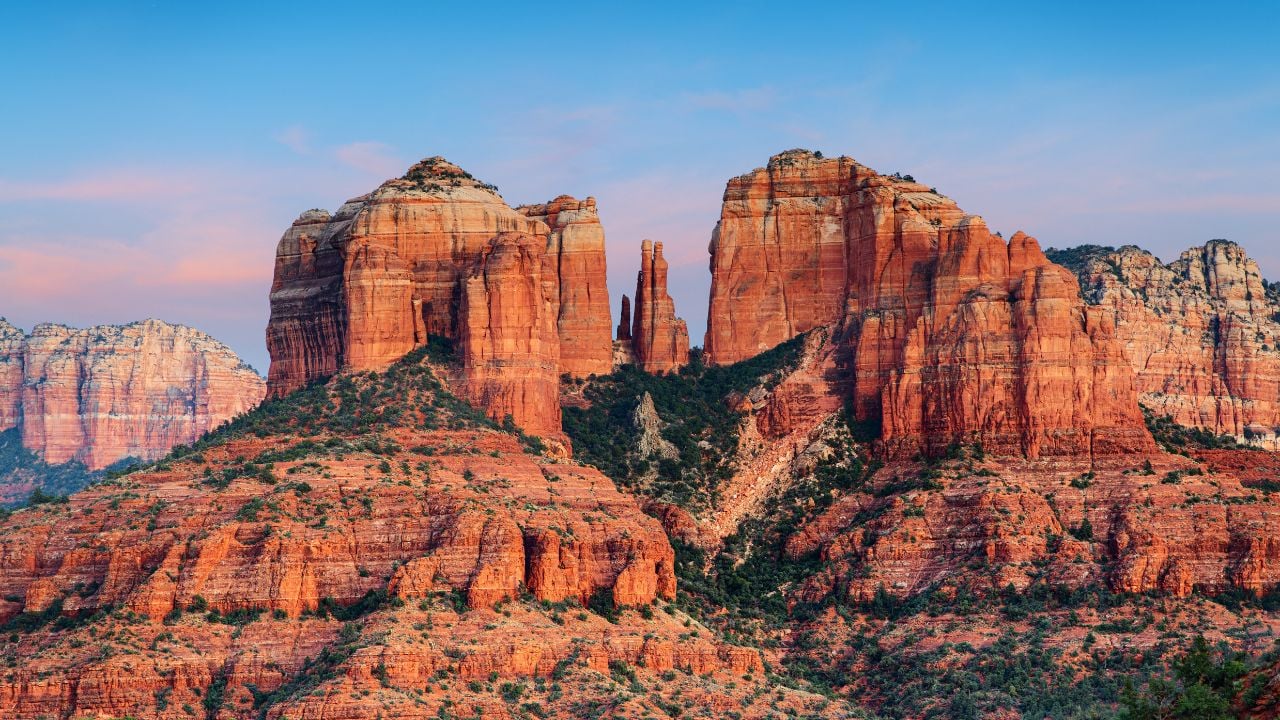
Use the second morning for one real red-rock walk before leaving Sedona. Red Rock State Park says its trails include a 5-mile network of interconnecting loops through Oak Creek greenery and Sedona red rock views. That gives travelers a softer outdoor option than a long exposed hike, especially when heat is a concern.
Start early, carry water, and keep the route realistic. Morning light gives the rocks sharper color, Oak Creek greenery breaks up the dry landscape, and the day stays more comfortable before the pavement and open trails heat up. This is the moment to walk, not to sleep late and turn the outing into a noon heat test.
By afternoon, head north to Flagstaff. The drive trades Sedona’s red rock and desert shrubs for higher elevation, pine trees, cooler air, and a night-sky focus. Flagstaff also keeps the route practical because it breaks the trip before the longer southbound drive to Tucson.
Lowell Observatory gives the stargazing night structure. General admission includes access to exhibits, tours, stargazing, and more, and Lowell lists regular public hours daily except Tuesday. If clouds roll in or the timing does not work, Flagstaff still makes sense as an overnight stop before the longer drive south.
3. Day Three: Drive South to Tucson and Reach the Saguaros by Sunset
Day three is the long transfer, so it should be treated as a travel day with a strong evening payoff. Leave Flagstaff after breakfast, pause when needed, and aim for Tucson with enough daylight left to see the desert before dinner. This is not the day to add a stack of extra stops just because the map shows open road.
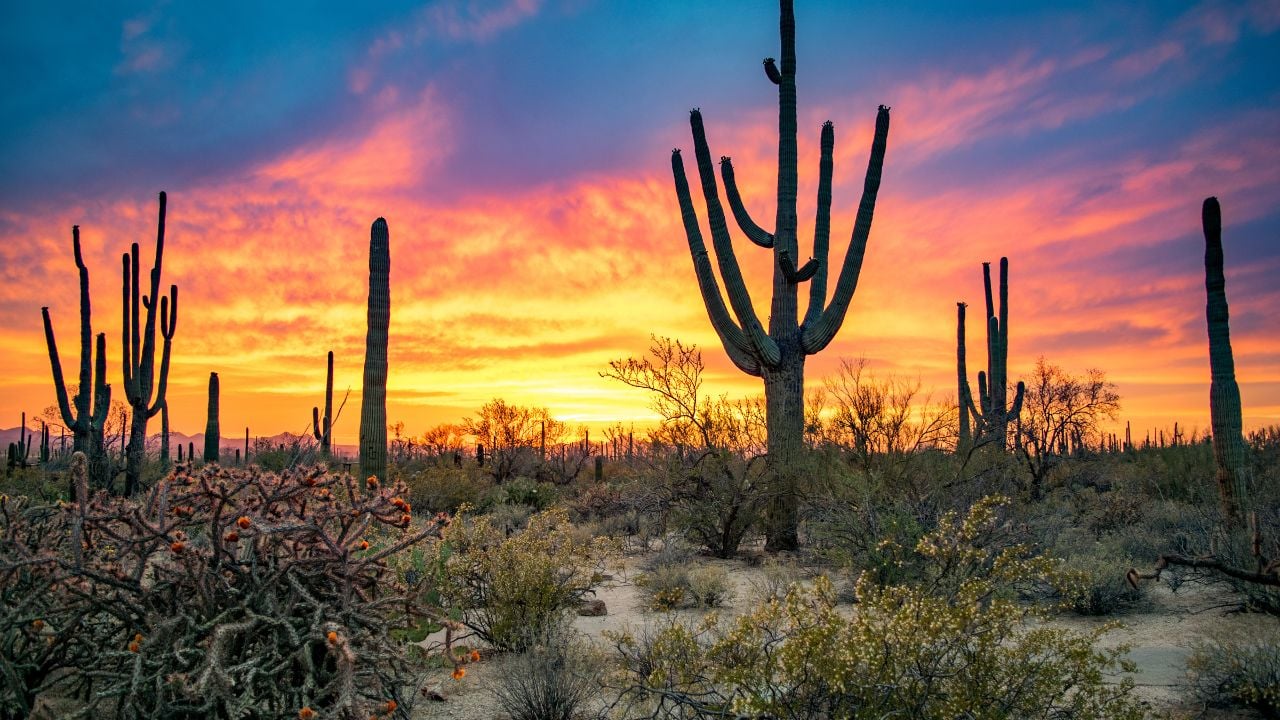
The reason to drive south is the saguaro landscape. The National Park Service says the saguaro cactus grows only in the Sonoran Desert, and only in parts of it where heat and rainfall are balanced correctly. NPS also notes that saguaros can reach 50 feet tall, which explains why the first view of a cactus forest feels so different from Sedona’s sandstone walls.
Choose the side of Saguaro National Park that fits the hotel location and the time left in the day. The Tucson Mountain District sits west of the city, while the Rincon Mountain District sits east. Either way, keep the evening short: a scenic drive, a visitor-center stop if timing allows, and a sunset view with cactus shapes against the sky.
The Sonoran Desert has its own visual language. Saguaros stand upright like figures on the hillsides, cholla catches the low light, palo verde branches look green even in dry conditions, and ocotillo can rise in thin, thorny lines against the sky. After dark, return for dinner rather than adding another long drive. The next morning can handle the fuller desert walk.
4. Day Four: Spend the Morning With Saguaros, Then End With the Night Sky
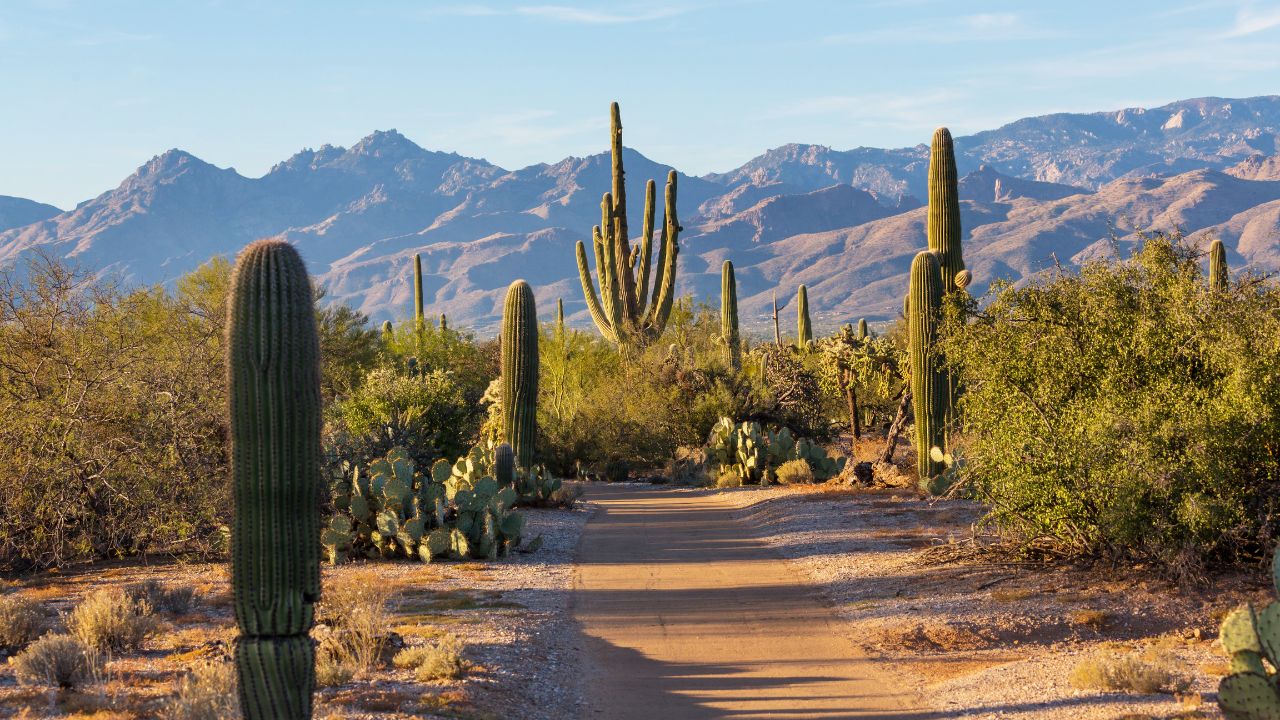
Use the final full day for the Sonoran Desert before the heat gets heavy. A scenic drive, a visitor center stop, and one short trail can be enough if temperatures are high. Look for the details that are easy to miss from the car: birds moving through cactus arms, shadows falling between the ribs, small plants under larger nurse trees, and the way the mountains frame the cactus forest.
The National Park Service notes that Saguaro National Park is home to more than 2 million saguaros. Its saguaro information also explains that young saguaros often grow under nurse trees such as palo verde, ironwood, or mesquite, which protect them from summer sun and winter frosts. Those details make a short walk more interesting than simply photographing the tallest cactus nearby.
End the trip with the sky if conditions cooperate. Visit Arizona says Flagstaff became the world’s first designated Dark Sky Place in 2001 and lists certified dark-sky parks across the state, including Saguaro National Park. The National Park Service says Saguaro National Park was certified in 2023 as an Urban Night Sky Place.
Check the moon phase, cloud cover, park access, and gate hours before making firm plans. NPS notes that many trails are not accessible after gates close at 8 p.m., though winter in the Sonoran Desert can provide hours of darkness before the night gets late. Keep the final evening simple: cactus silhouettes, cooling desert air, red-light flashlight if needed, and enough darkness to make the short Arizona route feel much larger than four days.