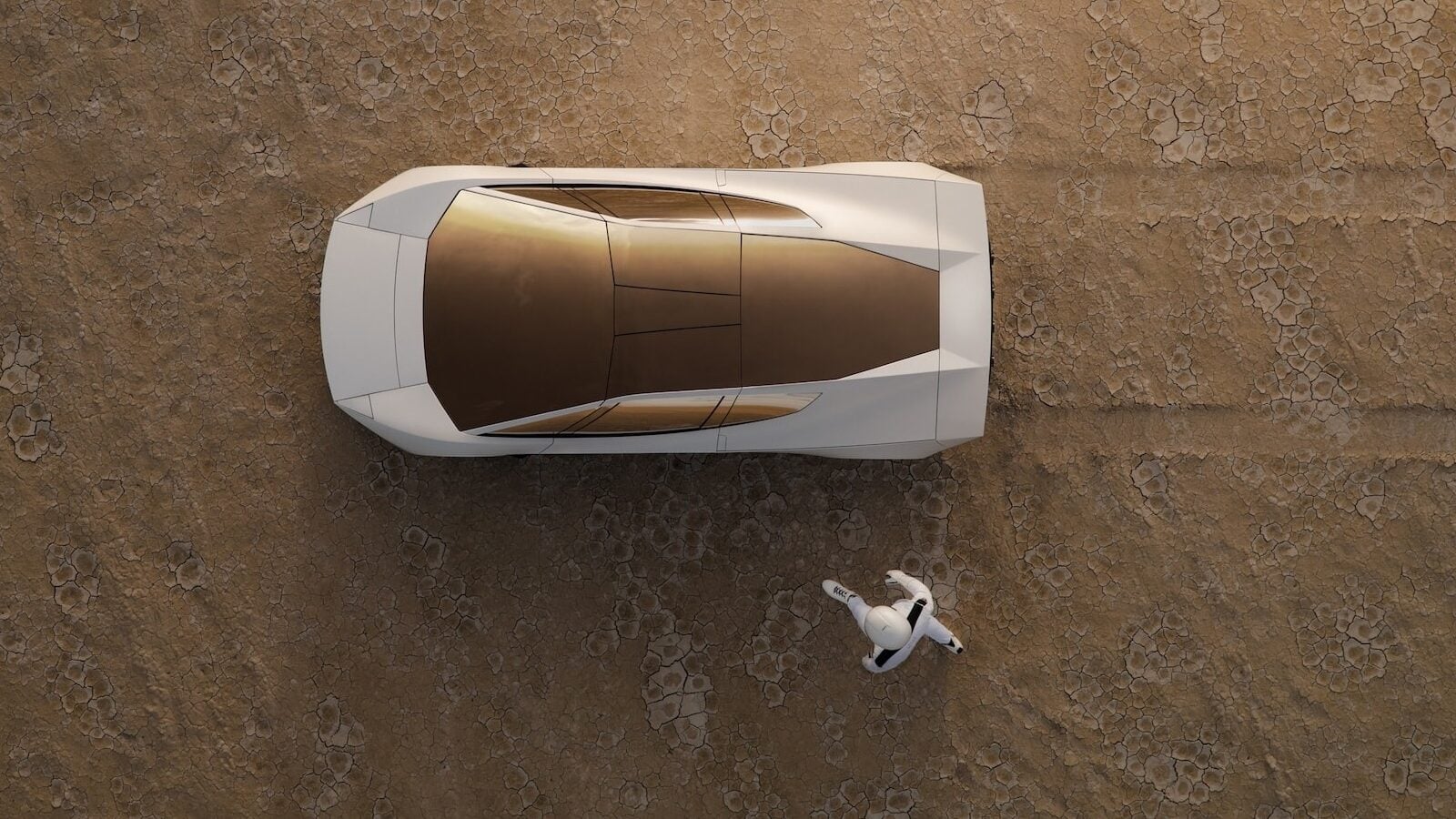
Tesla’s new Roadster has a trick that makes a fast lap look tame: it can launch itself over other cars. The demonstration also raises a question that a few seconds in the air cannot settle: how useful is this as a flying car?
In an October 23 video, Engineering Explained examines the suction fans and gas thrusters behind Tesla’s stunts. Its calculations support the basic engineering, including the upside-down driving and a displayed 0-to-60-mph time of 0.81 seconds.
Scientific critics have focused on what happens beyond the demonstration. Their objections include the short supply of gas, the demands on occupants, and whether the hardware makes sense in a car someone would use.
Those concerns leave room for both admiration and skepticism. The video praises Tesla’s engineering while questioning how much of the promised performance will reach customers, a judgment made from stated specifications and calculations rather than an independent road test.
Under the Body
Embedded media follows; please allow a moment for it to load.
The Roadster’s grip starts with a change in air pressure. Fans pull air out from beneath the car while skirts help seal that space. With lower pressure underneath, the surrounding air presses the car toward the surface.
Engineering Explained calculates that the pressure difference needed for the stated downforce is plausible. The system can also help the tires grip during acceleration, rather than waiting for speed to build enough airflow over conventional wings.
Getting airborne requires a different system. High-pressure gas rushes through nozzles, pushing the car in the opposite direction. Rear-facing jets help acceleration, while downward-facing jets provide lift.
The equipment takes up substantial room. Car and Driver reports that the Rocket demonstration car used tanks with a combined capacity of 600 liters, holding 250 kilograms of compressed gas. The tanks eliminate the passenger seat.
A Short Flight
Yann LeCun, an NYU computer scientist, challenged the practical value of the display in an October 17 X post reproduced by Live Science: “Cute demo, but totally impractical.” His criticism centers on the limited useful thrust available from compressed gas.
The Engineering Explained calculation illustrates that limit without rejecting the stunt. Using an assumed vehicle mass of about 2,000 kilograms and a stated nitrogen supply of 250 kilograms, the video estimates about 6.75 seconds of hovering. Climbing into the air or slowing a fall demands more thrust, shortening that time.
Its analysis finds the roughly four-second stunts plausible within those assumptions. That calculation evaluates whether the stated hardware could perform the maneuvers; it does not establish the demonstration car’s actual weight or gas consumption.
Physicist Rhett Allain, an associate professor at Southeastern Louisiana University, also questions the flying-car description because the gas supply provides only seconds of thrust.
In his WIRED analysis, Allain tracks the car’s position during the jump and estimates roughly 10 g of vertical acceleration. That is a rough video-based estimate, rather than an onboard measurement. He warns that brief exposure to such acceleration can still pose risks for occupants.
Back on Earth
Even with the tires on the ground, maintenance questions remain. Engineering Explained points out that the sealing skirts wear, and debris passing through the fans can wear those components too. How well the suction works also depends on the surface beneath the car.
The video uses McMurtry’s fan-car experience to explain the problem, while leaving Tesla’s actual replacement intervals unresolved. A smooth demonstration surface gives the system favorable conditions; ordinary use would expose it to different surfaces and debris.
The presenter’s reservation about buying into the promises is blunt: “You never really know until you actually have it in your driveway.”
He also challenges a reported claim that a base Roadster without suction fans could reach 60 mph in just over a second. Under his rear-wheel-drive and tire-grip assumptions, he estimates roughly 2.5 to 2.7 seconds for that configuration.