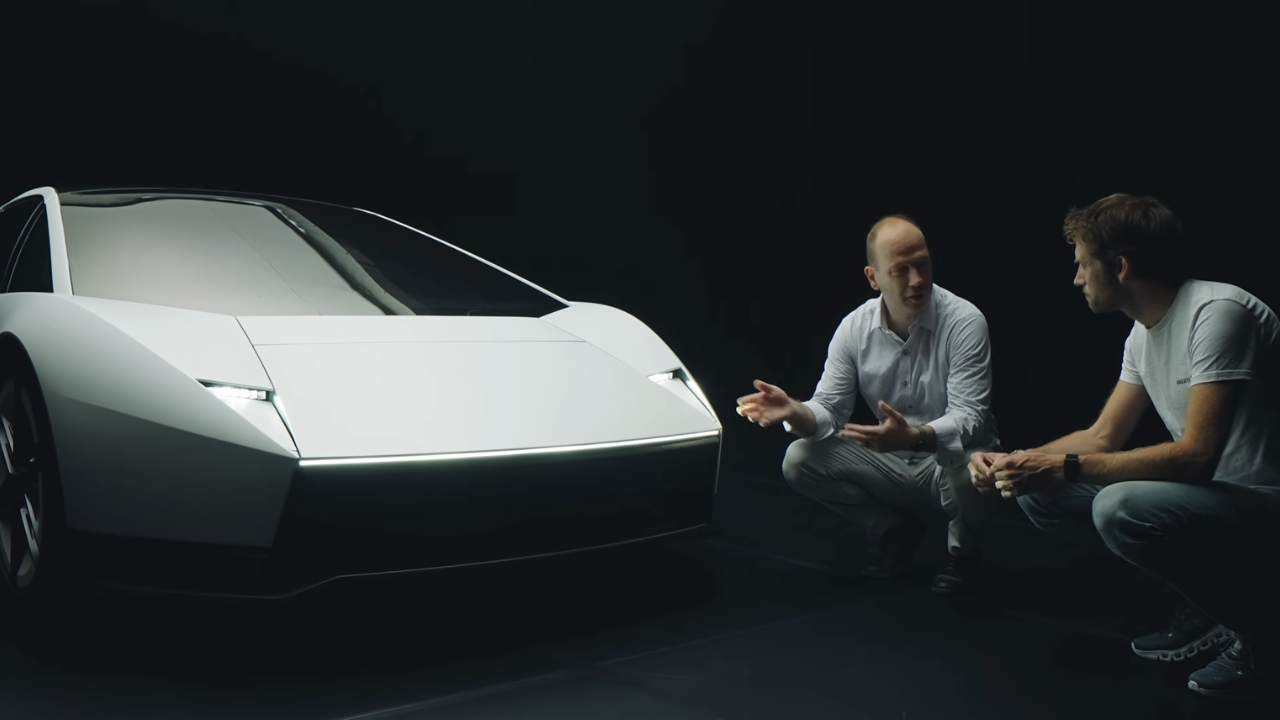
Tesla’s new Roadster combines two very different ways of moving air: fans that pull the car toward the pavement and nitrogen thrusters that help propel it forward or lift it off the ground.
In a Hagerty interview, Tesla Vice President of Vehicle Engineering Lars Moravy walked Henry Catchpole through the hardware behind those capabilities. His explanation separates the systems that generate grip from the equipment developed with SpaceX to provide thrust.
Underneath it all is a rear-wheel-drive electric sports car with two motors. The interview puts output at 1,341 horsepower, sent entirely through the rear tires, making traction central to how that power reaches the road.
Tesla developed the battery, powertrain, chassis, movable bodywork, and suction system. SpaceX joined the development of the cold-gas equipment for the Thrust and Rocket versions. The engineering details describe a vehicle still undergoing development; the performance figures discussed are company claims.
Making It Stick
Embedded media follows; please allow a moment for it to load.
Movable aerodynamic surfaces redirect airflow around and beneath the Roadster. Front wing elements can rotate through as much as 80 degrees, while panels along the sides extend outward. Closing the openings reduces drag when the extra airflow is unnecessary.
Those surfaces depend on speed to generate downforce. To press the car toward the road at lower speeds, four electric fans extract air from underneath it while four independently moving skirts help seal the space beneath the body.
Lowering the pressure underneath increases the force pressing the tires against the pavement. Moravy calls this the “sucker system,” intended to provide grip where conventional wings have less effect.
At high speed, the front and rear skirts open to let more air flow underneath, and the fans draw it out. Their main job in that mode is to improve aerodynamic performance.
Moving the rear wing requires hardware strong enough to withstand substantial loads. Tesla adapted leg actuators from its Optimus robot, adding a brake so the mechanism can hold position.
Pressure Into Motion
The cold-gas system stores nitrogen under pressure and releases it through valves and nozzles to create thrust. It needs no combustion: the escaping gas supplies the push.
Moravy describes a 200-liter pressure vessel in the Thrust configuration that can hold nitrogen at up to 10,000 psi. Separate left and right outlets allow adjustments to gas flow to help keep the car traveling straight.
For the Rocket version’s flight system, another 400 liters of storage occupies the passenger space, making it a single-seater. Six additional thrusters provide directional control, including units at the corners and two at the front for controlling rotation.
The available push diminishes as the stored gas escapes and pressure falls. Moravy compares the principle to releasing air from an inflated balloon.
Refilling the full 600-liter system currently takes six to seven hours, Catchpole explains. A system intended to cut that process to about half an hour remains in development.