Tesla has won a new trial in a lawsuit stemming from a motorcycle crash involving one of its employees. The Indiana Supreme Court overturned a $42.5 million judgment against the company while preserving the original jury’s finding that the employee was 70% responsible for the collision.
In its November 4, 2026, opinion, reviewed by Guessing Headlights, the Indiana Supreme Court ordered a new trial to determine whether Tesla employee Kyle Kaszuba was acting within the scope of his employment when he struck motorcyclist Christopher Dugan in Indianapolis in April 2017. Kaszuba was driving a company-owned pickup truck and attempting to stop for gasoline on his way to work.
Dugan, then 37, suffered a severe traumatic brain injury and the partial amputation of his left foot. A jury awarded approximately $60.7 million in damages in March 2024, reduced to $42.5 million after assigning Dugan 30% of the fault. The new proceedings will also reconsider the damages award.
Tesla argued that Kaszuba was commuting for his own convenience when the crash occurred. Kaszuba maintained that he was completing a company assignment by returning the truck and following his manager’s expectations about refueling. The justices found that a jury must resolve the conflicting evidence about whether he was acting within the scope of his employment.
The Turn Into Speedway
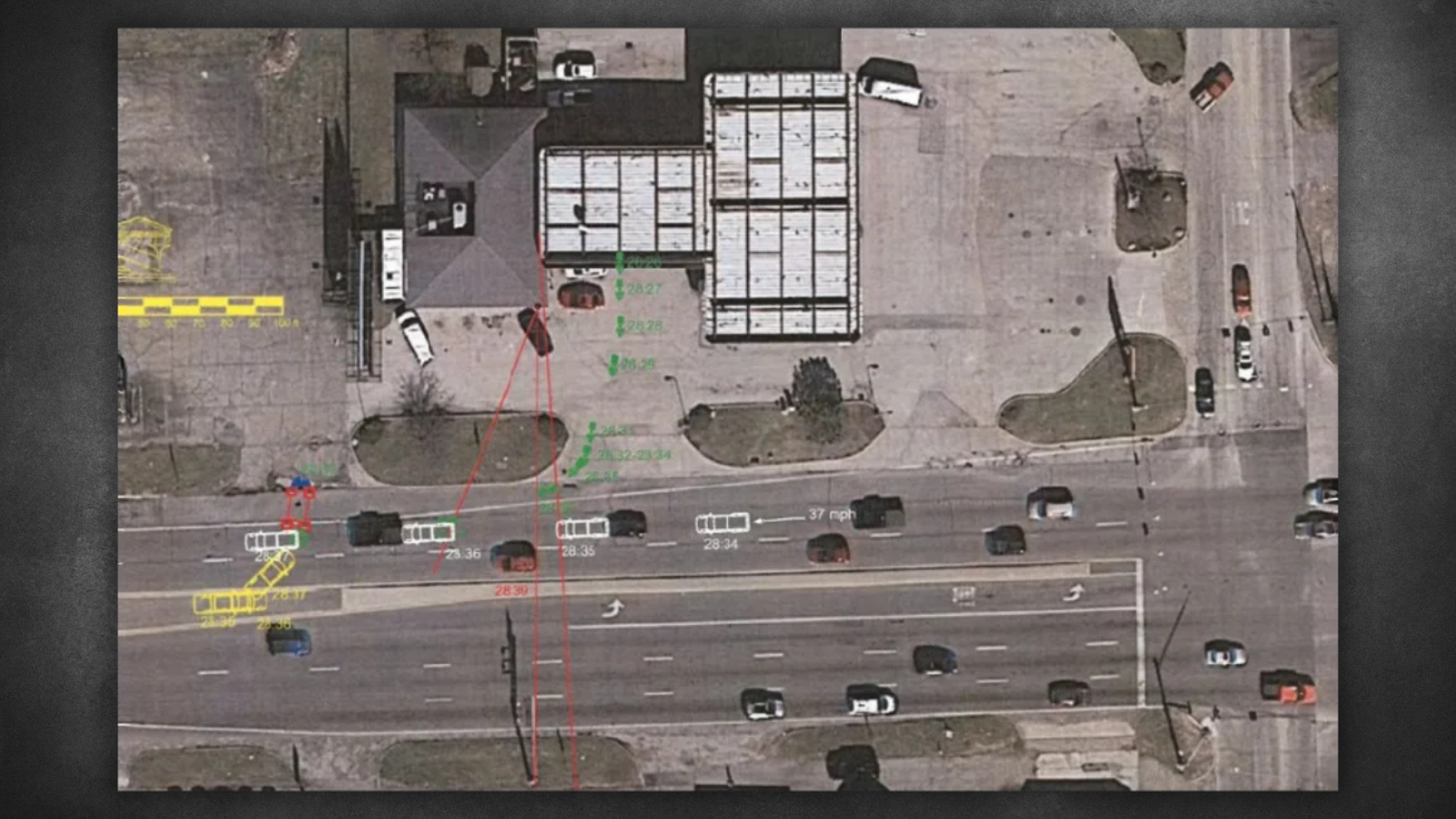
On April 25, 2017, Kaszuba was driving a 2014 Ford F-250 owned by Tesla along Rockville Road in Indianapolis. He moved into the center turn lane and attempted to turn left into a parking lot adjoining a Speedway gas station.
Dugan had just exited the Speedway on his motorcycle. According to the December 2025 Indiana Court of Appeals opinion, he turned right onto Rockville Road, traveled briefly along the shoulder, accelerated to approximately 30 to 35 mph, and merged into the westbound traffic lane.
As Kaszuba turned across oncoming traffic, the front of his pickup struck Dugan. The collision was partially captured by gas station surveillance cameras.
Tesla argued at trial that Dugan’s acceleration and position behind another vehicle made him difficult for Kaszuba to see. Attorneys for Dugan maintained that Kaszuba had attempted to bypass vehicles waiting to turn at the nearby intersection. An accident reconstruction expert testified that Dugan was visible, the collision was avoidable, and Kaszuba could have continued to the traffic light before turning.
Dugan was not wearing a helmet, which was legal for a licensed adult motorcyclist under Indiana law. Court records show that helmet evidence was disputed before trial. The appellate opinions do not establish whether helmet use influenced the jury’s allocation of fault or how much a helmet might have reduced his injuries.
The jury assigned 70% of the fault to Kaszuba and 30% to Dugan. The justices left those findings intact.
A Company Truck, a Morning Commute and a Tank of Gas
The previous afternoon, Kaszuba had used the Ford pickup to deliver a company trailer for repairs. Returning the truck to Tesla’s service center would have required driving through rush-hour traffic after his regular work hours. His manager gave him permission to take the truck home and return it the following morning.
Before leaving for work, Kaszuba performed a company-required 15-point vehicle inspection. He also noticed that the fuel tank was between one-eighth and one-quarter full.
Tesla’s service team had an informal practice of encouraging employees to refill company vehicles when the tank dropped below one-quarter full. The practice was intended to prevent employees from starting customer service assignments with insufficient gasoline.
The Supreme Court’s opinion recounts conflicting testimony about the refueling practice. Kaszuba said he understood it to be part of his responsibilities. His manager, Seth Aichinger, described it as a courtesy among employees rather than an official company requirement. Employees would not face discipline for returning a truck with less than a quarter tank.
There was also conflicting testimony about whether Kaszuba was working during his morning commute. He maintained that he considered himself on the clock when driving a company vehicle. His manager testified that Kaszuba was not being paid for the trip.
Under Indiana law, an employer generally is not liable for an employee’s negligence during an ordinary commute. Exceptions can apply when the employee is performing assigned work or otherwise acting in the employer’s service.
The justices found that the evidence supported competing interpretations of Kaszuba’s actions. A new jury will determine whether his commute and gasoline stop fell within the scope of his employment.
The Verdict That Didn’t Hold
The original damages verdict was also overturned because of a separate problem during the 2024 trial.
Jurors reported being deadlocked while determining damages. The judge announced a mistrial, then spoke privately with jurors before allowing them to continue deliberating. In its December 2025 opinion, the Indiana Court of Appeals found that the private communication created a presumption of error that had not been overcome. The Supreme Court subsequently left that ruling intact.
A new trial will reconsider damages as well as Tesla’s potential financial responsibility.
A new jury could award more or less than the original $60.7 million in damages. Dugan’s established 30% share of fault would still reduce the amount recoverable.
If jurors determine that Kaszuba was acting within the scope of his employment, Tesla can be held financially responsible for his negligence. If they conclude he was simply commuting, Tesla could avoid liability under that claim. Kaszuba’s own responsibility for the collision remains unchanged.
Nearly a decade after the crash, the case returns to the trial court with Tesla’s financial responsibility and the amount of damages still unresolved.