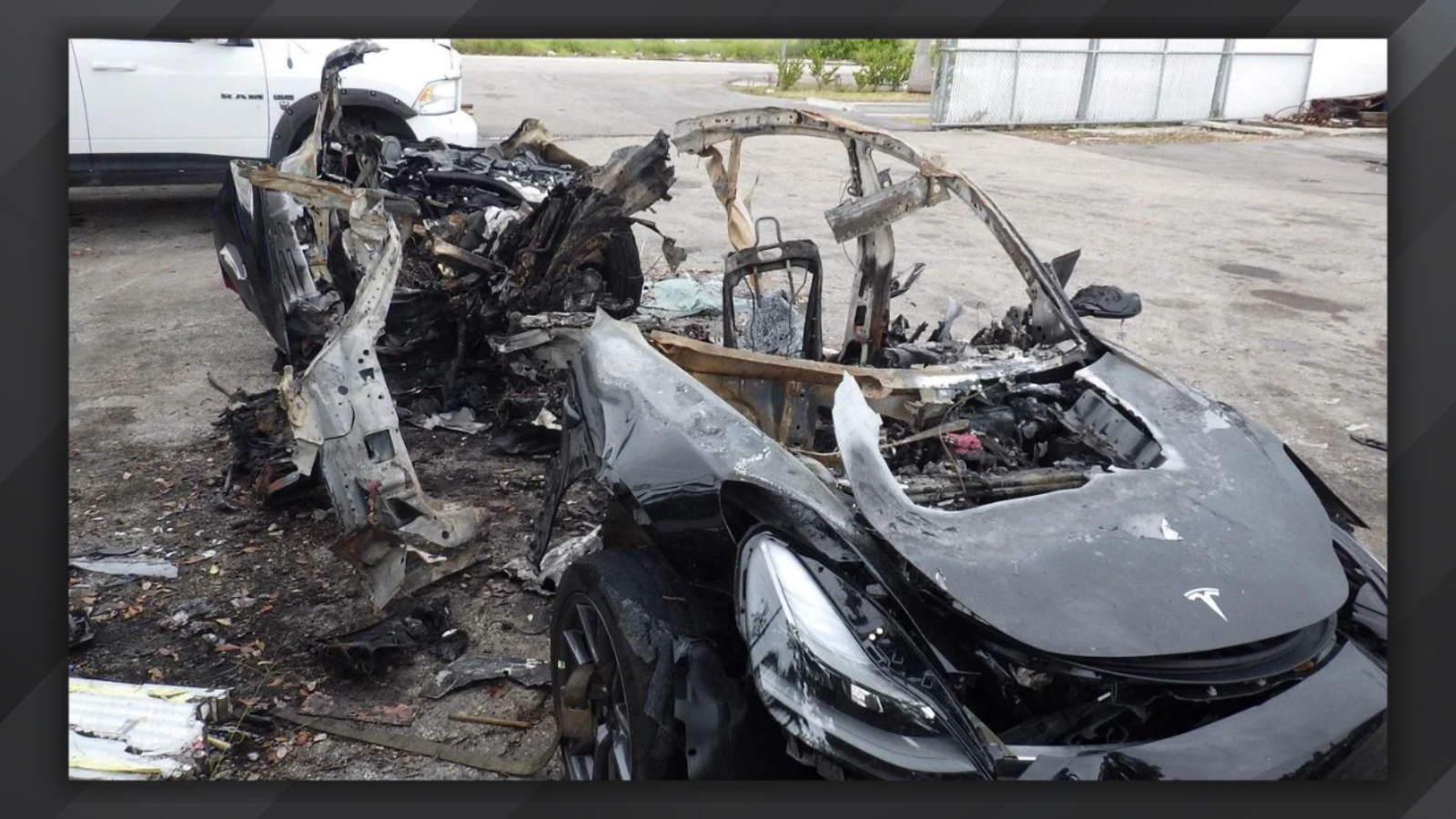
A Florida judge has refused to pause a wrongful-death lawsuit against Tesla involving a 2021 Model 3 crash that killed two young people, allowing proceedings to continue after nearly five years of litigation.
Broward County Circuit Judge Michael A. Robinson denied Tesla’s renewed request to halt proceedings during an October 16 hearing, according to Law360. Tesla wanted the case paused while it appeals an earlier decision refusing to move the trial from Broward County to Miami-Dade County.
The lawsuit stems from a September 2021 crash involving a Tesla Model 3 driven by 20-year-old Nicholas Garcia. He and his passenger, 19-year-old Jazmin Alcala, died after the vehicle left the road and struck two trees in Coral Gables.
Federal investigators concluded that Garcia’s excessive speed caused the crash. Alcala’s parents contend that defects in the vehicle also contributed to the collision. The litigation has since been complicated by repeated discovery disputes and court sanctions against Tesla.
A Crash Captured on Camera
On September 13, 2021, Garcia was driving his recently purchased 2021 Tesla Model 3 north on Alhambra Circle, with Alcala in the passenger seat.
Garcia passed another motorist by moving into the opposing traffic lane before returning to his own lane and accelerating toward the intersection with Coral Way. The other driver’s dashboard camera captured the events leading to the crash.
The traffic signal changed to red before Garcia reached the intersection, but the Tesla continued through. Traveling at approximately 90 mph in a 30-mph zone, the vehicle crossed a change in roadway elevation that caused its suspension to compress fully and its undercarriage to strike the pavement.
Sparks flew from beneath the car. It subsequently lost control, entered a grassy median, and struck two trees. The second impact severely damaged the passenger side and the high-voltage battery, causing a fire that engulfed the vehicle within seconds.
The National Transportation Safety Board’s final report, released in February 2023, provides a detailed reconstruction of the collision.
Investigators recovered five seconds of driving data after repairing a badly burned electronic chip by hand and installing it in another module. They compared the information with the witness’s dashcam footage, confirming the vehicle’s speed, the red-light violation and the absence of recorded service-brake application during the final five seconds.
The NTSB also found that the car’s electronic stability-control system registered a fault shortly after the undercarriage struck the roadway. Investigators could not determine the precise cause of that fault, although they acknowledged that the resulting loss of electronic stability control may have further contributed to the loss of control.
Ultimately, the agency identified Garcia’s decision to travel at excessive speed as the probable cause. Investigators found that the roadway design complied with applicable guidance and did not contribute to the crash.
Both occupants sustained extensive burns, but the NTSB concluded that their fatal injuries resulted from the violent collision rather than the subsequent fire. Medical findings included no soot in either occupant’s airways and no detectable carbon monoxide in their blood.
Two Families Turn to the Courts
Alcala’s parents, Etelvina and Jorge Alcala, filed a wrongful-death lawsuit in Broward County in January 2022 against Tesla and Garcia’s estate.
Their complaint alleged that the Model 3’s suspension, chassis, and related components were inadequately designed to withstand foreseeable driving conditions, contributing to the vehicle’s loss of control.
Garcia’s family filed a separate lawsuit the following month, naming Tesla entities and service manager Ignacio Socorro. That complaint alleged that Garcia had brought the nearly new Model 3 to a Tesla facility on September 9, four days before the crash, with concerns involving steering, suspension, the battery, electronic systems, and doors.
According to interviews conducted during the NTSB investigation, Garcia had owned the vehicle for approximately six days. His mother and a friend described a dispute with Tesla over a malfunctioning door or handle. Their accounts did not independently establish the broader mechanical complaints described in the lawsuit.
Garcia’s estate initially sought to consolidate its lawsuit with the Alcala case but withdrew that request. On March 14, 2022, it voluntarily dismissed its separate action without prejudice. That dismissal did not resolve whether Tesla’s vehicle was defective.
The estate remains involved as a defendant in Alcala’s lawsuit and has joined the plaintiffs in seeking certain discovery materials and opposing Tesla’s effort to relocate the trial.
Tesla disputes the allegations that a defective vehicle caused or contributed to the fatal crash. The key liability question is whether the Model 3 had an actionable defect that contributed to the outcome despite Garcia’s extreme speed and failure to stop at the red light.
Years of Disputes Over Testing Records
The case developed into a prolonged fight over evidence concerning Tesla’s internal testing, including reports and videos involving Model 3 vehicles traveling over raised roadway surfaces.
During discovery, the process through which opposing parties exchange evidence before trial, the plaintiffs sought records they considered relevant to whether Tesla knew about potential suspension or structural problems.
In October 2025, Judge Robinson sanctioned Tesla after finding that the company had violated earlier discovery orders. Among the issues was a late production of more than 123,000 pages of testing-related records that had been stripped of filenames and metadata, making the documents difficult to identify and connect with their original test reports.
The judge found that Tesla had intentionally made the material more difficult, time-consuming, and expensive for the plaintiffs to review. He ordered the company to pay reasonable attorney fees and associated expenses arising from the violations, with the amount to be determined separately.
The problems continued into 2026.
In August, Special Magistrate Charles M. Greene recommended additional sanctions after reviewing further failures to produce relevant testing records. His report noted that Tesla had identified 271 additional documents during a later review and disputed their significance.
Greene recommended an adverse evidentiary instruction concerning what Tesla’s testing of similar vehicles revealed about structural problems. He also recommended additional document-production requirements, personal certifications from Tesla employees confirming compliance and further access to witnesses at the company’s expense.
Robinson adopted the magistrate’s recommendations in an October 2 order.
An adverse evidentiary instruction can affect how jurors evaluate disputed evidence. However, the sanctions do not constitute a judicial finding that a defect caused this particular collision. That issue remains for the trial, and the exact wording of any instruction ultimately delivered to jurors has not been established.
A Fight Over the Courthouse
As the parties prepared for trial, Tesla sought to transfer the case from Broward County to Miami-Dade County, where the crash occurred.
Tesla argued that most of the relevant witnesses are located in Miami-Dade and that conducting the trial in Broward would impose unnecessary burdens. The company maintained that Florida appellate decisions supported transferring cases involving vehicle crashes to the counties where they occurred.
The Alcala family opposed the request, pointing to the years already spent litigating before Robinson. Garcia’s estate also opposed the transfer.
In September, Special Magistrate Greene recommended leaving the lawsuit in Broward. His findings addressed the extensive procedural history, the substantial discovery already conducted and the relatively short distance between the two courthouses.
On October 8, Robinson adopted the recommendation and denied Tesla’s request. The judge noted that he had presided over the litigation for nearly five years and agreed with Greene’s assessment of the evidence and legal issues.
Tesla filed a renewed motion the following day asking the court to suspend trial proceedings while it sought review from Florida’s Fourth District Court of Appeal.
In that filing, the company argued that going forward with a lengthy Broward County trial before the venue appeal was decided could waste judicial resources and deprive it of meaningful appellate review. It maintained that the plaintiffs’ primary consequence of waiting would be another trial delay.
The plaintiffs opposed the stay.
According to Law360’s account of the October 16 Zoom hearing, Robinson refused Tesla’s request. The decision leaves the case proceeding in Broward County while the venue dispute continues through the appellate process, unless another court orders otherwise.
A Trial Still Ahead
Tesla’s October 9 filing identified November 30, 2026, as the scheduled trial date. That schedule remains subject to additional court action.
Other pretrial questions remain unresolved. Tesla has filed motions seeking to exclude various categories of evidence, including arguments about the post-crash fire. The company’s position is that the occupants suffered fatal blunt-force injuries before the fire, consistent with the NTSB’s conclusion that the flames did not contribute to their deaths.
The larger disagreement concerns the Model 3’s design and whether any alleged deficiency contributed to the loss of control or fatal injuries.
The NTSB’s investigation determined the probable cause of the crash, but the agency does not decide civil liability. That distinction leaves the court to evaluate the families’ allegations, Tesla’s defenses, and the evidence presented under the applicable legal standards.
The October 16 ruling does not establish that Tesla was responsible for the collision, nor does it resolve the company’s venue appeal. It means the trial proceedings can continue while those questions remain contested.
Nearly five years after the crash, the federal investigation has established what happened on the roadway. The civil lawsuit has yet to determine whether Tesla bears any legal responsibility for the deaths.