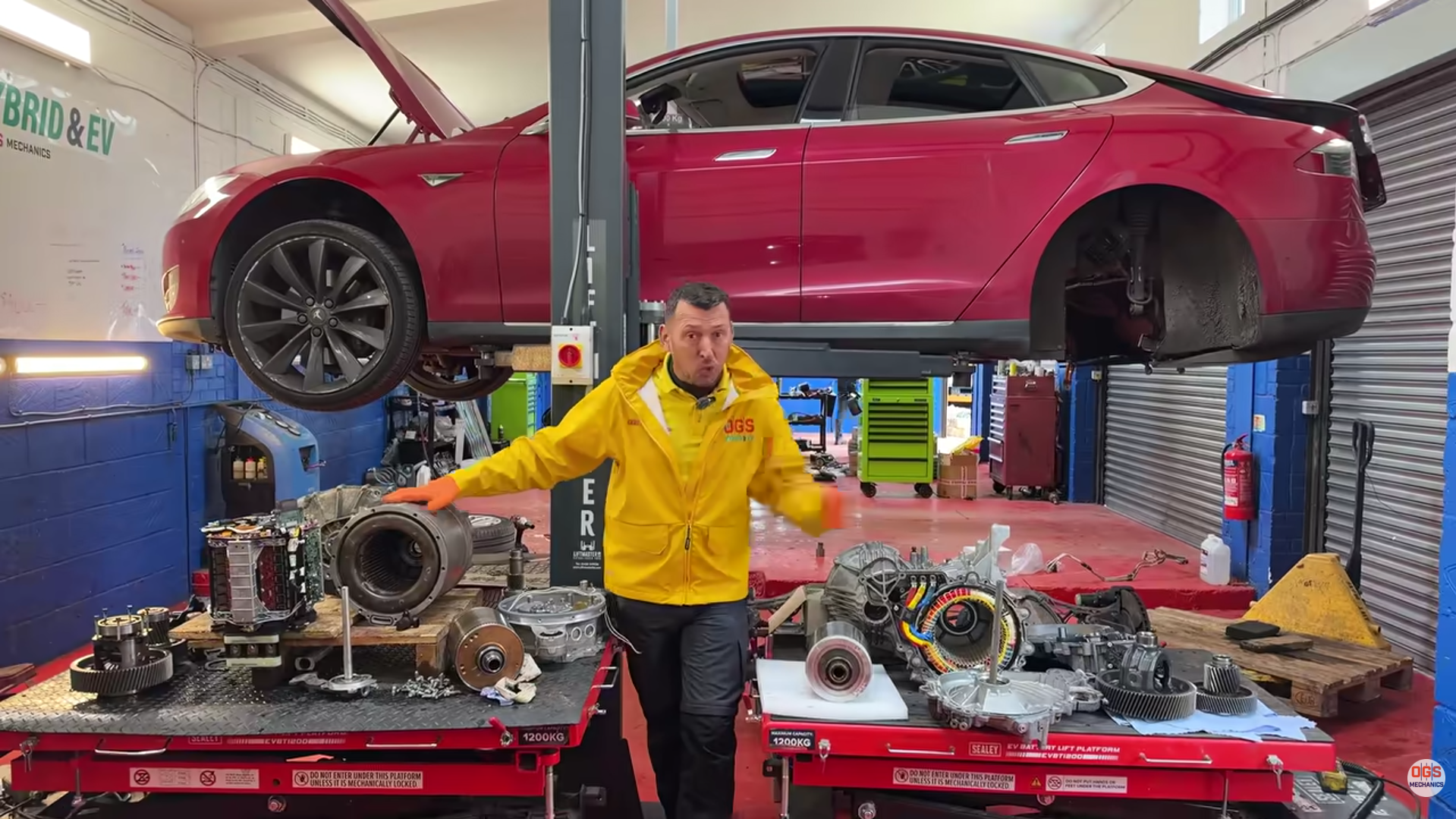
Electric cars are known for being quiet, so a loud whining noise from the drivetrain is certainly not a welcome sign. When a high-mileage Tesla Model S arrived at a specialist workshop with a grinding sound coming from the rear, the mechanics suspected a costly mechanical problem.
The car was a 2014 Tesla Model S P85 Performance with approximately 150,000 miles on the odometer. Its whining noise became louder under acceleration, although there were no dashboard warning lights to indicate anything was wrong.
In a video published by the OGS & Mechanics YouTube channel, technicians dismantled the Tesla’s rear drive unit to investigate the noise. What initially appeared to be a gearbox bearing problem led them to a much smaller component inside the electric motor.
The investigation revealed a weakness in the cooling arrangement used on some early Tesla drive units. Fortunately, the workshop caught the problem before it caused the extensive electrical damage the mechanics had encountered on another Model S.
A Tiny Seal With an Important Job
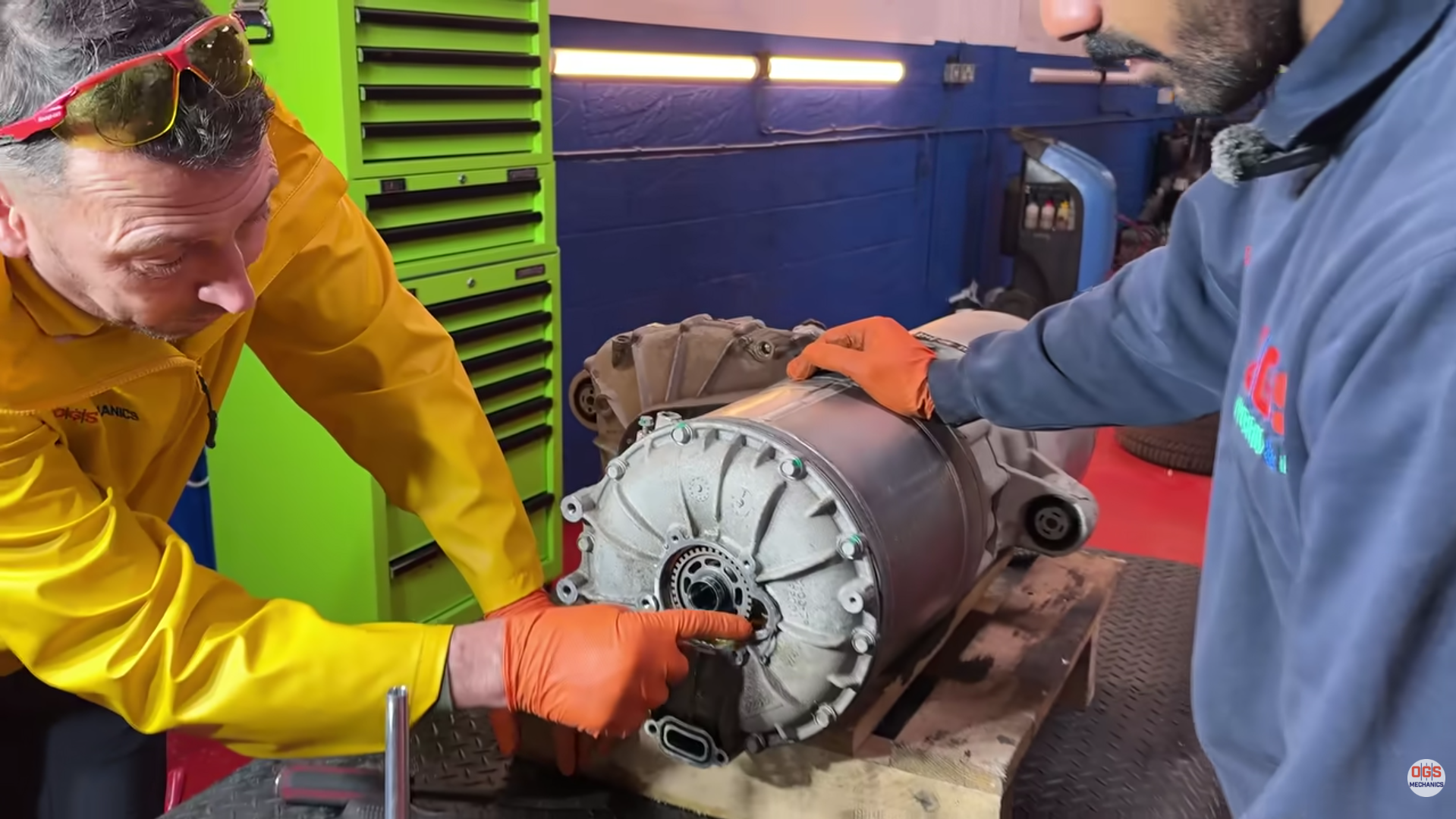
After removing the rear drive unit, the technicians separated the gearbox, electric motor, and inverter. They discovered corrosion around the motor’s cooling passages, indicating that coolant had escaped past a deteriorating seal.
The leaking coolant had reached a motor bearing and apparently washed away its lubricating grease. “It’s this little bearing that is causing all this drama,” the mechanic explained, pointing to the damaged component.
Why the Problem Could Have Been Worse
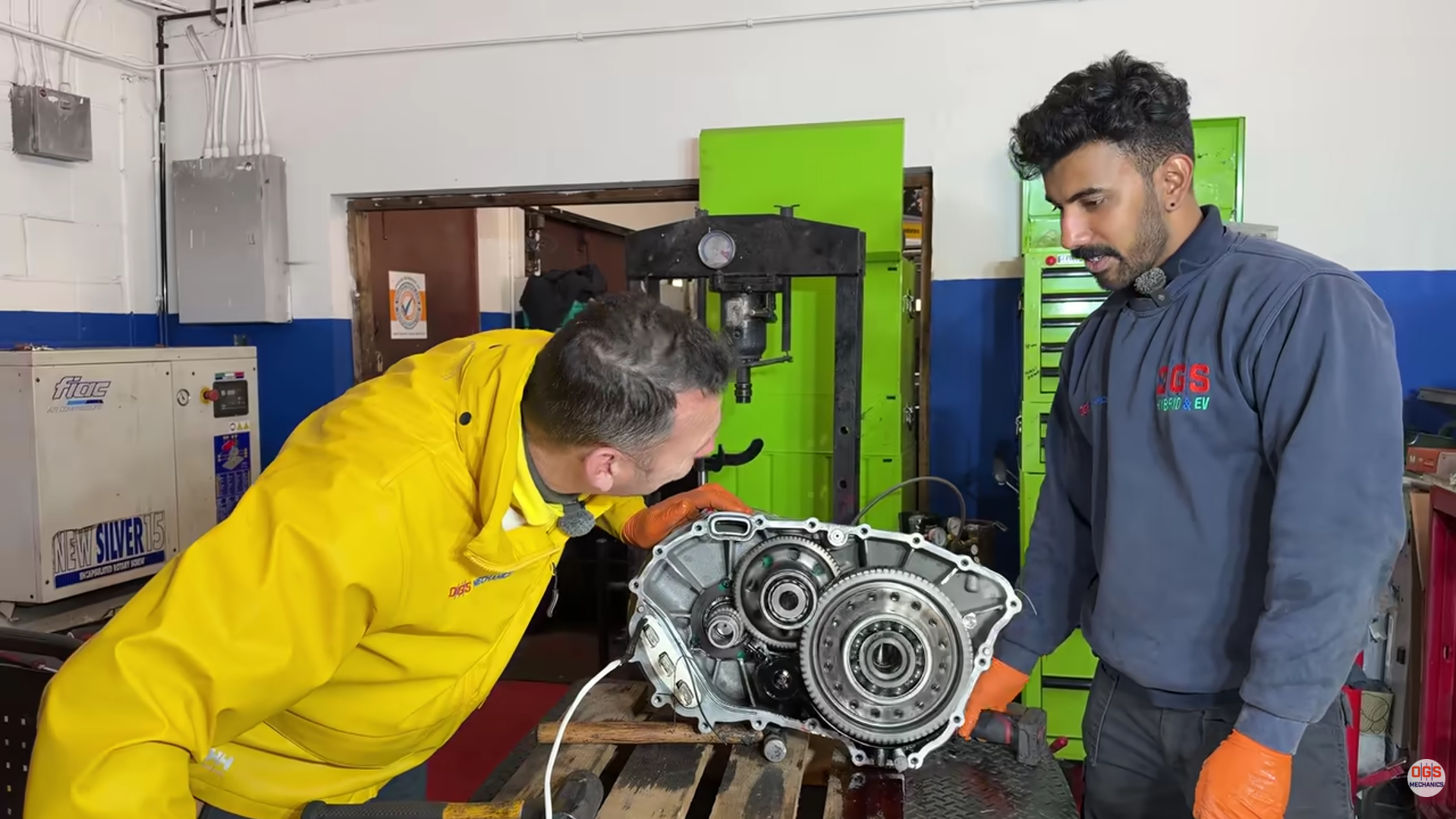
The early Tesla Large Drive Unit uses coolant circulating through the motor’s rotor to control temperatures. If the seal fails, coolant can reach components that were never intended to get wet.
The workshop showed another Tesla drive unit that had suffered far more extensive damage after coolant reached the inverter. The mechanics also discussed similar bearing and sealing problems encountered while repairing Mercedes EQV and EQC electric vehicles.
The mechanic also discussed changes made to later Tesla drive units. “They delete the cooling from the rotor,” he explained, describing a revision intended to eliminate the possibility of coolant escaping through that particular seal.
A Major Rebuild for a Small Failure
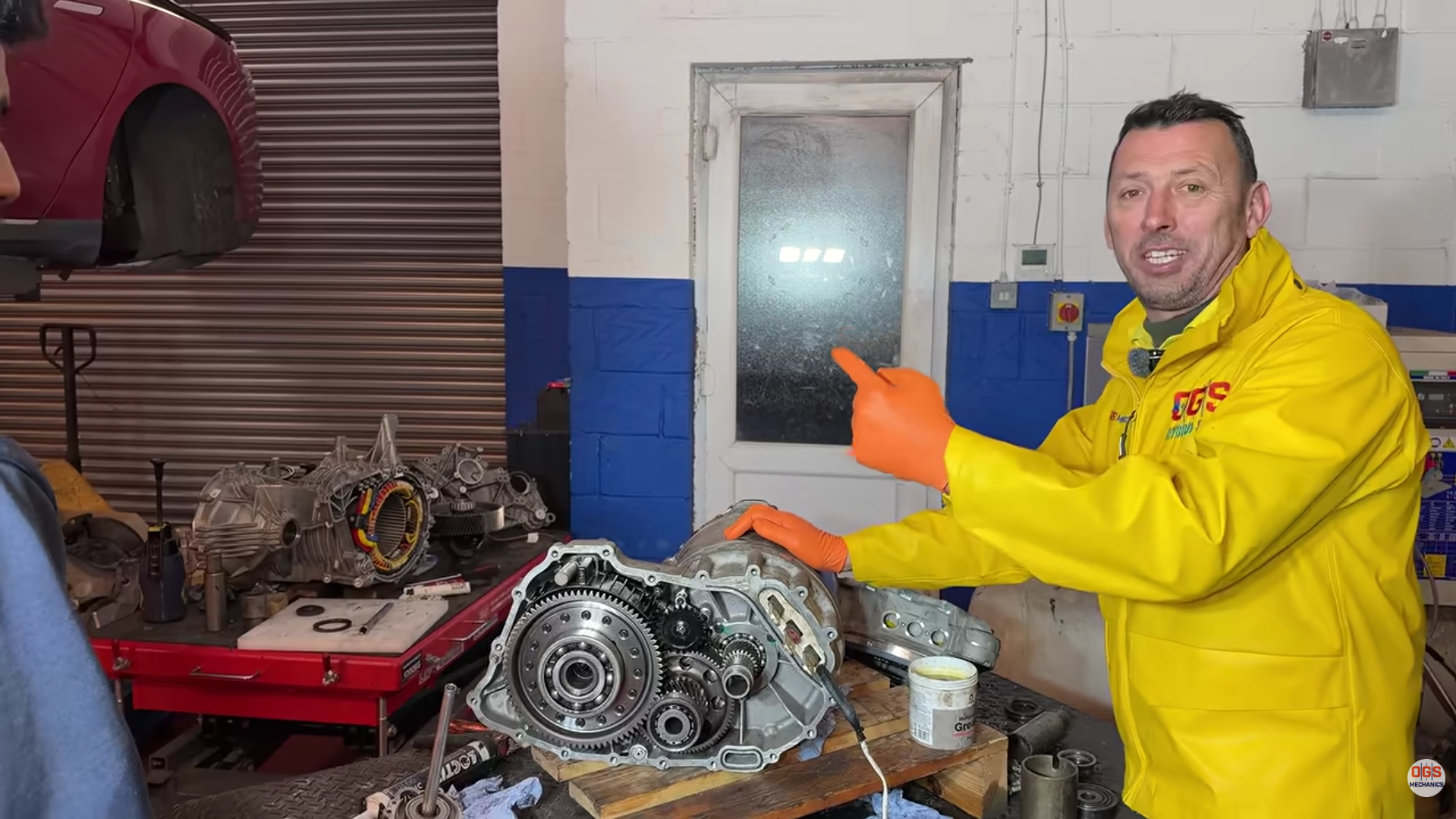
The technicians replaced the damaged bearings, installed upgraded seals, cleaned the gearbox, and renewed its oil. They then reassembled the drive unit, refilled the cooling system, and returned the Tesla to the road.
The repair wasn’t cheap: the workshop quoted £1,250 for the bearing kit and another £3,000 for the work, including removing, rebuilding, and reinstalling the drive unit. That brought the total to £4,250 plus VAT, or approximately $5,600 before tax.
The Battery Still Had Plenty of Life
Following the rebuild, the Model S completed its road test without the previous whining noise. A battery health check also showed 82% remaining capacity after approximately 150,000 miles.
The result highlighted an interesting contrast. While expensive battery replacements often dominate discussions about aging electric cars, this Tesla’s battery remained serviceable, and a relatively small seal failure had threatened its rear drive unit. Catching the leak early allowed the workshop to rebuild the original assembly rather than replace it.