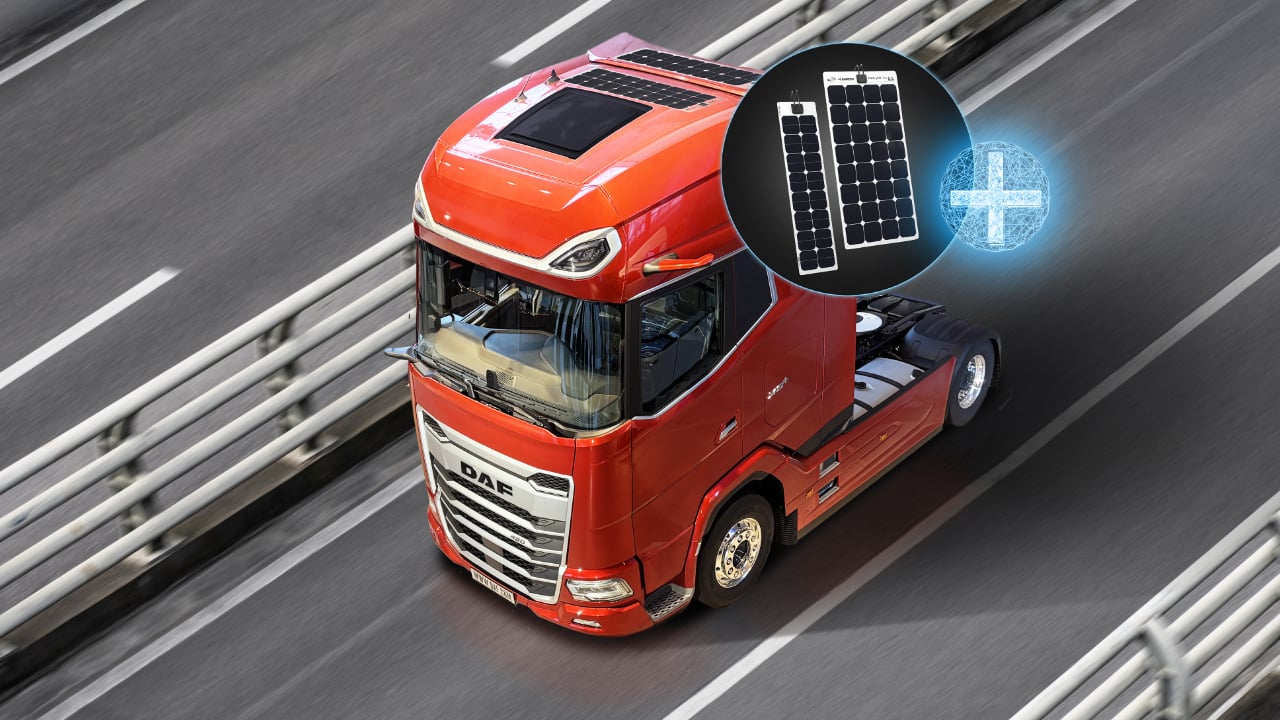
DAF is bringing solar power to the road in a smart, low-profile way—with ultra-thin, flexible panels mounted directly on truck cabs and trailers. Developed in partnership with Paccar Parts, the new system helps keep batteries charged using sunlight, cutting down on fuel use and reducing wear on electrical systems—all while the truck is parked.
The idea is as simple as it is smart. Instead of relying on the engine to power lights, microwaves, or coffee makers while parked, drivers can let the sun do the work. The panels quietly top off the battery during daylight hours, meaning less idling, less fuel waste, and less wear on key components. For long-haul fleets and solo drivers alike, it’s a small shift that could mean big savings.
How It Works, And Why It’s Clever
Paccar Parts has developed self-adhesive solar panels that fit the curved surfaces of most cabs and trailers. They come in two sizes: a smaller 55 Wp panel (weighing just 700 grams) and a larger 110 Wp version. Both are only 3 mm thick, flexible enough to hug the shape of a spoiler or roof, and simple to install.
Energy from the sun is sent through a built-in converter straight to the truck’s battery, where it can either be used right away or stored. That means the battery stays healthier longer, and the dynamo—which usually helps recharge the battery while driving—gets a break. Less strain on the system means less maintenance and longer lifespan, two things every fleet manager likes to hear.
Not Just for One Truck Type
DAF says one large and one small panel can fit on nearly every cab roof, but trailers and hard-bodied vehicles with flat upper surfaces can often take more. That opens the door for broader application, especially for long-haul trucks or those with extended stops where idle power use is high.
These panels are especially helpful when trucks are parked and drivers are using in-cab electronics. Normally, the engine has to run to support that power load. Now, the sun can do the heavy lifting instead, and do it quietly and cleanly.
Big Picture Impact for Fleets
Even though the system’s power output seems modest — 165 Wp between one large and one small panel — it’s enough to run common cab comforts like a microwave or a TV. And over time, reducing engine idling can lead to meaningful fuel savings, less CO₂, and lower operating costs.
DAF says recouping the cost depends on how much daylight is available and how often a driver uses electricity while parked. But for fleets running in sunny regions or with frequent overnight stops, the benefits add up quickly.
Available Now—and Worth Watching
These solar strips aren’t prototypes. They’re on sale now at over 1,100 DAF dealers and service centers. That makes them one of the more accessible clean-tech upgrades available to the commercial trucking industry.
They may not be headline grabbers like electric semis or hydrogen rigs, but these solar panels offer a quiet, affordable, and immediate way to lower fuel use and emissions without changing the way people drive. For an industry looking for practical steps toward sustainability, it’s exactly the kind of solution that deserves attention.