
We need to discuss something that makes people cry harder than seeing their first maintenance bill: depreciation. Yes, that beautiful, merciless beast that turns six-figure automotive jewelry into “Hey, maybe I can afford that” territory. See, here’s the dirty little secret the exotic car magazines don’t want you to know: not every supercar appreciates like a vintage Porsche 911 or holds value like a McLaren F1. Some of these carbon fiber beauties drop in value faster than a tuned Honda Civic transmission on the drag strip.
This is where it gets interesting for us mere mortals who don’t have oil wells in our backyards: one person’s financial disaster is another’s opportunity to finally park something with a prancing horse, raging bull, or swoosh logo in the driveway.
We’re not talking about your typical luxury car depreciation here (looking at you, BMW 7-Series, that’s worth less than a Camry after five years). We’re talking about proper supercars, mid-engine monsters, front-engine grand tourers, and hybrid hypercar experiments, that have lost 15-40% of their value faster than you can say “extended warranty.”
So if you’ve got the budget, the garage space, and the emotional fortitude to deal with exotic car ownership, now might be the perfect time to turn that poster on your bedroom wall into something in your driveway. Just don’t say we didn’t warn you when you’re writing a check for $3,000 to replace a door handle.
How to Buy Your Next Ride 50% Off!

It’s no secret to anyone who uses Facebook Marketplace an unhealthy amount during work breaks: cars lose value every time you drive them. However, some supercars and high-end sports cars lose value every time you even look at them. With so many models in the six figures, this is something to consider. So,we’re here to shed light on some of the harshest depreciations in the United States marketplace, the sports cars that can lose roughly 15% or more of their original value within about three years, depending on model, trim, mileage, and market conditions.
We cross-referenced pricing data from trusted sources like Goodwood, Hagerty, and high-volume U.S. dealer platforms, prioritizing models that were widely available in America and sold initially as premium or exotic performance vehicles.
We also considered resale behavior, public demand, and long-term desirability, avoiding limited-edition halo cars that tend to hold value. If it once had a sky-high price tag and now feels shockingly accessible, it probably made the cut. Our goal was simple: spotlight depreciated high-end sports cars that real buyers can find, afford, and enjoy right now.
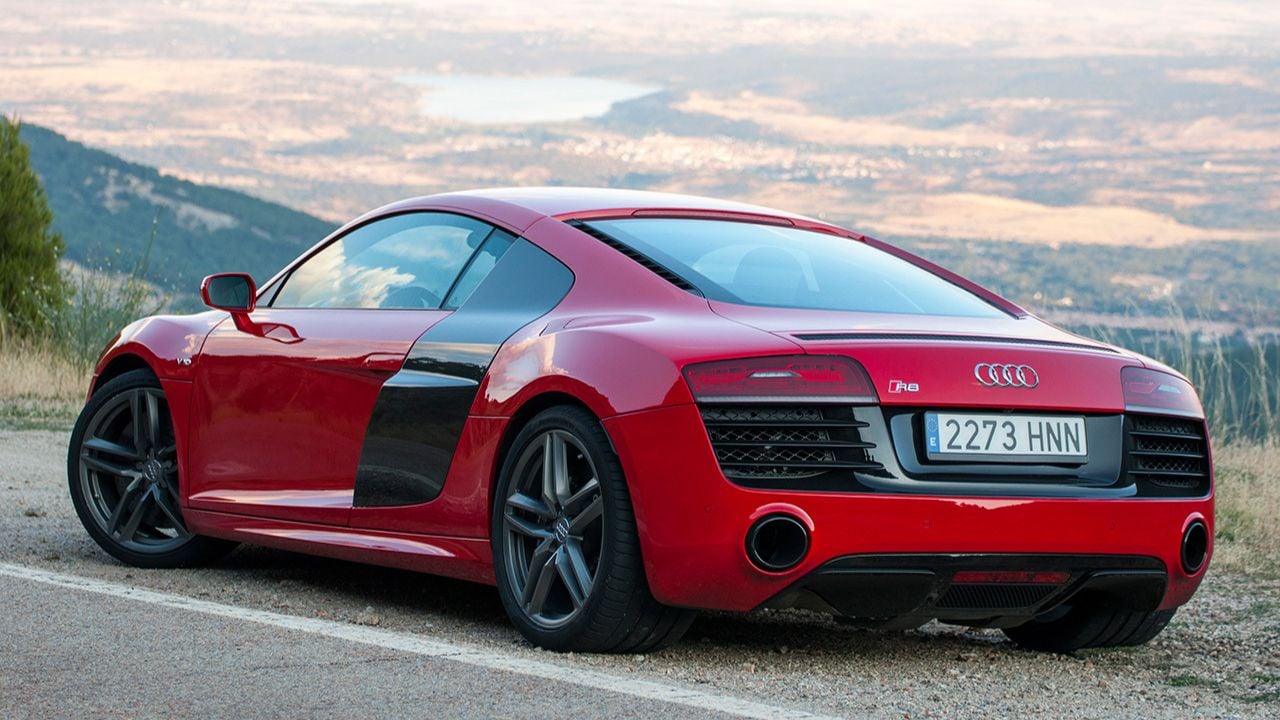
Audi R8 V10

The R8 is essentially a Lamborghini Huracán in a business suit, sharing the same 5.2 liter naturally aspirated V10, but output varies by model year and trim, roughly 562 hp in some versions and up to about 602 hp in others, and it sounds like automotive angels having a very loud argument. Because it wears four rings instead of a raging bull, it gets about as much street cred as a base model Corvette at car shows, which is why it can depreciate noticeably in the first few years, depending on model year, mileage, and market demand.
You get Lamborghini performance with German reliability (yes, that’s a thing), and you won’t have every valet driver asking if you’re a drug dealer.
Clean examples are floating around $120K-140k, down from their original $180k+ sticker, that’s McLaren 570S money for something you can daily drive without having a nervous breakdown every time you see a speed bump. Plus, when something breaks, you can get parts without selling a kidney, unlike its Italian cousin, which requires a blood sacrifice to Lamborghini’s parts department.
This thing will do 0-60 in 3.2 seconds while your neighbors assume you bought a sensible German luxury car, making it the perfect sleeper for people who want supercar thrills without supercar drama.
Acura NSX

Honda spent a decade developing this technological marvel, and the final product was so complicated it made a Bugatti Veyron look simple, three electric motors, a twin-turbo V6, all-wheel drive, and enough computing power to launch a space shuttle, all wrapped in styling that screams “I wanted a McLaren but my accountant said no.”
The hybrid system fills in turbo lag perfectly, delivering 0-60 in 2.7 seconds with more sophistication than anything coming out of Maranello, but try explaining that to someone who just sees “Acura” on the badge. Original MSRP was around $157k, but now you can find them for $120k or less, that’s used 911 Turbo S money for something that’s faster, more advanced, and won’t be at every suburban country club.
The NSX has a reputation for being relatively reliable for a supercar, which should tell you everything about how little the market cares about Honda badges on six-figure cars. The depreciation hit is brutal but undeserved, this thing is more reliable than a Ferrari, faster than most Porsches, and has technology that makes Tesla look primitive.
In 10 years, when EVs have completely taken over and people are nostalgic for the last great hybrid supercars, these are going to be worth stupid money. Buy now, thank us later, and enjoy explaining to people why your “Honda” just obliterated their 911 Turbo at the track day.
McLaren 720S

McLaren crafts some of the most incredible supercars on the planet, naming them like they’re Wi-Fi routers. However, the 720S is a different story, boasting a staggering 710 hp that propels it from 0 to 60 in just 2.8 seconds, and it’s made from more carbon fiber than a Formula 1 car. The active aerodynamics are so advanced they make fighter jets jealous. However, because McLaren builds them like they’re still a small-batch race car company (spoiler alert: they’re not), quality control can be more inconsistent than British weather.
These beauties sold initially for $285k+ but now trade for around $220k-240k, still supercar money, but you’re getting hypercar performance at a significant discount.
The catch is that you’ll need to budget for maintenance like you’re keeping a Formula 1 car running, because these aren’t Honda Civics, and when something breaks (and it will), you’ll be writing checks that would make a Ferrari owner wince. Suppose you can handle the electrical gremlins and occasional unscheduled pit stops. In that case, you’ll own something that can humiliate Ferraris on track days while looking like it was designed by aliens who actually understand aerodynamics.
The 23% depreciation in three years is steep, but it’s also your ticket into the hypercar club without selling your firstborn to McLaren’s finance department.
McLaren 570S
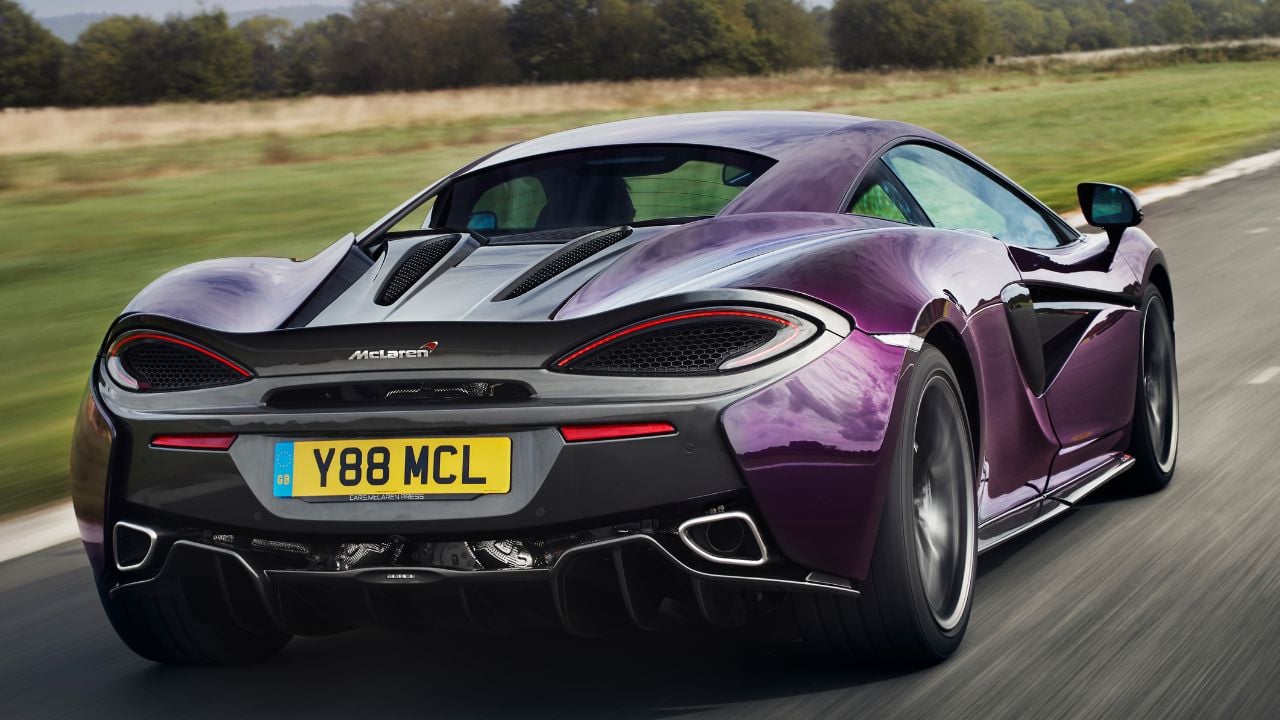
McLaren called this their “entry-level” supercar, which is like calling a heart attack an “entry-level” medical emergency, it’s still got 562 horsepower from a 3.8-liter twin-turbo V8 that’ll hit 0-60 in 3.2 seconds, making it legitimately faster than 90% of the supercars from the ’90s that we worship as gods. Because it’s the “cheap” McLaren, it gets no respect and loses roughly 25% of its value in the first three years, which is brutal for the owners but fantastic for anyone with $140k-160k burning a hole in their pocket.
That’s used 911 Turbo money for something that’ll destroy a 911 Turbo on any racetrack, assuming you can keep the electrical system happy.
Originally $191k, these are now the supercar equivalent of buying a three-year-old BMW 3-Series, depreciated but still fantastic at doing supercar things at supercar speeds. The large supply and discontinuation reduce its relative rarity, meaning your local exotic dealer probably has one gathering dust at a bargain price. Yes, it’s still a McLaren, which means it’ll bankrupt you in creative ways and leave you stranded more often than you’d like, but it’s also genuinely one of the best driver’s cars ever made.
Just be mindful of service history and mileage, because a poorly maintained McLaren is like a poorly maintained relationship, expensive, complicated, and likely to end badly.
2018 BMW i8

BMW designed this thing to look like it fell through a time portal from 2035, complete with scissor doors and spaceship curves, then gave it the performance of a well-tuned Miata, it’s like dating someone who’s incredibly good-looking but has the personality of wet cardboard.
The i8 was never about straight-line performance; it was about making a statement: “I care about the environment, but I also want to look like I drive a Lamborghini,” and mission accomplished, well, sort of. Original MSRP was around $147k, but these things have fallen off a cliff harder than Tesla stock in 2022, now selling for $80k-100k, that’s used Corvette money for something that looks like it should be fighting crime in Gotham City.
It still turns heads like nothing else, is rated around 69 MPGe combined (and about 27 mpg combined on gasoline), and has more presence than cars costing twice as much, making it perfect for people who want to look wealthy while secretly being environmentally conscious. The plug-in hybrid system combines a 1.5-liter three-cylinder engine with electric motors for a total of 362 hp, which sounds impressive until you realize a Honda Accord can keep up in a straight line.
In 20 years, it’ll be a fascinating footnote in automotive history. This car bridged the gap between internal combustion and electric supremacy, assuming the electrical system doesn’t fry itself before then.
Ferrari 812 Superfast

Ferrari named this thing “Superfast,” which is like naming your kid “Really Smart” or your dog “Very Good Boy”, redundant and slightly embarrassing, but at least it’s honest about the 789 hp coming from a naturally aspirated V12 that sends it to 60 in 2.8 seconds with a top speed of 211 mph. It’s legitimately one of the fastest front-engine cars ever built and sounds like the automotive equivalent of Pavarotti hitting a high note. Being front-engined, it’s like a ridiculously expensive old Corvette with an Italian accent and a maintenance schedule that would make NASA jealous.
Original MSRP was around $335k, but clean examples are now selling for $280k-300k, still “sell your house” money, but it’s Ferrari V12 money with a significant discount.
The problem is that it’s not a limited edition, which means it lacks the artificial scarcity that drives up Ferrari values, leaving it vulnerable to the same depreciation as ordinary cars (if you can call any Ferrari ordinary). Suppose you want to experience what a naturally aspirated V12 feels like before they’re extinct. In that case, this is your chance to own something that makes sounds you literally can’t get from any other mechanical device on Earth. The 18% depreciation in three years might hurt the original owner, but it’s your ticket into the exclusive club of people who can make small children cry with happiness just by starting their car.
Just remember that maintenance costs will make your accountant question your life choices. And you’ll agree with them.
Porsche 911 GT3 / GT3 RS
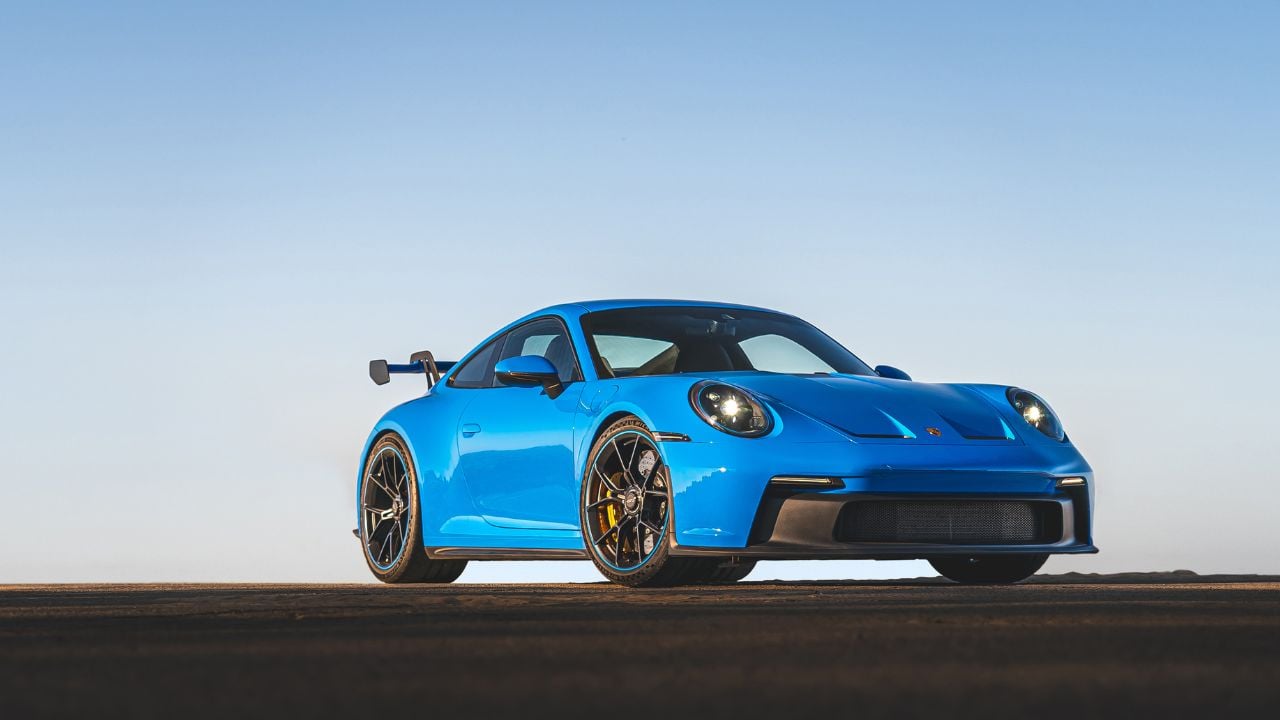
These are the cars that turn normal humans into insufferable track day heroes who can’t shut up about their lap times at Laguna Seca, yes, they’re incredible with the GT3 making 502 horsepower from a naturally aspirated flat-six that revs to 9,000 RPM. The GT3 RS is even more hardcore, with more aero than a NASCAR Cup car and a suspension setup that makes your kidneys hate you.
Even these legends can vary by market, but pricing does not typically fall anywhere near the low $130,000 to $180,000 range for modern GT3 and GT3 RS cars. Recent U.S. base MSRP is roughly $187,500 for a 911 GT3 and about $241,300 to $246,300 for a 911 GT3 RS depending on model year, before options and any dealer markup.
The 13% depreciation in three years is modest compared to other supercars, which is a sign of strong demand and the fact that these are among the few naturally aspirated 911 variants still on sale, meaning they’ll be collector items eventually (assuming Porsche doesn’t change their mind and build more). Right now, you can experience what a proper track-focused Porsche feels like without getting destroyed financially, though you’ll still join the ranks of people who think every conversation needs to include their “heel-toe downshift technique” at Laguna Seca.
These will probably appreciate eventually, but for now, you can own automotive perfection at a reasonable discount, just prepare for your social life to revolve entirely around track days and tire compound discussions.
Aston Martin DB11

Aston Martin is like that really attractive person who’s completely broke, the cars are gorgeous, sophisticated, and refined, and they’ll leave you stranded slightly less often than a 1970s Italian exotic. The DB11 is genuinely stunning, looking like it was designed by someone who understood both aerodynamics and art history, with a V12 that sounds like thunder and an interior nicer than most people’s living rooms.
Prices for these things sink like a rock, losing almost 50% of their value in five years, with original $214k MSRPs now trading for $100k-120k, which is brutal even by luxury car standards but fantastic if you’ve ever wanted to drive something that looks like it belongs in a James Bond movie.
The depreciation disaster comes from Aston’s reputation for electrical problems that would make Lucas Industries proud, combined with the fact that they’re essentially very expensive fashion accessories that happen to have engines. If you can handle the reliability issues and budget for maintenance like you’re keeping a small aircraft airworthy, you’ll own something with more presence than cars costing twice as much.
The DB11 is proof that sometimes the most beautiful things in life are also the most financially destructive, but at these prices, you can afford to have your heart broken by British engineering at a significant discount.
Ferrari 488 GTB
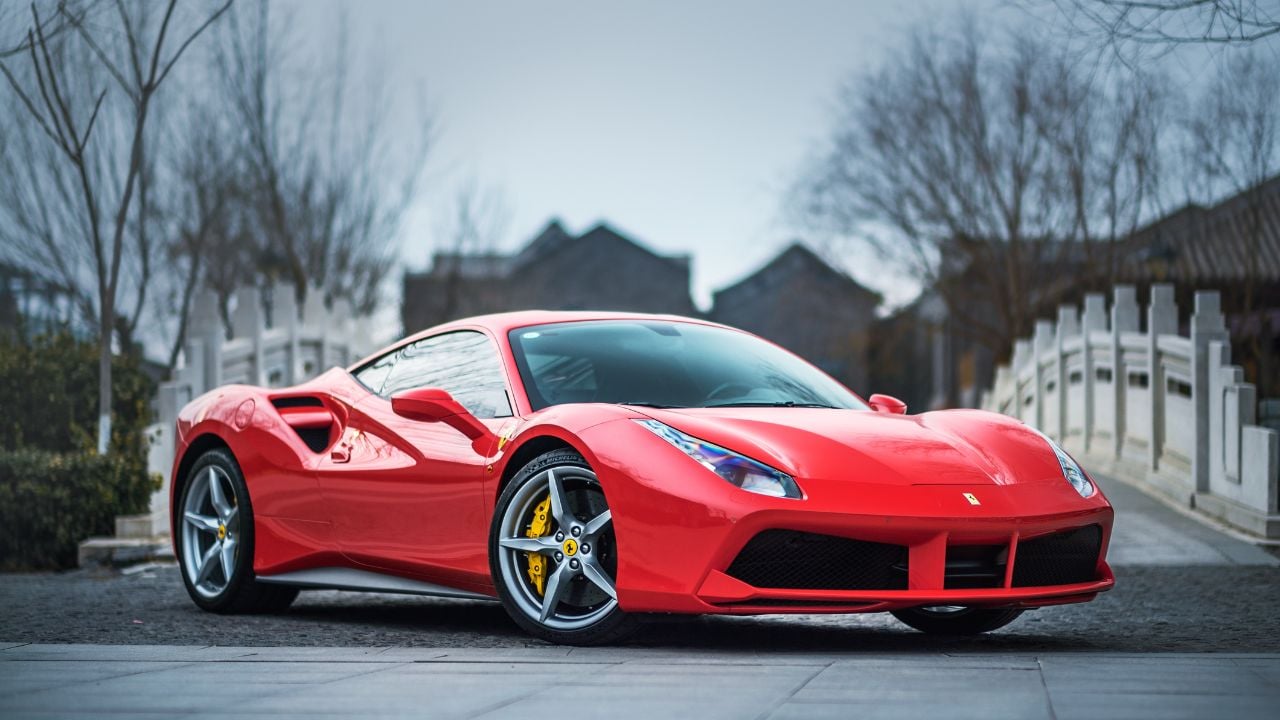
This was Ferrari’s first turbocharged mid-engine V8 since the F40, and the purists lost their minds screaming “It doesn’t sound right!” and “Where’s the naturally aspirated soul?”. At the same time, it was busy being faster than every naturally aspirated Ferrari that came before it, thanks to its 661 hp and 0-60 in 3.0 seconds. It sounds like a furious Italian opera singer. It handles like it was designed by racing gods, with enough electronic wizardry to make average drivers feel like racing legends. Still, the turbo conversion controversy means it depreciates around 16% in three years.
Original MSRP was around $245k, but clean examples now trade for $200K-220k, still expensive, but you’re getting modern Ferrari performance without the new car premium.
The reality is that in 10 years, when people realize this was one of the greatest Ferraris ever built, prices will recover, but right now you can buy one for “only” slightly more than a house. It’s legitimately one of the best-handling cars ever created, with the kind of steering precision and chassis balance that makes you understand why people mortgage their homes for Italian exotics.
The depreciation hit is a temporary punishment for Ferrari’s decision to embrace forced induction. Still, future collectors will recognize this as the car that proved turbos could enhance rather than diminish the Ferrari experience, assuming you can afford the maintenance schedule that reads like a luxury vacation itinerary. But nowhere near as fun.
Lamborghini Huracán
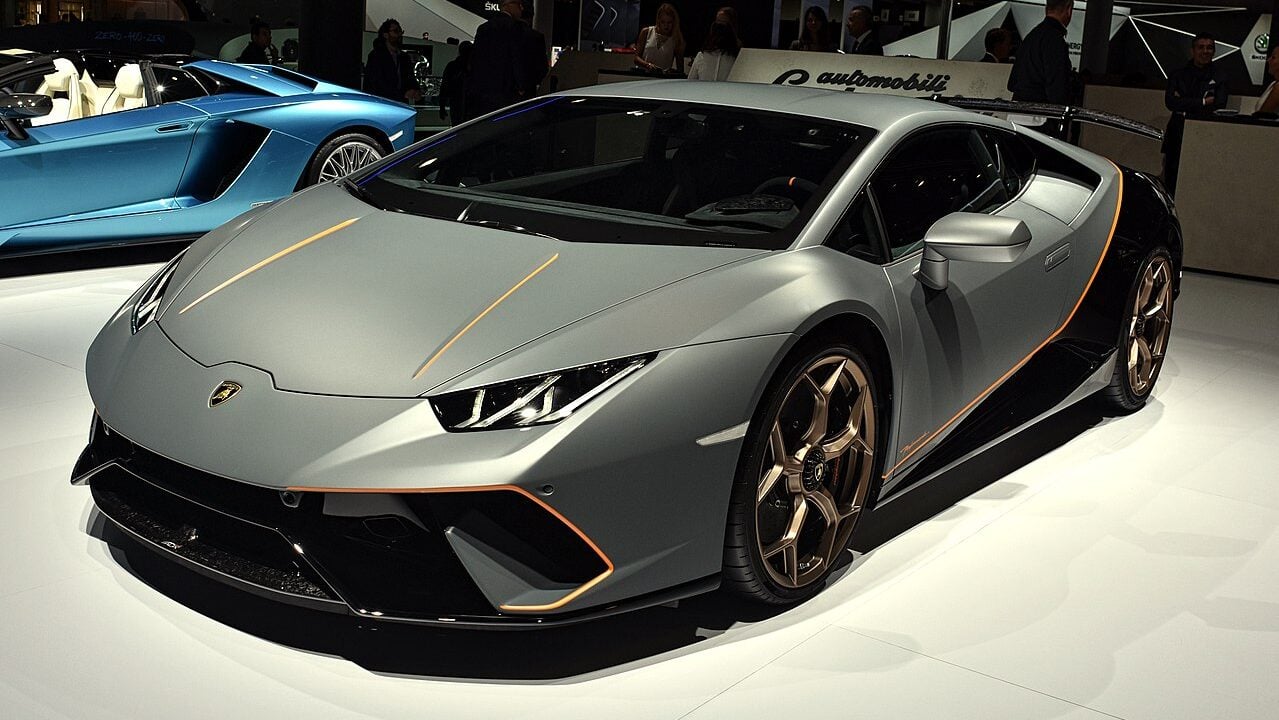
This is what happens when Audi engineers get together with Italian designers and too much espresso, it’s the same basic car as the R8, but with more anger, more noise, and significantly less reliability, packing 602 hp with all-wheel drive and styling that makes every other car look like it was designed by committee. It’s the automotive equivalent of wearing a leather jacket to church, inappropriate, but undeniably cool, and early Huracáns are now selling for $150k-170k, down from their original $200k+ MSRP.
That’s serious supercar performance for “only” doctor money instead of “investment banker” money, though depreciation varies by year and trim, and one large scale analysis puts 5 year depreciation for the Huracán coupe around 20%, not 50%+.
It’s still a Lamborghini, which means maintenance costs that would make a Ferrari owner jealous and electrical problems that defy both logic and warranty coverage. Still, if you want to make entrances like you’re arriving at your own movie premiere, this is your car. The Huracán was designed to be the “approachable” Lamborghini, offering just enough daily-drivable comfort to attract new buyers. However, newer versions like the Evo and Sterrato rendered early models outdated.
For anyone with supercar dreams and falling-wallet anxiety, this depreciation disaster is your window into ownership of something that sounds like the automotive equivalent of an Italian rage quit.
Jaguar F Type SVR

Jaguar tried to build a British Corvette and somehow made something that’s less reliable than a 1970s British Leyland product, but with one of the greatest exhaust notes ever created, it sounds like a natural disaster having an argument with a thunderstorm, with overrun pops and crackles so dramatic they should come with their own soundtrack.
The supercharged V8 with all-wheel drive delivers proper performance, but the electrical problems would make Lucas Industries proud, and these things lose 60%+ of their value in five years. You can find SVRs for $60k-80k, down from their original $125k+ MSRP, that’s used Corvette money for something that sounds infinitely better, assuming it starts.
The F-Type SVR is proof that sometimes the best-sounding cars are also the most financially devastating. Still, at these depreciated prices, you can afford to have your heart broken by British engineering on a regular basis. Reliability is aggressively British, meaning you should budget for electrical gremlins and always carry jumper cables, but you’ll also own something that makes sounds no American or German car can match.
It’s the perfect car for people who want to experience the thrill of British sports car ownership without paying British sports car prices, though you’ll still get the full British sports car experience of wondering if it’ll start every morning.
Maserati GranTurismo

Maserati is what happens when you have Ferrari styling, Chrysler reliability, and Stellantis ownership, the GranTurismo might be the most beautiful car on this list, with proportions that would make Michelangelo weep and sounds like an Italian opera singer hitting a high note while riding a motorcycle.
Depreciation can be steep on many luxury cars, but large scale resale value analysis puts 5 year depreciation for the GranTurismo coupe closer to about 42% (about 58% value retained), not 67%. For instance, GranTurismos now sell for $40k-60k, less than a new Corvette, yet they resemble automotive sculpture. If you want to look like you have more money than you do, and you enjoy the thrill of never knowing if your car will start, this is your ride.
The GranTurismo is the automotive equivalent of dating someone incredibly attractive but completely unreliable, you know it’s going to end badly, but the experience is so intoxicating you can’t help yourself. The Ferrari-derived V8 sounds magnificent, and the design is timeless, but you’ll spend more time talking to your mechanic than your family.
At these depreciated prices, you can afford to have your heart broken by Italian engineering while looking spectacular doing it. Just remember that maintenance costs will make your accountant question every life choice that led to this moment.
When Price Tags Drop, Dreams Start to Look Real
Supercars aren’t just for celebrities and collectors anymore. Thanks to depreciation, more and more dream machines are becoming realistic options for regular drivers who know where to look. Sure, there’s still maintenance, insurance, and the occasional “exotic tax,” but the cost of entry has never been lower for some of the world’s most dramatic and powerful rides.
These cars may have fallen hard in value, but their ability to thrill hasn’t faded a bit. So if you’ve ever wanted to own something with presence, pedigree, and plenty of horsepower, now might be your moment. You’ll make up the difference with just a few oil changes, but hey, isn’t life all about doing what makes you happy?