

Some cars are memories wrapped in fiberglass, rolling reminders of when Detroit actually gave a dang about making your pulse quicken. The Corvette has been America’s sports car punching bag and pride for seven decades now, and along the way, Chevrolet has cranked out special editions like they were trying to empty their parts bin before the accountants showed up.
These weren’t just regular ‘Vettes with fancy stickers (though let’s be honest, some came pretty close.) Each one captured a moment when someone at GM said, “What if we made this one different?” and somehow got approval before the bean counters sobered up.
Here’s a deep dive into 12 special Corvettes that time forgot, spanning from the muscle car heyday to today’s mid-engine madness. Some are legendary, some are head-scratchers, but all of them prove that when Chevrolet wants to show off, they really know how to make the neighbors jealous.
How We Parked on These Picks
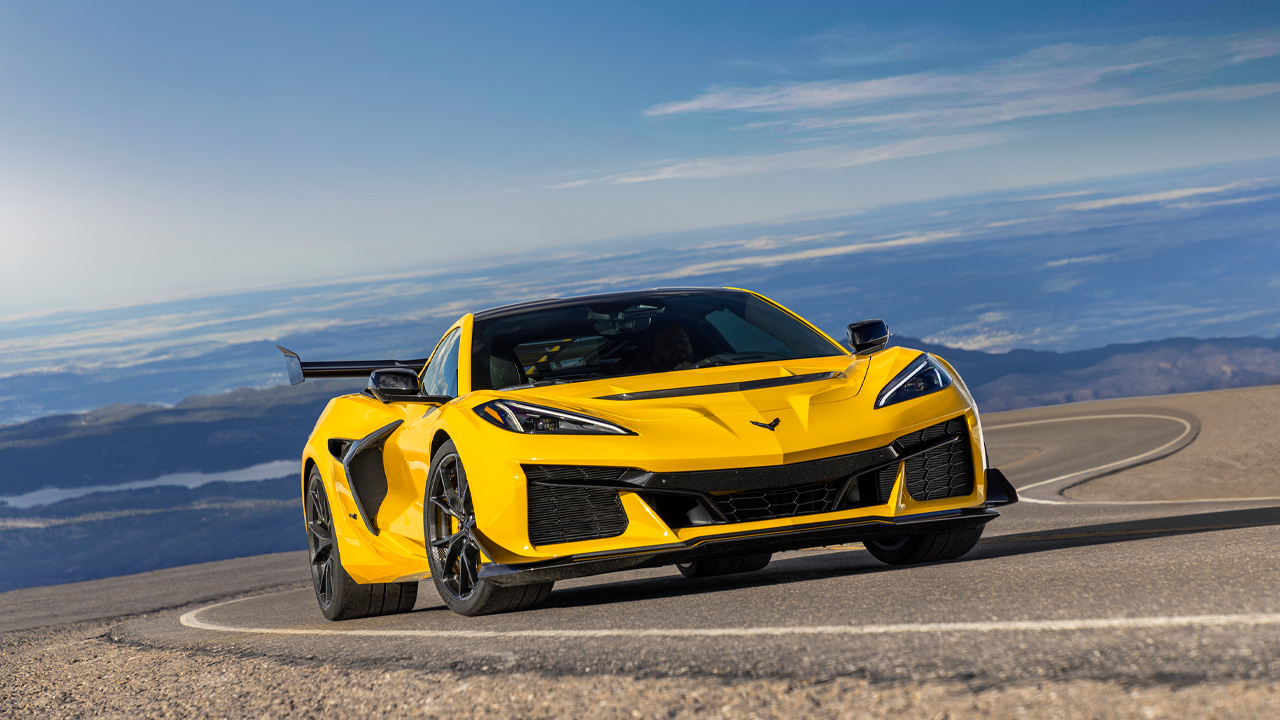
Corvettes have always had a special place in American car culture. From the working man’s sports car of the past to high-end performance cars of the future, Corvettes are one of the most recognizable cars in the United States. But that doesn’t mean every Corvette is instantly identifiable. In fact, there are some that you may have forgotten existed.
This lineup came together by focusing on Corvettes with a story to tell, whether through rare production numbers, a landmark anniversary, or a direct link to racing history. The goal was to span decades, showing how Chevrolet marked milestones and pushed design forward from the 60s to today. Each model was chosen for its ability to capture a moment in time and keep turning heads long after it left the showroom.
1963 Corvette Grand Sport

The 1963 Grand Sport wasn’t just a special edition: it was Zora Arkus-Duntov’s war against corporate bureaucracy wrapped in lightweight fiberglass. When Ford started embarrassing GM with the Cobra, Zora went rogue and secretly developed what should have been America’s Ferrari-killer. The plan called for 125 production cars to meet racing homologation rules, but GM management killed the program when they “increased their enforcement” of the AMA racing ban, leaving only five prototypes weighing around 1,980 pounds with 550+ horsepower from a specially built 377-cubic-inch small block.
Think about that math for a second: 550 horses in a sub-2,000-pound car in 1963. That’s a better power-to-weight ratio than most modern supercars, achieved when seat belts were still considered optional equipment. The surviving cars became legends in private hands, showing up at races like automotive ghosts, changing liveries faster than a witness protection program.
Why it’s often overlooked: Only five were ever built, making them rarer than hen’s teeth and about as attainable as a reasonably priced house in California. Most people have never seen one outside of a Barrett-Jackson auction, where they sell for more than most people’s houses.
1971 Corvette ZR2

The ZR2 was Chevrolet’s final “hold my beer” moment before the EPA crashed the muscle car party like an angry parent at a teenage house party. Only 14 units were built, each packing the legendary LS6 454 big-block that cranked out 425 horsepower when most other manufacturers were already waving the white flag to emissions regulations.
This wasn’t some flashy show pony with racing stripes and spoilers: the ZR2 was all business, like a bouncer in a tuxedo. The package included heavy-duty suspension, an aluminum radiator, and cooling upgrades that meant you could actually use all that power without turning your engine bay into a foundry. The LS6 engine was offered only once in Corvette history, for only one model year — 1971, before both the LS6 and ZR2 packages were phased out for 1972.
Why it’s often overlooked: It came at exactly the wrong time. By 1972, insurance companies were treating muscle cars like toxic waste, and the Clean Air Act was making 425-horsepower engines about as politically correct as smoking in a nursery. The ZR2 became a footnote right as America decided horsepower was the enemy.
1978 Corvette Indy 500 Pace Car Replica

Say what you want about the late ’70s — and trust us, there’s plenty to say — but the 1978 Pace Car Replica knew how to work a Saturday Night Fever vibe. Chevrolet celebrated the Corvette’s 25th anniversary by having it lead the Indy 500, then promptly offered replicas to anyone willing to pay extra for the privilege of looking like they’d just stepped out of Studio 54.
The black and silver paint scheme with red pinstripes was pure disco glam, and those mirrored T-tops were basically automotive mood rings. Inside, silver leather seats made you feel like you were piloting a space disco. Sure, the 350 small-block under the hood was about as threatening as a vegetarian at a barbecue, but this car wasn’t about straight-line speed: it was about making an entrance.
Why it’s often overlooked: It represents everything automotive purists love to hate about the late ’70s: more style than substance, built during the horsepower drought, and unapologetically flashy. Plus, with 6502 produced, they weren’t exactly rare, which killed their collectibility faster than polyester killed fashion.
1988 Corvette 35th Anniversary Edition
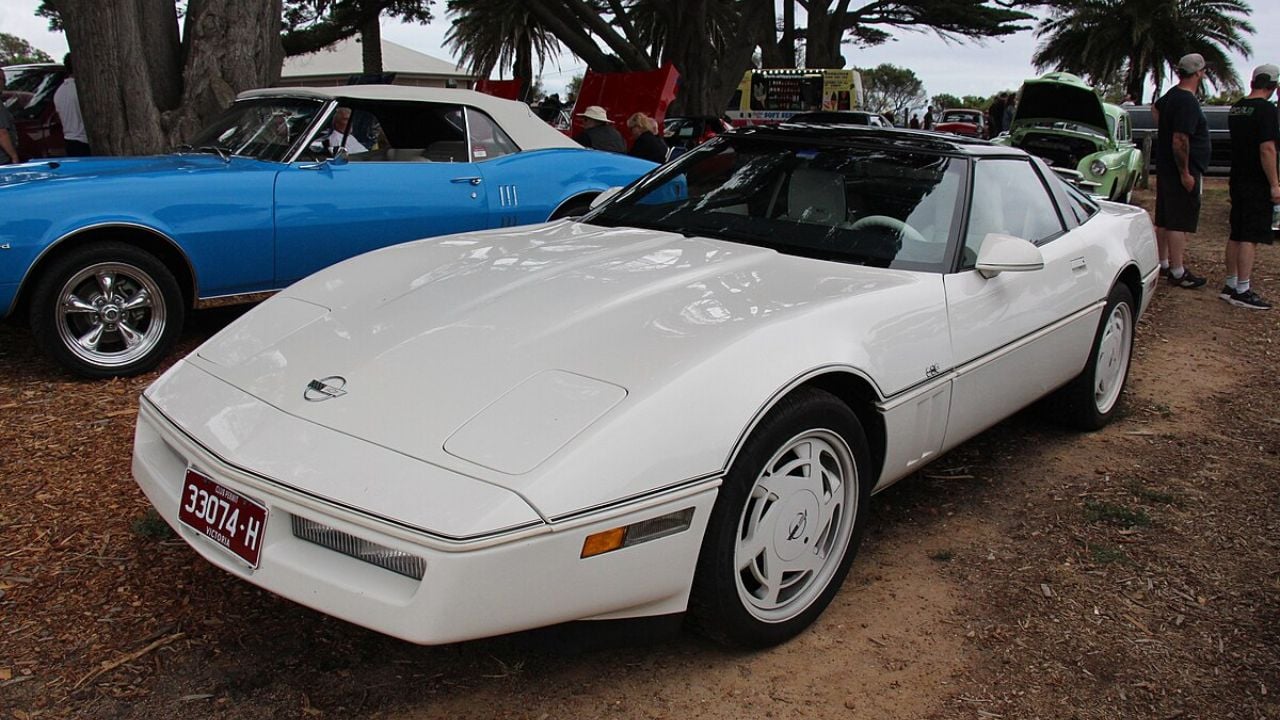
The 1988 35th Anniversary Edition proved that sometimes less is definitely less. Chevrolet’s idea of celebration was to paint everything white — and we mean everything. White paint, white wheels, white mirrors, and even white wheel center caps. The only breaks in the monotony were a black roof panel and a black dashboard, creating a color scheme that looked like it was designed by someone who’d never heard of contrast.
The L98 V8 made a respectable 245 horsepower, which was actually decent progress after the dark days of the early ’80s. The real story was the automatic transmission that came standard, because nothing says “sports car” like letting a computer decide when to shift for you. Manual transmissions were available, but you had to specifically ask for the privilege of shifting your own gears.
Why it’s often overlooked: It looked like a fleet car for dental offices, and came during the C4’s awkward adolescent phase when it was trying too hard to be sophisticated. The white-on-white theme was about as exciting as watching paint dry, which ironically, is exactly what it looked like.
1996 Corvette Grand Sport

After years of the C4 generation trying to figure out what it wanted to be when it grew up, the 1996 Grand Sport finally got it right — just in time to say goodbye. This was Chevrolet channeling the spirit of the legendary ’63 Grand Sport with Admiral Blue paint, white center stripe, and red fender hash marks that actually meant something this time.
Only 1,000 were built (810 coupes, 190 convertibles), each packing the LT4 small-block that cranked out 330 horsepower; the most powerful small-block Corvette engine since 1970. Unlike its ancestors, this one actually worked reliably and didn’t require a mechanical engineering degree to maintain. The six-speed manual was mandatory, because if you’re buying the farewell tour, you’d better be willing to row your own gears.
Why it’s often overlooked: The C5 was already stealing headlines, and most people were ready to move on from the C4’s digital dashboard and plastic fantastic interior. It’s the middle child of Grand Sports: more powerful than the ’63 but overshadowed by later iterations.
2003 Corvette 50th Anniversary Edition
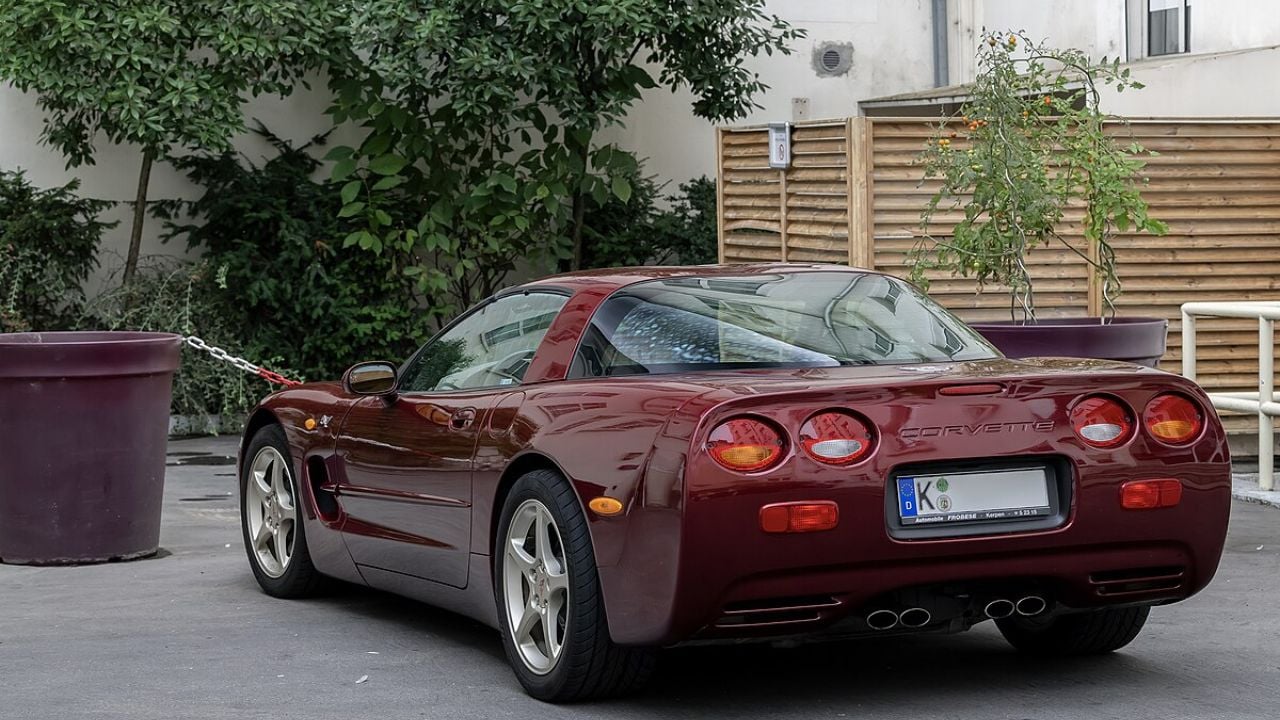
The 50th Anniversary Edition arrived wearing Anniversary Red Metallic paint and champagne-colored wheels that looked sophisticated enough to park at the country club. This wasn’t just a paint job celebration: it was Chevrolet proving they’d figured out how to build a modern sports car that didn’t fall apart if you looked at it wrong.
The LS1 small-block delivered 350 horsepower with the manners of a gentleman and the appetite of a teenager. Magnetic Selective Ride Control was cutting-edge tech that actually worked, letting you dial between comfort and track modes without requiring a PhD in suspension geometry. The 50th anniversary logos were tastefully done, unlike some special editions that looked like they’d been attacked by a bedazzler.
Why it’s often overlooked: It was almost too refined for its own good. While competitors were building fire-breathing monsters, Chevrolet built a sophisticated grand tourer that happened to be really fast. Sometimes being the responsible adult in the room doesn’t get you the attention you deserve.
2004 Corvette Commemorative Edition

The Commemorative Edition honored Corvette Racing’s Le Mans victories with Le Mans Blue paint that looked like it had been mixed with liquid midnight. Silver stripes and special badges told the story of American endurance racing success, while the LS6 V8 in Z06 models pumped out 405 horsepower through a six-speed manual that required actual skill to master.
This wasn’t some marketing department fever dream: it was a legitimate tribute to actual racing success. Corvette Racing had been embarrassing European exotics at their own game, and Chevrolet wanted everyone to know about it. The carbon-fiber hood on Z06 models wasn’t just for show; it was functional weight reduction that actually improved performance.
Why it’s often overlooked: It arrived right when the automotive world was obsessing over the upcoming C6 generation. Great timing, Chevy – like throwing a birthday party the day before Christmas.
2011 Corvette Z06 Carbon Edition

The Carbon Edition took the already extreme Z06 and dialed it up to 11, because apparently, 505 horsepower from the LS7 7.0-liter V8 wasn’t quite enough for some people. Limited to just 500 units, it combined the Z06’s lightweight platform with aerodynamic bits borrowed from the ZR1, including a carbon-fiber hood, roof, and splitter that actually did something besides look expensive.
Brembo carbon-ceramic brakes could stop this thing from warp speed repeatedly without fading, while Supersonic Blue or Inferno Orange paint ensured you’d never lose it in a parking lot. The LS7 was naturally aspirated poetry in motion – no turbo lag, no supercharger whine, just 7.0 liters of American V8 thunder that revved to 7,000 RPM like it enjoyed the abuse.
Why it’s often overlooked: It lived in the shadow of the ZR1 supercar and was too extreme for casual enthusiasts but not quite extreme enough for track junkies. Plus, carbon fiber was still expensive enough that most people couldn’t justify the premium for weight savings they’d never actually use.
2013 Corvette 427 Convertible Collector Edition

The 427 Convertible was Chevrolet’s answer to the question nobody asked: “What if we put the Z06’s LS7 V8 in a convertible?” The result was 505 horsepower with the top down, creating a car that could ventilate both your hair and your driving license simultaneously.
Carbon fiber in the hood, fenders, and floor kept weight reasonable, while the LS7’s 7.0-liter displacement ensured you’d never want for power. The six-speed manual transmission was mandatory, because if you’re buying a 500-horsepower convertible, you better be committed to the full experience.
Why it’s often overlooked: Convertible supercars are inherently compromised, and everyone knew the C7 was coming with a completely new design. It was the automotive equivalent of buying the last iPhone before the new model launches: a little bit of an upgrade but immediately obsolete.
2017 Corvette Grand Sport Collector Edition

The 2017 Grand Sport Collector Edition finally got the formula just right: not too soft like the base Stingray, not too dedicated like the Z06, but exactly what most enthusiasts actually wanted. Watkins Glen Gray paint with Tension Blue hash marks and interior accents created a color combination that looked fast while standing still.
It paired the Stingray’s naturally aspirated LT1 V8 with the Z06’s wide body and magnetic suspension tuning, creating a car that could handle track days without requiring a pit crew. The naturally aspirated engine meant no heat soak issues, no supercharger maintenance, and no surprise repair bills that required a second mortgage.
Why it’s often overlooked: It was too sensible for its own good. In an era of 650-horsepower Z06s and 755-horsepower ZR1s, a “mere” 460-horsepower car seemed almost quaint. Sometimes being perfectly balanced means getting overlooked for the extremes.
2020 Corvette C8.R

The C8.R Edition package transformed regular C8 Stingrays into rolling tributes to Corvette Racing’s IMSA dominance. Limited to 1,000 units, it featured exclusive Accelerate Yellow or Hypersonic Gray paint schemes that made every gas station stop feel like a victory lap. The race-inspired graphics weren’t just decoration: they were a direct connection to the factory race cars winning championships.
Underneath the flashy exterior was still the same 495-horsepower LT2 V8 and dual-clutch transmission, because sometimes the standard recipe is already perfect. The Z51 package came standard, ensuring these weren’t just pretty faces but actual performers capable of backing up their racing credentials.
Why it’s often overlooked: It’s too new to be classic and too common to be exotic. Plus, every C8 already looks like a race car to most people, so the special graphics get lost in translation. In 20 years, when C8s are considered “vintage,” this one might finally get the respect it deserves.
Closing the Hood on Legacy

These 12 Corvettes prove that special doesn’t always mean remembered, and rare doesn’t always mean valuable. They’re rolling reminders that Chevrolet has been in the dream-building business for seven decades, sometimes hitting home runs, sometimes striking out, but always swinging for the fences.
Whether they were built to celebrate anniversaries, honor racing victories, or just because someone in engineering had leftover budget and a wild idea, each one represents a moment when Chevrolet decided that ordinary wasn’t good enough. In a world increasingly filled with gray crossovers and electric appliances, these forgotten Corvettes remind us that cars used to be about passion, pride, and the peculiarly American belief that if some horsepower is good, more is always better.
The best part? Most of them are still out there, waiting in garages and collections, ready to remind anyone who’ll listen that America’s sports car has always been willing to take risks, make statements, and occasionally embarrass itself in pursuit of something special. And really, isn’t that what makes them worth remembering?