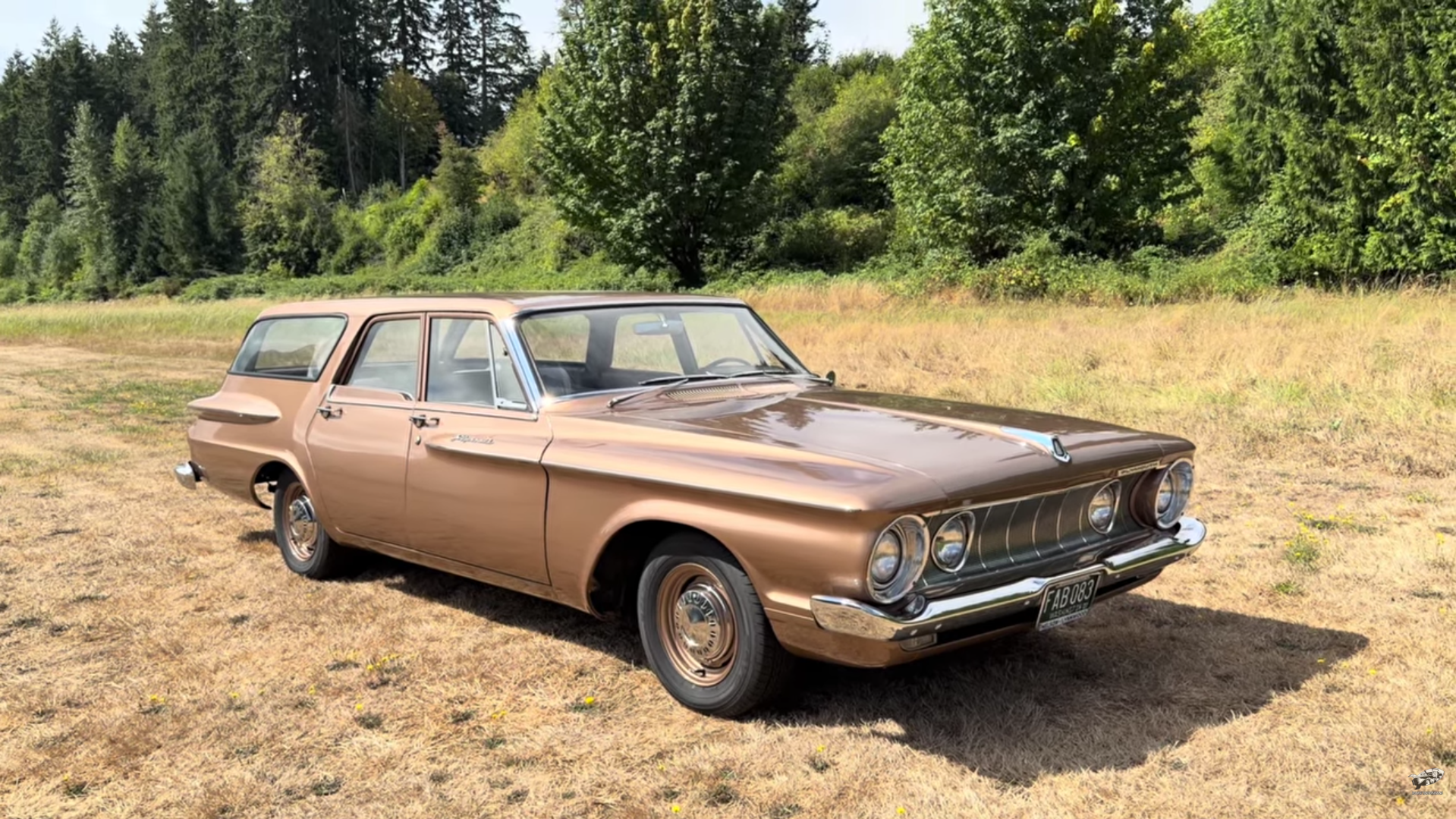
Some classics attract attention because everyone instantly recognizes them. Others do it because even seasoned car-show regulars have to stop, stare, and figure out exactly what they’re looking at.
I think this 1962 Plymouth Savoy wagon firmly belongs in the second category. Its unconventional styling comes from one of Chrysler’s most turbulent periods, when a last-minute change in direction helped create cars that looked unlike almost anything else on American roads.
Six decades later, that troubled history has arguably become part of the appeal. Survivors aren’t exactly common, especially ones that haven’t been converted into something louder, faster, or substantially different from what Plymouth originally intended.
Rocket Restorations is now offering an unusually well-preserved take on that formula. The restored wagon combines a Slant-Six, column-shifted three-speed manual, painted steel wheels, dog-dish hubcaps, and an asking price of $20,000.
This Plymouth Is About As Basic As They Came
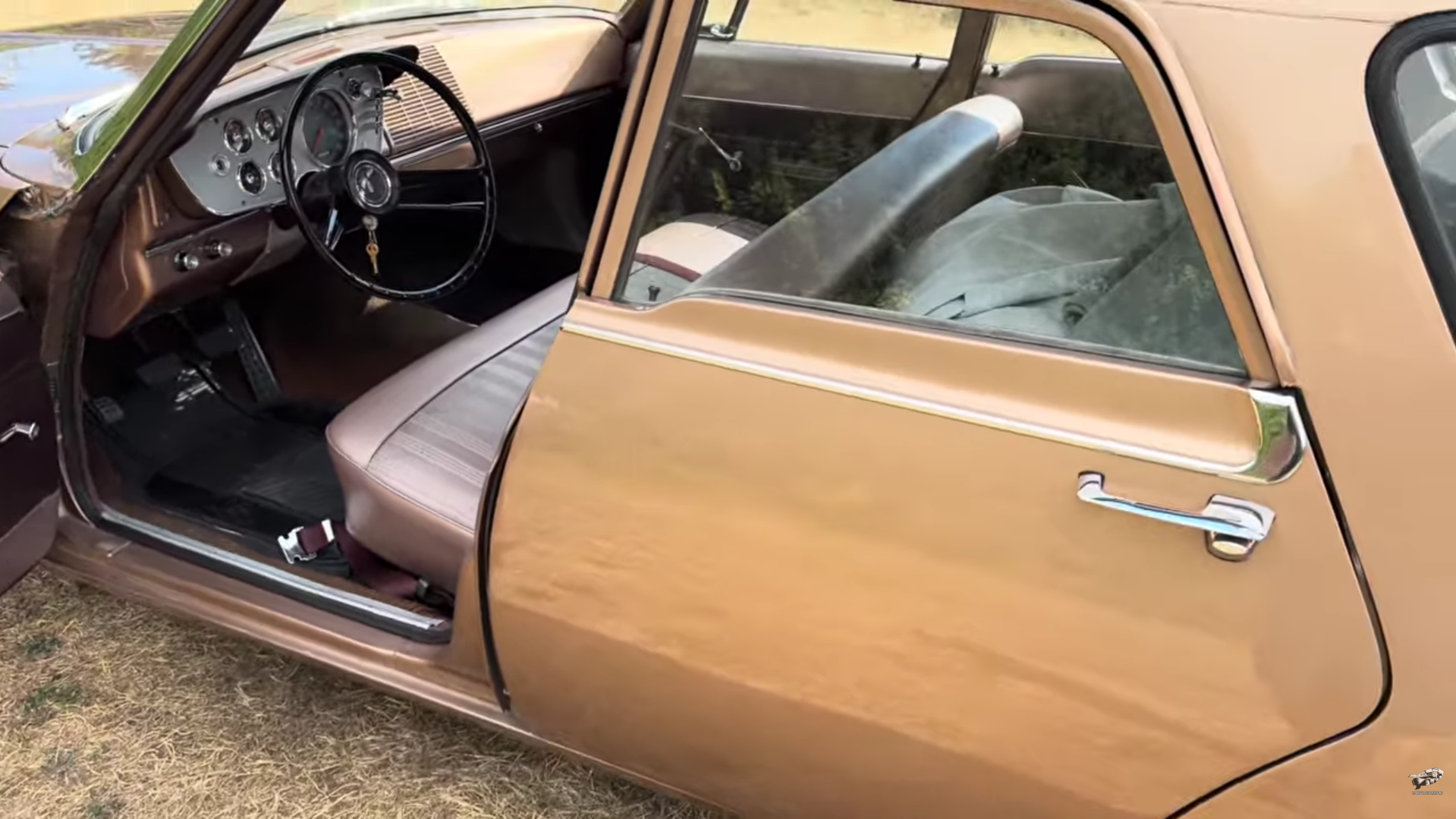
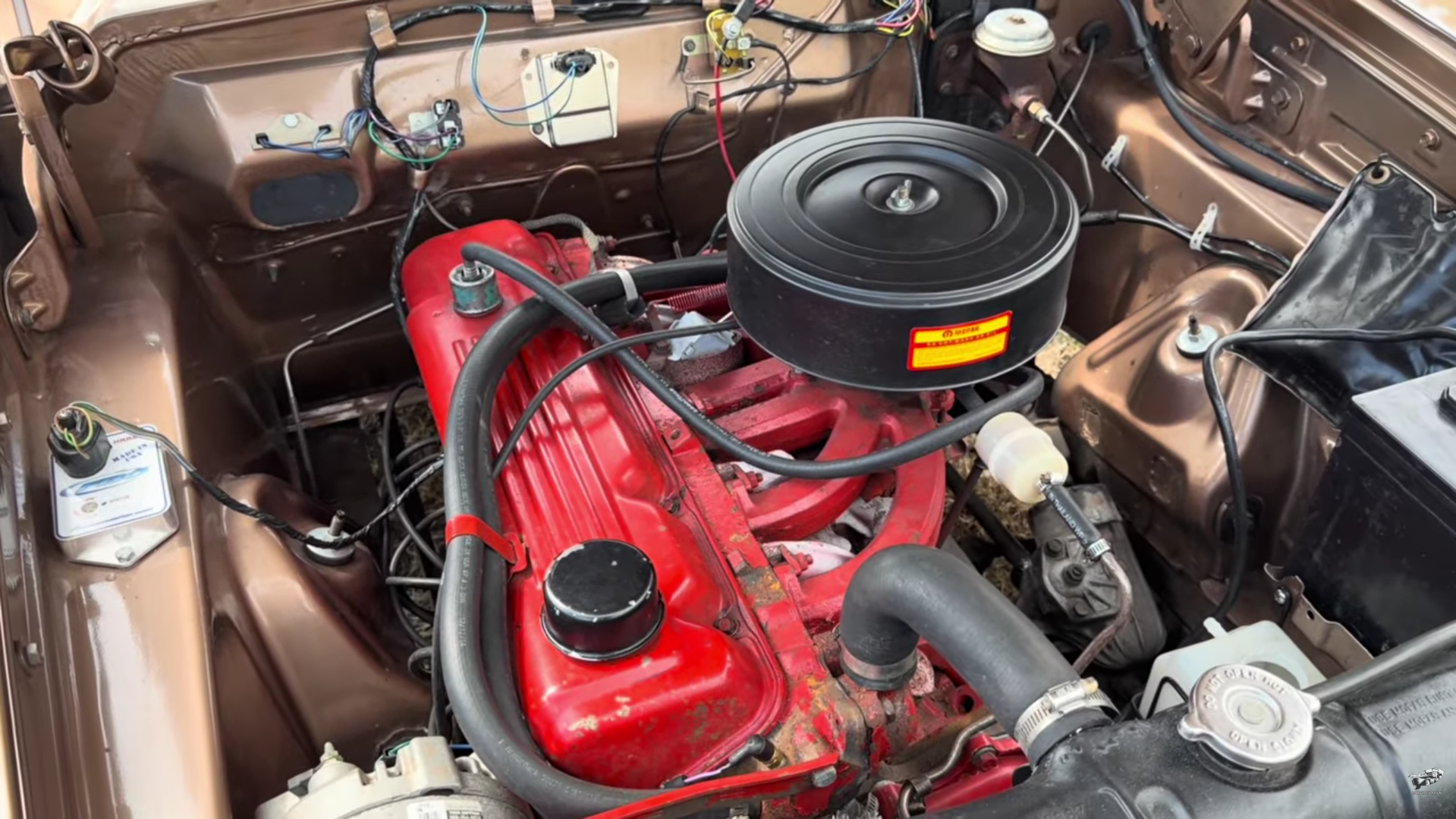
The Savoy was hardly Plymouth’s luxury offering, and this wagon embraces that simplicity. Power comes from Chrysler’s famously durable Slant-Six, although Rocket Restorations notes that the engine currently fitted is a later unit rather than the wagon’s original powerplant.
It’s paired with a three-speed manual operated through a column-mounted shifter, better known as a “three on the tree.” Steering is manual, braking comes from drums at all four corners, and even the rear tailgate glass is manually cranked rather than powered.
The car does have a few sensible upgrades, such as electronic ignition, an updated alternator and voltage-regulator arrangement, a rev limiter, and added seat belts, which make it somewhat easier to live with without fundamentally changing its character.
The interior remains delightfully sparse. There’s vinyl seating, an unusually sculpted early-’60s dashboard, actual auxiliary gauges, and a radio-delete plate where buyers with slightly deeper pockets could have specified some entertainment.
A Restoration With Driver-Quality Intentions
According to Rocket Restorations’ Tom, the Plymouth belongs to longtime friend Frank, whose father once daily drove a similar wagon. The current owner knew going into the restoration that he was unlikely to recover everything spent on the project, which helps explain why the car received far more attention than its humble specification might normally justify.
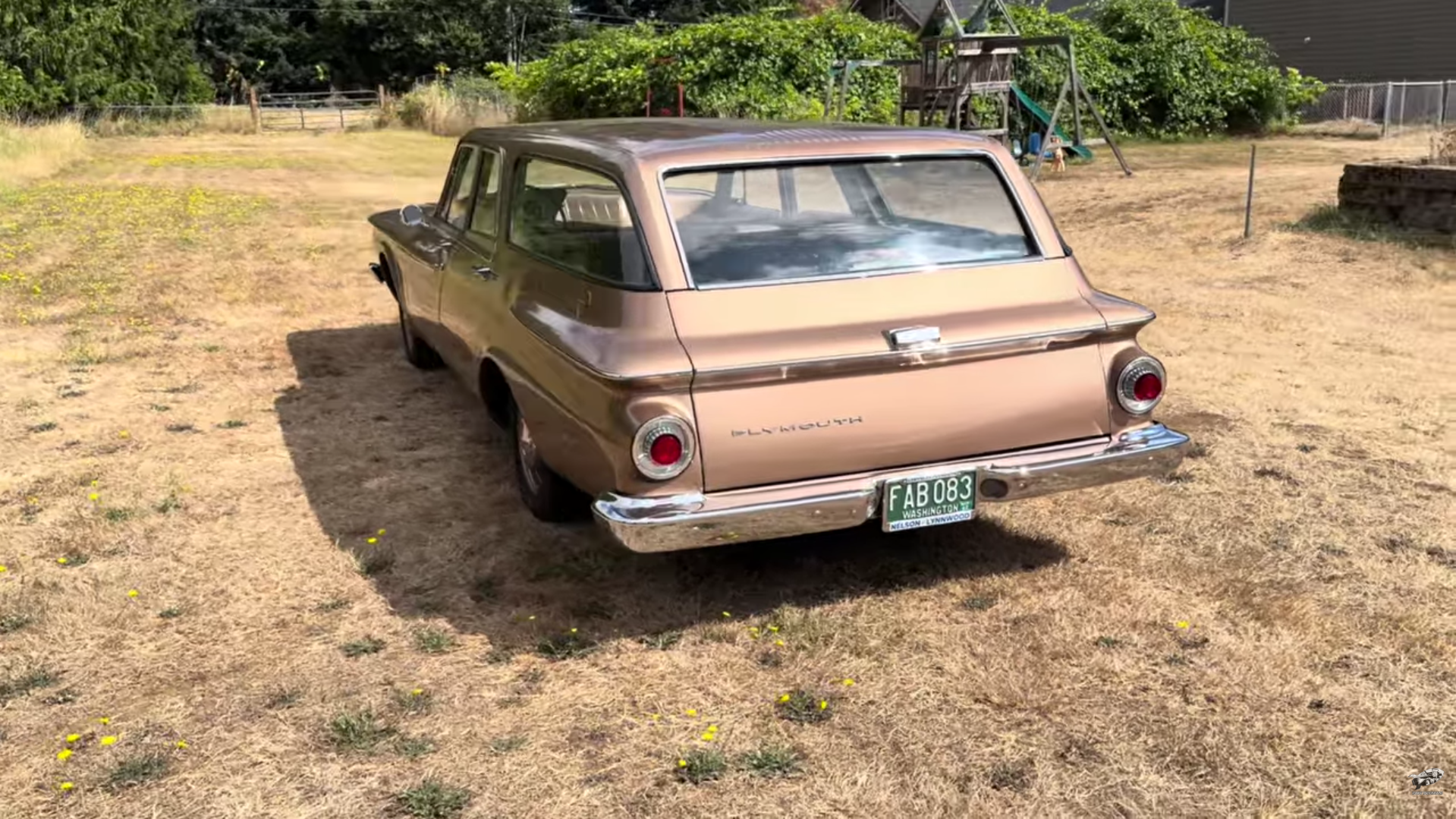
The body was painted during an earlier period when Rocket Restorations still handled paint and bodywork. Tom describes the finish as very nice rather than flawless, noting minor imperfections, including a paint crack near the drip rail and some small marks elsewhere.
Underneath, the wagon appears impressively solid for a vehicle of this age. Common rust areas around the rear cargo floor, spare-tire well, frame rails, and lower body structure reportedly remain in good condition.
There are still a few items a future owner may want to address. The tires date to 2014, the transmission tailshaft appears to have a minor leak, and part of the exhaust sits close enough to the driveshaft that Rocket Restorations recommends correcting its position.
Chrysler’s Accidental First B-Body
The Savoy’s significance goes deeper than its rarity. Chrysler’s 1962 Plymouth and Dodge intermediates became the first vehicles built around what enthusiasts now recognize as the B-body platform, which would later underpin some of Mopar’s most celebrated muscle cars.
Chrysler management reportedly became convinced Chevrolet planned to dramatically downsize its full-size lineup, prompting the company to abruptly shrink vehicles that had originally been designed at larger dimensions.
That assumption proved costly, as Chevrolet hadn’t abandoned the full-size market, and Plymouth and Dodge dealers suddenly found themselves without the conventional full-size offerings customers expected.
Sales suffered, and the unusual styling did little to help. Plymouth’s sales reportedly dropped again for 1962, while Dodge was hit even harder, contributing to significant management and design changes inside Chrysler.
There was an unexpected upside, however. The smaller, lighter B-body architecture proved highly effective in competition, particularly once Chrysler introduced its fearsome Max Wedge V8s, turning an awkward corporate miscalculation into the foundation for serious performance machinery.
This One Isn’t Trying To Be A Muscle Car
That racing legacy makes it tempting to imagine stuffing a big-block into this wagon, although doing so would arguably miss the point. A basic Slant-Six Savoy with a three-on-the-tree manual is far stranger today than another modified Mopar packing enormous horsepower.
Rocket Restorations says the car recently completed roughly an hour-and-a-half drive without trouble, although the usual caveats apply when considering a 64-year-old vehicle for long-distance travel. During the video’s road test, the Plymouth ran cool, shifted properly, and generally behaved exactly as a low-powered six-cylinder wagon from 1962 should.
Performance clearly isn’t the attraction here. The appeal comes from column shifting, manual steering, bizarre early-’60s styling, and the novelty of arriving somewhere in a Plymouth wagon most enthusiasts have probably never seen in person.
At $20,000, it also sits in an interesting corner of the collector market. That money won’t buy you a headline-grabbing Hemi Mopar, although it could buy something considerably rarer at the average Saturday morning cars-and-coffee.