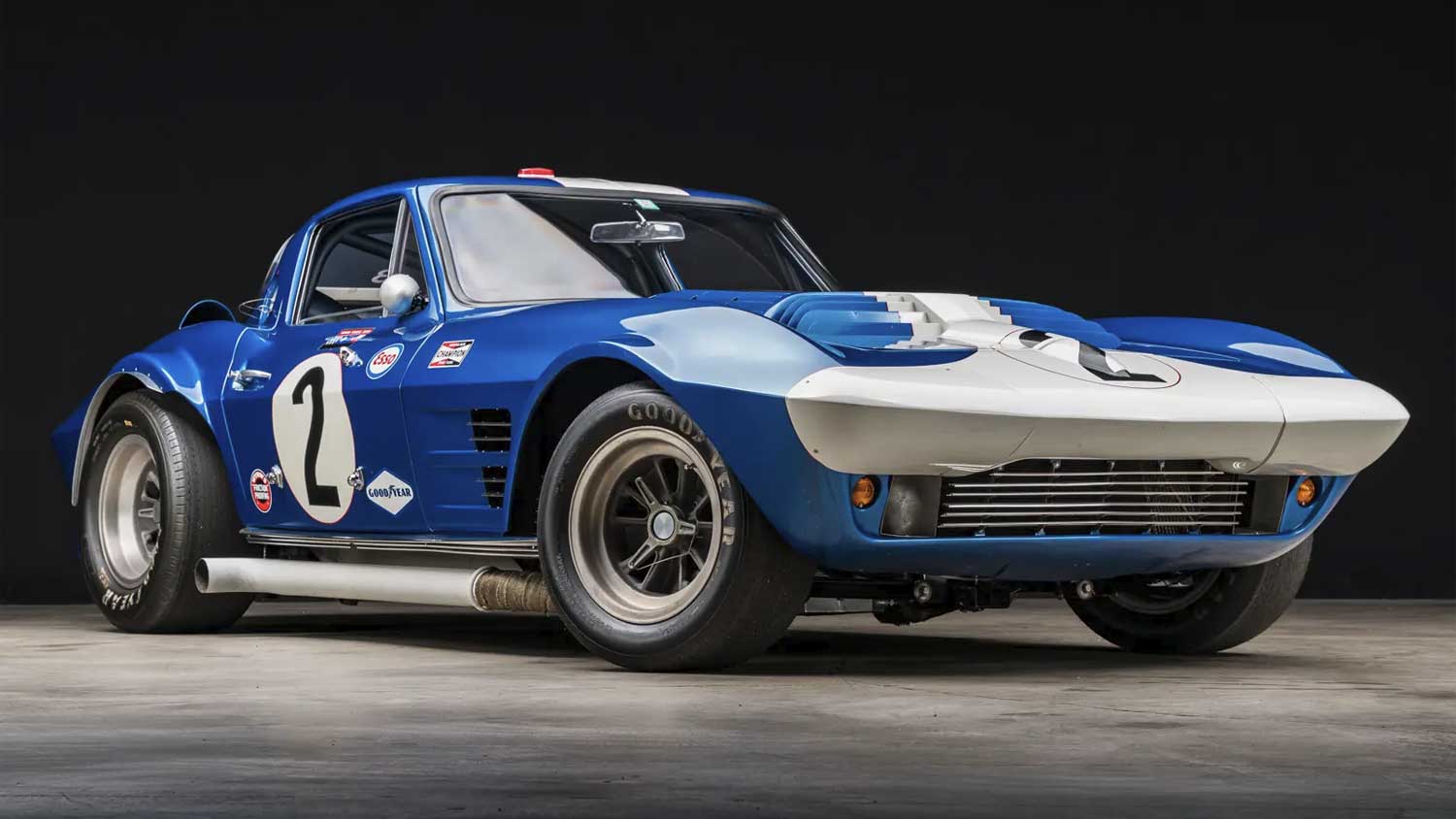
Corvettes have always occupied a special place in American performance history, yet one example has just pushed the nameplate into a different financial universe. A 1963 Chevrolet Corvette sold for $18.705 million at RM Sotheby’s Monterey auction, setting a new benchmark for the model.
This wasn’t a pristine split-window Sting Ray with a famous previous owner or an especially desirable factory option package. It was one of the brutally rare Grand Sport competition cars created under Zora Arkus-Duntov’s direction when Chevrolet was trying to prove the Corvette could take on the best sports cars in the world.
Only five Grand Sports were ever completed before General Motors shut the project down. The car sold in Monterey was chassis 003, the first of just three coupes, and its racing history includes appearances at Sebring, Nassau, and numerous SCCA events.
Its final price makes the Grand Sport one of the most valuable American cars ever sold at auction. Road & Track reports that the $18.705 million result places it third behind the $22 million 1935 Duesenberg SSJ and the $42.905 million Shelby Cobra Daytona Coupe sold shortly before it.
Far From A Normal 1963 Corvette
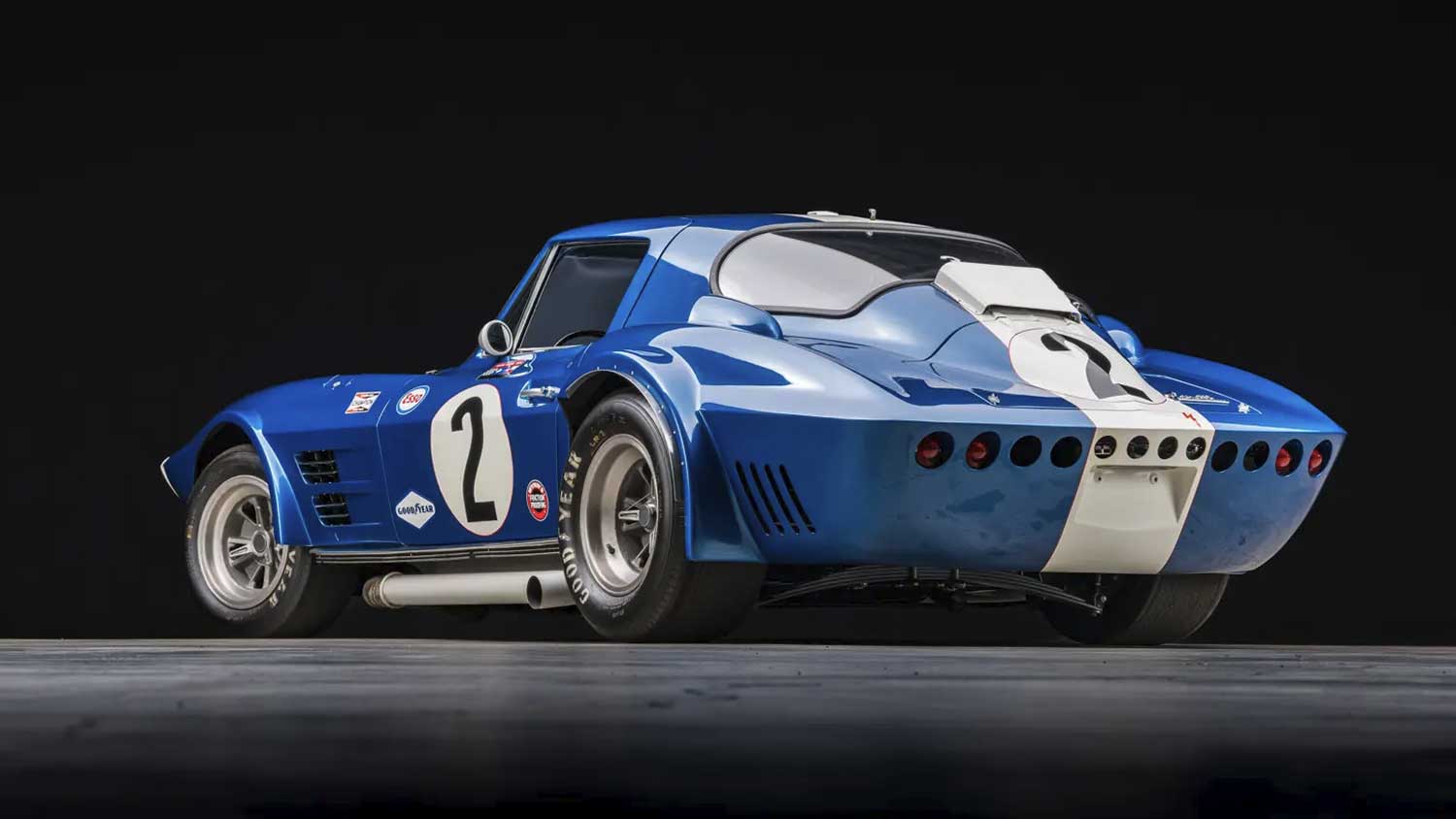
The Grand Sport program was created because Duntov believed the production Corvette, even in Z06 form, was simply too heavy to consistently beat Carroll Shelby’s Cobra. His solution was essentially to start over and build a purpose-made racing machine that only looked broadly similar to a Sting Ray.
A conventional Corvette weighed roughly 3,200 pounds, while the Grand Sport came in at around 1,900 pounds. Engineers achieved that enormous reduction through a lightweight tubular chassis, extremely thin fiberglass bodywork, Plexiglas windows, aluminum components, magnesium pieces, and countless smaller redesigned parts.
The body was also widened and reshaped around massive racing tires, while fixed headlights replaced the production car’s hidden units. Girling disc brakes, revised suspension geometry, specialized cooling systems, and Halibrand magnesium wheels completed a package that was closer to a prototype racer than a modified street car.
Chassis 003 Went Straight Into Battle
Chassis 003 was loaned to Chevrolet dealer and racer Dick Doane, who campaigned it throughout 1963 and scored multiple SCCA class victories. It later became part of John Mecom Jr.’s racing operation during the famous 1963 Bahamas Speed Week.
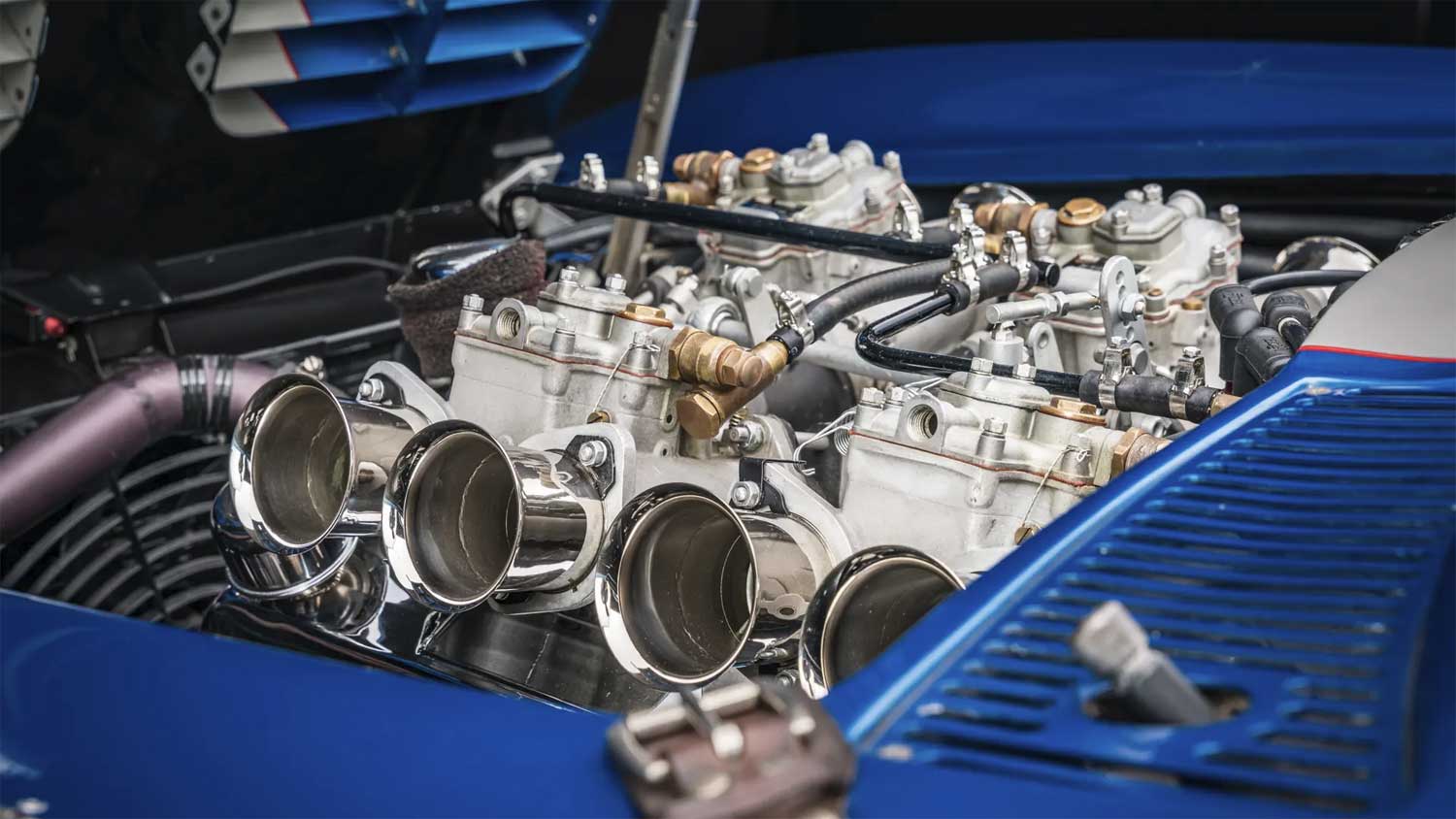
By then, the Grand Sports had evolved significantly. Chevrolet fitted them with all-aluminum 377-cubic-inch V8s breathing through four Weber carburetors, while wider bodywork and additional cooling modifications helped them handle the demands of serious endurance racing.
The results were strong enough to justify the engineering effort. Chassis 003 finished second in class in the Nassau Trophy, then returned to major competition with a second-in-class finish at the 1964 12 Hours of Sebring and third in class there in 1965.
Its list of period drivers reads like a snapshot of American motorsport royalty. A.J. Foyt, Jim Hall, Augie Pabst, John Cannon, Dick Thompson, and Delmo Johnson were among the drivers associated with the car during its active competition years.
GM Nearly Killed The Program Before It Started
The Grand Sport story is especially fascinating because Chevrolet wasn’t officially supposed to be doing this. General Motors had withdrawn from factory-supported motorsport, yet Duntov and sympathetic executives quietly continued developing the cars behind the scenes.
The original plan reportedly called for enough Grand Sports to satisfy racing homologation requirements, but senior GM management discovered the program and ordered it stopped. Only five cars escaped, instantly making every surviving example extraordinarily significant.
Those five nevertheless proved Duntov’s point. At Nassau, the Grand Sports were fast enough to challenge and beat Shelby Cobras, earning their reputation as some of the most formidable American racing cars of the era.
More Than 4,000 Hours Went Into Its Restoration
Chassis 003 survived its racing career unusually well, retaining its original lightweight body, tubular structure, and many factory-built components. That preservation became especially important when its longtime California owner commissioned a detailed restoration during the 2000s.
RM Sotheby’s says Terry Scarborough Racing spent more than four years and over 4,000 labor hours returning the Corvette to its 1964 Sebring configuration. The restoration reportedly cost close to $1 million and emphasized retaining original components whenever possible.
The current engine is an all-aluminum 377-cubic-inch V8 built to period Grand Sport specification, using original Weber 58 DCOE carburetors and an original cross-ram intake. Output is estimated at over 600 horsepower and more than 600 lb-ft of torque, which is considerable even today and downright outrageous in a roughly 1,900-pound 1960s race car.
$18.7 Million Buys A Huge Piece Of Corvette History
The $18.705 million sale price reflects far more than rarity alone. Chassis 003 combines factory development significance, major race history, famous drivers, exceptional originality, and decades of careful stewardship in one of only five cars ever built.
It is also rarer than both the Ferrari 250 GTO and Shelby Cobra Daytona Coupe, although rarity alone doesn’t determine collector value. The real significance lies in what the Grand Sport represented, namely Chevrolet’s attempt to transform the Corvette into a legitimate international racing weapon.
Who bought chassis 003 has not been disclosed. Whoever it was now owns one of the most important Corvettes ever made, and at nearly $19 million, it is easily one of the most expensive American performance cars ever to change hands.