
Imagine a world where a carmaker, known for building sensible commuter cars, tosses logic into the wind and makes a mid-engined, rear-wheel-drive hot hatch.
That’s exactly what Renault did with the help of Tom Walkinshaw Racing. While they were at it, they threw a V6 into its cabin, too. And voilà, the Renault Clio V6 was born. The Renault Clio V6 isn’t just any ordinary hot hatch. It’s a tiny supercar that shouts at everyone in a French accent.
With just 1,631 Phase 1 models having been built, the Clio V6 is one of the rarest hot hatches ever made. If you have a knack for obscure cars, you’ll be pleased to know that early Phase 1 Clio V6 models will begin to qualify for U.S. import under the 25-year rule starting in 2026, depending on their exact build date.
Renault’s Racing Heritage
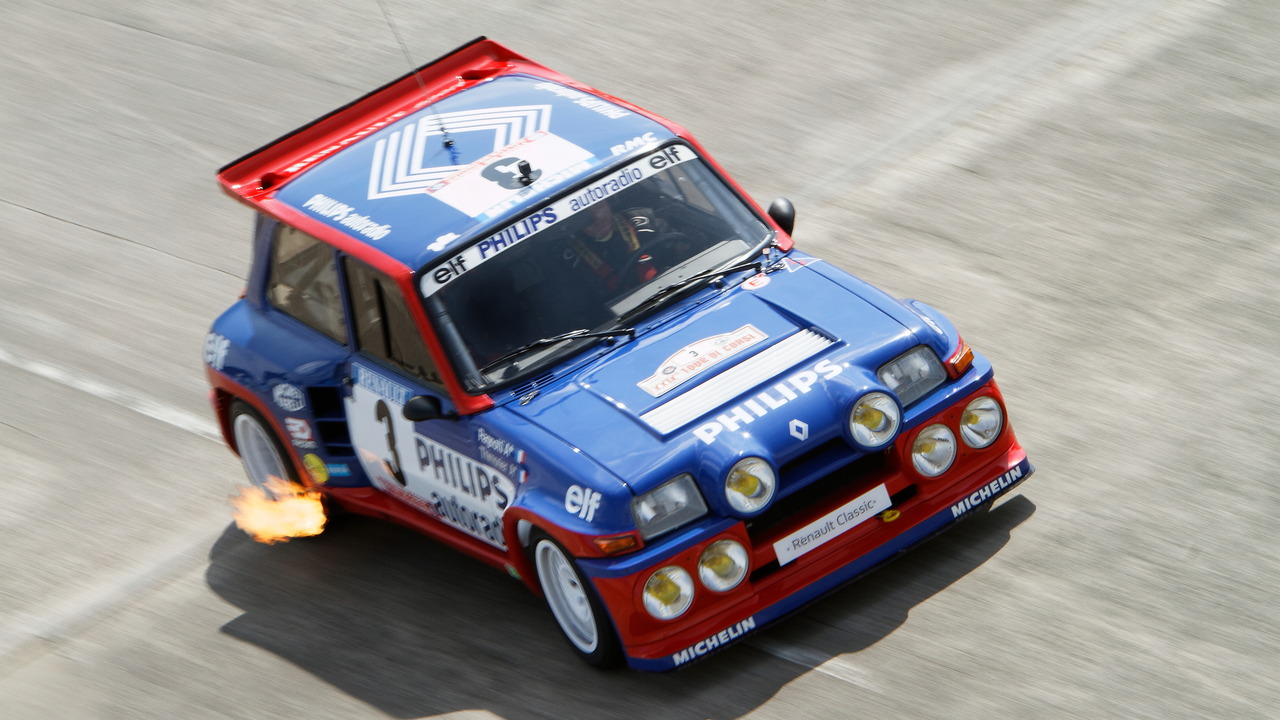
For the average Joe, Renault is another French brand that builds fragile hatchbacks and crossovers. While there’s some truth to that, Renault also has a rich racing history.
They’ve done everything from Formula 1 to compete in the World Rally Championships, with some of their most stand-out icons being the classic lightweight performance cars like the Renault 5 Turbo and Alpine A110.
In the late ‘90s, Renault had a racing series where second-gen Clios, fitted with a V6 engine, pushed the meaning of the hot hatch. Due to its popularity, the public wanted their hands on a road-legal V6-powered French hatchback. So, Renault let their impulses take over and reached out to Tom Walkinshaw Racing (TWR).
They struck a deal, and from there on out, TWR hand-built the Phase 1 Renault Clio V6 in Sweden.
From Frugal Hatch To Mid-Engined Deathtrap
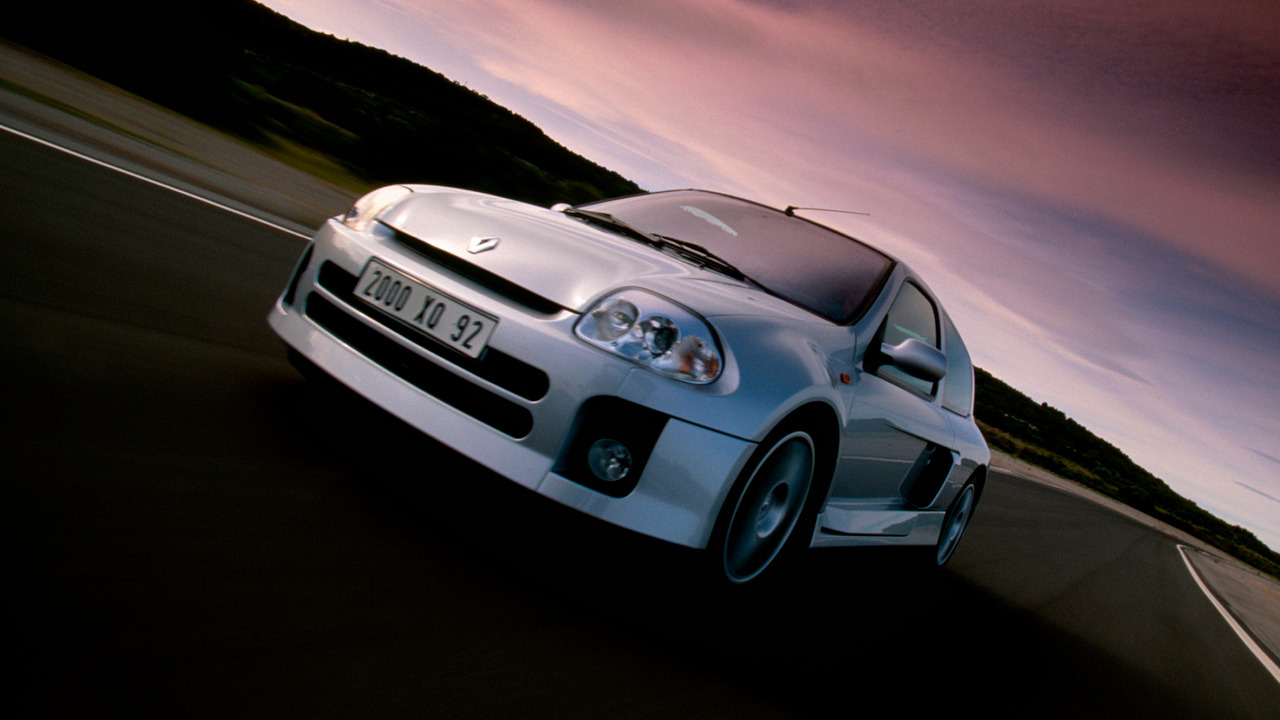
Based on the humble second-generation Renault Clio, the V6 version was anything but bland. Despite its short length, the Clio V6 was far wider than most small hatchbacks, giving it proportions unlike anything else in its class.
The stuck-on widebody panels made it 6.73 inches wider than the standard Clio, while it sat 2.6 inches closer to the ground than the normal Clio and had meaty tires, too.
Additionally, to keep it planted, it featured a stiffer suspension setup, and an anti-roll bar yanked from the Clio race car.
Under the hood sat a small front storage compartment measuring about 2.36 cubic feet, with the engine relocated behind the cabine. The real star of the show, the naturally aspirated 2.9-liter 24-valve V6 engine, was right behind the driver’s head.
Although you can’t see much apart from a massive plastic cover, you’ll hear the 227 hp and 221 lb-ft of torque try to escape the cabin. And like all true driver’s cars, the Clio V6 came with a six-speed manual transmission and a limited-slip differential.
Curiously, when TWR built this borderline race car, they fitted some creature comforts like an air conditioner and a six-CD changer.
Performance-wise, the Clio V6 wasn’t world-shatteringly quick, but it was unadulterated fun. The rear-wheel-drive mid-engined French hatchback went from 0 to 60 mph in just over six seconds and only topped out once it reached 147 mph.
Not many people were brave enough to push it that far, though. More than just a hot hatch, the Clio V6 was a Frankenstein creation on wheels.
How It Compares To Other Iconic Hot Hatches
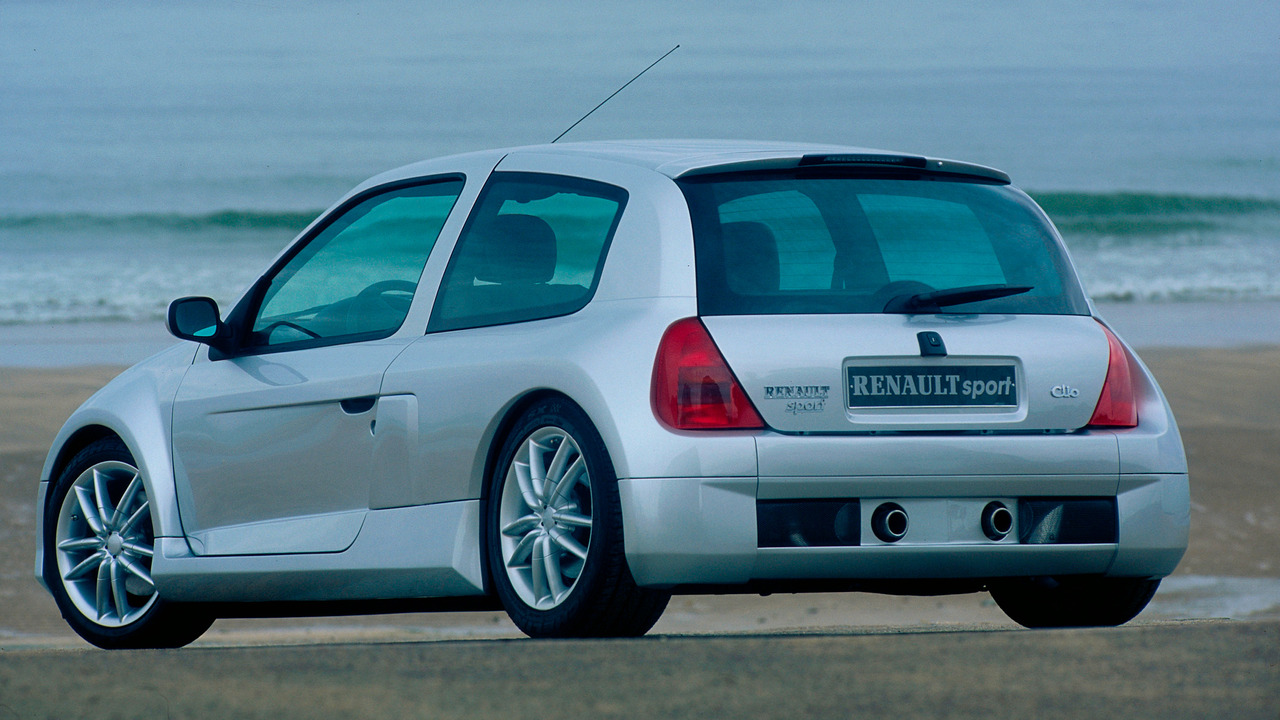
The early 2000s were a wild time to be alive — at least if you were a carmaker. Porsche debuted the first Cayenne, the Pagani brand was finding its feet, and of course, Renault stuffed a hatchback with a V6. Yet, some hot hatch contenders gave the Clio V6 a run for its money.
Take the Volkswagen Golf R32, for example. It was the first car in the VW group to feature a dual-clutch transmission and had a 3.2-liter VR6 engine, as opposed to the usual four-pot.
While its Haldex all-wheel-drive system was incredible for grip, it lacked the sheer lunacy of the rear-wheel-drive Clio V6.
The EP3 Honda Civic Type R, on the other hand, was all about efficiency. So, it stuck to the traditional front-engined, front-wheel-drive layout hot hatch recipe.
But again, like the R32, the Type R acts too much like a scalpel, whereas the Clio V6 is more like a fire-breathing sledgehammer.
The only hot hatch I can see that compares with the Clio V6 is the BMW M135i (F21 three-door). It, too, was rear-wheel-drive and had a six-cylinder engine, albeit the notorious N55.
Yet, I’d argue it’s more watered-down than the Renault. Let’s not beat around the bush; there is no hot hatch as wild as the Clio V6.
Why You’d Want One In Your Garage
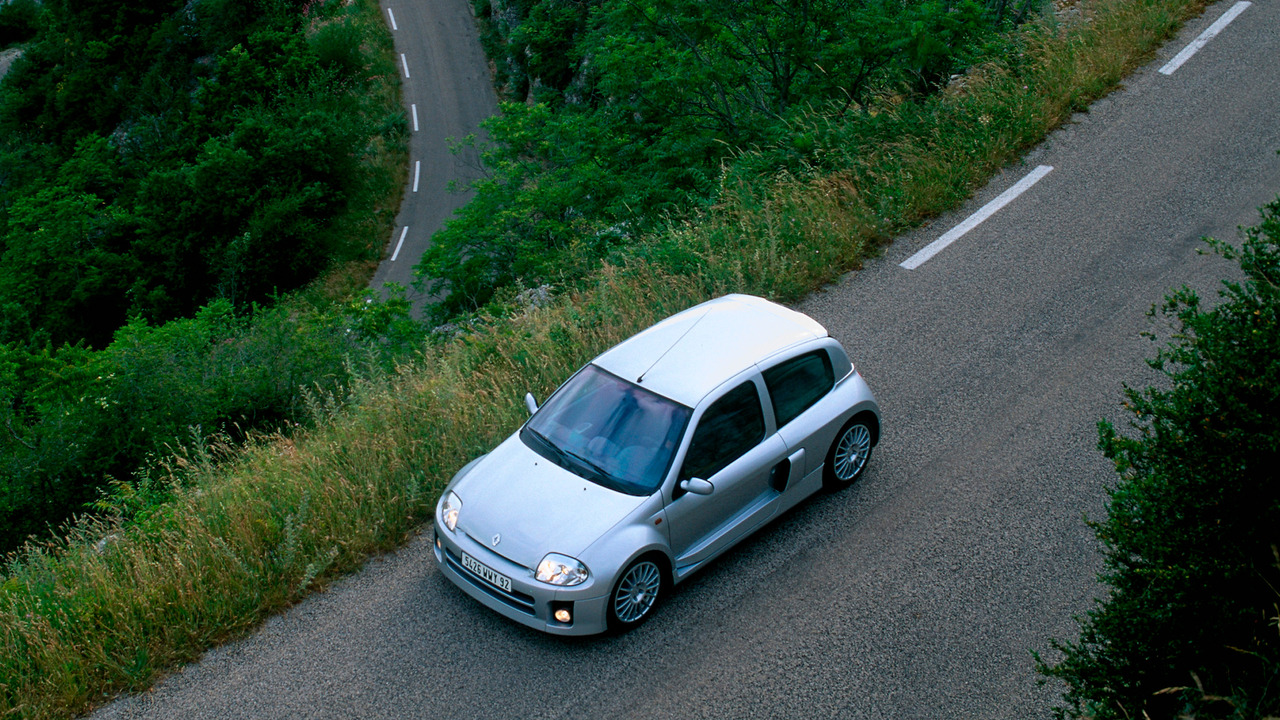
Uttering the words ‘dangerous driving experience’ and ‘French hatchback’ in the same sentence seems impossible. Yet that’s how people who got a chance behind the wheel of the Clio V6, like Andrew Frankel, described it.
Because the wheelbase of the rear-drive Clio is so short, and the engine sits over the rear axle, it makes this French hot hatch especially tricky to drive. As DriveTribe proved several years ago, a slide can turn into a spin far too quickly, but that’s part of the fun, I suppose.
The number of Phase 1 Clio V6 models left in existence is unclear. If the number of cars crashed by journalists back in the day is any indication, I have a feeling that about half of them have been punted off narrow back roads. Tragic — unless you’re in the market for one.
Because of its rarity and unique layout, the Clio V6 is already a sought-after classic. According to Classic.com data, Phase 1 Clio V6 values typically trade in the low-to-mid $40,000 range. However, with the 25-year rule now in play, values will most likely begin to creep up.