
Modern sports cars are often loaded with touchscreen tech, electronic nannies, and enough weight to make Colin Chapman roll in his grave. But a few automakers still understand the thrill of driving something light, fast, and razor-sharp.
This list celebrates the featherweights of the racetrack — cars that don’t need a thousand horsepower to feel like a missile. With spot-on suspension, great balance, and just enough grip to make your palms sweat, these machines are built for speed, simplicity, and the pure joy of driving.
From boutique brands to underrated gems, these are the lightest track cars that prove less really is more.
These Lightweights Punch Harder Than You Think

Having done countless track days over the years, I’ve embraced the whole “less is more” mantra, and the lightweight cars in this article are often considered the ultimate track tools by enthusiasts.
They’re ranked from lightest to heaviest, with all the specs, weight, power, and performance figures coming directly from the manufacturers’ websites. Whenever driving dynamics are mentioned, it’s either based on personal experience or from journalists writing for respected enthusiast sites, such as Road & Track and Evo.
Caterham Seven 170 — 970 lbs

Half this article could probably consist of various Caterham Seven versions (and the other half could be Lotus models), but we’ll just go with the British company’s lightest model, the Seven 170, and leave it at that.
Weighing just 970 lbs, this baby doesn’t need a massive V8 to get going — and you won’t find one either. In fact, the Caterham Seven 170 only has a turbocharged 660cc three-cylinder Suzuki engine that’s normally found in a kei car. Although it only generates 84 horsepower (hp), this super light sports car can scramble to 60 mph in just 6.9 seconds.
BAC Mono R — 1,213 lbs
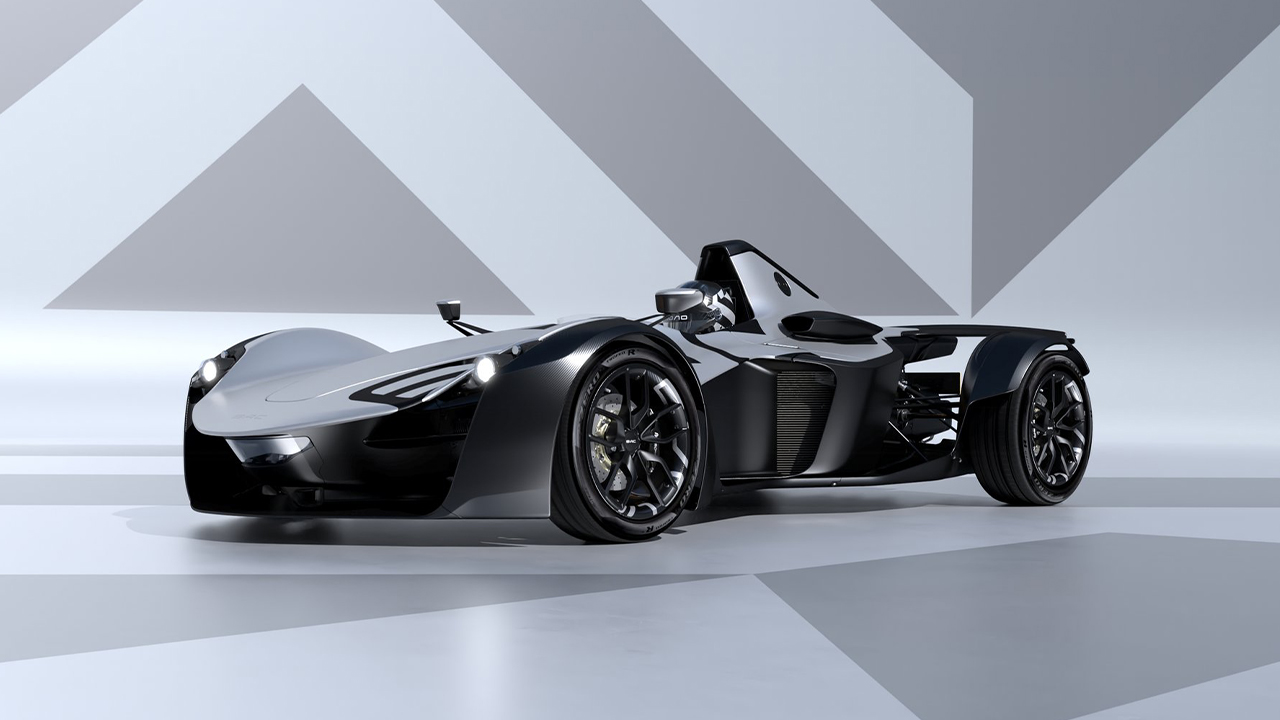
The latest version of the BAC Mono has been on a diet and lost some weight, as it now weighs in at 1,213 lbs, compared to 1,279 lbs previously. They managed to keep the weight that low thanks to panels made from a material called graphene. Still, seeing as it now has a larger and more powerful engine, that weight loss is even more impressive.
It’s powered by a 2.5-liter Mountune Racing engine that sends 338 hp to the wheels via a six-speed sequential transmission. Fun fact: that’s the highest specific power output ever for a naturally aspirated engine, equating to 136 hp per liter, and 609 hp per tonne. Evo Magazine says zero to 62 mph takes a tire-shredding 2.5 seconds, and the Pirelli Trofeo R rubber will keep it glued to the track.
Ariel Atom — 1,312 lbs
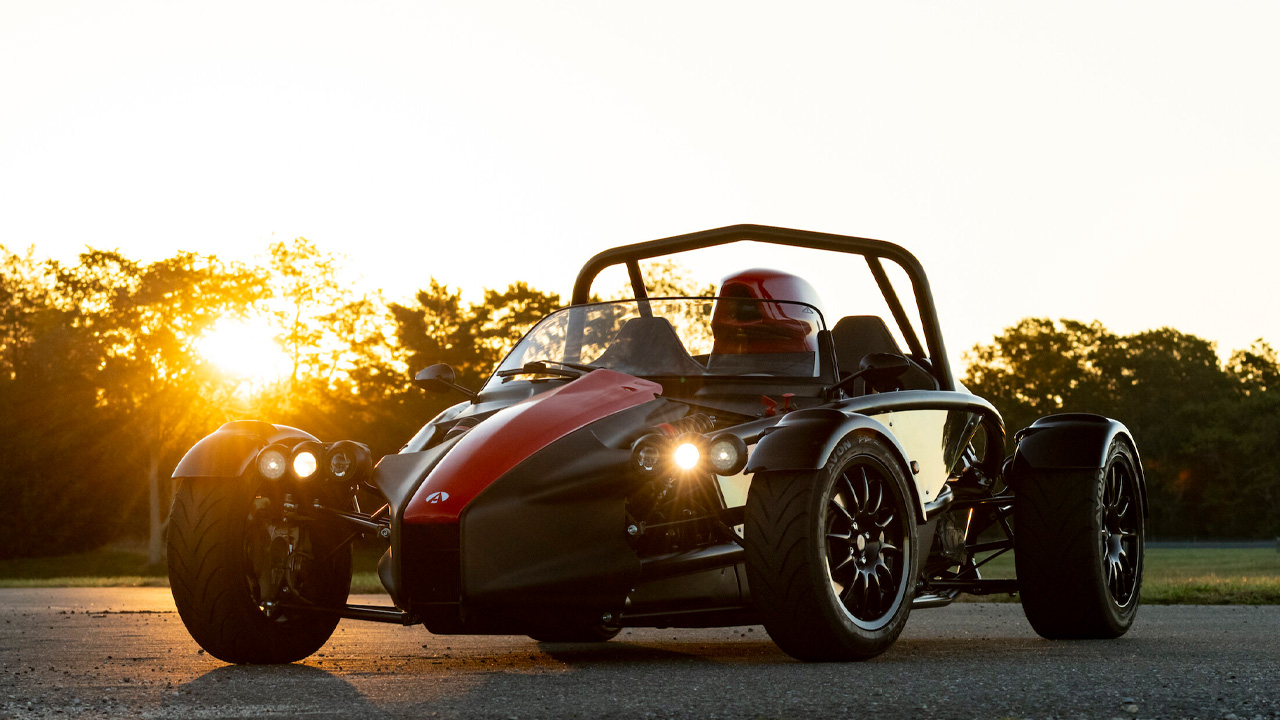
Top Gear fans may remember that time when the Ariel Atom rearranged Jeremy Clarkson’s face. Well, that was two decades ago, and while today’s Atom may look similar, it’s undergone several updates since then.
The Ariel Atom is currently in its fourth generation and is better than ever. For a car that’s seemingly made of scaffolding, it may sound strange that it’s now fairly civilized to drive. Don’t get us wrong, with a turbocharged Honda Civic Type R engine pushing out close to 320 hp, it’s still a beast, seeing as the Atom 4 only weighs a mere 1,300 lbs, but it’s less tail-happy than previous versions.
Vuhl 05RR — 1,455 lbs

Vuhl is a rather obscure name in the world of superlight track cars, but that doesn’t make the 05RR any less spectacular. It weighs in at just 1,455 lbs, and with a Ford-sourced 2.3-liter four-cylinder producing almost 400 hp and 370 lb-ft of torque, the 05RR explodes off the line, reaching 62 mph in just 2.7 seconds and continues until it hits its 170 mph top speed.
If, for some reason, you don’t want to ride a sports bike, I believe the Vuhl 05RR is a decent substitute!
Donkervoort F22 — 1,653 lbs

You’re forgiven if you’ve never heard of the Donkervoort F22. It’s a fairly obscure Dutch supercar, and while it’s very lightweight, it’s a heavy bar brawler compared to the bare-bones Ariel Atom.
Power is courtesy of an Audi-sourced five-cylinder turbo engine that churns out a whopping 493 hp, sending it to 62 mph in just 2.5 seconds. There’s also enough grip to pull 2.3g in the corners. If 1,653 lbs sounds like a lot of unnecessary weight, you’ll be happy to know they also made a lighter version with fully exposed carbon-fiber bodywork weighing a mere 1,609 lbs.
Radical Rapture — 1,687 lbs
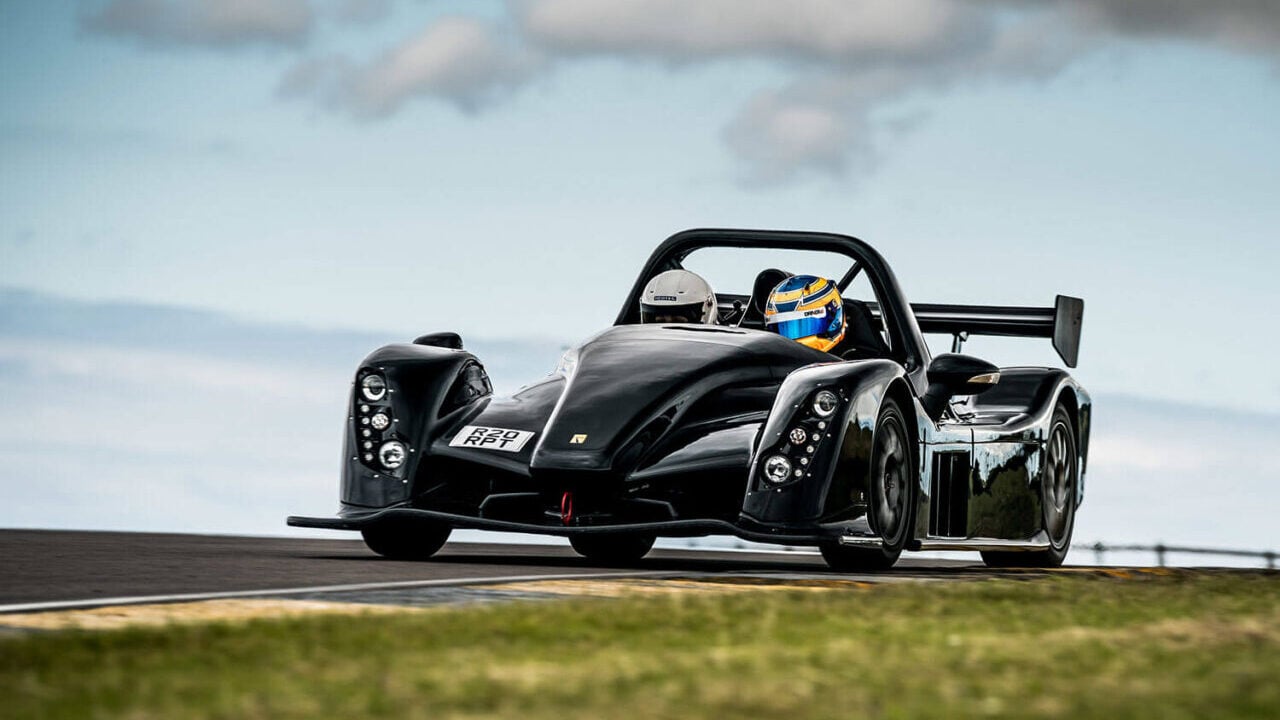
Radical is another British lightweight sports car company, but it’s more extreme than most, and its cars are highly track-focused.
The Radical Rapture was introduced in 2019 as the brand’s road car, and it’s even got some luxuries, such as a 12V socket, a cabin light, and a heater. Hey, I never said it was a practical road car! It’s still closer to a race car than something you’ll want to drive on pothole-strewn roads, and with a 2.3-liter Ford unit producing 360 wild horses to propel just 1,687 lbs, you’d better strap in tight and hold on for dear life.
KTM X-Bow — 1,742 lbs
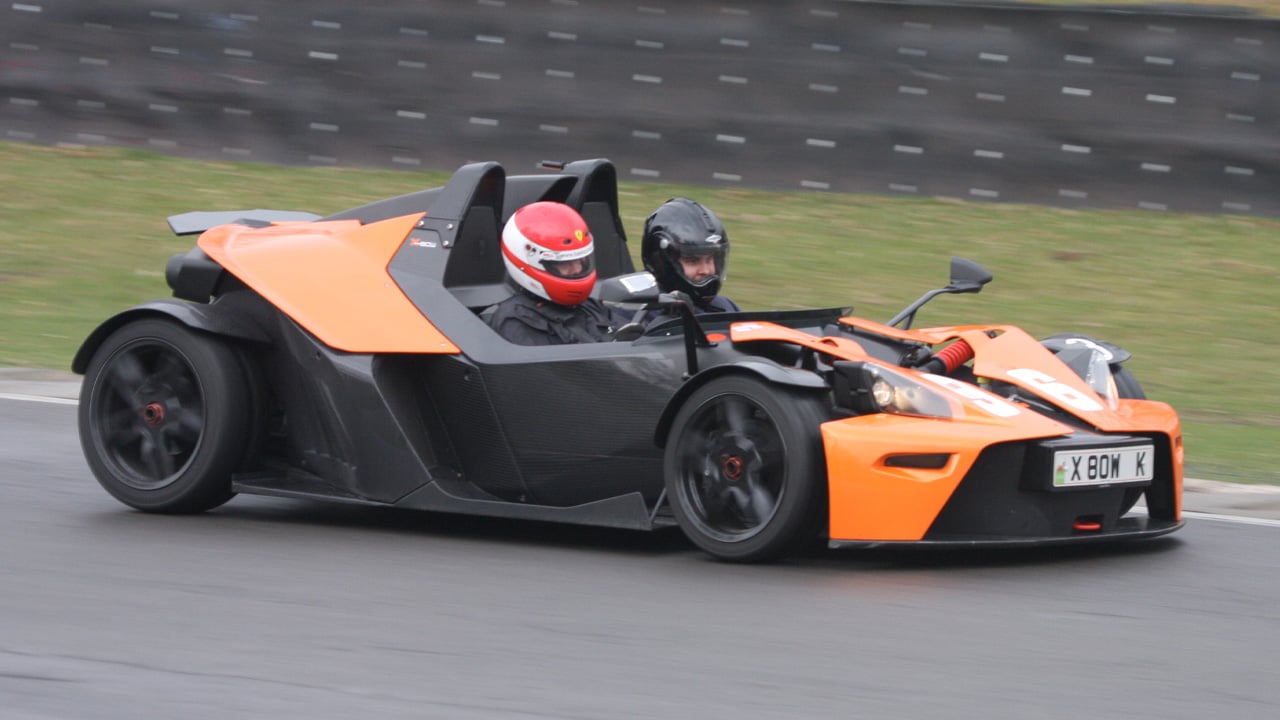
KTM has expanded its X-Bow lineup, but the original from 2008 is still the best if you ask us. In fact, according to New Atlas, it proved so popular that KTM had to increase production and build a new plant.
It’s a road-legal track tool with no roof, or any other amenities for that matter. After parting with around $100,000, buyers get a carbon-fiber monocoque and a turbocharged 2.0-liter Audi engine with 237 hp.
Dallara Stradale — 1,885 lbs
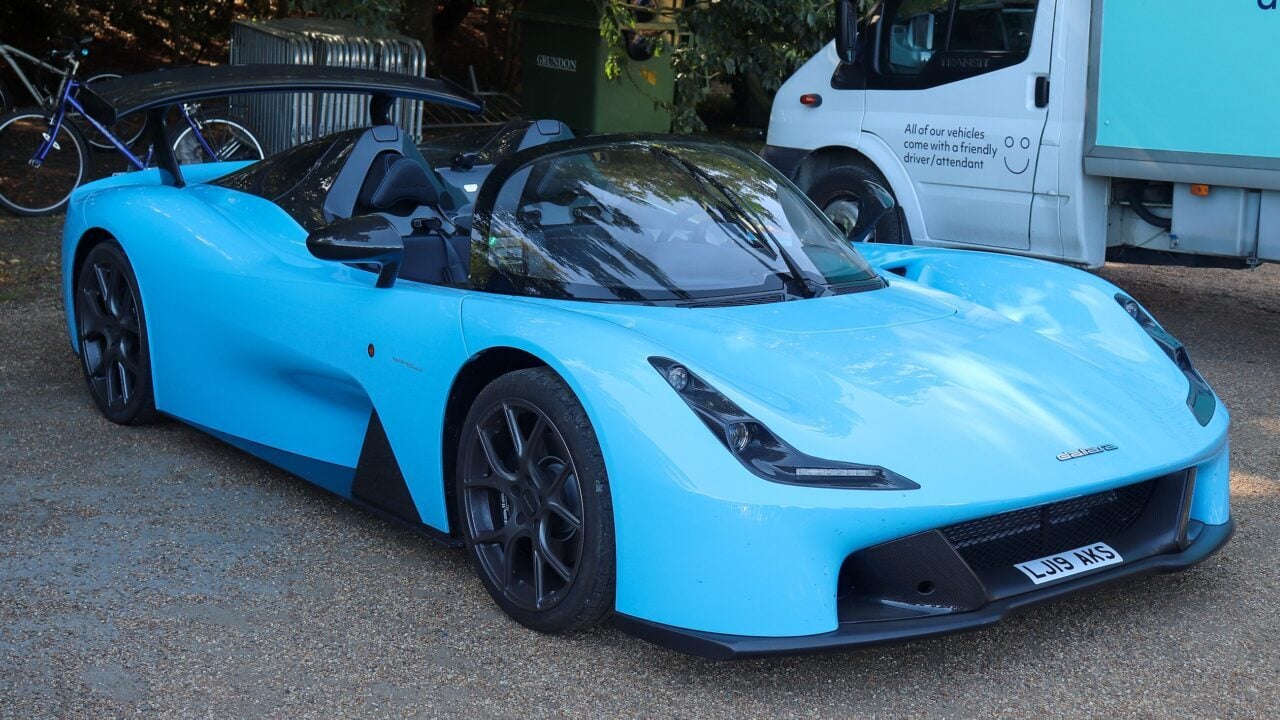
Dallara is an Italian company that builds actual race cars, including Formula 1 and IndyCar. They’ve also been involved with the aforementioned KTM X-Bow, not to mention the Bugatti Veyron and Chiron, so they clearly know how to build fast-track toys.
The Dallara Stradale is the company’s own road-legal track car, and it’s built to obliterate everything else you may encounter on a track day. Its 2.3-liter turbocharged Ford EcoBoost engine is also found in the Focus RS and Mustang, but here it pushes out 400 hp. Pretty good for a car that weighs less than 2,000 lbs.
Lucra LC470 — 1,971 lbs
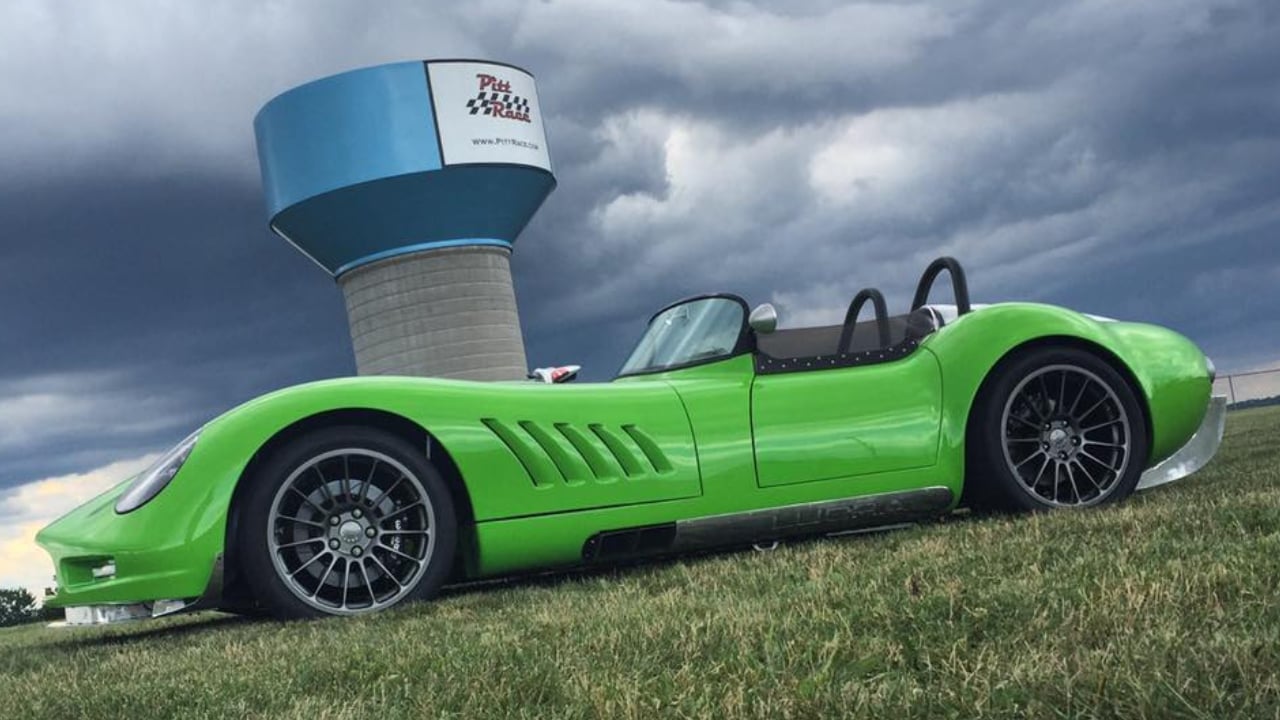
The Lucra LC470 was dreamed up by American entrepreneur Luke Richards. This sports car combines Euro-inspired retro styling with blue-collar American performance in the form of a V8 Chevy or Mercedes engine.
The Lucra LC470 is hand-built, and no matter which engine buyers opt for, the car will pack a severe punch. There’s a 6.3-liter Mercedes engine, a Chevy LS3 with 430 hp, which should be enough for most, or a 7.0-liter LS7 V8 with 630 wild stallions. Luckily, its driving dynamics match the power, making it properly fast around a racetrack.
Lotus 3-Eleven 430 — 2,028 lb
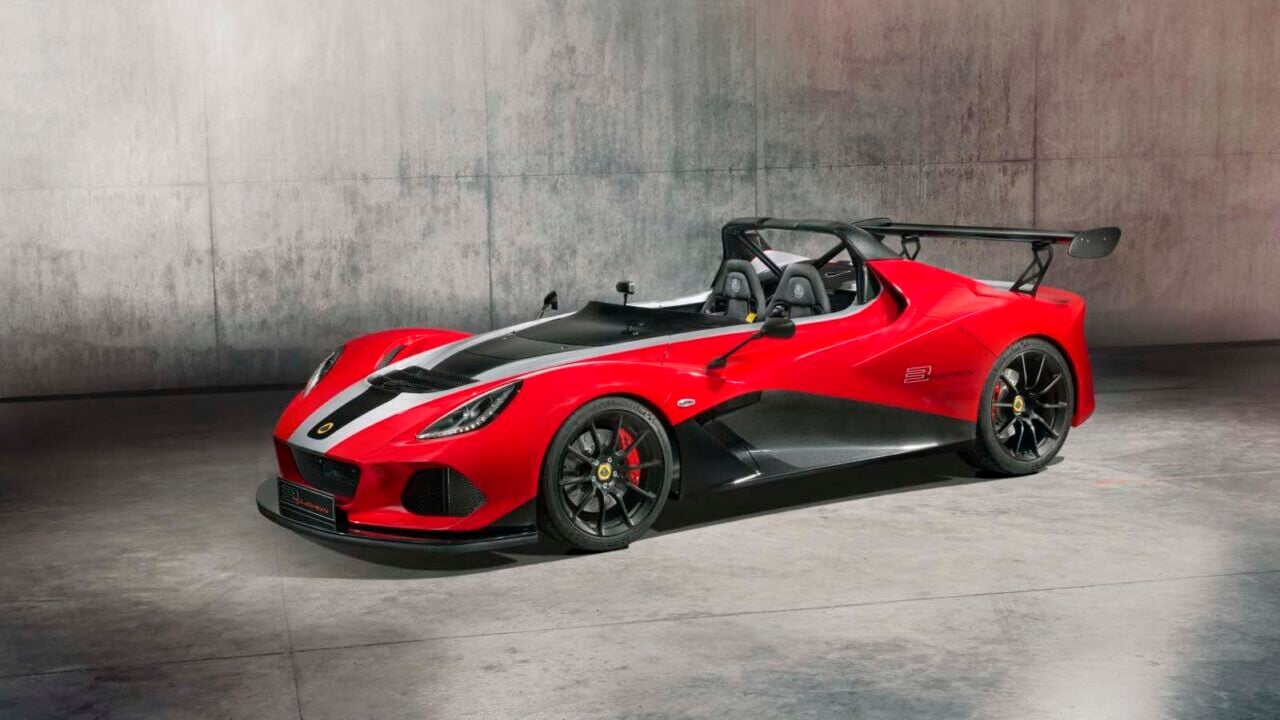
Lotus first launched the 3-Eleven in 2016, and it was available as a road or race version. In 2018, the road version received a facelift and mechanical updates, bumping its supercharged Toyota-sourced engine from 410 to 430 hp.
The power is sent to the rear wheels via a six-speed manual transmission. It scrambles to 62 mph in roughly three seconds, and will keep going until the speedometer needle points at 180 mph.
Ultima RS — 2,050 lbs

British Ultima Sports Ltd. makes some of the world’s fastest kit cars. In fact, the Ultima GTR that was introduced in 1999 was so fast that it broke world speed records. Since then, Ultima has gone from strength to strength, and the Ultima RS is an absolute monster.
According to the company’s website, you can buy a self-assembly package of parts for “around the same ballpark price as a mundane new BMW M3.” Obviously, if you go wild when spec’ing it, the price will increase accordingly. The top-spec version of this mid-engined super kit car has a Chevy V8 that sends 1,200 horsepower to the rear wheels. That means a 0 to 60 mph acceleration time of 2.3 seconds and a 250 mph top speed.
Alfa Romeo 4C — 2,070 lbs
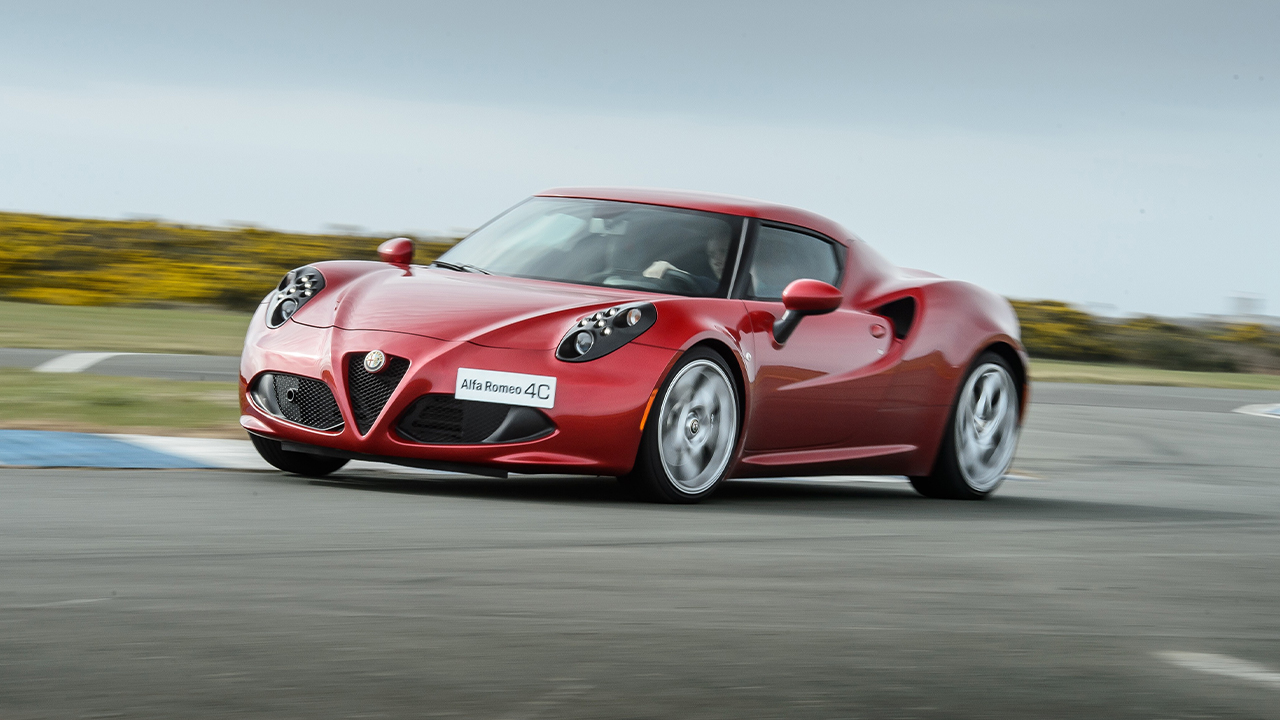
While more practical than many others on this list, the Alfa Romeo 4C is definitely not a great option if you’re looking for a daily driver. However, it’s perfect for Italophiles who can’t afford a Ferrari or Lambo, and don’t want to mess with unreliable older Italian sports cars. It’s also the most obtainable option if you want a mid-engined Italian performance car.
Behind the driver sits a 237 hp 1.75-liter turbo engine, and it only has to move slightly more than 2,000 lbs. Alfa Romeo 4Cs sold in the States are a bit heavier due to added safety equipment. Road & Track put different trims on the scale, and the lightest one weighed in at 2,437 lbs.
Morgan Plus Four — 2,233 lbs
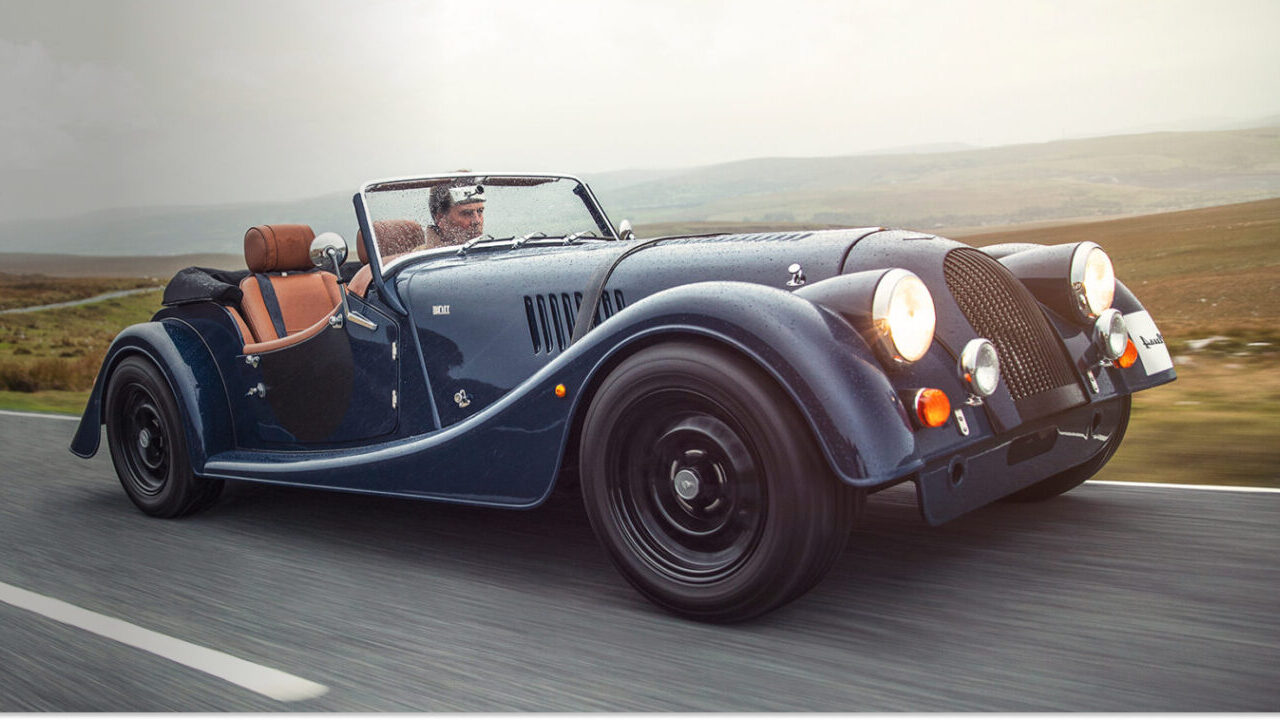
While it’s probably too late to get a Troy Indy Special, there are other new cars that look old, and no carmakers play that game better than Morgan. At first glance, the brand is still stuck in the 1940s — to this day, they use wood in the construction — but underneath, they’re as modern as anything else.
The Morgan Plus Four is powered by a 2.0-liter BMW engine that sends power to the rear wheels via a 6-speed manual or an 8-speed automatic. Opting for the automatic does save a few pounds, but the manual makes it more engaging on the track.
Lotus Exige Sport 410 — 2,367 lbs
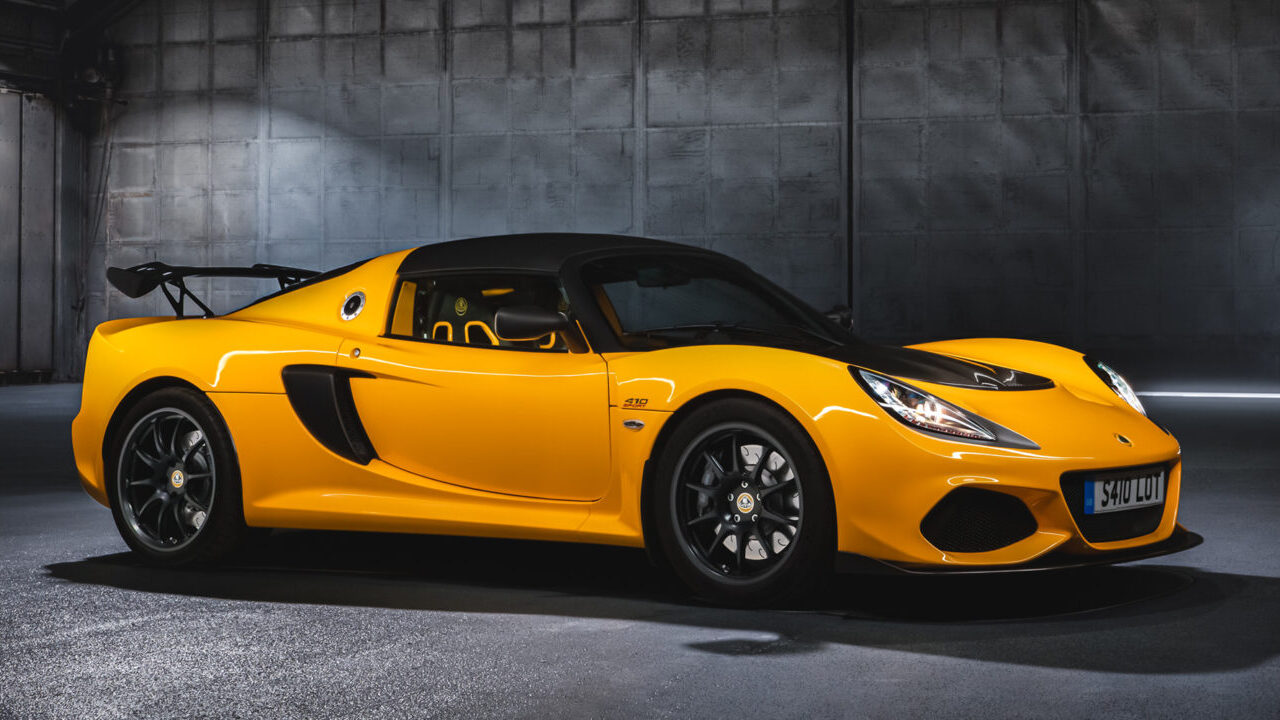
Lotus developed the road-going Exige Sport 410 on the track-focused Exige Cup 430, so it’s obvious that it’s a proper driver’s car. Behind the driver, there’s a supercharged Toyota 3.5-liter V6 unit from a Camry, but as the name suggests, it now punches out 410 racehorses.
With such a large engine, it’s impressive that Lotus has managed to keep the weight under 2,400 lbs. It sprints to 60 mph in 3.3 seconds and has a 180 mph top speed, but as with all Lotuses (Loti?), it really shines in the corners.
Mazda MX-5 Miata Club — 2,454 lbs
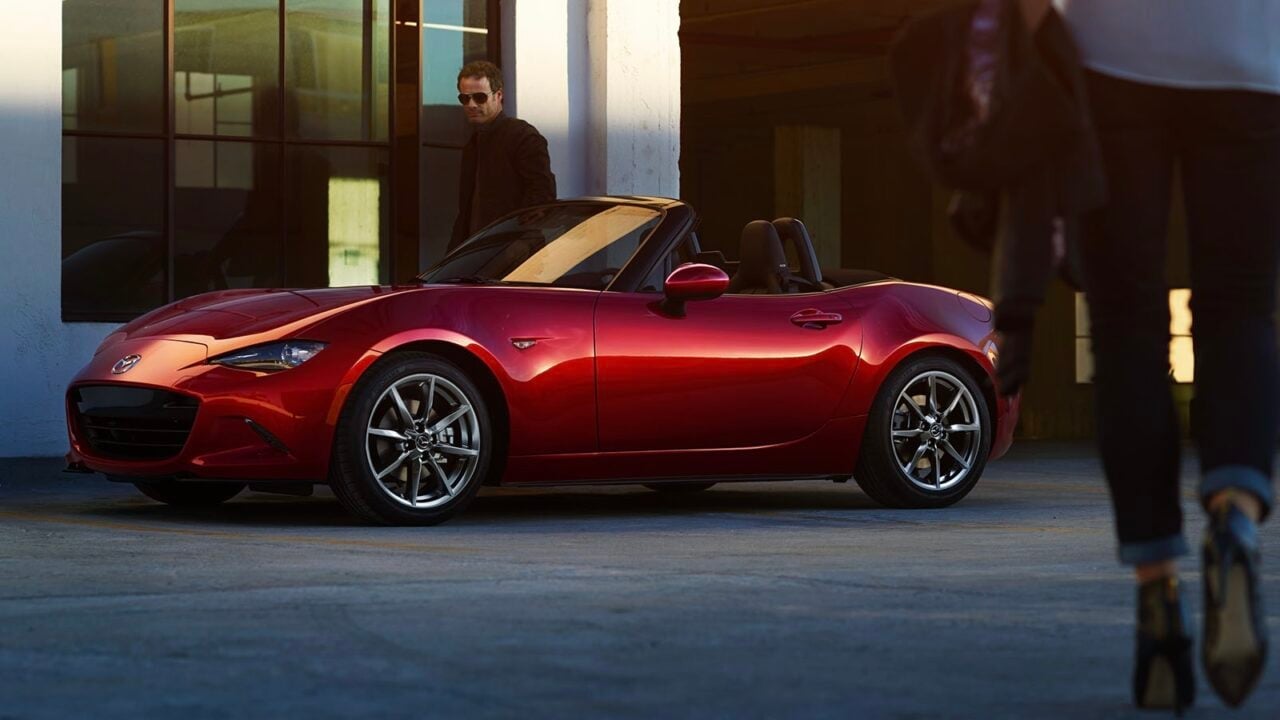
Enthusiasts say Miata is always the answer, and once again, that turns out to be the case — at least when it’s the Club spec. Under the hood, the MX-5 Miata Club still has the same 2.0-liter with 181 hp, but thanks to other upgrades, it’s sportier than the rest of the lineup.
The suspension is tuned for sportier driving and upgraded with Bilstein dampers to keep it stable through the corners. Couple that with the Miata’s low weight, and you have yourself a very affordable track tool. As an added bonus, it’s actually a great daily driver as well, unlike most of the cars in this article.
It’s Time to Go Race!

There’s certainly no shortage of fun, lightweight cars that feel at home on the racetrack. In fact, this list barely scratches the surface, as there are plenty of others that didn’t make it.
Whether your pockets are flush with cash or you’re on a strict budget, there’s a track tool out there with your name on it.