Speeding is never the solution. Excessive speed can have serious consequences, putting the driver, any passengers and others on the road at risk.
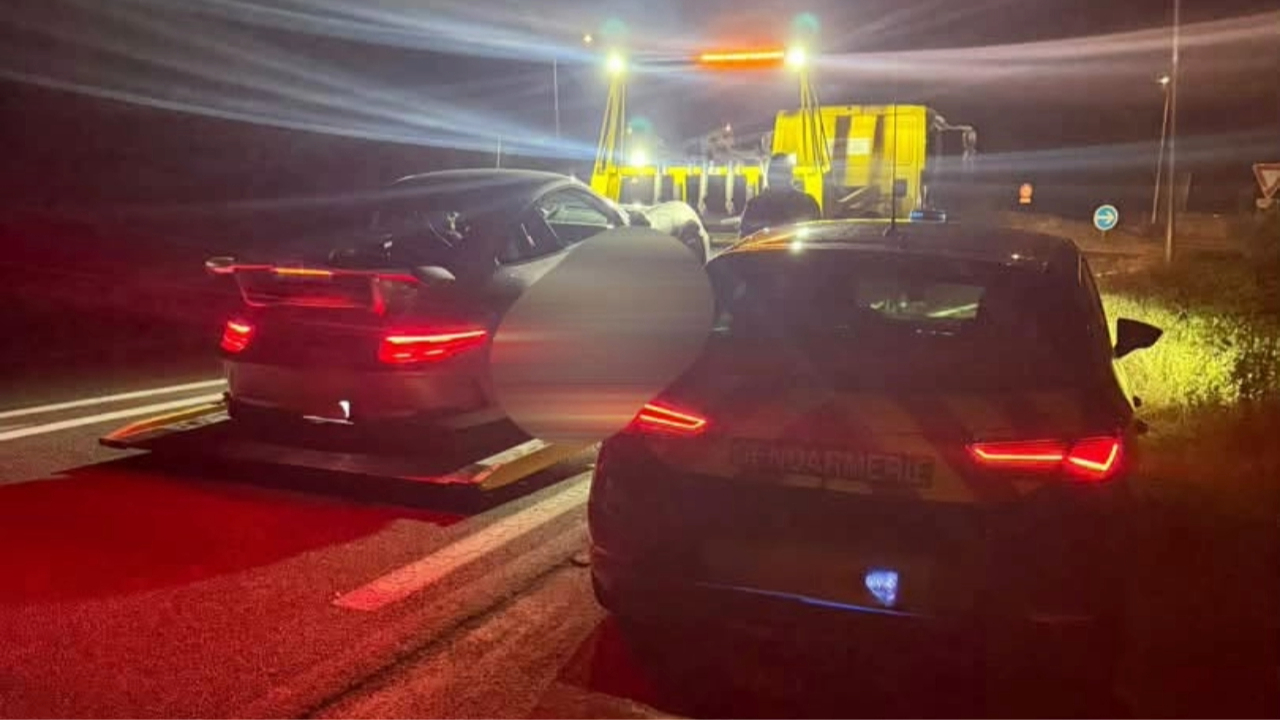
Overnight on the A40 highway in Haute-Savoie, southeastern France, one Porsche 911 GT3 driver took things to the extreme, in what authorities only described as the highest speed ever recorded by French police on a highway.
French highways have a speed limit of 81 mph (130 km/h). But this Porsche driver? He was caught traveling at a staggering 194 mph (312 km/h), 113 mph (182 km/h) above the legal limit.
Crazy Speed
As the Gendarmerie de la Haute-Savoie, the departmental branch of France’s National Gendarmerie responsible for public safety and law enforcement, pointed out, that speed means traveling nearly 87 meters every second, with other drivers still sharing the road in the middle of the night.
Even after France’s 5% radar tolerance was applied, the speed was still around 186 mph (300 km/h), meaning the driver was traveling roughly 105 mph above the 81 mph limit. The tolerance is applied when calculating the speed used for enforcement, rather than making the original 194 mph reading disappear.
Police stopped the foreign driver, reported by Europe1 to be a 48-year-old Swiss driver, and confiscated their driver’s license. The Porsche was also seized, while the driver paid a €1,500 security deposit.
The driver, whose name was not disclosed, faces a fine of up to €3,700, a driving ban in France and potentially three months in prison.
The previous French record was 178 mph (287 km/h), recorded on the same motorway in May 2026 by an Audi RS3.
French authorities stressed the dangers of such extreme speeds, particularly when other motorists are using the same road.
Facebook Reacts
The incident sparked strong reactions online, with commenters discussing the dangers of extreme speeding and how penalties should be applied.
One commenter argued that France should consider a system similar to Switzerland, where speeding fines can be linked to income:
“If we really wanted to limit this type of speeding, we should do like the Swiss, the fine should represent 10% of the annual remuneration.”
Another commenter focused on the dangers of driving at 312 km/h (194 mph) at night, pointing out that drivers can only react to hazards within the distance illuminated by their headlights.
“At 312 km/h, we travel nearly 87 meters per second. In other words, the time it takes to see an obstacle and react, we’ve already passed it.”
The commenter also highlighted potential hazards including animals, broken-down vehicles, debris and pedestrians, arguing that low traffic does not eliminate the risks associated with extreme speeds.
“This behavior is neither responsible nor intelligent. That’s exactly why regulations exist. Thank you to the law enforcement for their work…”