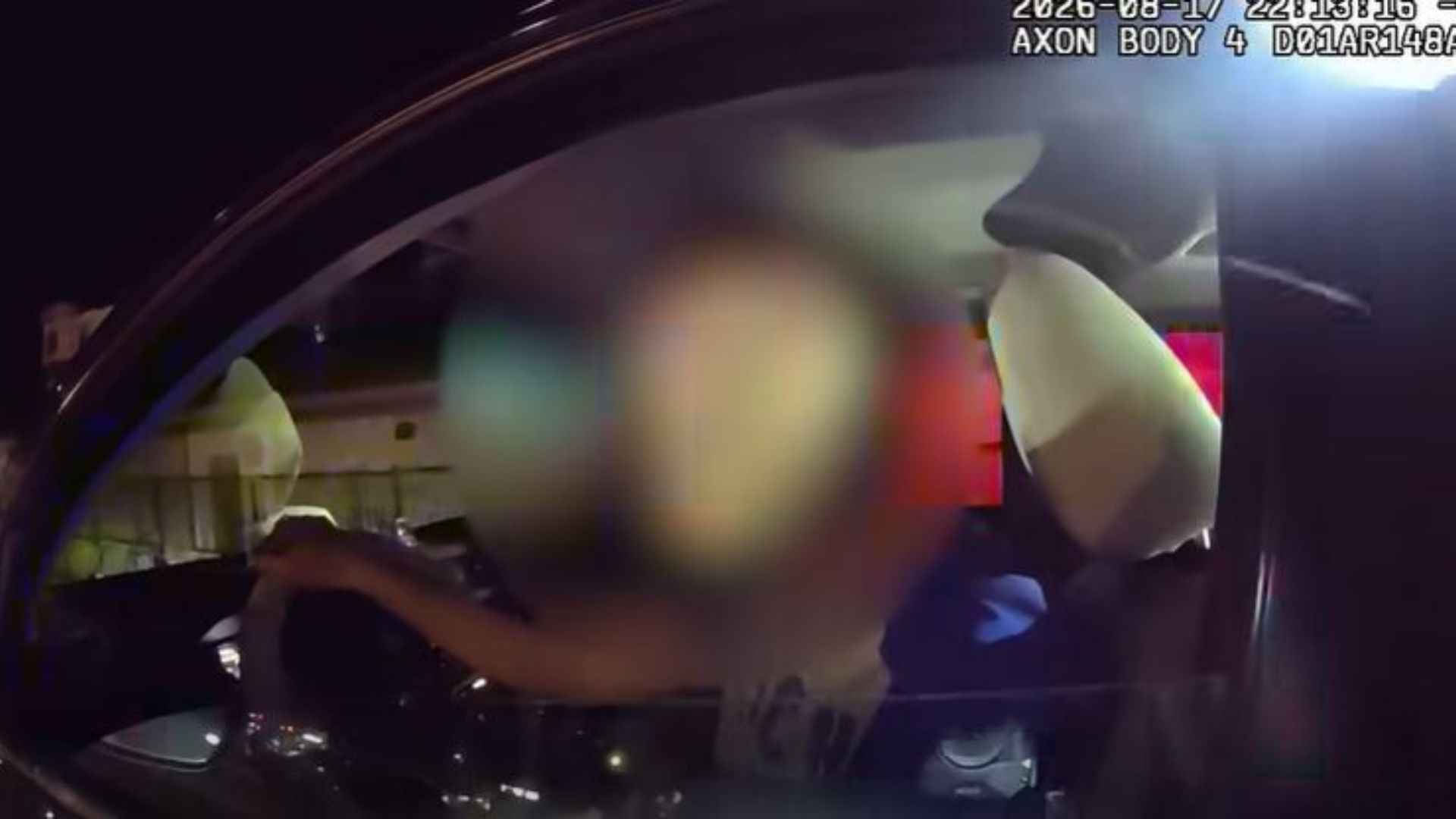
A burned-out taillight led to an unusual traffic stop in Parker after an officer discovered the driver spoke Mandarin. The language barrier could have made a simple conversation much harder, but the officer had another option available.
She activated the translation feature on her body-worn camera, allowing her instructions to be translated into Mandarin as the stop continued.
The driver was then able to hear why she had been pulled over and respond to the officer’s requests for her driver’s license and insurance. The entire exchange was recorded on the body camera and later shared by the police department.
The brief interaction offers a glimpse at how technology is being used to solve a problem officers have faced for years: communicating with drivers who speak a different language.
The Body Camera Became the Translator
The traffic stop video, uploaded by Parker Police Department, begins with Officer Sharma explaining that the vehicle’s right taillight is not working. But when she asks the driver what language he speaks, the conversation quickly comes to a halt when the driver answers, “Mandarin.” For readers unfamiliar with the language, Mandarin is the most widely spoken variety of Chinese and is used by roughly 80% of China’s population.
Rather than waiting for a human translator, Sharma turns to her body-worn camera. She uses the device’s translation function, selects Mandarin, and repeats the reason for the stop.
The camera then delivers the message in Mandarin, telling the driver that he was stopped because his right taillight was out. The officer follows up by asking for the driver’s license and insurance, with the body camera translating those instructions as well.
According to Pew Research Center, about 5.04 million Chinese Americans lived in the U.S. in 2023, with roughly 58% born outside the country; since only 64% of Chinese Americans ages 5 and older speak English proficiently, it’s entirely possible for officers to encounter drivers who are not proficient in English. The entire exchange shows how the technology can remove a language barrier during a routine traffic stop without requiring a third party to step in.
The Body Camera Can Translate More Than 50 Languages
The technology used during the Parker traffic stop is part of Axon Body 4’s Real-Time Translation feature. Axon says the system can support communication in more than 50 languages, allowing officers to translate speech directly through the body camera rather than waiting for a human interpreter. The feature is part of Axon’s AI-powered Axon Assistant technology, which uses artificial intelligence to process and translate spoken language in real time.
The system works through a push-to-talk function. An officer can select a language manually or use an automatic language-detection option, then speak into the camera. The translated response is played aloud through the device, allowing the conversation to continue in both directions.
Axon specifically lists traffic stops, minor incident reports and other everyday encounters among the situations where its real-time translation feature is intended to be used. The company also says the translation automatically starts a body-camera recording, creating a record of the exchange that can later be reviewed by a human interpreter when a certified translation is required.
The Parker video offers a simple example of how that works in practice. Rather than ending the conversation over a burned-out taillight while waiting for outside help, the officer was able to explain the reason for the stop and request the driver’s documents within moments.
The Translation Feature Quickly Won Over Viewers
The video quickly drew praise from viewers who saw the translation feature as a practical way to make routine police encounters less stressful for everyone involved. One commenter compared the device to Star Trek’s universal translator, which is probably the easiest way to describe what makes the footage feel so futuristic.
The discussion also turned to how the system might perform with other languages and dialects. Some commenters questioned whether it would work equally well across languages with significant regional differences, while others focused on how useful it could be during everyday encounters.
For Parker police, however, the purpose is much simpler. A stop that could have required waiting for a translator was handled immediately, allowing the officer to explain the reason for the stop and request the driver’s documents without the language barrier bringing the conversation to a halt.
The future of police technology may not always look dramatic. Sometimes it looks like an officer explaining a burned-out taillight in Mandarin.