
We’re journalists, so we get it. Nothing sells clicks quite like a good old-fashioned American automotive disaster story. Whether it’s exploding gas tanks, spontaneous combustion, or transmissions that decide to take unscheduled vacations, the car world loves a good cautionary tale. However, sometimes this leads to some sensational slander and, as a result, the internet’s collective memory gets a little… creative with the facts, we’ll say.
You know how it goes: One guy’s cousin’s neighbor’s Pontiac does something weird, and suddenly every forum warrior is an expert on why Detroit can’t build a decent car. It’s time we took a look back at some of the American cars that fell victim to overblown dramatics to give them a bit of automotive redemption.
How We Picked These Automotive Underdogs
To make this list, a car had to meet three criteria. First, it needed a genuinely terrible reputation that stuck around like that one friend who never pays for gas. We’re talking about cars that people still won’t buy at auction because they’re convinced they’ll spontaneously combust or transform into a pile of rust overnight.
Second, the actual data had to tell a completely different story from the horror tales floating around. We dug into recall numbers, insurance claims, and actual incident reports – you know, boring stuff like facts and statistics.
Finally, the bad reputation had to be demonstrably overblown, whether due to media sensationalism, internet echo chambers, or just plain old-fashioned automotive mythology that refuses to die.
So buckle up and get ready to revisit some American rides that you once feared for all the wrong reasons.
Pontiac Fiero (1984-1988): The “Flaming” Sports Car That Really Wasn’t

The Fiero was a pretty sleek-looking mid-engine sports car that allegedly had a habit of turning into a rolling barbecue pit. If you believed the stories, every Fiero was basically a Molotov cocktail on wheels, just waiting for the right moment to recreate the Chicago Fire. The internet is absolutely lousy with tales of Fieros spontaneously combusting faster than your money at the mechanic.
But that wasn’t the real story. GM said it was aware of about 260 engine-compartment fires tied to the issue, and it recalled more than 136,000 1984-model Fieros. That’s a fire rate of about 0.07% – statistically, you’re more likely to get struck by lightning while holding a winning lottery ticket (probably). The fires were primarily limited to 1984 models with a specific connecting rod issue that was quickly identified and fixed.
By comparison, the contemporary Porsche 911 had a higher fire rate, but somehow nobody was calling Stuttgart a fire hazard. The Fiero’s reputation was severely damaged. The Fiero’s reputation was permanently damaged, even though the problem was concentrated in early cars, and GM issued a recall.
Ford Pinto (1971-1980): The Exploding Economy Car That Mostly Didn’t

The Ford Pinto has become the poster child for corporate negligence and exploding gas tanks, immortalized in business school case studies and late-night TV jokes. According to popular lore, Pintos were basically automotive IEDs, ready to detonate at the slightest rear-end bump. Hollywood even got in on the action, using Pintos as cinematic shorthand for “car that will definitely explode in this chase scene.”
Reality check time: While the Pinto did have a design flaw that made fuel tank ruptures possible in severe rear-end collisions, the actual numbers tell a different story. The NHTSA’s investigation noted 38 rear impacts resulting in fires, associated with 27 deaths and 24 injuries (1970 to mid-1977), and Ford later recalled Pinto/Bobcat models over the rear-impact fuel-tank defect, a tragic statistic, but one that is statistically comparable to other small cars of the era.
Chevrolet Corvair (1960-1969): Unsafe at Any Reputation

Ralph Nader’s 1965 book “Unsafe at Any Speed” turned the Chevrolet Corvair into automotive public enemy number one, painting it as a death trap that handled like a shopping cart full of bowling balls. The rear-engine layout was supposedly so dangerous that driving one was tantamount to playing Russian roulette with physics. For decades, mentioning the Corvair in polite company was like bringing up your ex at a wedding.
The truth? A 1972 NHTSA evaluation concluded the 1960–63 Corvair’s handling and stability did not result in an abnormal potential for loss of control or rollover and that the limited accident data suggested rollover rates comparable to other light domestic cars. that the Corvair’s handling characteristics were actually comparable to other cars of its era, including the beloved Volkswagen Beetle (which had the same rear-engine, swing-axle setup that Nader criticized).
The 1965-1969 models, with their improved suspension design, were actually quite good handlers. Professional drivers praised the Corvair’s balance and responsiveness, and many examples competed successfully in racing. The Corvair paid the price for being different in an era when different equaled suspicious.
Cadillac Cimarron (1982-1988): The Luxury Car That Wasn’t Luxurious Enough

The Cadillac Cimarron gets roasted harder than a marshmallow at summer camp, accused of being nothing more than a Chevrolet Cavalier with leather seats and delusions of grandeur. Car enthusiasts love to point and laugh at it as the perfect example of GM’s badge-engineering gone wrong, calling it everything from “fake luxury” to “automotive fraud.” It’s become the punchline that writes itself whenever someone wants to bash GM’s 1980s decision-making.
But hold up! While the Cimarron wasn’t exactly setting luxury benchmarks, it wasn’t the complete disaster everyone makes it out to be. It actually sold reasonably well for what it was: a compact luxury car in an era when most luxury cars were still boat-sized gas guzzlers. The later models (especially 1985 and beyond) had genuine improvements over the base Cavalier, including better materials, different suspension tuning, and more powerful engines.
Sure, it wasn’t a BMW 3 Series, but it was priced below many European luxury alternatives. The Cimarron’s biggest sin wasn’t being a bad car; it was wearing a Cadillac badge when people expected something completely different.
AMC Pacer (1975-1980): The Wide-Body Wonder That Wasn’t That Wide

The AMC Pacer gets mocked as the “flying fishbowl” – an oddly proportioned, gas-guzzling mistake that supposedly handled like a refrigerator on roller skates. Internet commenters love to bash its unusual styling and claim it was some kind of automotive fever dream that should have never left the drawing board. It’s become shorthand for “weird 1970s design gone wrong,” right up there with shag carpeting and popcorn ceilings.
Here’s the thing: The Pacer was actually ahead of its time in many ways. Its wide stance and low center of gravity made it surprisingly stable and safe – it was one of the first cars designed specifically around occupant protection. The unusual proportions that everyone mocks? They were the result of serious aerodynamic and safety engineering. Motor Trend did not name the Pacer Car of the Year; the 1975 Motor Trend Car of the Year was the Chevrolet Monza 2+2, praising its innovative design and excellent visibility.
The Pacer’s real problem was being too weird for its own good in an era when automotive conservatism ruled the day. It was like that friend who started listening to new wave instead of disco right as 1980 hit. You listen back now and wonder why you ever thought that was a bad thing.
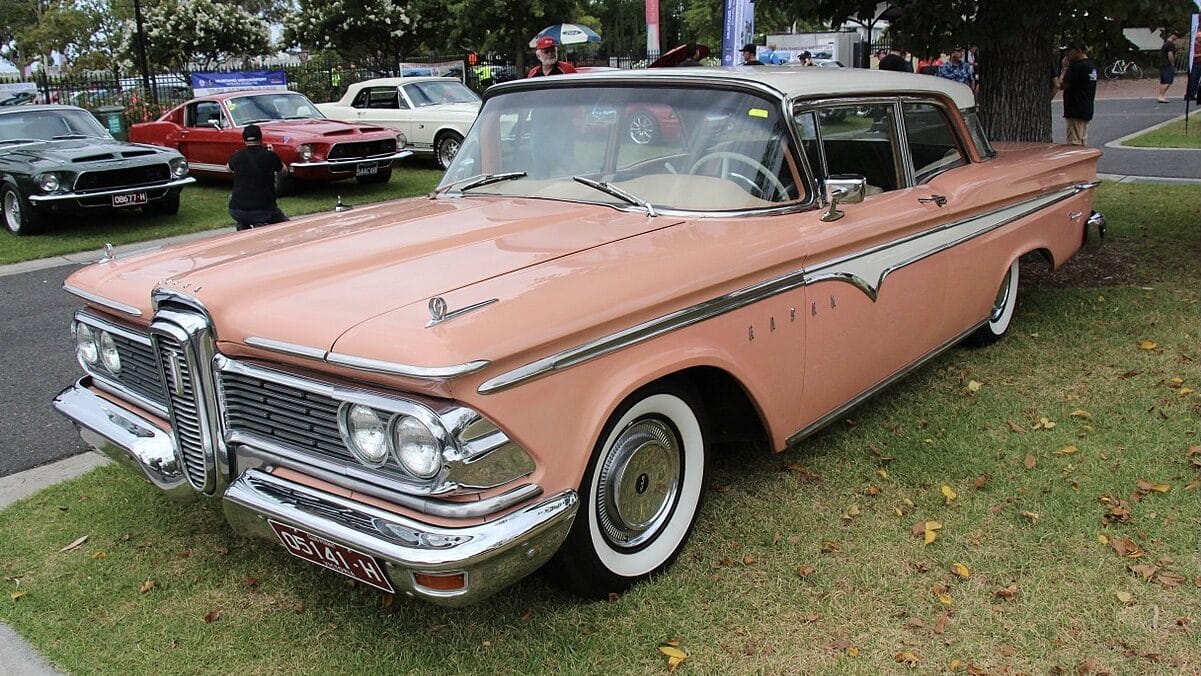
Ford Edsel (1958-1960): The Marketing Disaster That Was Actually Pretty Decent

The Ford Edsel has become synonymous with spectacular business failure, used in MBA programs as the textbook example of how not to launch a product. Everyone “knows” the Edsel was a terrible car that nobody wanted, with styling so bad it made people physically ill. It’s been called everything from “an Oldsmobile sucking a lemon” to “automotive birth defect,” and its name has become corporate shorthand for expensive mistakes.
The reality is that the Edsel was actually a pretty competent car that got caught in the perfect storm of bad timing and worse marketing. The car itself was well-engineered, sharing components with successful Ford and Mercury models. Road tests of the time praised its performance, comfort, and build quality. The infamous “horse collar” grille? It was actually positioned with distinctive styling meant to stand out showing that people wanted more distinctive styling.
The Edsel’s failure had more to do with economic recession, dealer problems, and overly aggressive sales projections than any inherent flaws in the car itself. It became a punchline, but it really deserved better.
Chevrolet Vega (1971-1977): The Rust Bucket That Wasn’t Always Rusty

The Chevrolet Vega gets absolutely roasted for being a rust-prone, engine-destroying disaster that supposedly fell apart faster than a house of cards in a hurricane. Car forums are full of horror stories about Vegas that rusted through before the first payment was due, or engines that decided to seize up just for the fun of it. It’s become the go-to punchline whenever someone wants to bash 1970s American quality control.
While early Vegas did have some legitimate issues with rust and engine durability (thanks, rushed development schedule!), GM made ongoing changes over the Vega’s run, but early engine and corrosion issues were serious enough to permanently damage the car’s reputation. Later Vegas were actually pretty decent little cars with improved rust protection and more reliable engines. The car won Motor Trend’s Car of the Year in 1971 and was praised for its European-influenced styling and handling.
Many Vegas went on to live long, productive lives, but nobody writes internet posts about the Vegas that ran for 200,000 miles. The bad reputation stuck like rust on a Wisconsin winter beater, long after the actual problems were solved. Ugh, why even bother?
The Verdict: Don’t Always Believe the Hype

Here’s the thing about automotive reputations: they’re stickier than summer asphalt and about as hard to change as your uncle’s political opinions at Thanksgiving dinner. Once a car is labeled as a “disaster,” its reputation tends to follow it around like a bad smell, regardless of the actual facts. These seven American cars got caught in the crossfire of sensationalized reporting, internet echo chambers, and good old-fashioned automotive prejudice.
The moral of the story? Maybe don’t believe everything you read on internet forums, and definitely don’t base your car-buying decisions on decades-old horror stories that may or may not be true. Sometimes a car’s worst enemy isn’t rust, fire, or mechanical failure – it’s its own reputation. These Detroit “disasters” prove that in the automotive world, perception isn’t always reality, and sometimes the best cars are the ones everyone tells you to avoid.