
The automotive world has given us some incredible limited-production supercars over the years, but there’s something uniquely captivating about a car that exists in a quantity of exactly one. These rare vehicles become singular expressions of engineering ambition, design freedom, and sometimes pure automotive whimsy.
While most of us will never sit in the driver’s seat of these machines, they represent the ultimate “what if” scenarios that keep enthusiasts dreaming. Some were built to push technological boundaries, others to fulfill a specific customer’s wildest fantasies, and a few simply because the engineers got carried away in the best possible way.
Here are twelve ultra-rare, bespoke supercars and concepts, some true one-offs, others built in tiny numbers that continue to occupy valuable real estate in our automotive-obsessed minds.
Ferrari SP38

Debuting in 2018, the SP38 represents Ferrari’s Special Projects division operating at peak creativity.
The car was commissioned by a devoted collector who wanted something that merged the racing spirit of the F40 with modern performance, all wrapped in a body that recalls the legendary 308 GTS. Built on the 488 GTB platform, it retains the Ferrari 488 GTB’s twin-turbo V8 powertrain (commonly listed at 670 CV / 492 kW) while wearing completely unique bodywork that required extensive wind tunnel testing. The result is a car that somehow looks both retro and futuristic, managing to honor Ferrari’s past without becoming a pastiche.
What makes the SP38 particularly special is how it proves that even with modern regulations and safety standards, truly bespoke coachbuilding isn’t dead, it’s just gotten more expensive.
Bugatti La Voiture Noire

When Bugatti unveiled La Voiture Noire at the 2019 Geneva Motor Show, priced at €11 million before tax, according to Bugatti, it instantly became the most expensive new car ever sold.
And it wasn’t just marketing hyperbole, the car is a fully functional reinterpretation of Jean Bugatti’s legendary Type 57 SC Atlantic, one of the most beautiful cars ever made. Under that flowing carbon fiber body sits the same quad-turbocharged 8.0-liter W16 engine from the Chiron, producing 1,479 horsepower, but Bugatti did not publish an official top-speed figure for La Voiture Noire. The six exhaust outlets and illuminated Bugatti line that runs the length of the car add theater to an already dramatic package.
While some criticized it as an exercise in excess, there’s something refreshingly unapologetic about building a car this extravagant in an era of increasing automotive homogenization.
Aston Martin Victor

Built by Aston Martin’s Q division in 2020, the Victor is what happens when you give talented engineers access to the parts bin and tell them to go wild.
The car combines a carbon fiber body inspired by the 1980s V8 Vanguard with the naturally aspirated 7.3-liter V12 from the One-77, now producing 836 horsepower. Unlike many one-offs that prioritize looks over function, the Victor was engineered to actually be driven hard, with a six-speed manual transmission that routes power to the rear wheels through a limited-slip differential. The aggressive aero package generates substantial downforce while the interior blends modern technology with vintage-inspired switchgear.
Its cost was not officially disclosed, though it’s widely reported in the ~$3 million range, the Victor represents a philosophy that modern supercars have perhaps lost: the idea that maximum performance and maximum driver engagement can coexist.
McLaren X-1

Commissioned by an anonymous collector in 2012, the X-1 proves that McLaren’s Special Operations division is willing to go much further than subtle carbon fiber trim.
The client worked with McLaren for three years to create something that borrowed design cues from sources as diverse as the 1961 Facel Vega, 1953 Chrysler D’Elegance, and various aircraft canopies. Beneath the completely bespoke body lies the mechanicals from the MP4-12C, using the 12C’s twin-turbo V8 (625 PS, often quoted as ~616 hp). The proportions are deliberately unconventional, with a long hood, sweeping roofline, and distinctive side strakes that make it instantly recognizable.
McLaren stated they would never build another X-1, making it truly unique in their catalog, a modern interpretation of the coachbuilt era where wealthy patrons could commission bodies that reflected their personal taste rather than committee-approved design language.
Rolls-Royce Sweptail

When Rolls-Royce revealed the Sweptail in 2017, it marked the British marque’s return to true coachbuilding after decades away.
Commissioned by a superyacht and aircraft enthusiast, the car took four years to develop and reportedly cost around $12.8 million (Rolls-Royce did not disclose pricing). The design draws inspiration from 1920s and 1930s Rolls-Royces, particularly the graceful swept-tail body style that gives the car its name. Instead of rear seats, the Sweptail features a centrally mounted hat shelf and luggage area inspired by racing yachts, while the interior is trimmed in wood from a single tree to ensure perfect grain matching. The panoramic glass roof is described by Rolls-Royce as the largest for a modern Rolls-Royce, flooding the cabin with natural light.
This wasn’t just a special paint color or unique wheels, Rolls-Royce essentially started from scratch to fulfill one client’s vision.
Pagani Zonda HP Barchetta
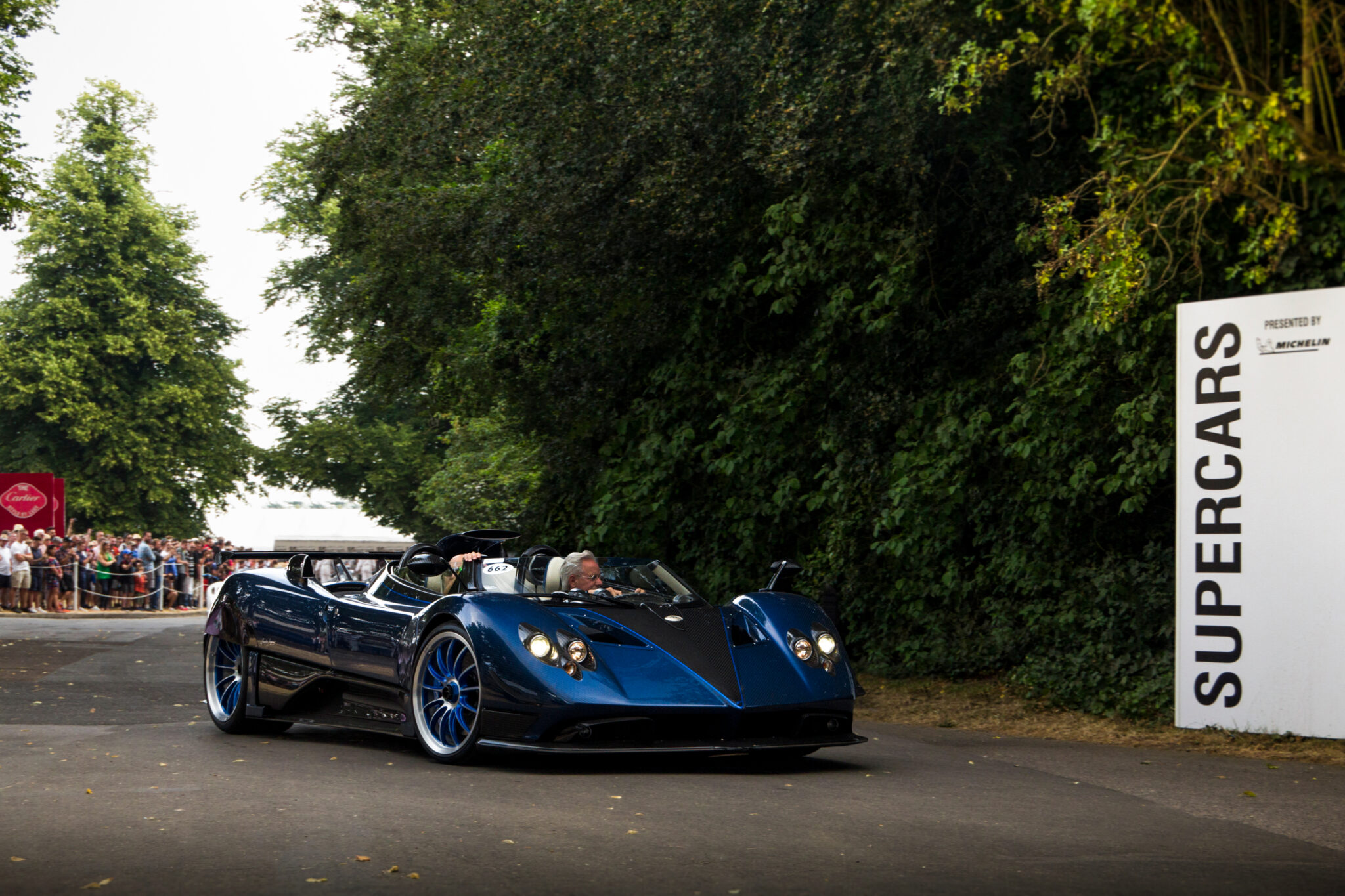
Completed in 2017, the Zonda HP Barchetta is one of the most extreme, and rarest, final evolutions of the Zonda. Only three were built, making it an ultra-limited run rather than a single one-off.
Power comes from an AMG-sourced, naturally aspirated 7.3-liter V12, paired with a six-speed manual transmission. True to the “barchetta” name, it features an ultra-low windscreen with small aero screens and dramatically reworked bodywork, including distinctive rear wheel spats and exposed carbon-fiber surfaces often finished with a tinted lacquer effect.
One example was commissioned as a personal car for Horacio Pagani, underlining how the HP Barchetta functions as a rolling manifesto of the brand’s mix of engineering, craftsmanship, and visual theater.
Ferrari P4/5 by Pininfarina
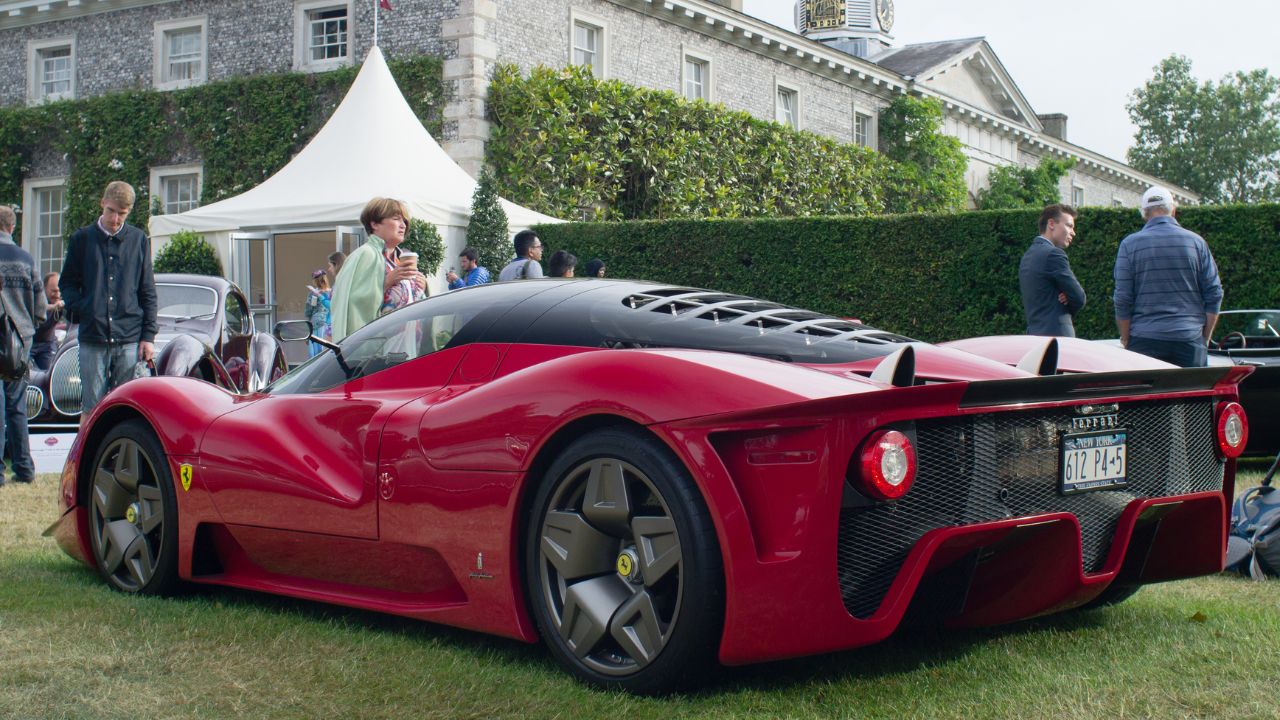
Built in 2006, the P4/5 represents what happens when a passionate collector with deep pockets commissions Pininfarina to create a modern interpretation of Ferrari’s legendary P-series race cars.
Film director James Glickenhaus wanted something that combined the racing heritage of the 1960s sports prototypes with contemporary performance and reliability. The project started with a Ferrari Enzo chassis, which was then clothed in completely unique aluminum and carbon fiber bodywork designed and built by Pininfarina. It retains the Enzo’s 6.0-liter V12 (often cited as 660 PS, roughly 650 hp/bhp depending on units), and Ferrari officially recognized the car with its own type number. Beyond its stunning looks, the P4/5 proved that the art of coachbuilding could work with modern supercar platforms, inspiring a new generation of bespoke builds.
Glickenhaus has driven the car extensively, rather than keeping it as a static showpiece, demonstrating that Glickenhaus actually drives his creation rather than keeping it as garage art.
Mercedes-Benz Vision One-Eleven

Unveiled in 2023, the Vision One-Eleven serves as both a concept car and a celebration of Mercedes’ experimental C111 from the 1970s. Also, this is a drivable concept, not a production model.
The car features a radical design with gullwing doors, a transparent engine cover, and distinctive louvered rear sections that pay homage to its predecessor. While specific performance figures weren’t disclosed, Mercedes confirmed the car utilizes an electric powertrain with axial-flux motors and a cylindrical battery pack inspired by Formula E technology. The pixelated LED lighting signatures and futuristic interior with a floating center console push design boundaries while remaining distinctly Mercedes.
Although labeled a concept, the Vision One-Eleven is a fully functional vehicle that represents Mercedes-AMG’s vision for high-performance electric vehicles. Its combination of retro inspiration and forward-looking technology makes it a bridge between automotive past and future.
Maserati MC12 Stradale
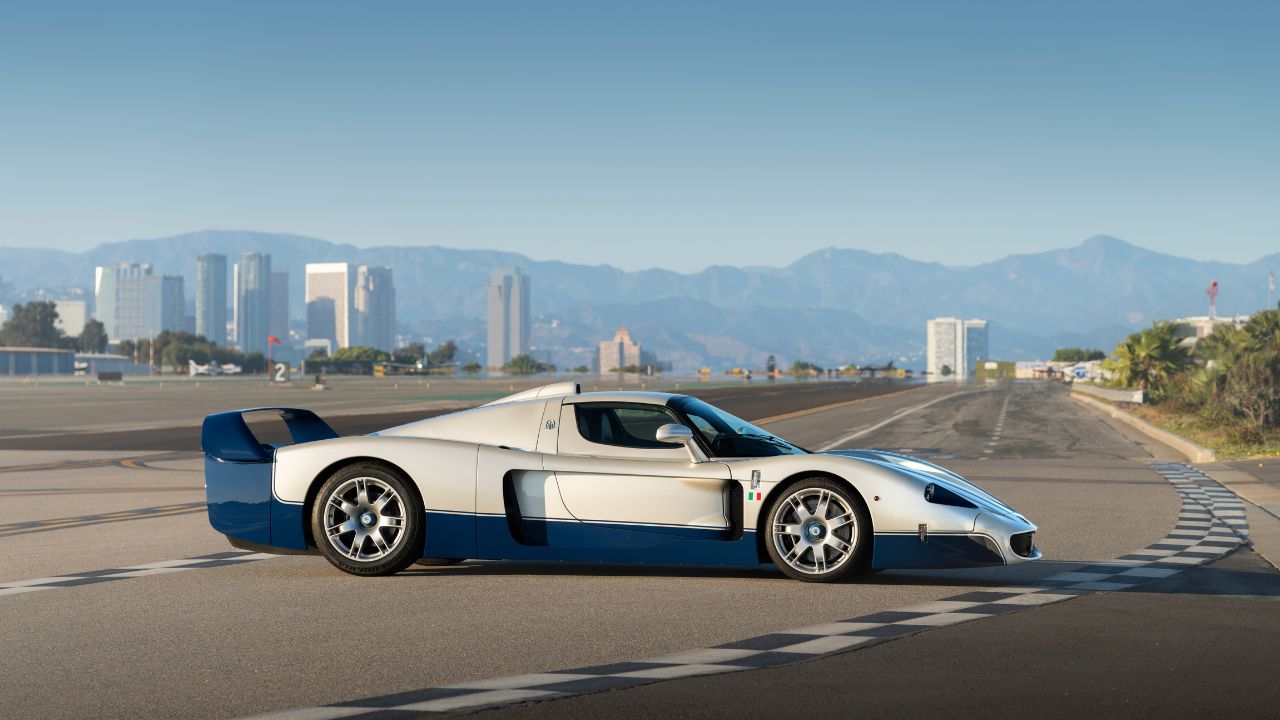
The Maserati MC12 Stradale wasn’t a one-off, it was produced in a limited run of 50 road cars to homologate the GT1 race program.
Built around Enzo-derived architecture, it uses a naturally aspirated 5,988 cc (6.0-liter) V12 rated by Maserati at 630 hp at 7,500 rpm (with 652 Nm quoted in period specs), wrapped in dramatic long-tail bodywork designed for high-speed stability. Most MC12 Stradales left the factory in the iconic Fuji White with blue accents, though one exception frequently cited is an all-black car associated with Michael Schumacher.
Rare, visually unmistakable, and closely tied to one of the most dominant GT1-era programs, the MC12 Stradale earns its place among modern collectible supercars, even if it isn’t strictly a one-off.
Lamborghini Egoista

Created to celebrate Lamborghini’s 50th anniversary in 2013, the Egoista is exactly what its name suggests: a completely selfish, single-seat supercar that looks like it escaped from a science fiction film.
Designed by Walter De Silva, the car takes inspiration from modern fighter jets, particularly the Apache helicopter’s canopy design for its cockpit access. The aluminum and carbon fiber body features active aerodynamics and a completely exposed engine , a 5.2-liter V10 producing 600 horsepower. The single seat is positioned centrally like a Formula 1 car, and the dashboard features an aircraft-inspired heads-up display. Lamborghini has stated the Egoista will remain a one-off showpiece in their museum, intended as a one-off concept piece for Lamborghini’s collection rather than a production model.
It represents the brand at its most uncompromising; a car built not to satisfy customers or regulators, but purely to celebrate their own anniversary with something outrageous.
Koenigsegg One:1

Koenigsegg built only seven One:1s, but the model still holds a special place as the original “megacar,” built around a one-to-one theme that paired 1 megawatt of power with a 1,360 kg curb-weight target.
One example was finished in exposed carbon fiber, and the One:1 also served as a development and demonstration platform, a One:1 recorded a widely reported 2:32.14 lap at Spa-Francorchamps in 2015 during a track-day practice session, a time often referenced in period coverage as a production-car benchmark (though not an official record attempt).
Koenigsegg backs the aero claims with hard numbers too, listing 610 kg (about 1,345 lb) of downforce at 260 km/h, aided by active aerodynamics and its distinctive Triplex suspension setup to keep the car stable and planted at speed.
Porsche Vision 357 Speedster

Created for Porsche’s “Dreaming in Colour” exhibition in 2023, the Vision 357 Speedster reimagines the iconic 356 for the electric age while maintaining the spirit of the original.
The concept features a minimalist speedster design with a low-slung body, integrated aero elements, and a transparent wraparound windscreen that recalls vintage racing cars. Unlike many modern concepts that prioritize screens and technology, the Vision 357 embraces analog simplicity with tactile controls and a driver-focused cockpit.
Porsche says it’s based on the 718 GT4 e-Performance concept platform, though it hasn’t positioned it as a production-intent powertrain spec sheet, but the car is built on an electric platform designed to deliver the engaging driving dynamics the brand is known for. The color scheme, a two tone marble/gray with cognac leather interior, references classic Porsche combinations while the modern surfacing and lighting bring it firmly into the present.
As a design study, the Vision 357 exists as a singular statement about how electric sports cars can honor their heritage without becoming retro pastiches.
Conclusion

These twelve one-off creations demonstrate that even in an era of increasing regulation and platform sharing, there’s still room for genuine automotive artistry. Each represents a different approach to the fundamental question, what happens when budget and creativity have no practical limits? Some push technological boundaries, others explore radical design directions, and a few simply exist because someone had the vision and resources to make them real.
What’s particularly encouraging is that most of these cars aren’t static museum pieces, they’re driven, enjoyed, and occasionally even raced by their owners. The tradition of bespoke coachbuilding may have evolved from the early 20th century, but projects like these prove it’s alive and well. As automotive enthusiasts, we’re fortunate to live in an era where manufacturers are still willing to undertake these ambitious one-off projects, giving us tangible proof that imagination still matters in the car world.