Savannah is easy to overplan. A first-time visitor can fill three days with house museums, restaurant reservations, ghost tours, riverfront stops, and cemetery walks, then miss the thing the city does best: shaded streets where the next square, porch, church tower, or café is close enough to reach on foot.
A better long weekend uses the Historic District as the base and keeps the schedule loose around walking. Live oaks cover brick sidewalks, Spanish moss hangs above iron fences, and the city’s squares break the day into small, manageable pieces. The trip should have history, food, and river views, but not every hour needs an appointment.
Three nights is a strong frame. Stay in or near the Historic District, walk the squares early, use Forsyth Park for a slower morning, make food part of the day instead of a separate mission, and save River Street or City Market for evening when the heat and crowds feel easier to handle.
NPS says Savannah’s National Historic Landmark District was designated in 1966 and is one of America’s oldest and most prominent National Historic Landmarks. That gives the weekend real historic weight, but the best version still leaves time for coffee, lunch, shade, and a few streets that were not on the plan.
1. Start in the Historic District, but Do Not Try To Finish It
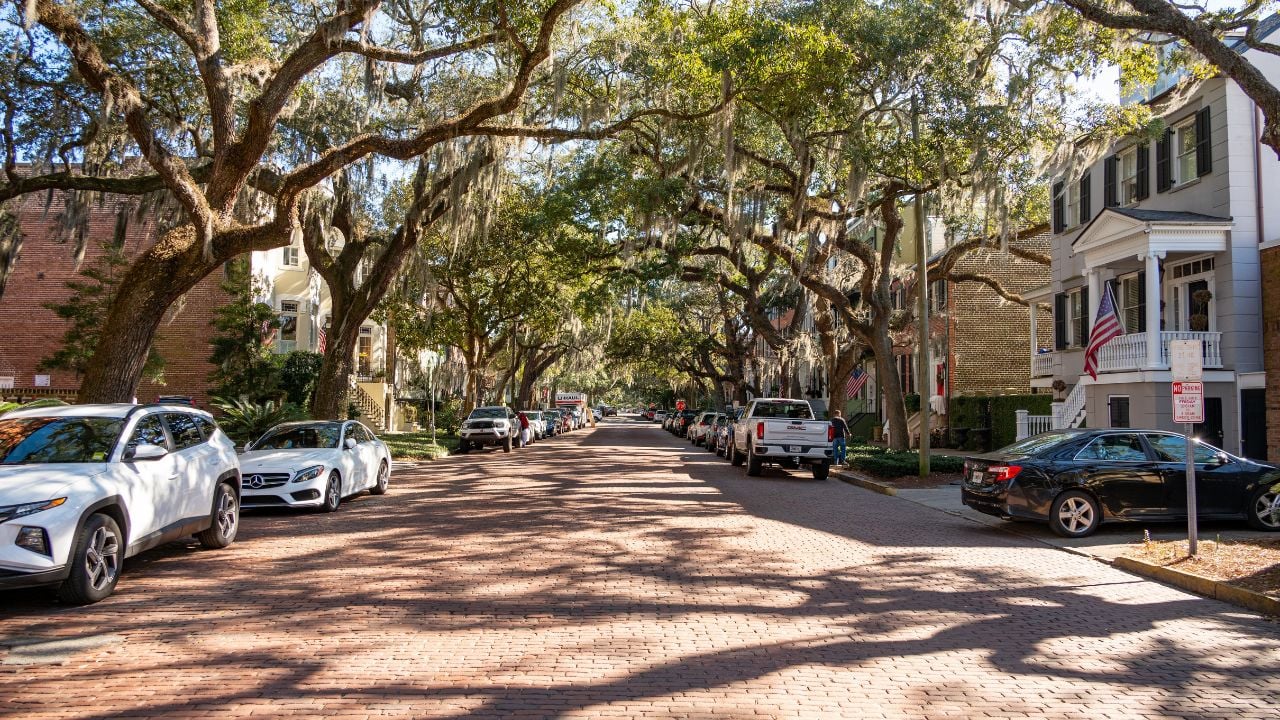
The Historic District is the right first walk, but it should not become a race through every square and landmark. Start near the hotel, choose a few nearby blocks, and let the first afternoon stay close. Brick sidewalks, iron balconies, old staircases, church spires, and shaded squares give the arrival enough material without forcing a formal tour right away.
Visit Savannah describes the Historic Landmark District through historic park squares, museums, monuments, and restored 18th- and 19th-century homes. Those pieces are close together, so the walk can stay relaxed: one square, one side street, one coffee stop, then another square when the shade looks better in that direction.
The squares are not just pretty pauses between attractions. They shape how the city feels on foot. Benches sit under live oaks, monuments rise from small patches of green, and the traffic breaks often enough that walking never feels like a long march from one major sight to another.
Keep any bigger tour for the next morning. On arrival day, a short loop, a drink, dinner nearby, and a walk back through darker streets will do more for the weekend than trying to check off Savannah before the bags are fully unpacked.
2. Use Forsyth Park for Shade, Space, and a Slow Morning
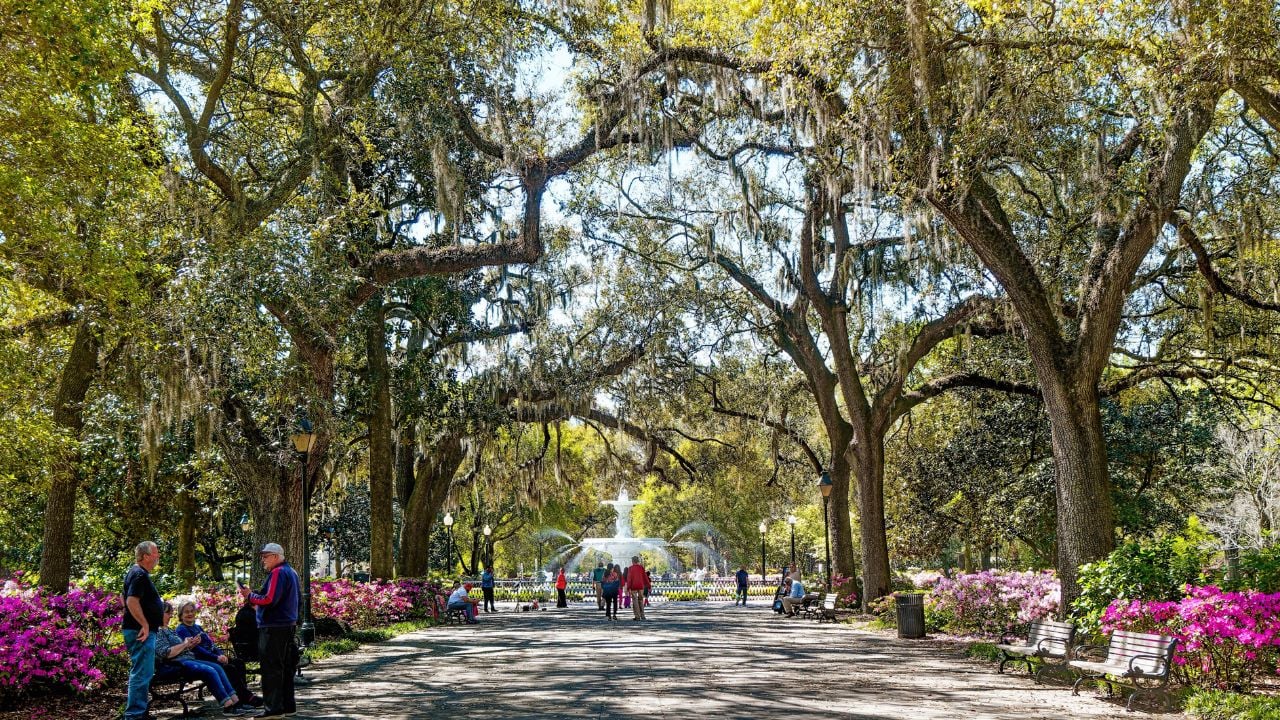
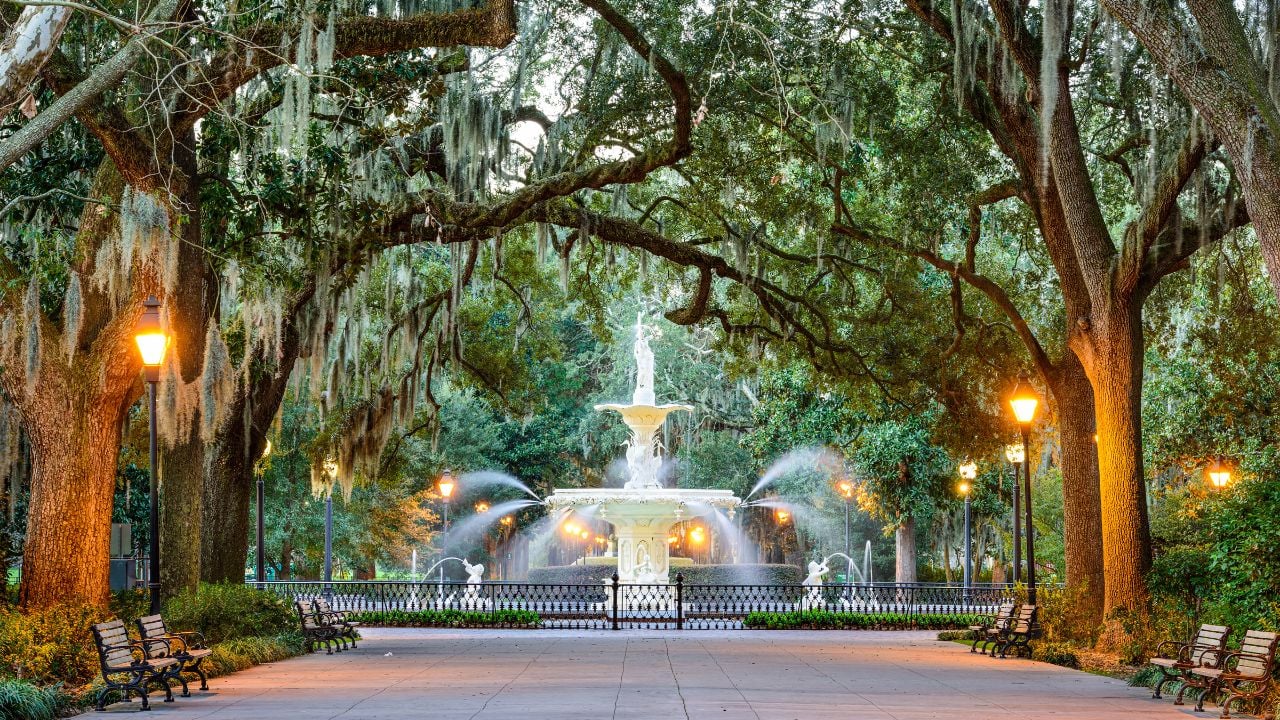
Forsyth Park belongs early in the weekend because it gives the city more space after the tighter streets and squares. The fountain sits near the north end, paths cut through lawns and trees, and the long views under the oaks make the park feel like a reset without leaving the Historic District.
The City of Savannah says Forsyth Park began in the 1840s as a 10-acre plot and later expanded to 30 acres. That size matters on a hot weekend. Visitors can move from fountain photos to shaded paths, benches, lawns, and nearby streets without turning the morning into a long transfer.
Saturday mornings add food and local movement. The market runs every Saturday from 9 a.m. to 1 p.m. in Forsyth Park, so the park can pair with coffee, baked goods, produce stalls, and a late breakfast nearby instead of a rushed indoor stop.
Use the park before the day gets heavy. Walk under the oaks, stop near the fountain, then drift toward brunch on the surrounding streets. Forsyth is not only a photo stop; it is the part of the weekend where the heat, walking, and sightseeing can slow down before the afternoon fills up.
3. Build the Food Plan Around One Good Dinner and Long Breaks

Savannah food can fill the weekend fast: shrimp and grits, fried chicken, seafood, biscuits, bakeries, cocktails, pralines, and polished dining rooms all compete for space. The mistake is booking every meal so tightly that the weekend becomes a reservation schedule with walks squeezed in between.
Visit Savannah highlights Southern cuisine, seafood, rooftop bars, riverfront restaurants, and local dining across the city. Use that range carefully. Book one dinner that matters, then leave room for casual lunches, coffee stops, dessert, and a late drink near wherever the day already is.
A long lunch can carry the hottest part of the day. Sit down after a morning walk, order something local, and let the next block wait until the sun drops a little. Savannah is more enjoyable when meals break up the walking instead of dragging visitors across town three times a day.
Keep the food plan close to the route. Historic District lunch, Southside or Midtown only if there is a reason to go, River Street or City Market later in the day, and one dinner worth booking ahead. The meals should add flavor and rest, not turn the weekend into a timing problem.
4. Save River Street and City Market for Evening
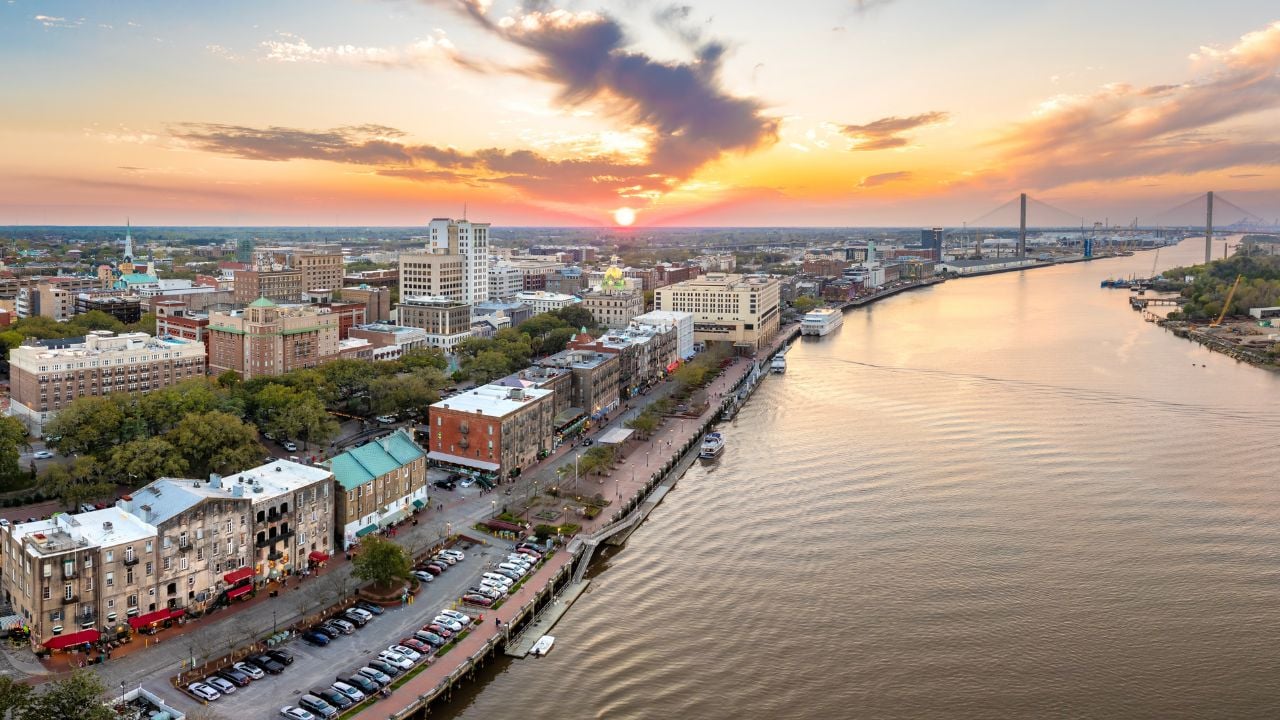
River Street is better later in the day than as the center of the whole itinerary. The cobblestones, old warehouse fronts, river traffic, shop signs, restaurant doors, and container ships across the water all make more sense when nobody is trying to make the waterfront carry a full afternoon in the heat.
River Street has more than 75 boutiques, galleries, artists’ studios, restaurants, and pubs housed in former cotton warehouses, according to Visit Savannah. That is plenty for an evening stroll: browse a little, look at the river, stop for a drink or dinner, then climb back toward the historic streets.
City Market gives the night another easy option nearby. Visit Savannah describes City Market through restaurants, art galleries, shopping, and entertainment, which makes it useful when a group wants choices without splitting the evening into several neighborhoods.
Keep this part simple. River Street for cobblestones, warehouses, water, and people-watching; City Market for food, shops, galleries, and music if something is happening. After that, walk back through the Historic District while the squares are quieter and the heat has dropped.
5. Finish With Bonaventure, Brunch, or One Last Square
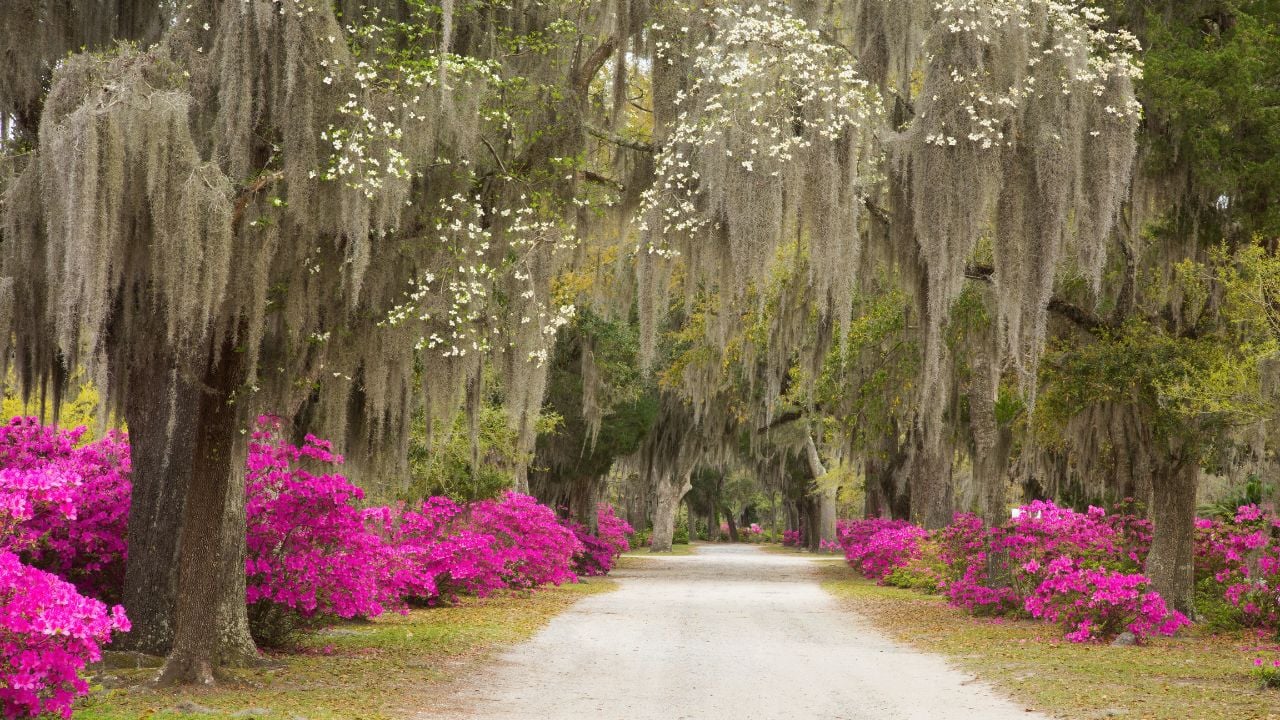
The final morning should stay quiet enough to make leaving easier. Bonaventure Cemetery is a strong option for travelers who want oaks, azaleas, historic graves, and a slower walk outside the busiest part of the Historic District, but it should be treated with respect rather than used as a rushed photo stop.
The Bonaventure Historical Society says the gates open daily from 8 a.m. to 5 p.m., and the organization offers free tours on the second weekend of every month. Savannah’s cemetery information also points visitors toward private tour options and the Bonaventure Historical Society for more details.
Travelers who do not want to leave the Historic District can keep the morning simpler. Return to a favorite square, get brunch, walk under the oaks one more time, or choose a café near the hotel so departure does not feel rushed before a flight or drive.
That kind of ending fits Savannah better than a final scramble. A good long weekend here has history, food, river air, shaded squares, park paths, and enough empty space between plans for the city to feel lived in rather than collected.