Let’s be honest: most of your daily commute involves dodging potholes, sitting behind someone going 10 under in the left lane, and wondering why your GPS insists on taking you through three construction zones. Luckily, every once in a while, the road gods smile upon us and deliver something special: bridges that actually make you want to slow down and savor the drive.
Bridges are engineering masterpieces that transform your windshield into a picture frame, your daily driver into a touring machine, and your grumpy passenger into someone who actually puts down their phone. Whether you’re behind the wheel of a weekend warrior sports car or your trusty road trip SUV, these spans deliver views that’ll make you forget about your next gas station stop.
From coast to coast, these bridges prove that American engineering can create something beautiful when it’s not busy figuring out how to make roundabouts more confusing. Here are 10 crossings that’ll remind you why you fell in love with driving in the first place.
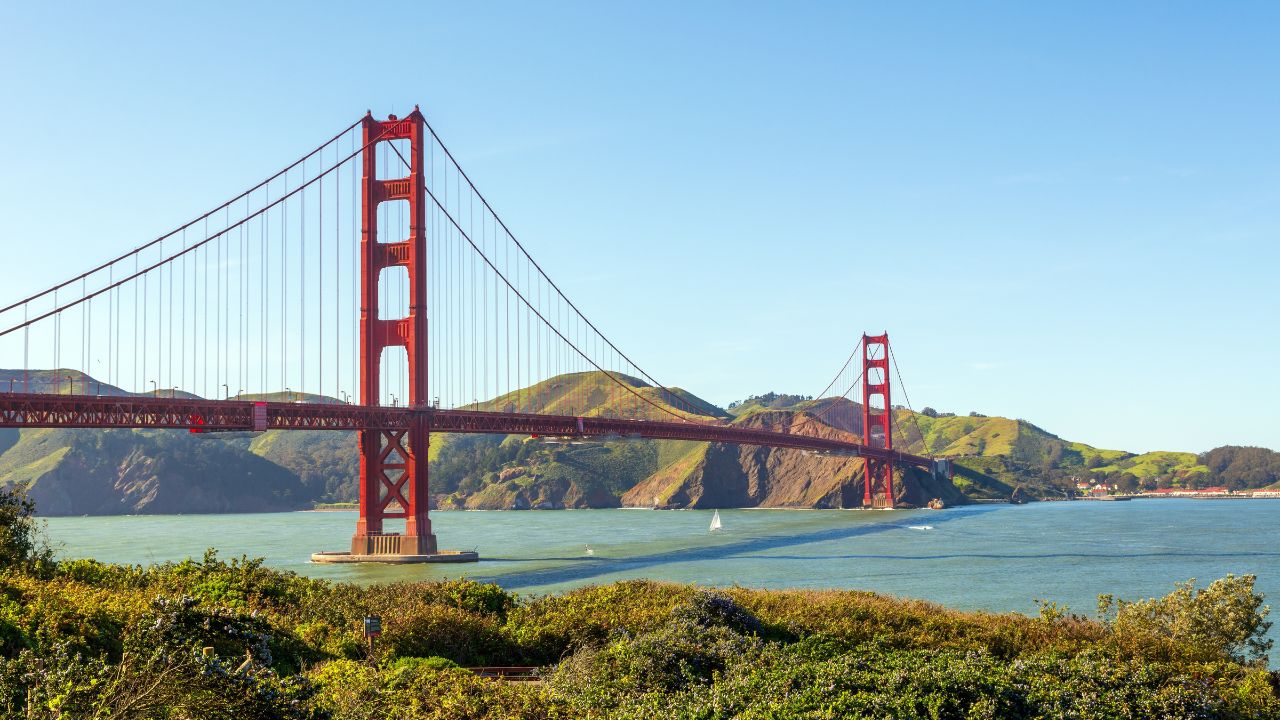
Golden Gate Bridge: San Francisco, California

Those International Orange towers aren’t just pretty (though they’re gorgeous): they’re 746 feet tall, and the roadway deck is designed to deflect sideways up to 27 feet 8 inches in strong winds, which means you’re essentially driving across a giant, earthquake resilient suspension system that’s been keeping cars aloft since 1937.
At 1.7 miles long, you’ve got plenty of time to enjoy the Pacific views while your passenger inevitably asks why it’s called “Golden Gate” when it’s clearly orange. (It’s named after the Golden Gate Strait, not the color, but good luck explaining that while dodging cyclists.)
The 90-foot-wide roadway carries six lanes of traffic plus sidewalks, and on a clear day, you can see 20 miles in every direction, assuming the famous San Francisco fog hasn’t rolled in to turn your scenic drive into a Stephen King movie. The bridge handles about 112,000 vehicles daily, so timing is everything unless you enjoy admiring the towers at 5 mph during rush hour.
The bridge cost $35 million to build in the 1930s, which sounds like a bargain until you realize that’s about $1.5 billion in 2016 dollars. Still cheaper than your kid’s college tuition, though.
Brooklyn Bridge: New York, New York
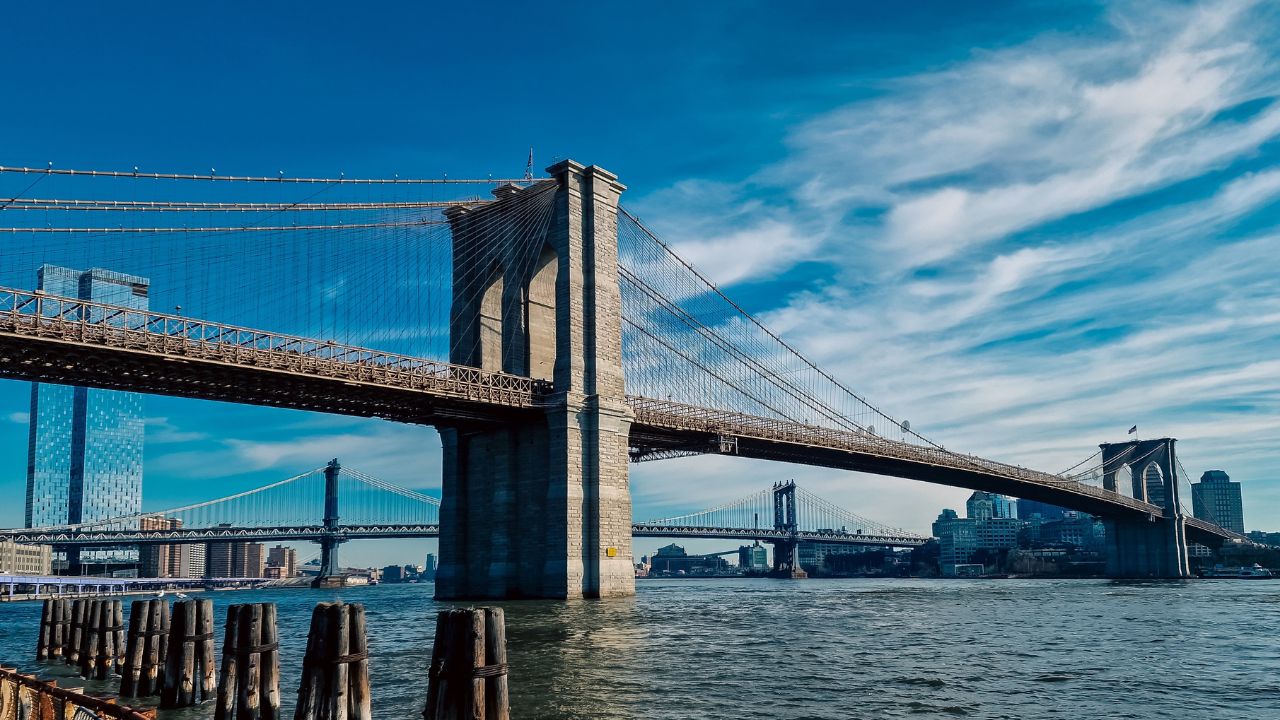
This 1883 masterpiece was the first bridge to use steel wire for its suspension cables and the longest suspension bridge in the world for about 20 years; basically the iPhone of 19th-century engineering. At 5,989 feet total length with a main span of 1,595 feet, it carries about 120,000 vehicles daily across its six lanes, plus thousands of tourists who insist on taking selfies in your blind spot.
The Gothic Revival towers are 276 feet high and built with limestone, granite, and Rosendale cement, materials chosen because people actually cared about craftsmanship back then, unlike whoever designed your local highway on-ramps. The wooden walkway sits 18 feet above the traffic, giving pedestrians the perfect vantage point to judge your parallel parking skills.
Here’s the thing about driving the Brooklyn Bridge: it’s like owning a classic car, undeniably cool, historically significant, and guaranteed to test your patience. The approach can be trickier than programming your grandmother’s universal remote, but the payoff is worth every frustrated horn honk. Just don’t expect to set any land speed records, the speed limit is 25 mph, which gives you plenty of time to contemplate why Manhattan real estate costs more per square foot than your entire car.
Mackinac Bridge: Michigan
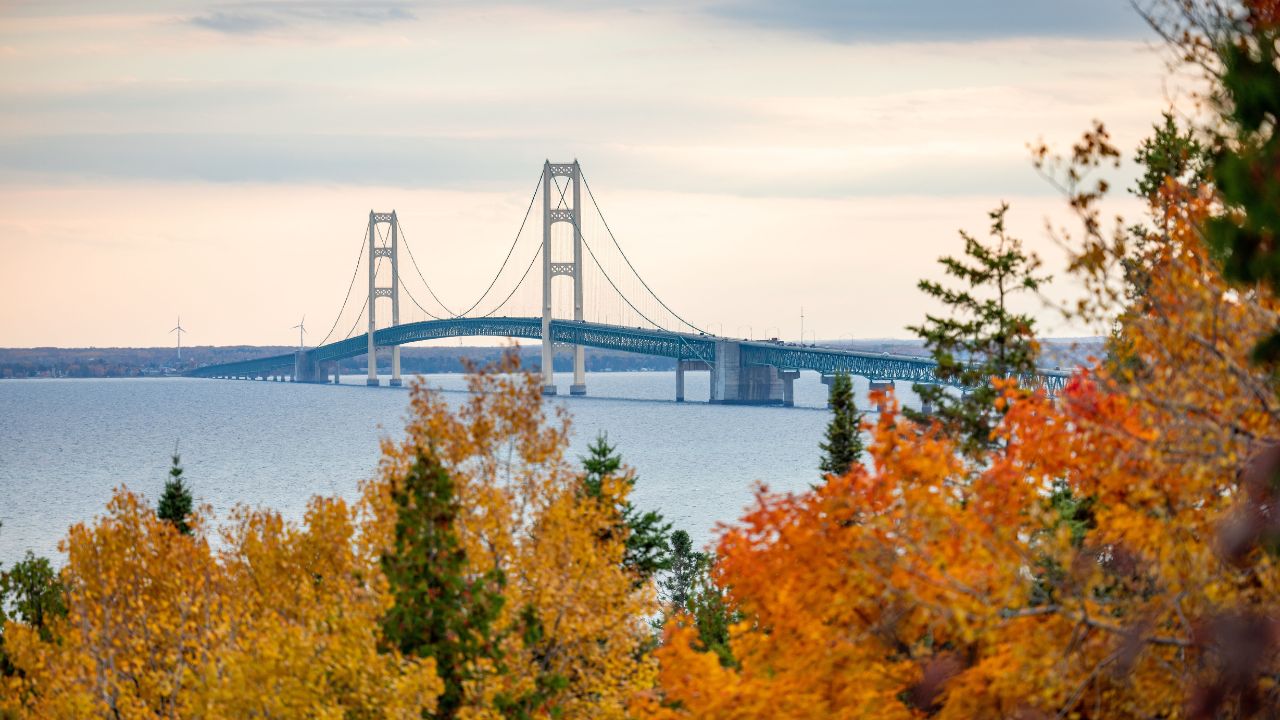
“Big Mac” isn’t just a sandwich: it’s Michigan’s 26,372-foot-long pride and joy that connects the mitten to the Upper Peninsula across the Straits of Mackinac. This 1957 suspension bridge boasts a main span of 3,800 feet and towers that rise 552 feet above the water, making it one of the world’s longest suspension bridges, and the Mackinac Bridge Authority describes it as the fifth longest by suspended length. It is definitely the longest bridge you’ll cross while craving pasties and debating whether Michigan or Wisconsin makes better cheese.
The bridge carries two lanes in each direction with a speed limit of 45 mph, which is perfect for gawking at the Great Lakes scenery and slow enough that you won’t accidentally drive into Canada (that’s a different bridge, genius). What makes this crossing special isn’t just the engineering, it’s the fact that you’re literally driving between two of the largest freshwater lakes on the planet, with water stretching to the horizon in every direction.
Fair warning: If you’re driving a high-profile vehicle or your car has the aerodynamics of a barn door, the crosswinds here can turn your steering wheel into a workout. The bridge authority actually provides driving assistance for nervous drivers and restricts certain vehicles during high winds; because apparently not everyone appreciates the full “sailing across the Great Lakes” experience at 200 feet above water level.
Chesapeake Bay Bridge Tunnel: Virginia
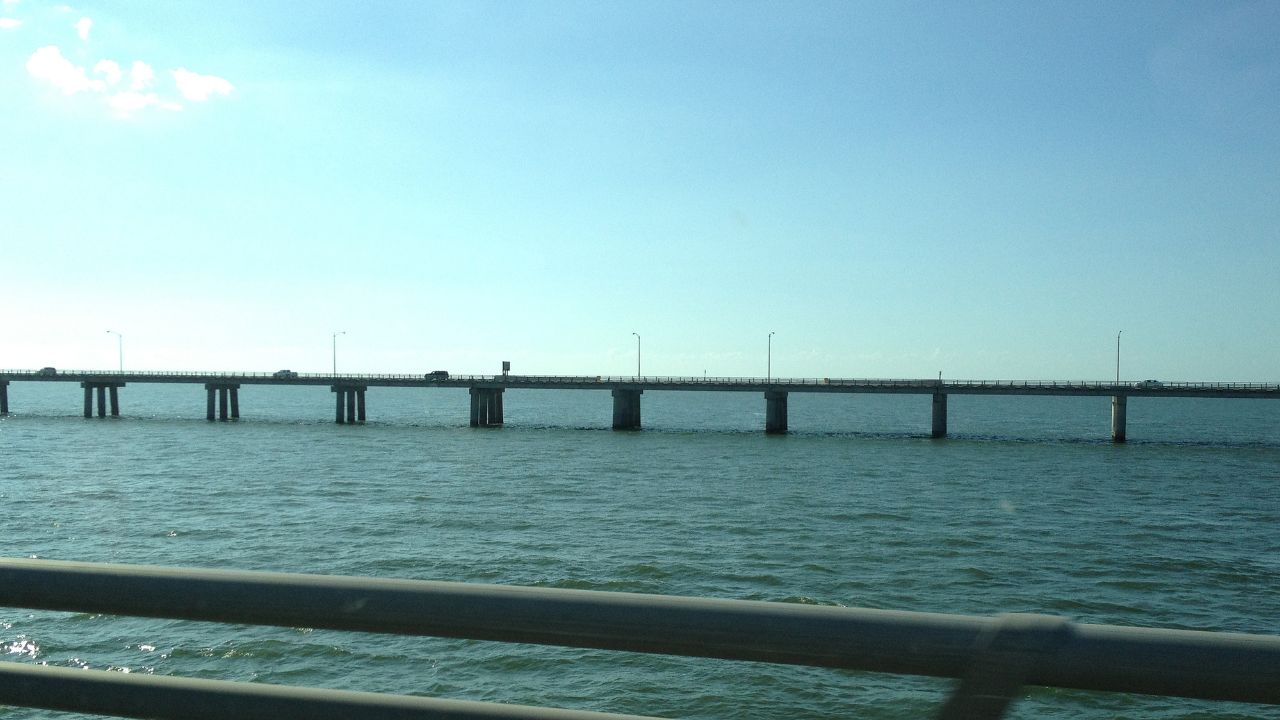
This structure is a 17.6-mile engineering fever dream that includes two mile-long tunnels, four man-made islands, and enough bridge spans to make you question why anyone thought driving under the ocean was a good idea. Opened in 1964 and expanded in 1999, this $200 million project (in 1960s money) connects Virginia’s mainland to the Delmarva Peninsula.
The bridge sections offer sweeping views of the Chesapeake Bay, while the tunnel portions let you experience the unique joy of driving 55 mph underwater while wondering if that ceiling leak is normal. The tunnels were built instead of high bridges to avoid interfering with ship traffic, because apparently the Navy’s schedule was more important than your peace of mind.
What makes this drive special is the constant variety: you’re cruising along enjoying bay views one minute, then suddenly you’re in a tunnel wondering if your GPS still works underground. Traffic varies by season, and the Chesapeake Bay Bridge Tunnel charges tolls in both directions. For cars without trailers, the toll is $16 off peak, with higher peak season pricing on Fridays through Sundays during the summer, while larger vehicles are charged by class based on axles and size. At least the views are free, assuming you can take your eyes off the road long enough to enjoy them.
Seven Mile Bridge: Florida Keys
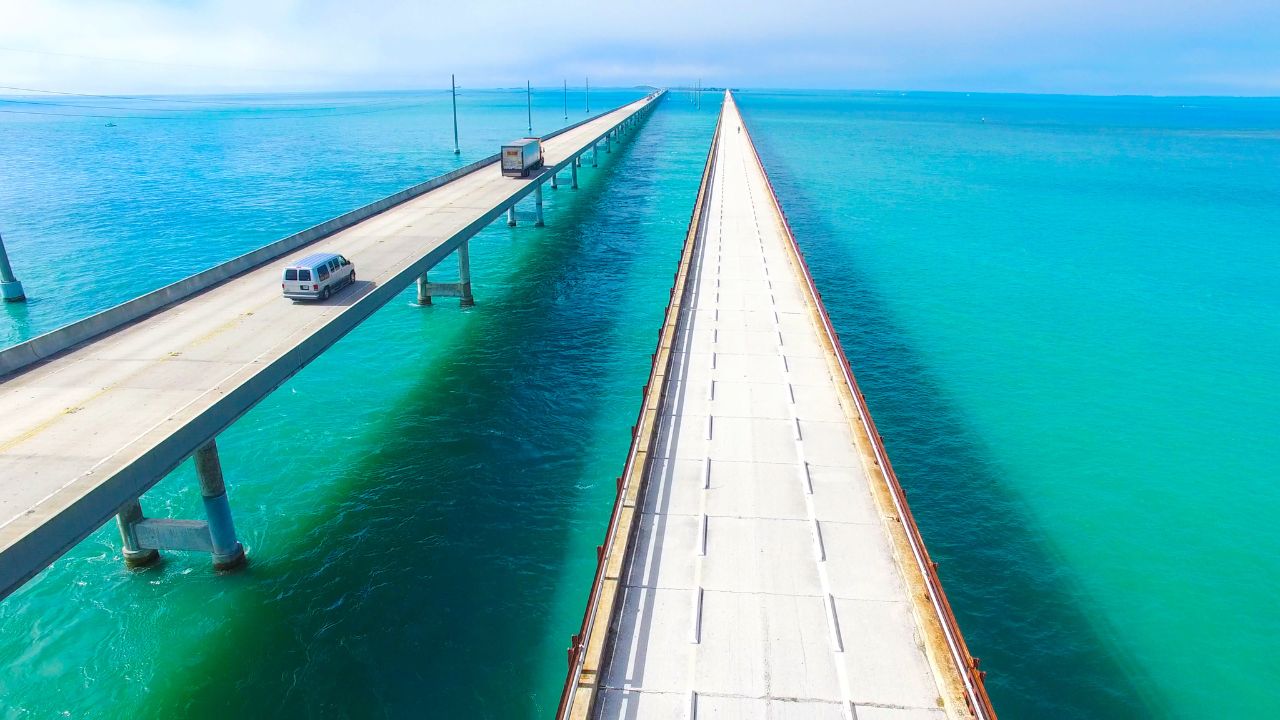
This 35,867-foot concrete masterpiece along the Overseas Highway is what happens when engineers decide that driving across the ocean should be a thing. Built in the 1980s to replace a 1912 railroad bridge, it connects Knight’s Key to Little Duck Key with 65-foot vertical clearance for boat traffic and unlimited clearance for your sanity as you realize you’re essentially driving across open ocean.
The two-lane roadway maintains a 45 mph speed limit, which is fast enough to feel the ocean breeze and slow enough to spot the occasional manatee or dolphin. The bridge offers fishing platforms and scenic overlooks, because someone realized that crossing seven miles of open water might make people want to stop and take pictures.
Here’s what’s genuinely amazing about this drive: you’re cruising along with nothing but turquoise water in every direction, feeling like you’re piloting a boat rather than driving a car. The downside? There’s literally nowhere to go if you suddenly remember you’re afraid of heights or water. Commit to the crossing: it’s not like you can make a U-turn at mile three and explain to your passengers that you’ve changed your mind about reaching Key West.
New River Gorge Bridge: West Virginia
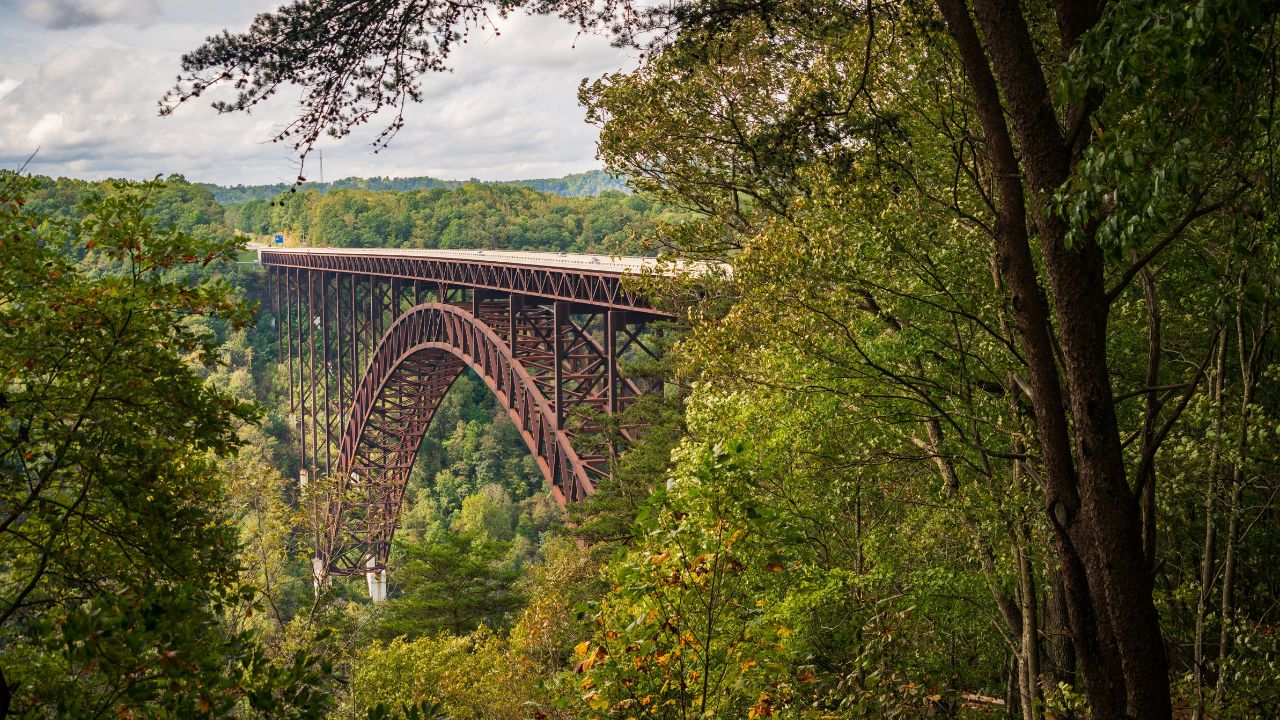
Rising 876 feet above the New River, this single-span steel arch bridge is the third-highest vehicular bridge in the United States and the perfect place to terrify your acrophobic passengers. Completed in 1977, the 3,030-foot-long bridge reduced the drive across the gorge from 40 minutes of winding mountain roads to about 30 seconds of “holy cow, we’re really high up.”
The bridge carries four lanes of US Route 19 traffic with a 55 mph speed limit, though you’ll probably find yourself going slower just to take in the views of the Appalachian Mountains stretching to the horizon. The New River below has been carving this gorge for millions of years, creating a 1,000-foot-deep canyon that makes your daily commute look pathetically flat by comparison.
What sets this bridge apart isn’t just the height, it’s the fact that you’re crossing one of the oldest rivers on the continent (despite its name, the New River is actually ancient) in a region where mountains still look like mountains, not suburban developments. Every October, the bridge becomes the world’s largest BASE jumping platform during Bridge Day, because apparently driving across isn’t exciting enough for some people.
Astoria-Megler Bridge: Oregon and Washington
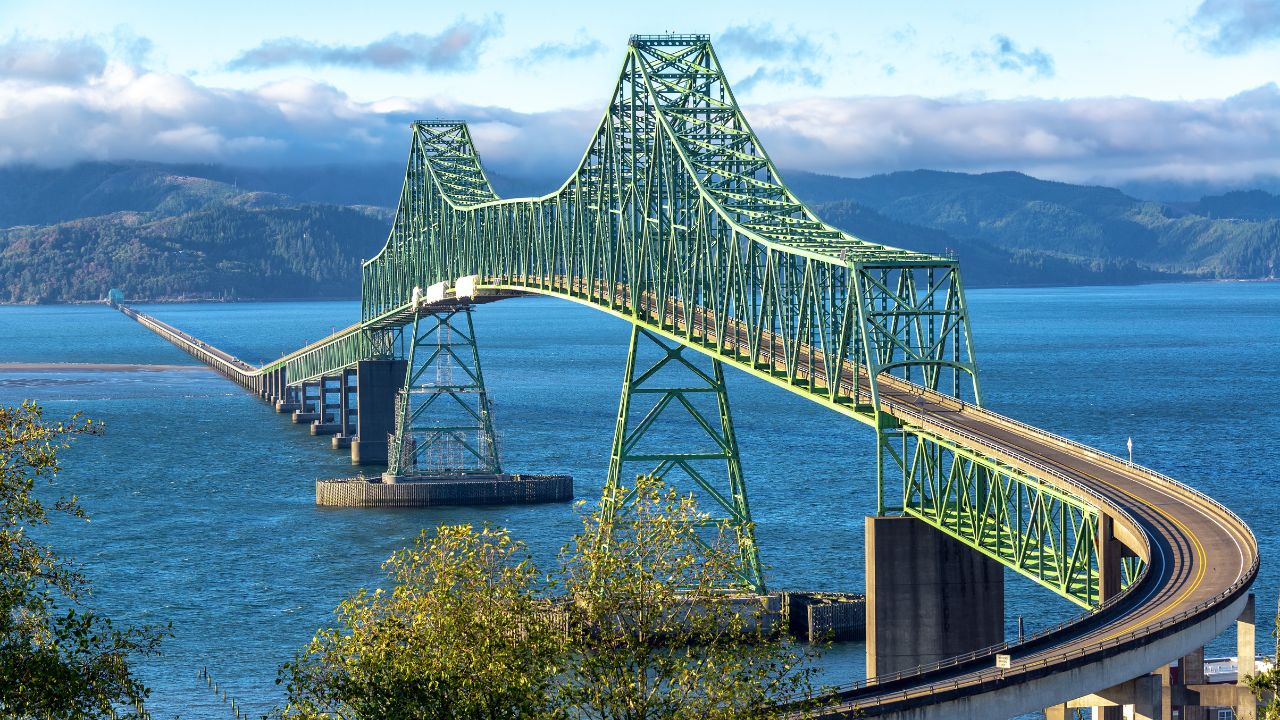
This 4.1-mile cantilever truss bridge across the Columbia River connects Oregon and Washington with all the grace of a giant steel sea monster rising from the water. Opened in 1966, it features a main span of 1,232 feet and a vertical clearance of 196 feet, making it tall enough for oceangoing vessels and dramatic enough to make you feel like you’re in a car commercial.
The bridge carries one lane in each direction, and the shoulders are narrow, which is crucial to know when your passenger is having a panic attack about the height, the length, or the fact that you’re crossing the same river that Lewis and Clark navigated with considerably less horsepower. The approach from the Oregon side climbs gradually, giving you time to build up to the main event, while the Washington approach gets right to business.
What makes this crossing special is the sheer drama of it all: you’re driving across the mouth of the Columbia River where it meets the Pacific, with cargo ships below that look like bathtub toys from this height. The bridge replaced a ferry service that could take hours during bad weather, proving that sometimes the best solution to a problem is to build a massive steel structure and hope for the best.
Sunshine Skyway Bridge: Florida
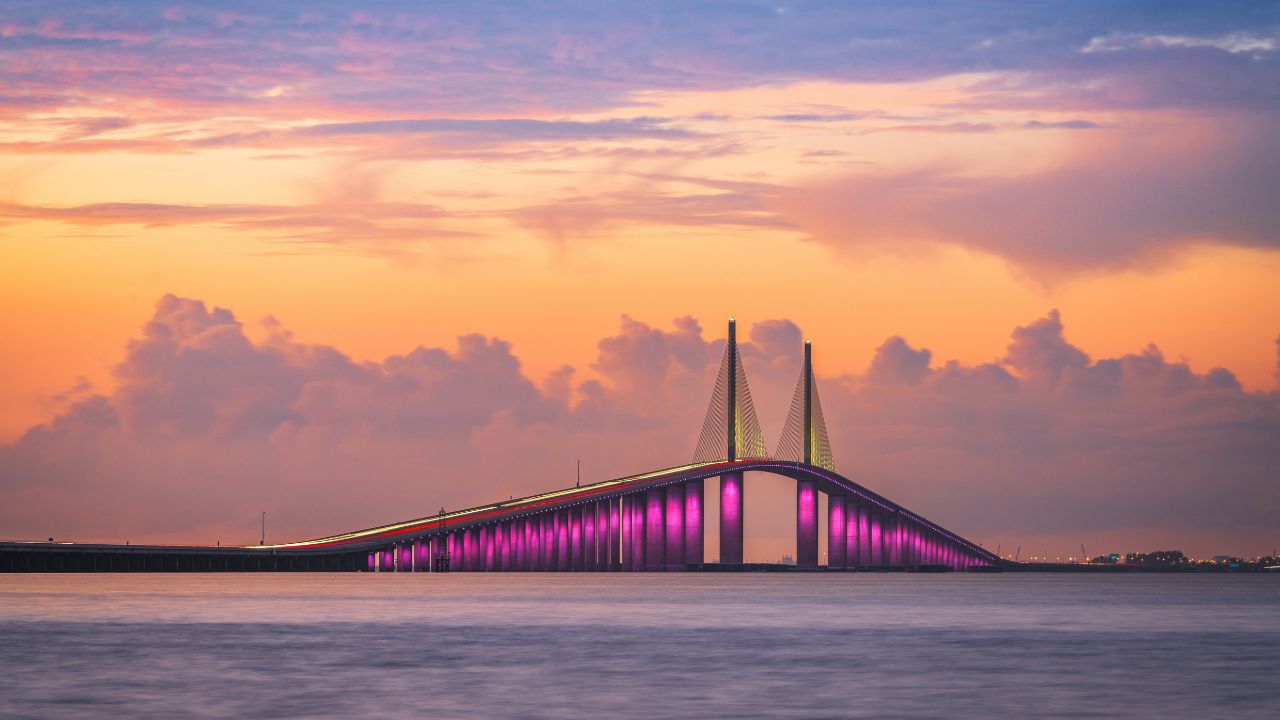
Florida loves its bridges! Those distinctive yellow cable stays aren’t just for show, they’re part of a cable-stayed design that spans 4.1 miles across Tampa Bay with a main span of 1,200 feet and a clearance of 190 feet. Opened in 1987 after the original cantilever bridge was destroyed in a 1980 collision, this $244 million replacement features a wider roadway, better visibility, and protective systems designed to prevent future disasters.
The bridge carries four lanes of Interstate 275 with a 65 mph speed limit, though you’ll find yourself slowing down to take in views that stretch from St. Petersburg to Tampa and beyond. The cable-stayed design isn’t just aesthetically pleasing: it’s also more resistant to ship impacts and provides better visibility for both drivers and ship pilots.
Here’s what’s genuinely impressive: you’re crossing one of Florida’s largest bays on a bridge that’s essentially a 190-foot-tall yellow monument to modern engineering. The fishing piers at both ends extend beyond the bridge approaches, creating recreational areas that prove not everyone wants to rush across this scenic route. Just remember that those yellow cables you’re admiring are a key part of the cable stayed design that supports the main span.
Lake Pontchartrain Causeway: Louisiana
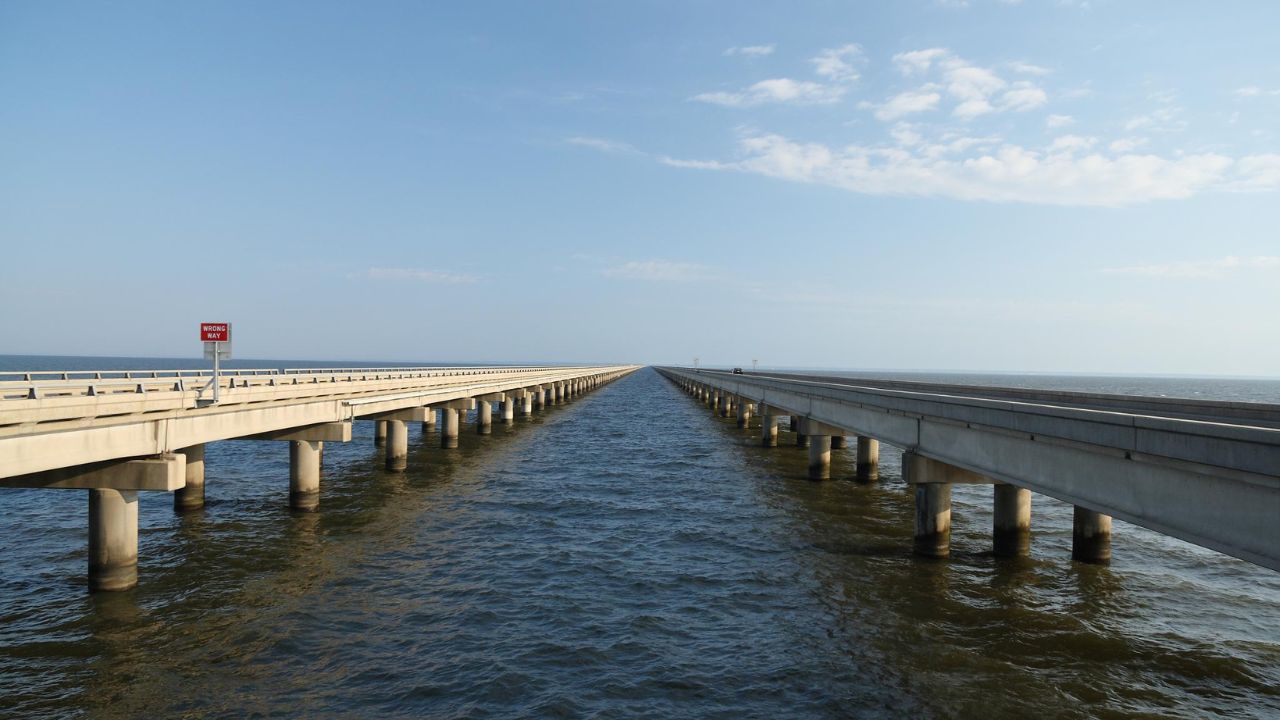
At 23.87 miles, the Lake Pontchartrain Causeway holds the Guinness World Record for the longest bridge over water (continuous), and driving across it is like playing the ultimate endurance test with your bladder and your attention span. Opened in segments in 1956 and 1969, the causeway connects Metairie to Mandeville with two parallel spans carrying two lanes each, because someone realized that building one impossibly long bridge meant you’d better have a backup plan.
The bridge maintains a 65 mph speed limit across its entire length, which means you’ll spend about 25 minutes crossing if you don’t get stuck behind someone taking scenic photos at highway speeds. The structure sits only about 15 feet above the water for most of its length, creating the surreal experience of driving across what feels like an endless lake with no land visible in any direction.
Here’s the thing about the Causeway: it’s simultaneously boring and terrifying. Boring because it’s just straight road over water for 24 miles. Terrifying because it’s just straight road over water for 24 miles. The experience is meditative until you realize you’re trapped in a metal tube surrounded by water with nowhere to go but forward. At least the views are consistent: water, sky, and the occasional pelican wondering why humans insist on building roads through their neighborhood.
Bixby Creek Bridge: California

This 714-foot-long concrete arch bridge along Highway 1 through Big Sur isn’t the longest or highest bridge in America, but it might be the most photographed. Built in 1932, the single-span arch rises 260 feet above Bixby Creek with a design that perfectly complements the rugged coastline rather than fighting it.
The bridge carries two lanes of Highway 1 with pullouts on both ends for tourists who can’t resist stopping to take the same photo that’s been taken approximately 47 million times since Instagram was invented. The speed limit through this section is 55 mph, though you’ll probably find yourself going slower just to extend the experience of driving through one of California’s most scenic areas.
What makes Bixby Creek Bridge special isn’t just the engineering or the views – it’s the way it perfectly captures the California coastal driving experience. You’re winding along cliffs above the Pacific Ocean, then suddenly you’re crossing this graceful arch with views that stretch from the Santa Lucia Mountains to the endless blue horizon. It’s the kind of drive that makes you understand why people pay California prices just to live near roads like this.
Bridges That Turn Road Trips Into Lasting Memories
The truth is, most of us spend too much time treating our cars like appliances: point A to point B transportation that’s about as exciting as a dishwasher. However, these bridges remind us that driving can still be an experience worth savoring, even in an age of GPS navigation and adaptive cruise control.
Each of these crossings offers something you can’t get from your daily commute: the satisfaction of piloting several thousand pounds of metal and glass across spans that seemed impossible when they were built. Whether you’re driving a weekend sports car or your reliable daily driver, these bridges transform ordinary vehicles into front-row seats for some of America’s most impressive engineering and scenery.
Sure, some of them charge tolls, and yes, a few come with white-knuckle heights that’ll test your passenger’s faith in structural engineering, but that’s all part of the experience. These bridges prove that sometimes the best part of a road trip isn’t the destination, it’s the spectacular route you take to get there.
So next time you’re planning a drive, consider routing through one of these spans. Your odometer might not thank you for the extra miles, but your memory bank definitely will.