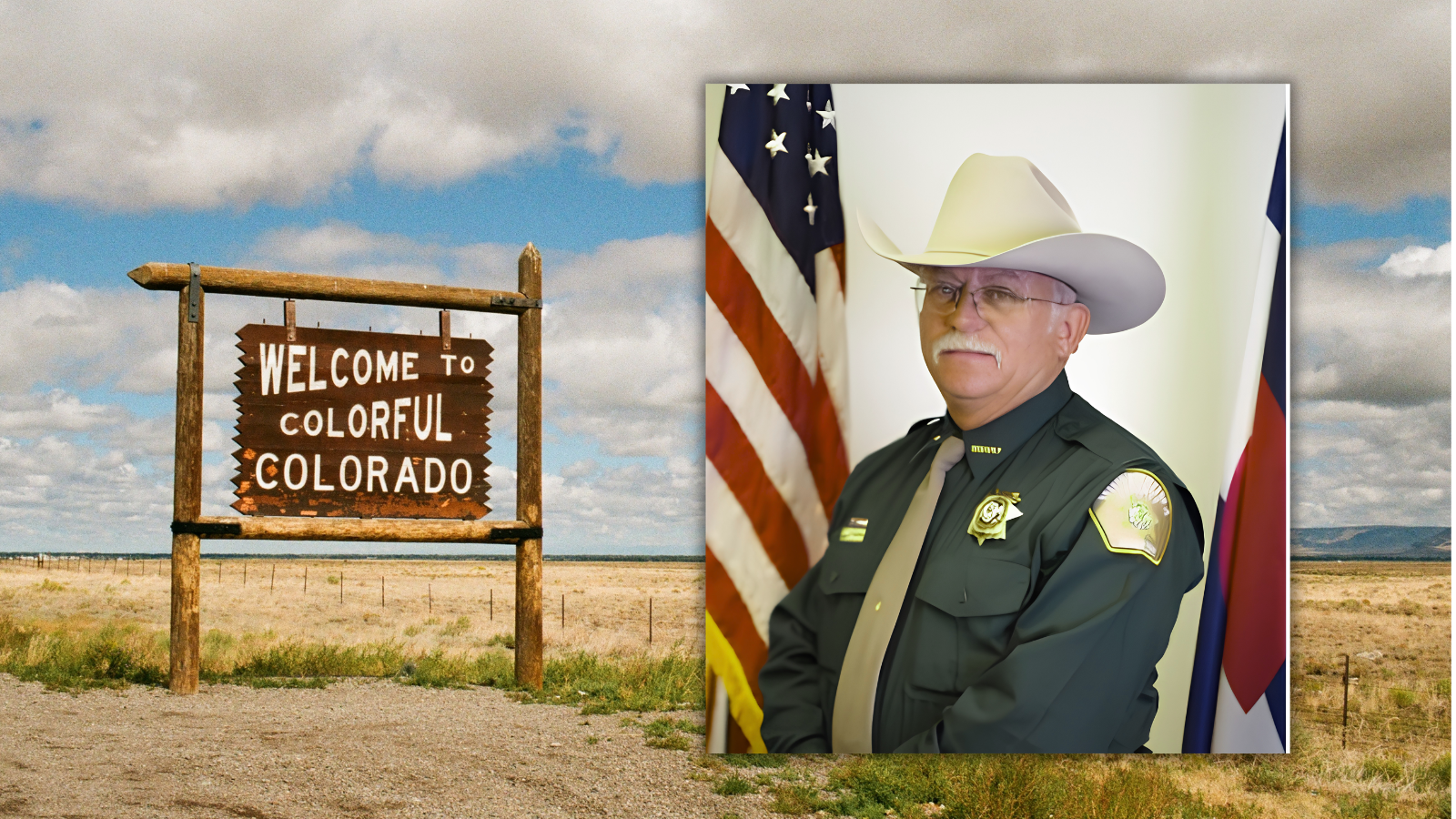
A Colorado sheriff says his office will not administer part of the state’s new semiautomatic firearm law, setting off a debate over constitutional rights, local authority and what the decision means for residents trying to follow the new rules.
The Montezuma County Sheriff’s Office announced that it will not manage or issue the firearms safety course eligibility cards required under Senate Bill 25-003. The new purchase restrictions and training requirements took effect on Aug. 1.
While firearms policy isn’t something we cover every day, there is significant overlap between Colorado’s automotive, overlanding, hunting, fishing and outdoor recreation communities. Many of the same readers who spend weekends exploring back roads, camping on public lands, or heading into the mountains for hunting season are now trying to understand how the state’s new firearm regulations will affect them.
Sheriff Steven Nowlin cited staffing, funding and constitutional concerns, arguing that his office lacks the resources to take on another administrative program. His decision does not cancel the law in Montezuma County, however, and it could leave residents traveling elsewhere to complete the required process.
Sheriff Says His Office Lacks the Resources
Nowlin said the law did not provide the county or sheriff’s office with funding for the additional personnel and administrative work needed to manage eligibility-card applications. “This new law does not provide funding to the County or the Sheriff,” the office said, adding that staffing cuts already limit its ability to handle existing duties, including concealed handgun permits. The law does allow sheriffs to charge a processing fee based on the direct and indirect costs of issuing cards. Colorado’s final fiscal note anticipated that sheriff’s offices would experience both new costs and additional fee revenue and compared the work to processing concealed handgun permits.
Still, collecting fees from applicants does not immediately provide a rural sheriff’s office with trained employees or enough staff to begin operating a new program.
Nowlin also objected to the training structure, saying the law concerns firearm purchases rather than hunting or trapping. Colorado Parks and Wildlife is responsible for managing the training and course-record system, creating an obvious connection for hunters and other outdoors enthusiasts accustomed to dealing with the agency.
What Colorado’s New Gun Law Requires
Under Senate Bill 25-003, the state generally prohibits the manufacture, sale, transfer or purchase of specified semiautomatic firearms unless an exception applies. The covered category includes semiautomatic rifles and shotguns with detachable magazines, as well as certain gas-operated semiautomatic handguns with detachable magazines. The law contains exemptions for several types of firearms, including manually operated guns, some rimfire models, qualifying fixed-magazine firearms and recoil-operated handguns.
Buyers using the training exception generally must complete either hunter education and a four-hour basic firearms course or a 12-hour extended firearms course. The longer course must take place over at least two days, and the instruction must be conducted in person. Before enrolling, a person must obtain a firearms safety course eligibility card. The law says each sheriff shall issue the five-year cards, review applications and deny applicants who cannot legally possess a firearm. Nowlin instead directed residents to Colorado Parks and Wildlife and participating sheriff’s offices for information about cards, courses and approved instructors.
Readers Debate Whether the Decision Helps Gun Owners
Reaction has leaned heavily in Nowlin’s favor, with many commenters describing the move as a defense of constitutional rights. “Good for him!” one person wrote, while another added, “Finally a sheriff with grit.” One commenter rejected the suggestion that Nowlin was simply opting out, writing, “‘Opting out’ is obeying the US Constitution which he swore to uphold and defend.” Others called him a patriot, urged more Colorado sheriffs to follow his example and even suggested he should run for governor.
However, some people questioned whether the decision could ultimately make things more difficult for residents trying to comply with the law. “But the FFLs are still going to require it, so doesn’t this make things harder?” one commenter asked. Another argued that residents would simply have to travel to a neighboring county to obtain a card. Critics also focused on whether a sheriff should be able to decline a duty imposed by state law. “He is not a judge,” one person wrote. “He doesn’t get to decide what laws he is required to enforce.” Another said constitutional challenges should be handled in court rather than decided independently by local law enforcement.
That leaves the debate split across two questions: whether the law is constitutional and whether refusing to administer the card process actually weakens it. For Montezuma County residents, the immediate concern may be more practical—finding a participating sheriff’s office and determining how far they will need to travel before making a future purchase.