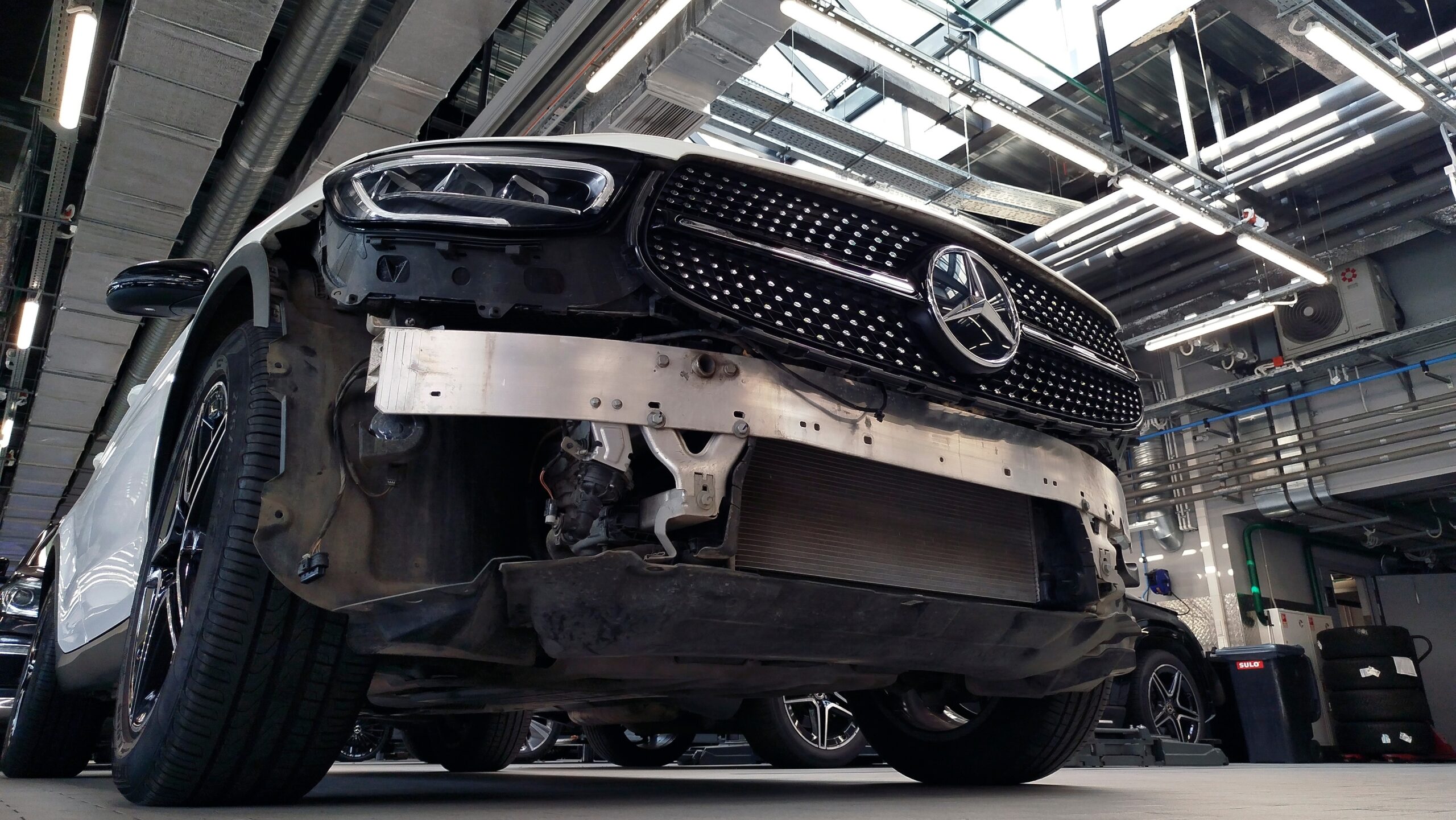
Over the past decade, vehicle safety technology has advanced rapidly. New vehicles now contain sensors, cameras, radar modules, and onboard computers that power Advanced Driver Assistance Systems, commonly known as ADAS.
These systems include forward collision warning, automatic emergency braking, blind spot monitoring, adaptive cruise control, and lane keeping assistance. Automakers, including Nissan, Toyota, Honda, and Ford, now install many of these technologies as standard equipment across large portions of their vehicle lineups.
The safety benefits are significant. Research from the Insurance Institute for Highway Safety shows that front crash prevention systems with automatic emergency braking reduce rear-end crashes resulting in injury by roughly 56 percent. The National Highway Traffic Safety Administration also identifies automatic emergency braking as one of the most effective technologies available for reducing traffic injuries and fatalities.
Greater safety technology has also created a new challenge for the collision repair industry. Modern vehicles are far more complex to repair after even minor accidents.
Modern Repairs Often Require Precise Sensor Calibration
Many ADAS systems depend on extremely precise sensor alignment. Cameras mounted near the windshield monitor lane markings, while radar modules located behind the front bumper track vehicles ahead. Ultrasonic sensors detect nearby objects during parking maneuvers.
Relatively small repairs can disrupt these systems.
Replacing a windshield, removing a bumper cover, or performing suspension work can change the angle of a camera or radar sensor by a few millimeters. A small misalignment can affect how the system interprets distance and object location at highway speeds.
Automakers publish repair documentation that requires sensor calibration after certain procedures. These calibrations ensure that sensors are aligned with the vehicle centerline and detection targets.
Skipping calibration may cause the system to function differently than engineers intended.
Why a Simple Bumper Repair Is No Longer Simple
Consider a modern midsize SUV such as the Nissan Pathfinder. The front radar sensor is mounted behind the front bumper and supports features such as adaptive cruise control, forward collision warning, and automatic emergency braking.
Removing or replacing the bumper can change the position of that radar unit. Manufacturer repair procedures often require recalibration using specialized targets and diagnostic equipment.
The process frequently includes vehicle scanning, software verification, target alignment, and sometimes road testing to confirm proper operation.
Repair data suggests the cost impact is real. A report from CCC Intelligent Solutions, which analyzes millions of insurance repair estimates each year, found that ADAS calibrations appear in a growing percentage of collision repairs and can add several hundred dollars or more to repair costs, depending on the vehicle and systems involved.
Insurance Estimates Do Not Always Capture the Full Process
One source of friction in modern collision repair involves how repair estimates are reviewed.
Insurance companies often verify repair costs by contacting dealerships or repair facilities for comparison pricing. The request sometimes focuses on a single procedure rather than the full repair process.
An adjuster may ask a shop how much a radar calibration costs. The number provided may represent only the calibration itself, not the supporting diagnostic steps required to complete the repair properly.
A proper calibration procedure may include pre-repair scans, diagnostic verification, target setup, environmental checks, and post-repair system confirmation. Incomplete comparisons can be confusing when two estimates for the same repair yield very different totals.
Collision Center Capabilities Vary Widely
Capabilities across collision repair facilities vary considerably.
Some shops have invested in calibration equipment, scanning tools, and technician training. Other shops rely on subcontracting calibrations to dealerships or specialized calibration providers.
A repair estimate from a shop that includes full calibration procedures may appear significantly higher than an estimate from a facility that omits those steps. The price difference may reflect a complete repair rather than excessive charges.
ADAS Technology Is Now Common in New Vehicles
Driver assistance technology has expanded rapidly across the automotive market.
According to the Insurance Institute for Highway Safety, automatic emergency braking is now standard on more than 90 percent of new vehicles sold in the United States. Other systems, such as blind spot monitoring and lane keeping assistance, are also becoming common even on lower-priced models.
As these vehicles age and enter the collision repair cycle, calibration procedures will become a routine part of repair work.
The Safety Risk of Skipping Calibration
Improper calibration can create genuine safety concerns.
A misaligned radar sensor may delay automatic emergency braking or fail to detect vehicles at the correct distance. A misaligned forward camera may cause lane keeping systems to misinterpret road markings.
Sensor errors may also produce false collision warnings or unexpected braking events. Some vehicles deactivate driver assistance features entirely when sensor alignment falls outside the manufacturer’s tolerance range.
Drivers may not realize that the system is no longer functioning as designed.
The Industry Is Still Adjusting
Vehicle technology has advanced faster than training across parts of the repair ecosystem.
Many insurance professionals began their careers when vehicles contained far fewer electronic safety systems. Some smaller collision centers are still investing in the equipment and training required for advanced diagnostics and calibration.
Misunderstandings about required repair procedures can arise when technology evolves faster than industry training. Vehicle owners often find themselves in the middle of these discussions while trying to ensure their car is repaired correctly.
The Bottom Line
Collision repair costs are rising largely because vehicles themselves have become more sophisticated machines. Modern cars rely on cameras, radar sensors, and driver assistance computers that must function correctly to deliver the safety benefits promised by manufacturers.
Repairing visible damage is only part of the process. Restoring the electronic safety systems that support the vehicle is equally important. The objective after any collision repair remains straightforward. The vehicle should be restored to the same level of safety it had before the accident.
Ya done good John!