
Step into a modern electric car, and chances are you’ll be greeted by the same scene: a barren dashboard, a monolithic touchscreen, maybe a light strip to pretend it’s futuristic, and enough recycled plastic to open your own bottle factory.
Whether you’re getting into a Tesla Model Y, a Hyundai Ioniq 5, or a Volkswagen ID.4, the vibe is suspiciously familiar. It’s as if every design team in the world went on the same mindfulness retreat and came back obsessed with clean lines, pale colors, and screens big enough to double as a home cinema.
There used to be personality. Quirks. Button placement that made no sense, but at least gave the car character. Now? Everything’s been smoothed over in the name of “progress.”
Tesla Started It

We have to talk about Tesla. The Model 3’s interior is less “car” and more “Apple Store with a steering wheel.” One central screen. No buttons. A dashboard that looks like it was sanded down by monks. No gauge cluster in front of you, just vibes.
That layout helped popularize the modern EV-minimalism trend: a central touchscreen with most functions routed through software. Plenty of brands have since leaned into the same idea, even if they still keep more traditional controls than Tesla does. Ford’s Mustang Mach-E? Similar screen-first vibe, but it still keeps a separate digital instrument display behind the steering wheel. BMW i4? A big curved display, plus (for now) iDrive controls like a rotary controller and other non-touch inputs. Even Mercedes, once the king of wood and metal, offers something called the MBUX Hyperscreen on models like the EQS: three displays blended under a single 56-inch glass panel.
Designed For Screens, Not People
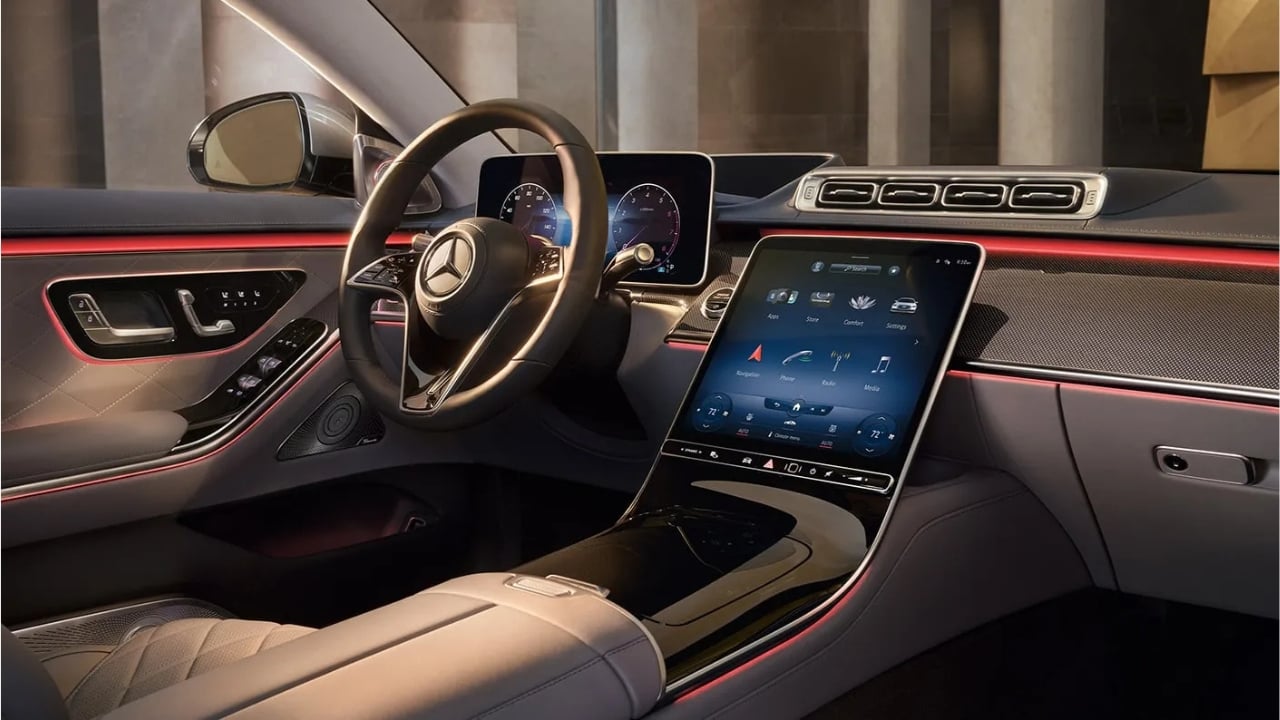
The problem is, modern EVs are being built for software, not humans. Everything has to be touchscreen-controlled because that’s what looks good in press photos. The volume switch? Gone. Climate control buttons? Nope. Want to change the fan speed? Enjoy navigating three menus while doing 70 on the freeway.
There’s this obsession with “clean design,” but what that really means is a lack of tactile controls. Less is more, we’re told. But sometimes less just means… less.
And it’s not just the layout. The color palettes are all eerily similar. Pale grey. Muted blue. Beige if someone’s feeling daring.
Platforms And Cost-Cutting

A big reason for the sameness is that many EVs are built on shared modular platforms. Automakers use these skateboard-like foundations, batteries, and motors underneath, with everything else bolted on top, to save time and money.
The result? Interiors become software hubs, not driver environments. Shared platforms and cost targets push brands toward similar packaging and screen-first layouts, which can make cabins feel more alike. The Kia EV6 and Genesis GV60 even share Hyundai Motor Group’s E-GMP platform, so the packaging fundamentals can feel similar even when the styling and materials differ.
The Future Needs Flair

If EVs are really going to take over, and let’s be honest, they are, then designers need to stop copying Tesla like it’s the only answer. There’s space here for creativity. For luxury that isn’t just software polish. For sportiness that doesn’t rely on carbon-look dashboard trim.
Imagine what an EV interior could be if it actually tried to excite you. If it made you smile before you even set off. Right now, too many feel like digital waiting rooms—sterile, safe, and utterly forgettable. It’s time for carmakers to remember that drivers don’t fall in love with pixels. They fall in love with character.
Where Did The Soul Go?

Sure, some brands try. The Lucid Air has its sleek four-screen setup. Rivian’s interiors look like a Pinterest board from a National Park gift shop. But even then, it still feels like variations on a theme: screens, soft shapes, sustainable materials, and vibes.
What we’re missing is risk. Weirdness. The kind of things that made you remember a car interior long after you got out. Saab put the ignition next to the gear lever. Old Jaguars had chrome ashtrays and walnut dashboards. Citroëns had single-spoke steering wheels and seats that felt like armchairs from a French art house.
Now, the boldest design move is ambient lighting that changes color when you sneeze.
All Buttoned Up and Nowhere to Go

So yes, every EV interior feels the same. Because design has been replaced with UI. Physical connection has been traded for minimalist “experiences.”
These cars might be clean, green, and technically brilliant, but they’ve lost the personality that made driving special. Right now, if you blindfolded someone and sat them inside a dozen EVs, the only way they’d tell the difference is by reading the name on the infotainment screen.
Maybe that’s progress. But it doesn’t feel like it.