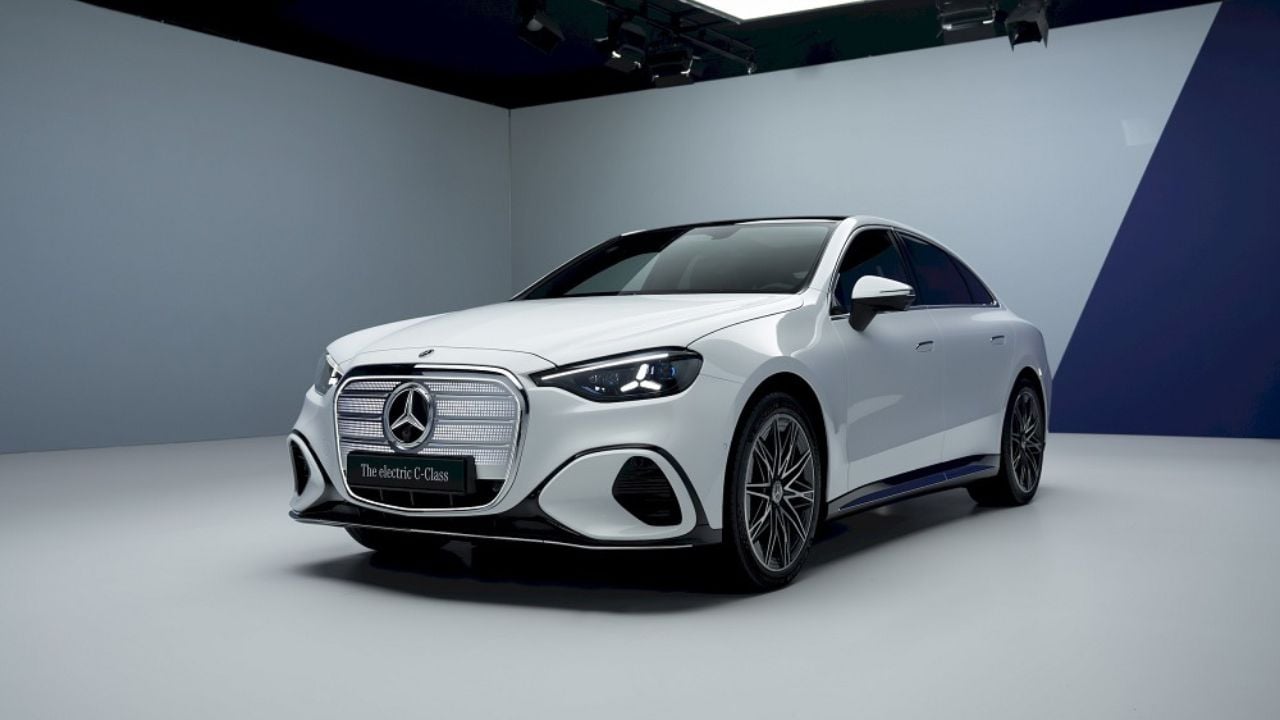
Mercedes-Benz is taking one of its most important nameplates into unfamiliar territory. The new electric C-Class is the first fully battery-powered version of a model line that has anchored the brand’s midsize luxury lineup for decades, and it arrives at a moment when Mercedes is trying to close a key gap in its EV range.
This is not a replacement for the gas-powered C-Class, but a separate car that will be sold alongside it.
Mercedes is also positioning it as a direct rival to BMW’s coming Neue Klasse i3, which gives the launch added weight in one of the industry’s most important premium segments.
What makes the new model especially interesting is that Mercedes has not treated it like another isolated EQ-style experiment. Instead, it uses a dedicated electric platform and EV-specific engineering while deliberately pulling its design back toward the look and proportions of a traditional luxury sedan.
An Electric C-Class Without The Old EQ Divide
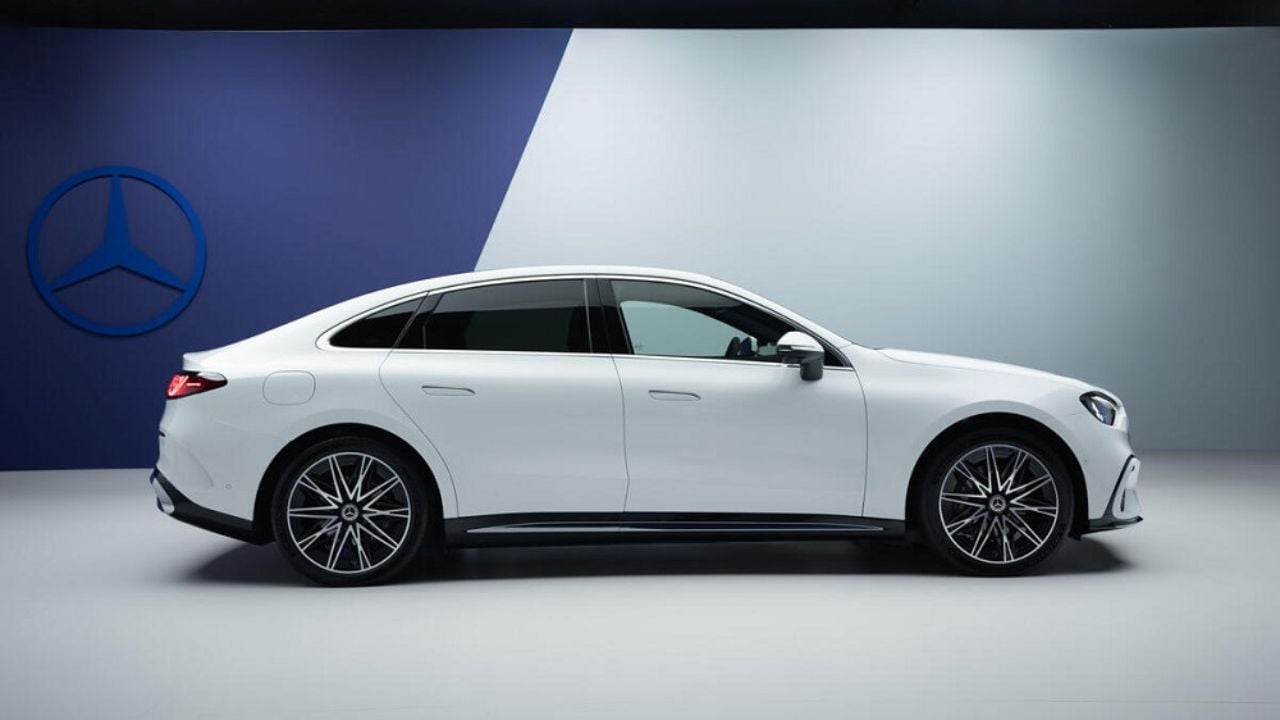
The new electric C Class rides on Mercedes’ midsize MB.EA architecture, the same basic platform family used by the electric GLC, and it stands apart from the combustion model under the skin even though the two will share showroom space. Mercedes has already said the electric GLC and electric C Class are central to its broader product offensive through 2027.
That makes this car far more than a simple powertrain variation. It is part of Mercedes’ move toward a more unified portfolio, where EVs and combustion models share a coherent design language instead of being split into obviously different visual worlds.
Robert Lesnik, Mercedes’ head of exterior design, told Autocar that the company has effectively reversed its old thinking about EV styling and is now bringing its electric and combustion design worlds back together. That shift is immediately visible in the new C Class, which looks much more like a proper sedan than the older EQE and EQS ever did.
A More Familiar Shape With New EV Signals
The front end still makes it clear that this is a new generation electric Mercedes. Carscoops reports that the illuminated grille uses 1,050 individual light elements, giving the car a very different face from the current gas-powered C-Class even though the overall shape stays familiar.
Mercedes also worked hard to preserve classic sedan proportions despite the packaging demands of an underfloor battery. Autocar reports that the roofline is higher and the body is more streamlined, while the drag coefficient drops to 0.22, a major gain for efficiency and highway quietness.
The electric architecture also stretches the wheelbase by 3.8 inches over the combustion model, bringing it to 116.6 inches. That extra space helps the new car feel less like a compact executive sedan and more like a smaller luxury flagship in the way it packages passengers and luggage.
Luxury And Screens Move Upmarket
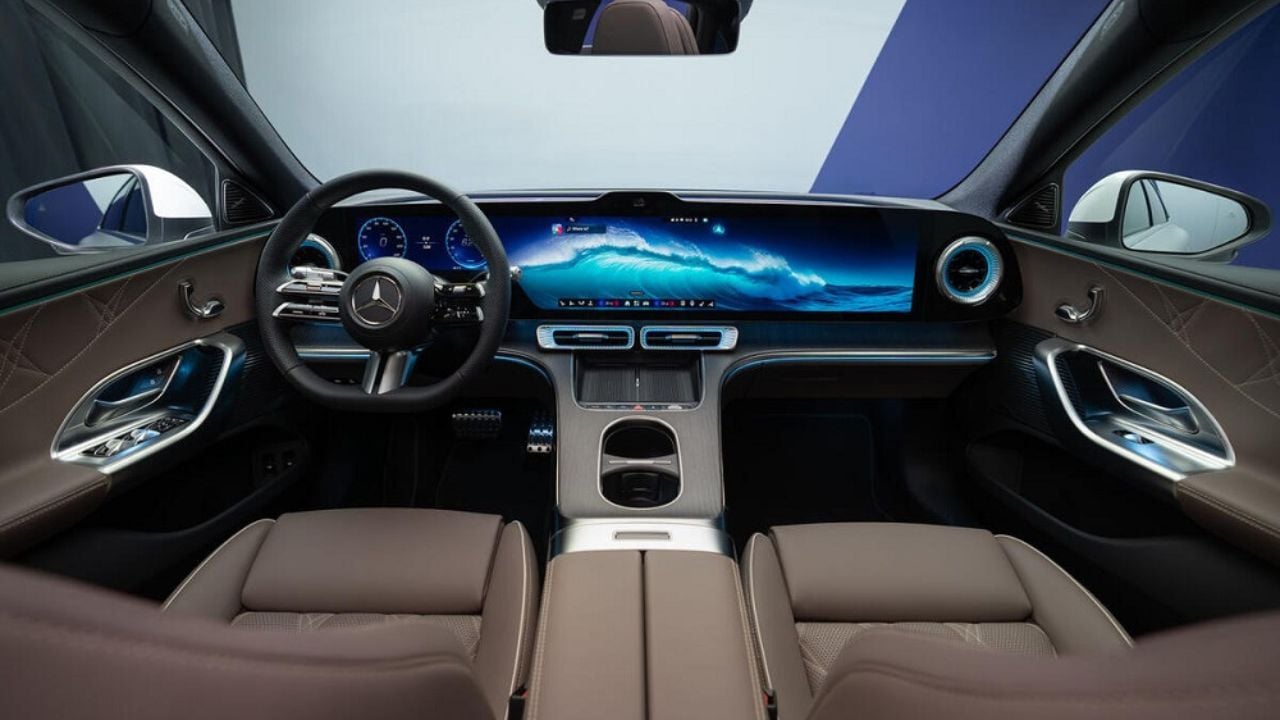
Inside, Mercedes is clearly aiming higher than a typical C Class. The optional MBUX Hyperscreen measures 39.1 inches across, while the standard Superscreen setup uses separate displays rather than one continuous glass panel, giving buyers two distinct interpretations of the same high-tech cabin theme.
The core screen hardware includes a 12.3-inch digital instrument cluster, a 17.7-inch central touchscreen, and an available 12.3-inch passenger display. The software layer is just as important, because this car runs Mercedes’ new MB.OS system and continues the brand’s larger push toward AI-enhanced infotainment, over-the-air updates, and more advanced assisted driving functions.
Mercedes has not gone fully screen-dependent, though. Reports on the production car note that key physical controls remain on the center console, and the EV layout also brings real space gains, including 16.6 cubic feet of rear cargo space plus a 3.6 cubic foot front trunk, along with slightly better headroom in both rows.
Big Range Meets Serious Pace
The launch version is the C 400 4MATIC electric, and it comes with dual motors making about 482 horsepower. Mercedes says it can reach 60 mph in 3.9 seconds, which pushes the car into performance territory that used to belong to much more serious AMG models.
Energy comes from a 94 kWh battery in an 800-volt system, and Mercedes claims up to 473 miles of WLTP range. That is not an EPA number, so American buyers will need to wait for the official U.S. figure, but even allowing for the usual difference between WLTP and EPA testing, the headline suggests a very competitive long-range EV sedan.
Charging is one of the biggest talking points. Mercedes says the car can charge at up to 330 kW and recover about 202 miles of range in 10 minutes under ideal conditions, which puts the new C-Class right where it needs to be in a segment where speed, convenience, and real road trip usability matter just as much as luxury.
A Different Kind of C-Class Turning Point

Chassis hardware shows the same ambition as the powertrain. Available air suspension, predictive damping, and rear axle steering with up to 4.5 degrees of movement are all on the table, and Mercedes is openly describing the car as the sportiest C-Class it has ever built while also chasing an S-Class level of refinement.
For now, Mercedes has only detailed the dual-motor C 400 4MATIC Electric, with additional versions expected later. Pricing has not been announced yet, but the company has already made the bigger point clear: this is not just another new EV, but a new definition of what the C-Class can be in the electric era.
That is why this launch matters so much. Mercedes is not abandoning the C-Class formula but rebuilding it around an electric platform, a more traditional luxury sedan shape, and enough range and charging performance to make the car feel like a true core model rather than a compromise built for compliance.
This article originally appeared on Autorepublika.com and has been republished with permission by Guessing Headlights. AI-assisted translation was used, followed by human editing and review.